Plug & Charge Fail and the 80% Cliff is Real

eltonlin

Well-Known Member
Joined
Oct 4, 2020
Threads
8
Messages
1,184
Reaction score
1,503
Location
NorCal
Vehicles
FE Gray
Country flag
Somewhat related question that popped up in my head...

Especially in cold weather, one can keep the heat on while plugged in at the charger (and with accessory mode ON)?
Sponsored
 

eltonlin

Well-Known Member
Joined
Oct 4, 2020
Threads
8
Messages
1,184
Reaction score
1,503
Location
NorCal
Vehicles
FE Gray
Country flag
After watching some review videos, I was worried it wouldn’t be able to charge from 10-80% in 45 minutes as claimed, especially in cold temperatures. I agree that this test is reassuring and exciting.

Yes, most battery charging rates decrease the closer it gets to full (I’ve heard an analogy of filling a bucket, you slow the speed of the water as it gets close to filling so it doesn’t overflow). I think we were just hoping for higher than 5KWh charging from 80-100%. Also, the MME extended range battery has 88 KWh usable, but the battery is actually 99 KWh (might be off by a little bit). So there’s actually a built in buffer of 11%. Some people are hoping that the fast charge rate could go until 90% of the usable charge, since that would leave a 20% buffer of the total battery capacity.

It’s not a defect of the product or a reason I wouldn’t want the car. I’m just hopeful Ford could change this in the future an OTA update.
Agree - I hope that they can at least extend the higher rates past 80%. If I were to use DCFC it'd be because I'm on a road trip and need to get as much charge/range as possible in the shortest amount of time. To have to wait a couple hours for the last 20% seems suboptimal for this scenario.
 

DBC

Well-Known Member
First Name
Don
Joined
Oct 1, 2020
Threads
8
Messages
1,224
Reaction score
1,430
Location
San Diego
Vehicles
Volt ELR
Country flag
The worrying thing is that the chargers hybrid2bev is using are the brand new Signet chargers that are EA's current standard, hopefully they're as up-to-date as it gets.
Well software moves much faster than hardware, or hardware firmware, so it's not unusual for new hardware to arrive with outdated software. On the other hand you have to believe that Ford has charged the MME from these chargers or some that are similar. That's why I think @JamieGeek is onto something when he identified the setup process as being the source of the disconnect.

But I don't see any of this as being "worrying". It's just how these things roll out. We saw it when the J1772 public chargers rolled out. We saw it when the Tesla chargers rolled out. And we saw it when the CCS chargers rolled out. I'm confident that in the very near future the issue will be addressed. And this is less problematic because the issue is with the payment system not the charging. So until it gets sorted the worst that happens is I pay more for a couple of charges when on a trip (which sadly isn't on the calendar yet).

Obviously if I needed to DC charge all the time I'd be more concerned.
 

DBC

Well-Known Member
First Name
Don
Joined
Oct 1, 2020
Threads
8
Messages
1,224
Reaction score
1,430
Location
San Diego
Vehicles
Volt ELR
Country flag
Is there some fear over heat management and they tried to be conservative? I hope in the next coming months they really work on this. Efficiency wise extremely happy.
They're trying to protect the battery and I can't see this changing anytime in the near future.
 

NoMoShocks

Well-Known Member
First Name
Larry
Joined
Jul 9, 2020
Threads
19
Messages
347
Reaction score
526
Location
Camas, WA
Vehicles
2017 Chevy Bolt Premier EV, 2018 Mitsubishi Outlander GT PHEV
Occupation
Electrical product safety engineer
Country flag
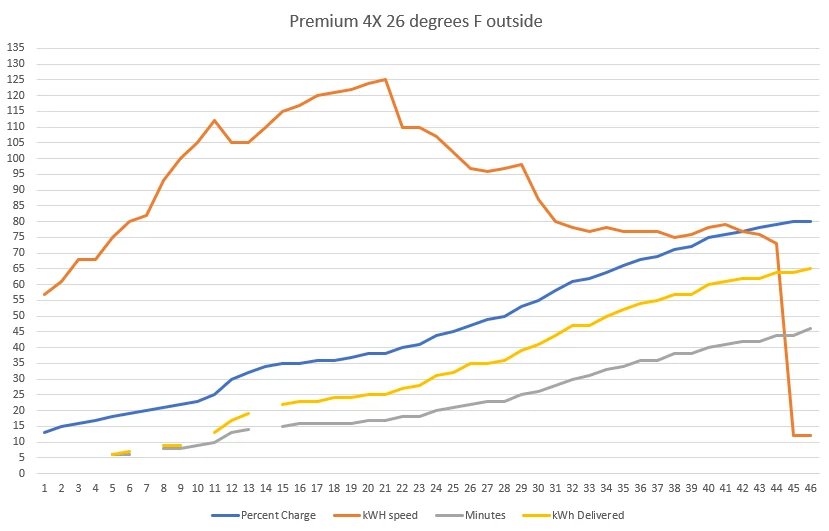
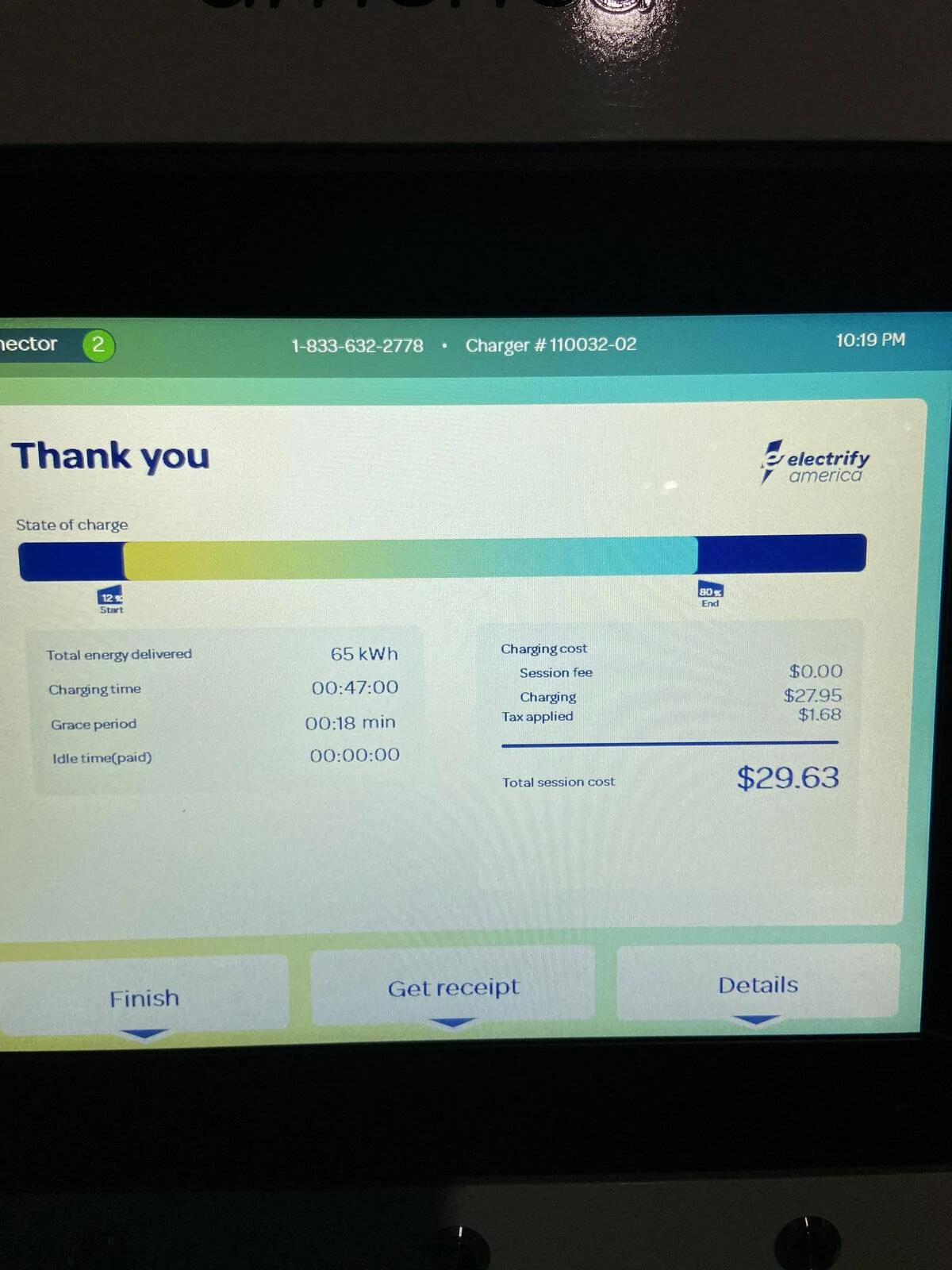
First the good news. From 12% to 80% took about 45 minutes so about right on target. I was able to start my charging session using Apply Pay on two different units, no charging faults (did not stop after paying until I stopped it). I don't have a membership so it charges $0.43 per kW instead of the member rate at $0.31 per kW.

I activated my Plug & Charge free 250kWH offer in Ford Pass earlier in the day. I drove my car around today until I reached 9% state of charge. Had been driving hard for about 90 minutes before plugging in at an EA station.

I had the car turned off. It was 26 degrees F outside.

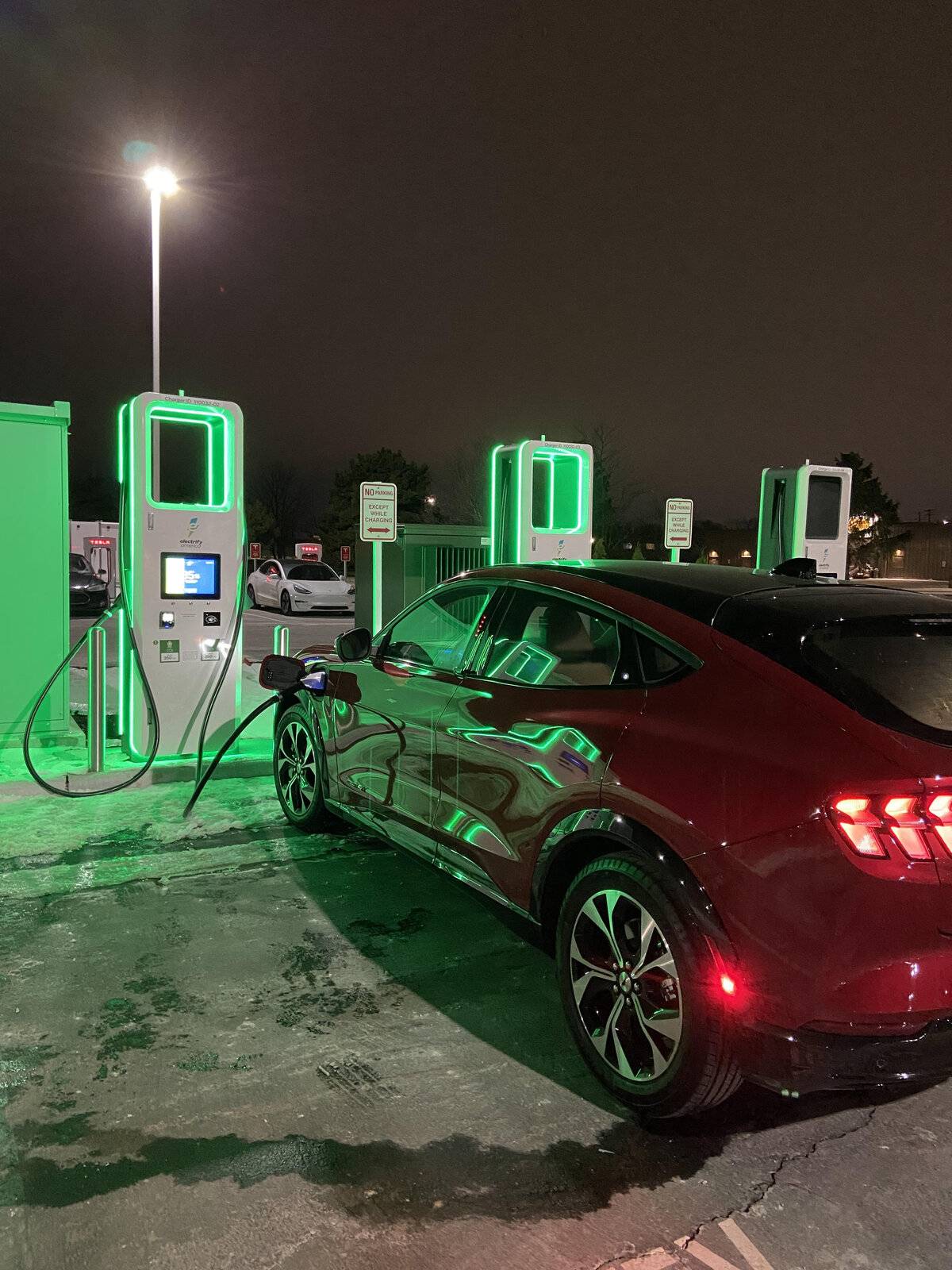
When I first plugged in the charger said connecting to vehicle, then it asked me to pay for the charging. I disconnected and moved to another charger, same thing. Decided to just pay for the charging on the 150 kW charger using Apple Pay which worked just fine. Plugged in at 9% and got 55 to 57 kW speed. I let it go to about 12% charge and disconnected. Thinking maybe the station could not put out enough power.

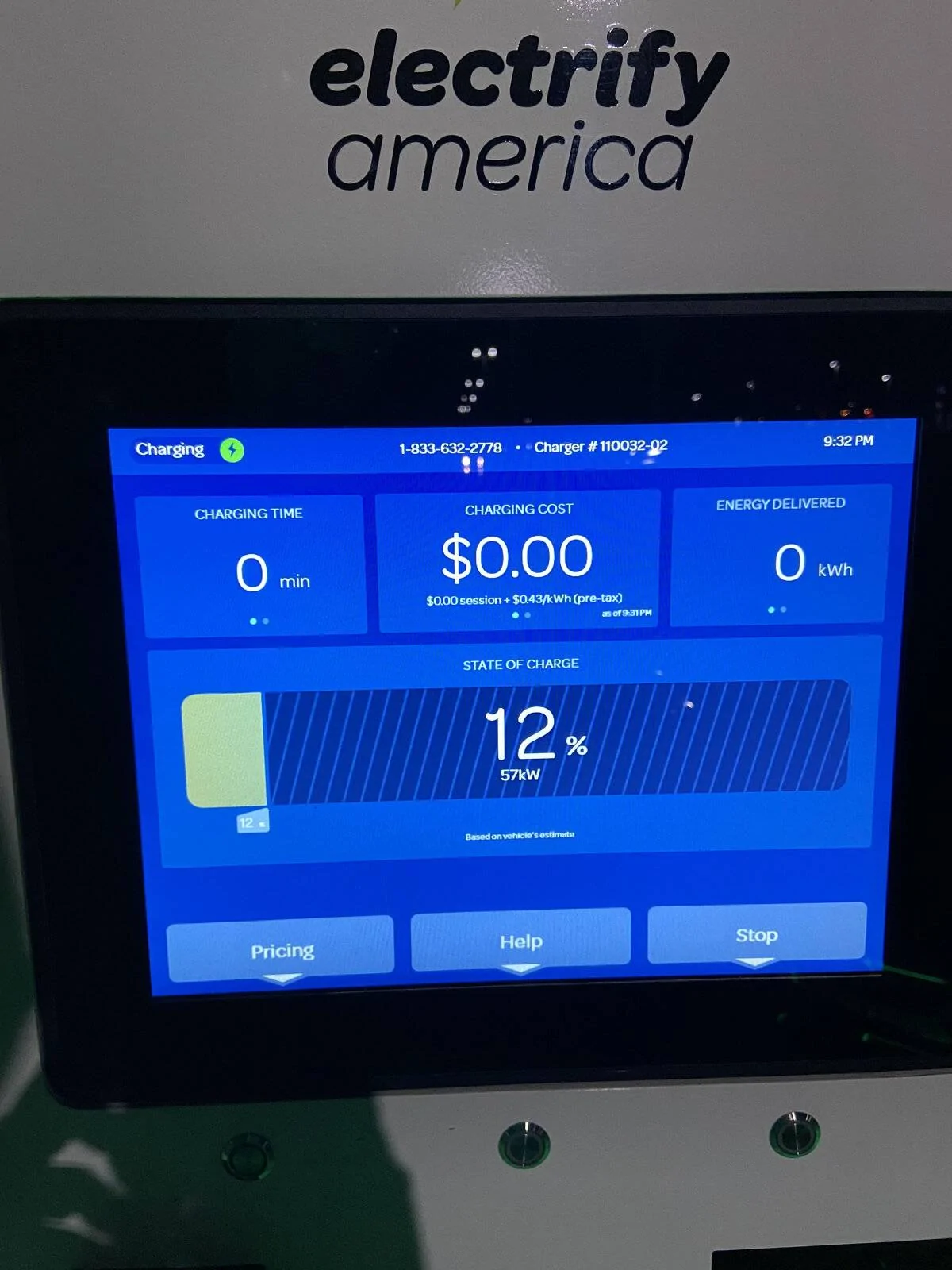
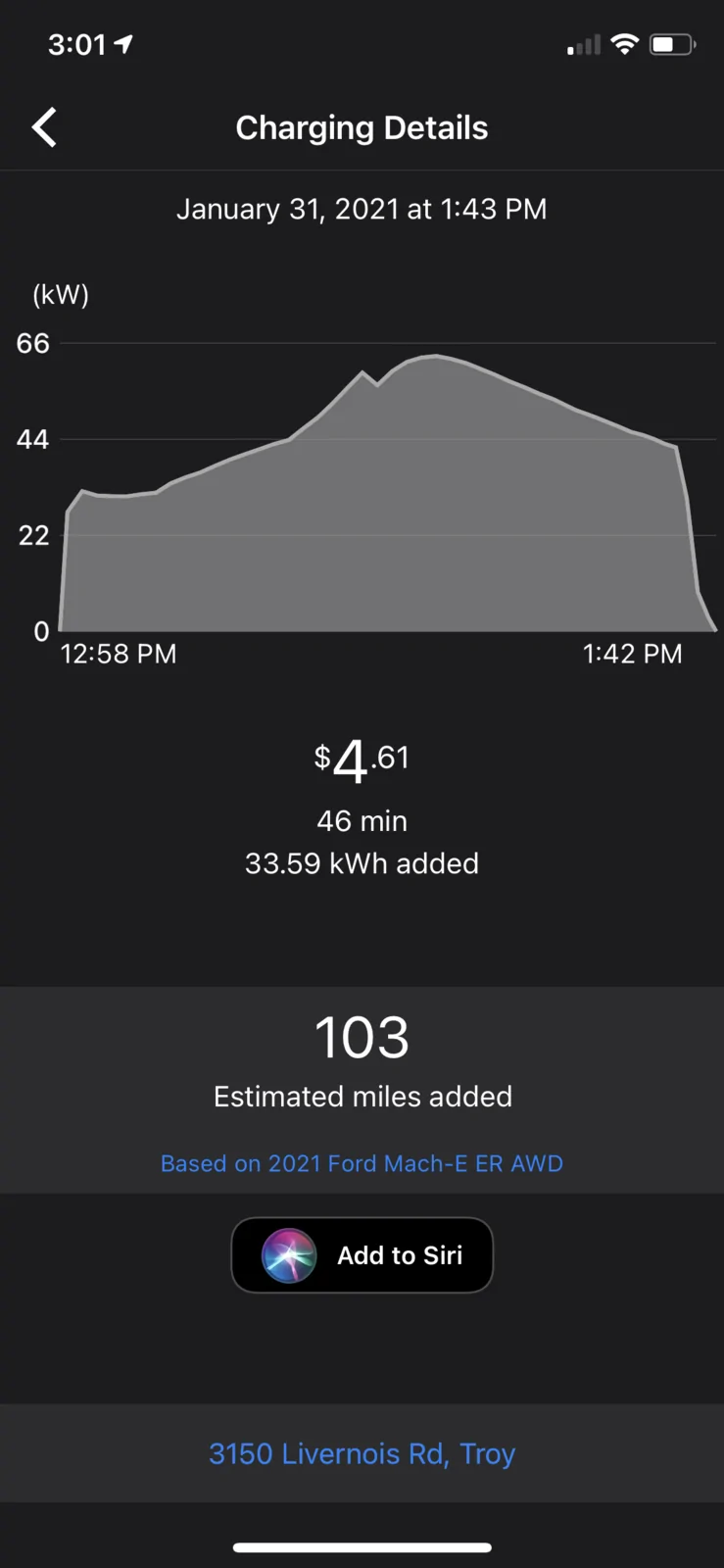
Moved to the 350 charger that I first started at but used the second cord. Plugged in... Plug and Charge failed so I just paid for charging using Apple Pay... started up at 57 kW at 12%. I will add that during the process the kW speed jumped around by a few kW it didn't seem to hold a steady rate. But it never stopped charging.

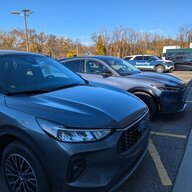
car charging.jpg


Below is the rest of the session data. Sorry for the gaps (had people come up at different times and want to talk about the car). The speed seemed to jump around a bit, this may have been the charger?

1612068141276.webp


Start of the second session:
start.webp


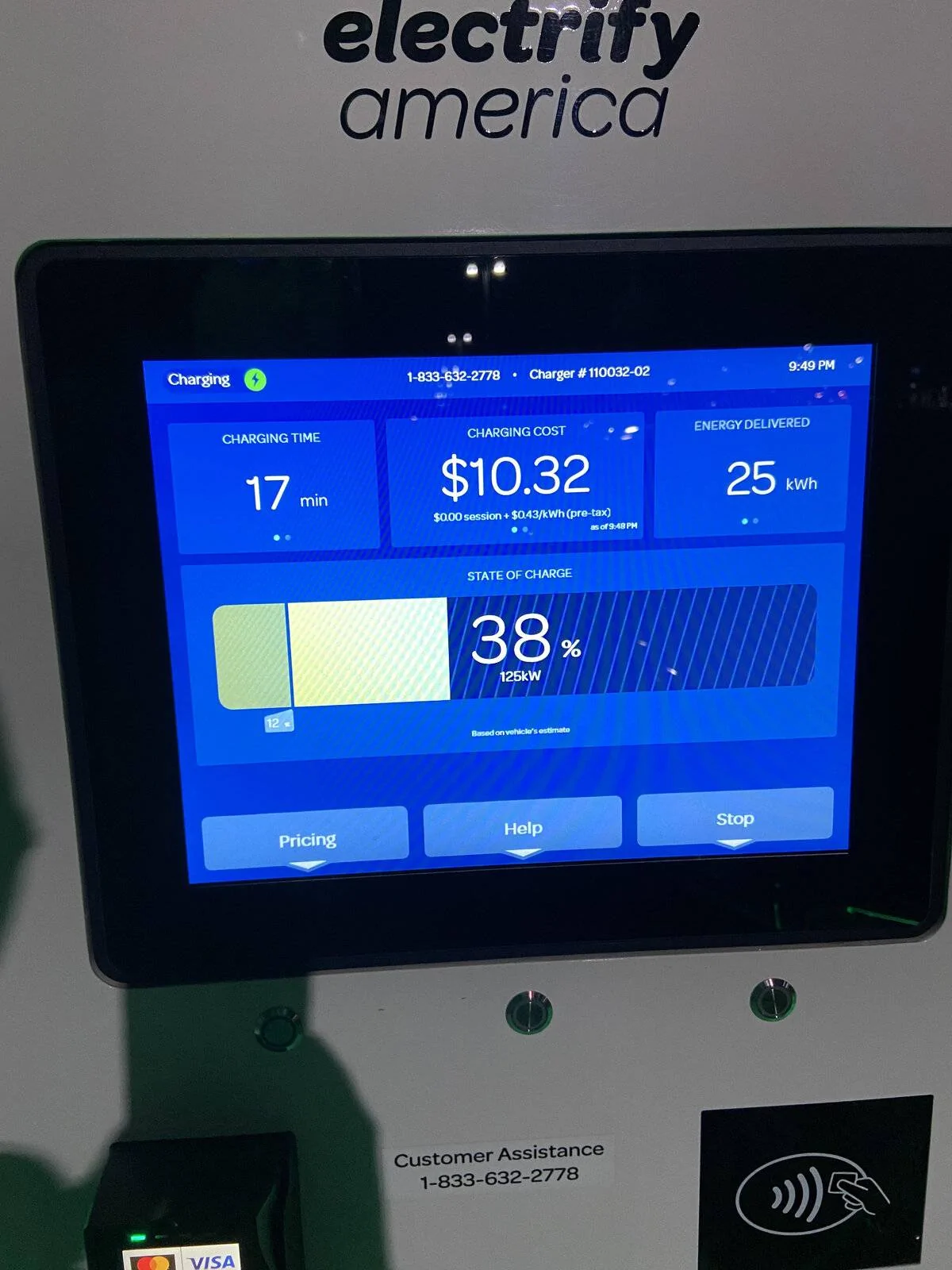
Peak Speed of 125 kW:
peak speed.webp


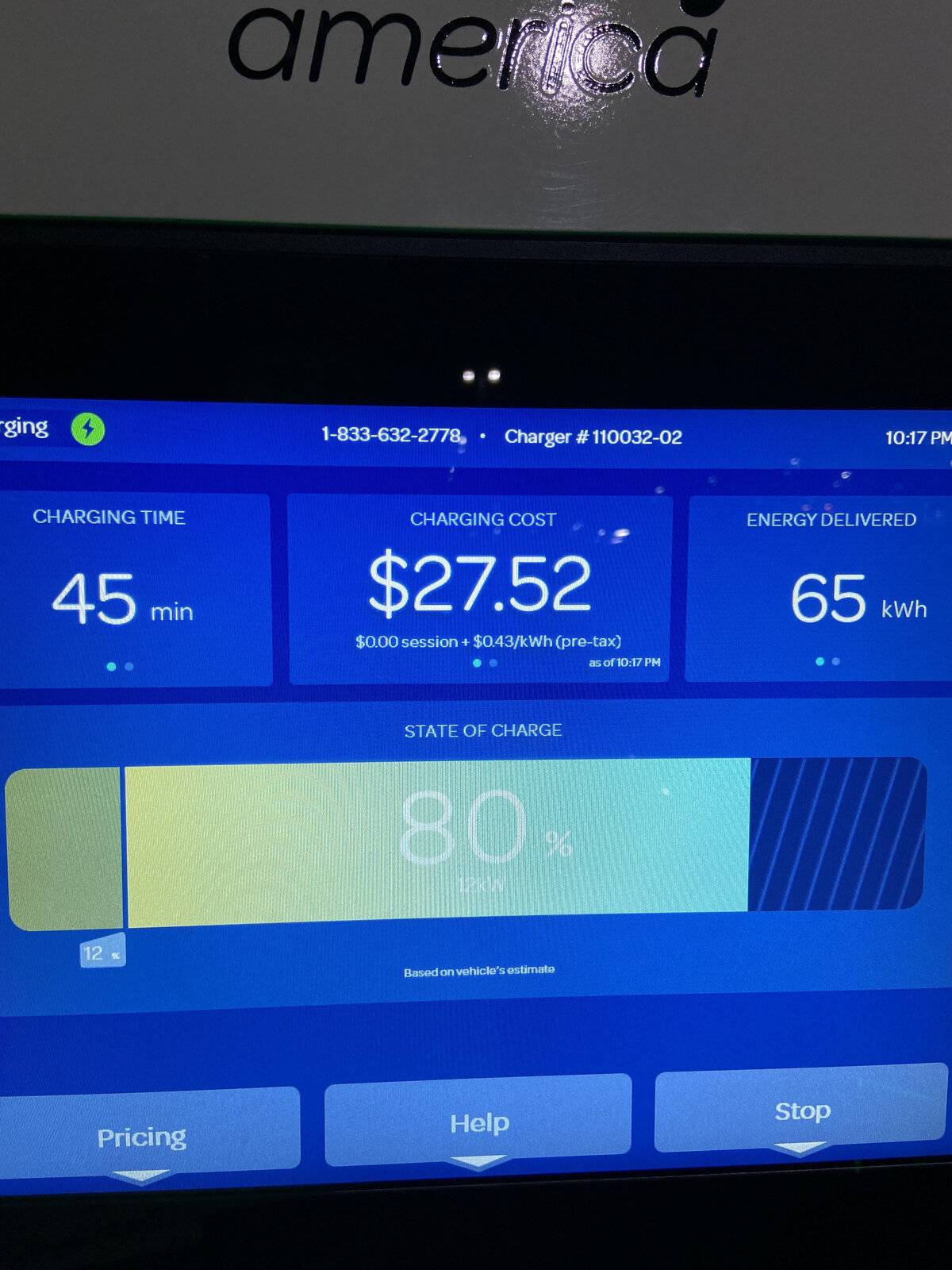
80% cliff: 12 kW. I let it go here at this speed for a couple minutes but it did not move off of 80%.

80 percent.jpg


End receipt: $0.43 per kWh as guest

end receipt.webp
Well, my quick math indicates that the 43 cents per kWh + tax is about 70 percent the cost of driving ICE car, assuming Mach E gets 3 m/kWh and ICE gets 25 MPG with gas at $2.50/gal.
 
Last edited:


BlueMach

Well-Known Member
Joined
Dec 24, 2020
Threads
0
Messages
549
Reaction score
716
Location
USA
Vehicles
Mach-E First Edition
Country flag
Sounds like DCFC is your primary charge method. If so, then you may not be satisfied with your purchase. Just being honest.....
Home charging is the primary method in terms of day-to-day, but road trips are a way of life.
 

dbsb3233

Well-Known Member
First Name
TimCO
Joined
Dec 30, 2019
Threads
56
Messages
10,100
Reaction score
11,965
Location
Colorado, USA
Vehicles
2021 Mustang Mach-E FE, 2025 Porche Macan Electric
Occupation
Retired
Country flag
They're trying to protect the battery and I can't see this changing anytime in the near future.
Even if they do it's probably not gonna be by much. They'll always maintain a buffer to protect the battery. The question is where the right balance is between "enough protection" and "wasting range"? 11% might be it, but after more data collection they may find 3% one way or the other may be the better sweet spot.

But that's only like 10 miles of range. Not even that on highway-speed road trips (where it typically matters).
 

Engijms

Active Member
Joined
Nov 2, 2020
Threads
0
Messages
33
Reaction score
85
Location
CA
Vehicles
Mach E AWD X on order
Country flag
I've gotta believe they'll work all this out. Interesting thing will be watching how the taxes start increasing as the shift from ICE continues to erode collecting high gas taxes that support roads. Home charging complicates this.
 

available_username2

Well-Known Member
Joined
Dec 31, 2019
Threads
32
Messages
527
Reaction score
573
Location
USA
Vehicles
Cmax energi
Country flag
Agree - I hope that they can at least extend the higher rates past 80%. If I were to use DCFC it'd be because I'm on a road trip and need to get as much charge/range as possible in the shortest amount of time. To have to wait a couple hours for the last 20% seems suboptimal for this scenario.
That's not how you road trip in an EV though. You want to charge to just being able to reach the next charger, with a little bit of a buffer. You want to arrive with less than 10% charge. Then you get the fastest part of the charging curve, so you spend the least amount of time at chargers.
 

dbsb3233

Well-Known Member
First Name
TimCO
Joined
Dec 30, 2019
Threads
56
Messages
10,100
Reaction score
11,965
Location
Colorado, USA
Vehicles
2021 Mustang Mach-E FE, 2025 Porche Macan Electric
Occupation
Retired
Country flag
Home charging complicates this.
Yep, that's what will prevent electricity taxes from becoming the new gas tax (for road funding). Only public chargers can isolate that electricity to vehicle use. Homes can't, and that's where the vast majority of charging will be.

We need a whole new method of road funding, because the gas tax is about to become a very poor (and unfair) method as more EVs hit the road.
 
  • Like
Reactions: ARK

BlueMach

Well-Known Member
Joined
Dec 24, 2020
Threads
0
Messages
549
Reaction score
716
Location
USA
Vehicles
Mach-E First Edition
Country flag
That's not how you road trip in an EV though. You want to charge to just being able to reach the next charger, with a little bit of a buffer. You want to arrive with less than 10% charge. Then you get the fastest part of the charging curve, so you spend the least amount of time at chargers.
Sometimes the next charger is more than 80% range away. With CCS there are enough deserts of charging where you will need to go to 100% (or at least past 80%) at a DCFC to get to the next one. That's the only reason the 80% cliff bothers me.
 

dbsb3233

Well-Known Member
First Name
TimCO
Joined
Dec 30, 2019
Threads
56
Messages
10,100
Reaction score
11,965
Location
Colorado, USA
Vehicles
2021 Mustang Mach-E FE, 2025 Porche Macan Electric
Occupation
Retired
Country flag
That's not how you road trip in an EV though. You want to charge to just being able to reach the next charger, with a little bit of a buffer. You want to arrive with less than 10% charge. Then you get the fastest part of the charging curve, so you spend the least amount of time at chargers.
While that is the most efficient pattern, it also creates more range anxiety to run below 10% for every refuel. I suspect as BEVs start getting beyond enthusiasts and reach deeper into the mainstream, a lot of those people aren't going to be as comfortable pushing it that low. Especially on routes where there's no backup chargers in range.
 

JamieGeek

Well-Known Member
Joined
Dec 29, 2019
Threads
82
Messages
3,589
Reaction score
6,823
Location
Southeastern Michigan
Website
spareelectrons.wordpress.com
Vehicles
Escape PHEV, old: Mach-E, Bolt, C-Max Energi, Focus Electric
Country flag
Yep, that's what will prevent electricity taxes from becoming the new gas tax (for road funding). Only public chargers can isolate that electricity to vehicle use. Homes can't, and that's where the vast majority of charging will be.

We need a whole new method of road funding, because the gas tax is about to become a very poor (and unfair) method as more EVs hit the road.
Not entirely: Many homes, such as ours, have a 2nd meter devoted soley to the EV. As such that electricity could, in theory, be subjected to a "road tax" (this would also discourage using that plug for any use other than the EV to save on paying that tax).

While that is the most efficient pattern, it also creates more range anxiety to run below 10% for every refuel. I suspect as BEVs start getting beyond enthusiasts and reach deeper into the mainstream, a lot of those people aren't going to be as comfortable pushing it that low. Especially on routes where there's no backup chargers in range.
For short-ranged EV's this is and was a frequent occurance. When your car can only go 70 miles you frequently arrive home <10 miles of range remaining.

Now that EV's are 200+ miles in range..I agree it will become more rare going that deep into the battery.
 

sldave84

Well-Known Member
First Name
Dave
Joined
Jun 26, 2020
Threads
3
Messages
68
Reaction score
144
Location
Michigan
Vehicles
Mustang Mach-e GT
Country flag
First the good news. From 12% to 80% took about 45 minutes so about right on target. I was able to start my charging session using Apply Pay on two different units, no charging faults (did not stop after paying until I stopped it). I don't have a membership so it charges $0.43 per kW instead of the member rate at $0.31 per kW.

I activated my Plug & Charge free 250kWH offer in Ford Pass earlier in the day. I drove my car around today until I reached 9% state of charge. Had been driving hard for about 90 minutes before plugging in at an EA station.

I had the car turned off. It was 26 degrees F outside.

When I first plugged in the charger said connecting to vehicle, then it asked me to pay for the charging. I disconnected and moved to another charger, same thing. Decided to just pay for the charging on the 150 kW charger using Apple Pay which worked just fine. Plugged in at 9% and got 55 to 57 kW speed. I let it go to about 12% charge and disconnected. Thinking maybe the station could not put out enough power.

Moved to the 350 charger that I first started at but used the second cord. Plugged in... Plug and Charge failed so I just paid for charging using Apple Pay... started up at 57 kW at 12%. I will add that during the process the kW speed jumped around by a few kW it didn't seem to hold a steady rate. But it never stopped charging.

car charging.jpg


Below is the rest of the session data. Sorry for the gaps (had people come up at different times and want to talk about the car). The speed seemed to jump around a bit, this may have been the charger?

1612068141276.webp


Start of the second session:
start.webp


Peak Speed of 125 kW:
peak speed.webp


80% cliff: 12 kW. I let it go here at this speed for a couple minutes but it did not move off of 80%.

80 percent.jpg


End receipt: $0.43 per kWh as guest

end receipt.webp
Same issue here, but sweet Jesus was Electrify America expensive! I used a ChargePoint DCFC and it was like 5 bucks. Not as fast, but still

Ford Mustang Mach-E Plug & Charge Fail and the 80% Cliff is Real FDE2251F-D680-4C71-8D44-E8DE7708C845
 

dbsb3233

Well-Known Member
First Name
TimCO
Joined
Dec 30, 2019
Threads
56
Messages
10,100
Reaction score
11,965
Location
Colorado, USA
Vehicles
2021 Mustang Mach-E FE, 2025 Porche Macan Electric
Occupation
Retired
Country flag
Not entirely: Many homes, such as ours, have a 2nd meter devoted soley to the EV. As such that electricity could, in theory, be subjected to a "road tax" (this would also discourage using that plug for any use other than the EV to save on paying that tax).
But that would be you getting taxed for it while I wouldn't (with an outlet that's just on the same meter as the rest of the house).

People would balk at that quickly.
Sponsored

 
  • Like
Reactions: ARK


Top