Doobster6
Well-Known Member
- First Name
- Len
- Joined
- Aug 1, 2024
- Threads
- 19
- Messages
- 225
- Reaction score
- 278
- Location
- Exton, PA
- Vehicles
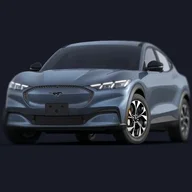
- 2024 Mach-E Premium extended battery, Vapor Blue
- Occupation
- Retired manufacturing executive

You’re not wrong when long trips are considered and it’s why we don’t use our MME for that. So I agree, EVs can’t be your ‘only’ car if you take long trips. But we use ours almost exclusively for ALL of our other daily driving needs, refilling our ‘tank’ each night from our Level 2 charger at home in the garage. We use my wife’s very nice Infiniti for our trips.The difference is that automobiles could do more and go faster than horses whereas EV's are actually slower on a trip when you factor in time to recharge/fuel compared to an ICE vehicle. Bottom line until EV's can be recharged as fast as an ICE vehicle can be refueled they are a compromise not an advancement.
The TRUTH is that Americans average driving fewer than 40 miles each day, including work commutes; I recall reading that 90%+ of Americans drive fewer than 150 miles per day. Those numbers mean that they can wake up every day to an EV with more than enough range to cover those needs if they charge overnight at home. For this use case, EVs are already a perfect solution.
So every multi-car family in the US can justify having one of them be an EV and using their ICE cars for their infrequent long trips, like we do. If they are part of the 50% who actually drive 40 or fewer miles each day, they can even refill those miles by charging from a 110v outlet, and avoid the cost of installing a level 2 charger.
So EVs are, right now, a realistic option for tens of millions of multi-car families. Factor in the greatly reduced periodic maintenance costs as well as the enhanced performance, and the arguments in favor become ever more compelling.
There are other considerations that work against EV adoption however, although not the ones typically heard. Modern EVs DO NOT catch fire and burn up with regularity as many disinformation outlets like to report. The data shows that ICE cars are twenty times more likely (per 100,000 cars) to ignite than EVs. That said, EVs are relatively new, and Teslas in particular drive the US roads in far greater numbers than other makes. So far a robust alternate spare parts supply chain has not materialized for any EVs, even Teslas (despite their numbers) and they remain very expensive to repair after an accident. This can often be reflected in higher insurance premiums, which I researched in advance and which then erased any gas savings I might have enjoyed driving a Tesla.
But at least in my own experience, that’s about it for negatives! We absolutely love our MME and intend to stay with an EV of some make when its lease expires in 2027.
Sponsored