

- Banned
- #31
I really, genuinely can't imagine the transition being that slow. I get that they're using models that are based on historic trends, etc. etc. but that's not how new technology is adopted. I really think we're gonna cross 50% before 2030, and Europe well before 2030.I think Ford will gradually add more BEV models. But sized more to the growth of BEV market share. Which in the US is still <3%. I don't think that market share will skyrocket faster than Ford can adjust to match it.
It took Ford 3 years to develop the Mach-E. If the market moves dramatically fast to BEVs (which I'm not expecting, and neither is Ford), then Ford may be a few years behind catching up. But only a few years. Frankly though I think it may be the other way -- that the market shifting to BEVs will be slower than many are hoping for (there's still real hurdles to compete with ICE, like price, range, and refuel speed). And it if does progress more slowly like the analysts expect, cranking out great ICE and PHEV vehicles will still be where most of the money is to be made for many years.
Either way though, there's a big market for all 3 (ICE, PHEV, BEV) likely through at least the end of the decade.

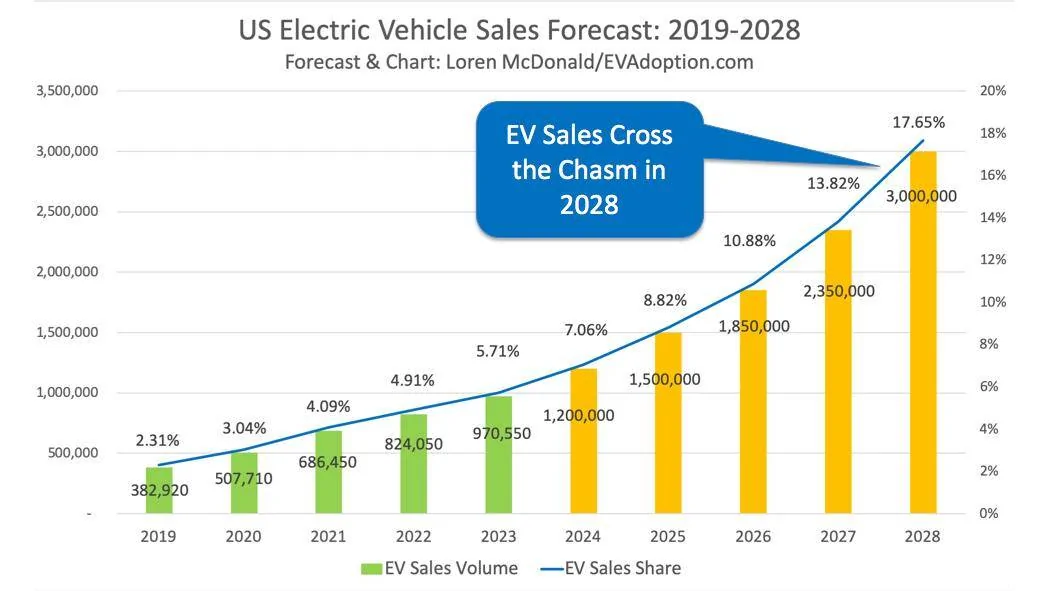
And not because of regulation - because of customer demand.
I really don't know anyone in my peer group who is not looking at a BEV as their next car. Rivian reservation holders, ID.4 reservation holders, folks waiting to see the EV F-150 and stretching out their current cars... I really think there is a supply shortage of EVs at the moment, and that it's only going to accelerate as costs come down further.
Sponsored