What’s ‘NORMAL’ for L3 charging speeds?

devmach-e

Well-Known Member
First Name
David
Joined
Sep 8, 2021
Threads
1
Messages
2,015
Reaction score
2,469
Location
SF Bay Area
Vehicles
2022 Premium RWD ER, 2016 Toyota Highlander Hybrid
Occupation
Unix Sysadmin
Country flag
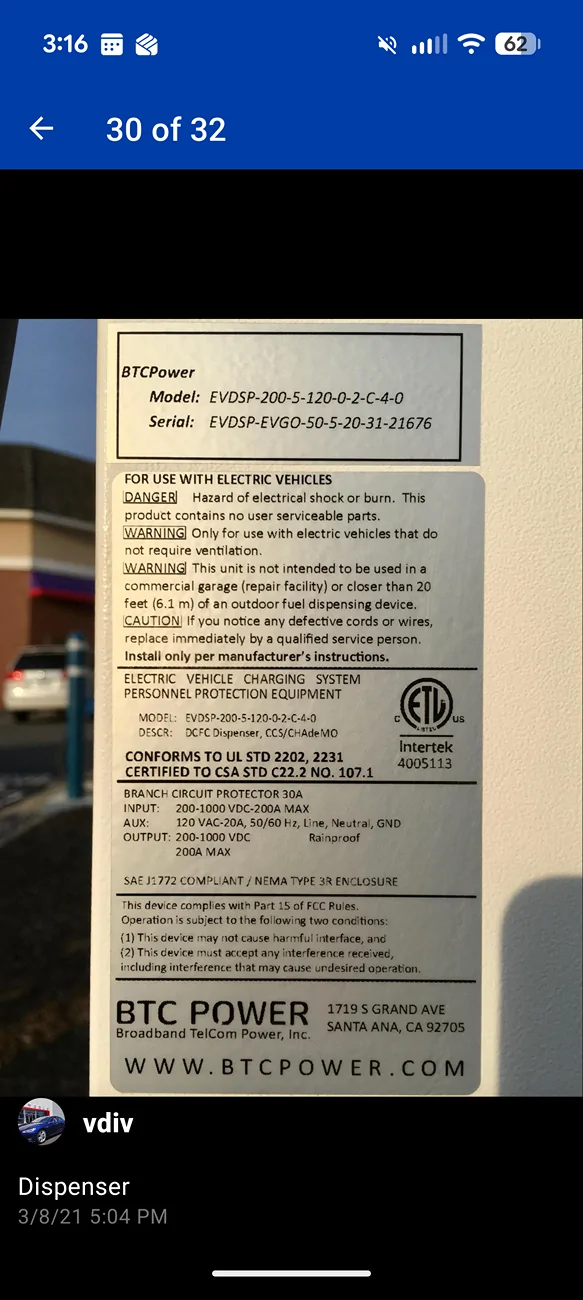
Here's a couple of examples. The EVgo pics are dated, but AFAIK still current as PS says they still have 200 kW dispensers. Edit - corrected the pic of the label

Page 6 here for ChargePoint, 250kW that does split.
https://docs.chargepoint.com/ref-docs-sec/content/pdfs/3-dc/express250/exp250-ds.pdf

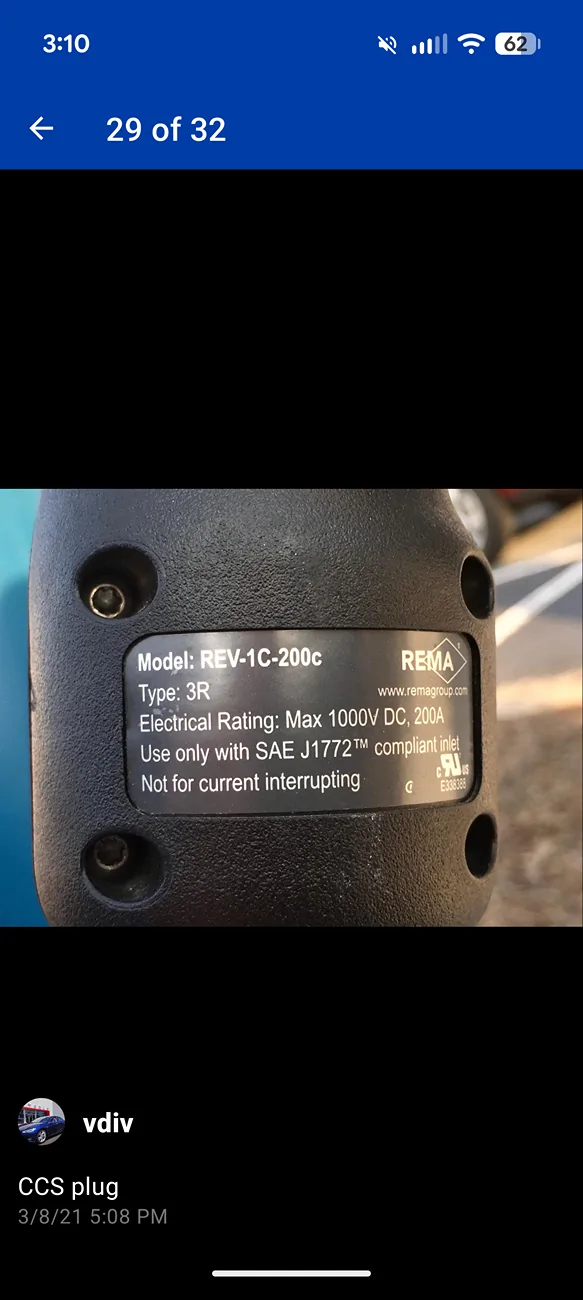
Screenshot_20260316-151002.webp


Screenshot_20260316-151628.webp
Thanks! Do keep in mind that in the last 5 years the capacities and capabilities of DC fast charging stations have evolved quite a bit. I know that ChargePoint has higher capacity stations available now. For instance, the 280 Express does up to 160 kW/250A, and the Express Plus goes up to 200 kW/375A. Clearly not all DC fast charging stations are the same (says the guy who used to deal with 50 kW stations with a Bolt EV).
Sponsored


cheerioboy26

Well-Known Member
First Name
Matt
Joined
Feb 29, 2024
Threads
1
Messages
108
Reaction score
82
Location
Pennsylvania
Vehicles
2023 Mach-E Premium AWD Ext.
Country flag
Thanks! Do keep in mind that in the last 5 years the capacities and capabilities of DC fast charging stations have evolved quite a bit. I know that ChargePoint has higher capacity stations available now. For instance, the 280 Express does up to 160 kW/250A, and the Express Plus goes up to 200 kW/375A. Clearly not all DC fast charging stations are the same (says the guy who used to deal with 50 kW stations with a Bolt EV).
Yes, agreed for sure. I just looked for two examples that I know are still out there in the wild. I used an Autel 240 kW DCFC last summer, but I think it had 400 amp cables so I at least got 125 kW or so.
 

devmach-e

Well-Known Member
First Name
David
Joined
Sep 8, 2021
Threads
1
Messages
2,015
Reaction score
2,469
Location
SF Bay Area
Vehicles
2022 Premium RWD ER, 2016 Toyota Highlander Hybrid
Occupation
Unix Sysadmin
Country flag
Yes, agreed for sure. I just looked for two examples that I know are still out there in the wild. I used an Autel 240 kW DCFC last summer, but I think it had 400 amp cables so I at least got 125 kW or so.
Last time we did a road trip, it was pretty much all Tesla SuperChargers with the adapter. Worked great.
 

E90alex

Well-Known Member
Joined
Feb 17, 2025
Threads
3
Messages
1,000
Reaction score
1,811
Location
Seattle, WA
Vehicles
‘25 MME GT
Related question:
With a Mach-E, is there *any* advantage to using a DCFC that is rated higher than 150kW? (Other than it's the only one available.)
The answer is *it depends*.

The kW rating of a charger is somewhat misleading without knowing how they arrived at that number.

For example a 150kW rated charger can be 1000Vx150A or 500Vx300A or various other combinations.

Usually the limiting factor is the amperage rating. The Mach-E needs approximately 400A to charge at maximum speeds.

So if the 150kW charger is amperage limited to say 200A then the fastest you’ll see on a Mach-E is about 75kW.
 

Gloff

Well-Known Member
First Name
Sean
Joined
Mar 26, 2021
Threads
6
Messages
340
Reaction score
581
Location
San Francisco
Website
www.serramonteford.com
Vehicles
2024 F150 Lightning, 2023 Mach E Extended Range, 2007 Mini Cooper Cab,
Occupation
Sales Manager
Country flag
My experience at EA stations has been Peak 120-150 depending on state of charge. Even on the 150kW cables, I've gotten the full boat. Some Stations are limited to 350A which should still be around 140kw


ESJB

Active Member
Joined
Feb 28, 2025
Threads
0
Messages
39
Reaction score
51
Location
Canberra, Australia
Vehicles
Select SR RWD 2023.75 (Aus)
The answer is *it depends*.

The kW rating of a charger is somewhat misleading without knowing how they arrived at that number.

For example a 150kW rated charger can be 1000Vx150A or 500Vx300A or various other combinations.

Usually the limiting factor is the amperage rating. The Mach-E needs approximately 400A to charge at maximum speeds.

So if the 150kW charger is amperage limited to say 200A then the fastest you’ll see on a Mach-E is about 75kW.
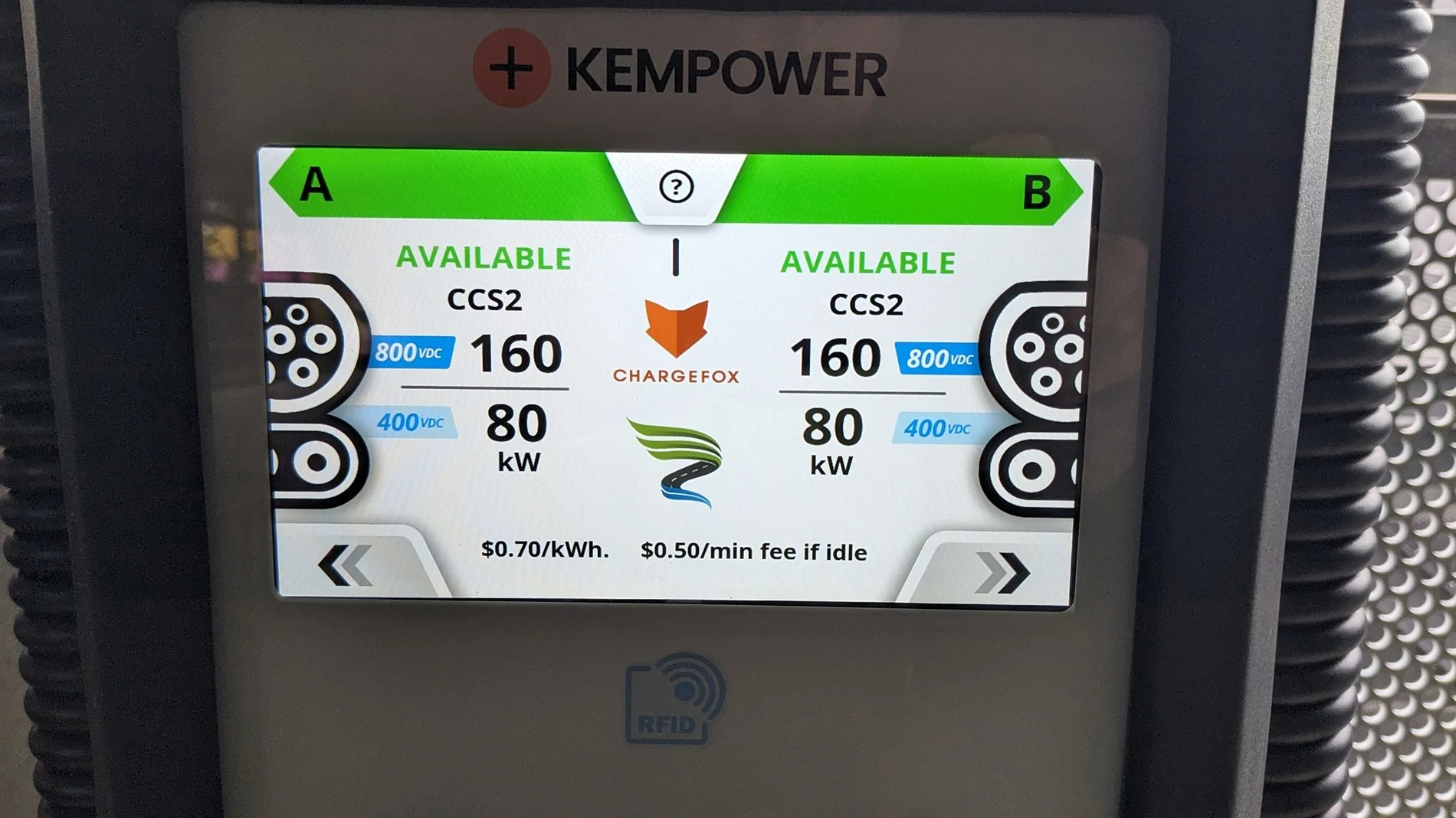
As an example: Here's a picture of a charger somewhere near me (random picture off Facebook -- and this is a CCS2 fast charger).

It's listed on the maps as "up to 160kW" but in reality for Mach-E you'd get 80kW. That's because the actual limit is 200A.

Ford Mustang Mach-E What’s ‘NORMAL’ for L3 charging speeds? 481043014_598005816549432_1478790242400534899_n
 
Last edited:

pikepilot

Well-Known Member
Joined
Mar 30, 2024
Threads
16
Messages
198
Reaction score
110
Location
New England
Vehicles
22 MME GT
Country flag
Interesting....was recently at a newer Rivian 300kw charger and I never got above a rate of 70 with the battery starting at 50 percent. Even with an outside temp of 45 and no precondition was expecting more.
 

celestial_knight

Well-Known Member
Joined
Sep 28, 2025
Threads
0
Messages
164
Reaction score
142
Location
United States
Vehicles
‘25 Mach E GT
The speed is modified to protect the battery. It is critical to do so

Even modern Teslas rarely charge at more than 200 kw/hr

It’s actually not good to do ultra fast (350 etc) as that will damage the battery more. However, time spent charging at “pretty fast” is still dangerous, and “pretty fast” takes longer than super ultra fast - but that’s when the difference we are taking about is 33% faster (ie 150 vs 200), not 200% faster (50 vs 150); in that case 50 is slow enough to be much safer and why the charging curve behaves that way

800 volt architecture (Ford and Tesla are 400v), advanced cooling and control may mean 350+ kw/hr becomes safer; not sure. Bears some investigating

Anyway, for practical purposes and less theory, only fast charge from about 15-25 percent (ideally closer to 25), to 60, never going over 60 through fast charging, as that puts an enormous strain on the battery, aging the battery (loses some capacity)

Too high or too low = bad. Too hot or too cold = bad. Always precondition for fast charging. If you’re uncomfortable, the battery is uncomfortable
 
Last edited:

Space_Pony

Well-Known Member
Joined
Jun 7, 2023
Threads
4
Messages
1,699
Reaction score
1,436
Location
Indiana
Vehicles
2023 Premium Mach-E awdX
Country flag
I’m a first-time EV owner and still getting used to L3 charging. When it was 25 degrees (F) here, I was getting 30-45KW at a Tesla charger. Last night at 62 degrees and 41% remaining charge, after driving 8 miles, my charge session started at 118KW but kept slowing down to eventually settle near 81KW. I pulled the plug at 81% charge and went home.

I wanted to precondition the batteries, but the Tesla location was not in the car’s public charging list; however, the location was visible in the Ford App. I successfully charged via BlueOval billing.

My question for the community is this: am I seeing typical charge speeds? I thought these cars could charge closer to 180KW.

Thanks in advance for your experience and tips!
My experience with L3 charging has taught me to avoid it if possible because of high prices and lines. Use your L2 charger at home in the garage.
 
OP
OP
inmyrightmind

inmyrightmind

Active Member
First Name
Matt
Joined
Dec 19, 2025
Threads
3
Messages
40
Reaction score
41
Location
Northern Ohio
Vehicles
2024 Mach-e Rally (white)
Occupation
retired
My experience with L3 charging has taught me to avoid it if possible because of high prices and lines. Use your L2 charger at home in the garage.
I completely agree. But sometimes I need a little extra juice when I’ve been out and about with some unexpected stops. That’s literally the only time that I use L3.

Additionally, I’ve used the Tesla superchargers after 9 PM where it’s around 35¢ per KWH. I’ve literally only used L3 chargers, three times (aside from a couple practice charges to learn how to use BlueOval charging) to grab an extra 20 to 50 KWH to assure that I have enough to get home with a 50 mile buffer.

Believe it or not I’ve been getting by on L1 charging since buying the car. Once the weather warms up a little more, I’ll be able to install my L2 charger in the garage. That will be a nice addition!
 

Fremont Kid

Well-Known Member
First Name
Steve
Joined
Oct 8, 2022
Threads
12
Messages
773
Reaction score
667
Location
Colorado Springs, CO
Vehicles
2022 Mustang Mach e Premium AWD
Occupation
Retired IT
Country flag
Related question:
With a Mach-E, is there *any* advantage to using a DCFC that is rated higher than 150kW? (Other than it's the only one available.)
Not really any advantage. Think of trying to push 10 gallons of water through a funnel that narrows to 8 oz. Only 8 oz. rate will get through.
 

Billyk24

Well-Known Member
First Name
William
Joined
Nov 29, 2019
Threads
116
Messages
2,307
Reaction score
1,295
Location
PA
Vehicles
Ford C-Max Energi, Premium Mach-E ordered
Country flag
Interesting....was recently at a newer Rivian 300kw charger and I never got above a rate of 70 with the battery starting at 50 percent. Even with an outside temp of 45 and no precondition was expecting more.
It is not the outside air temperature but battery temperature that strongly contributes to faster kW charging rates. That battery in the Mach E is too exposed allowing cold/cool air to rush over the top bottom and sides while you drive causing a drop in battery temperature.
 

kens

Well-Known Member
First Name
Ken
Joined
Jan 27, 2025
Threads
8
Messages
420
Reaction score
433
Location
IL, USA
Vehicles
2022 GT
I completely agree. But sometimes I need a little extra juice when I’ve been out and about with some unexpected stops. That’s literally the only time that I use L3.

Additionally, I’ve used the Tesla superchargers after 9 PM where it’s around 35¢ per KWH. I’ve literally only used L3 chargers, three times (aside from a couple practice charges to learn how to use BlueOval charging) to grab an extra 20 to 50 KWH to assure that I have enough to get home with a 50 mile buffer.

Believe it or not I’ve been getting by on L1 charging since buying the car. Once the weather warms up a little more, I’ll be able to install my L2 charger in the garage. That will be a nice addition!
Folks are too quick to dismiss level 1, it's likely sufficient for a good percentage of people. Not having L2 is often cited as a reason not to buy an EV, or as a large secondary expense when you do. While I plan to eventually add L2, I've been using L1 for a while and it's been plenty for my use.

Back to the OP, I used L3 exclusivity for my first few months, and have made a few multi-state road trips, so have done several dozen L3 charges. Typically see 150-160 at startup, but it quickly drops down, and as others have said if the pack is cold it'll suffer a slow charge.

Tesla and EA both have worthwhile memberships if your charging multiple times a month, though I just saw a price increase with EA here, so keep an eye on that. Ionna just opened here and seem to have the best prices around without a membership.
 

Elmst-e

Well-Known Member
Joined
Jan 9, 2023
Threads
21
Messages
106
Reaction score
233
Location
Kcarea
Vehicles
Mach-e premium
Country flag
Yes. Many DC fast chargers around 200 kW and under will only have cables rated at 200 amps. Since the Mach-E nominal voltage is around 360, the theoretical maximum in this case is 72000 watts, or 72 kw. An exception I know of is EA 150 kw chargers that have 350 amp cables, so you can charge at up to around 105 kW.

In order to reach the maximum charging curve (all other things like battery temp and preconditioning being equal), you need to use a Tesla Supercharger, or any other 350 kW or higher station, as they will generally have high enough amperage cables to make the math work.
I have found at EA sites, the 350kw chargers will deliver a consistently higher charge rate than the150kw chargers, though never above 150kw. As you say, probably because of the cable capacity. I always choose the highest rated charger at EA sites.
Sponsored


Top