
mkhuffman
Well-Known Member
- First Name
- Mike
- Joined
- Nov 19, 2020
- Threads
- 29
- Messages
- 6,878
- Reaction score
- 9,512
- Location
- Virginia
- Vehicles
- 2025 Rivian R1T Tri-Max, Jeep GC-L, VW Jetta

- Thread starter
- #1
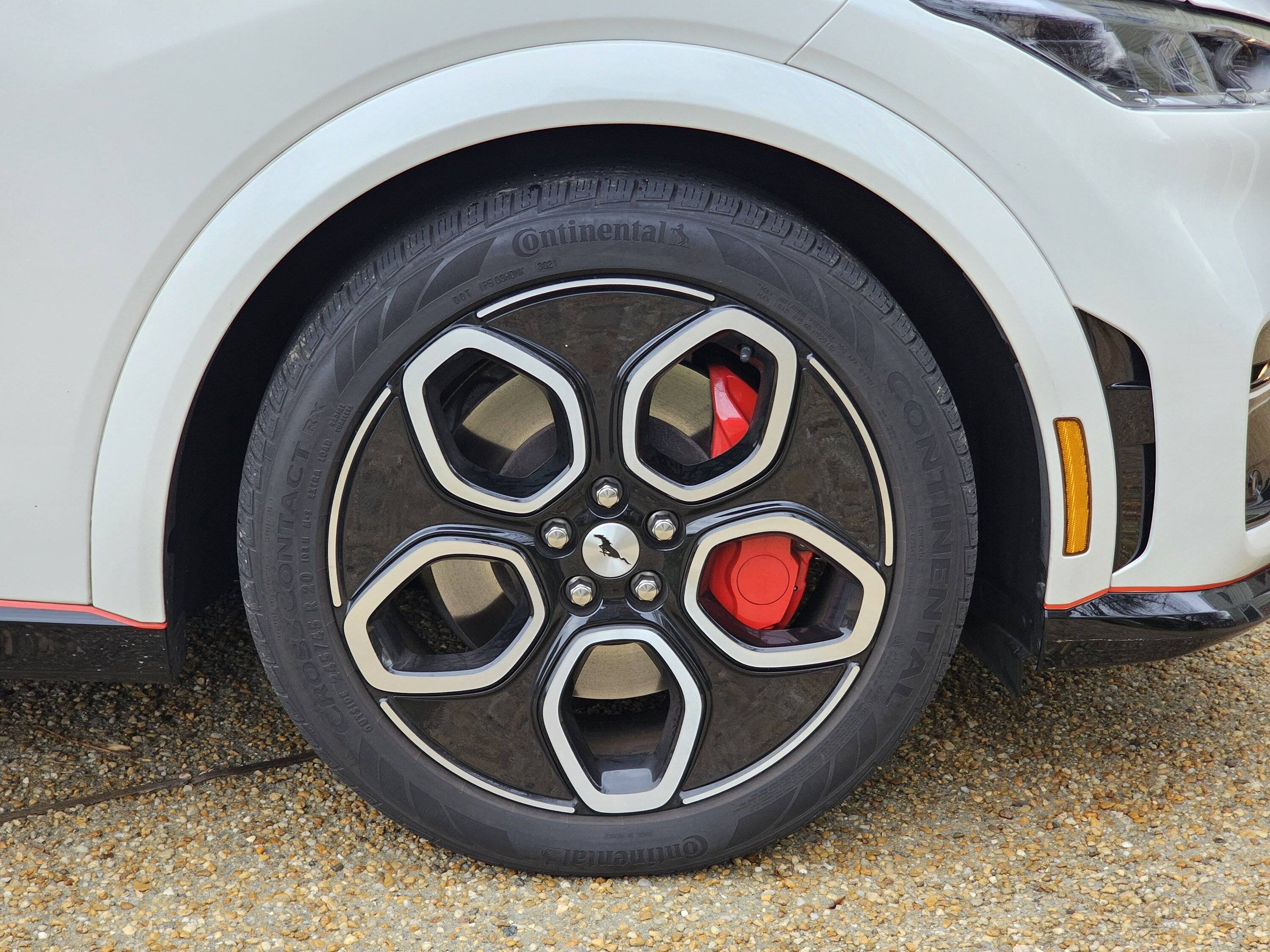
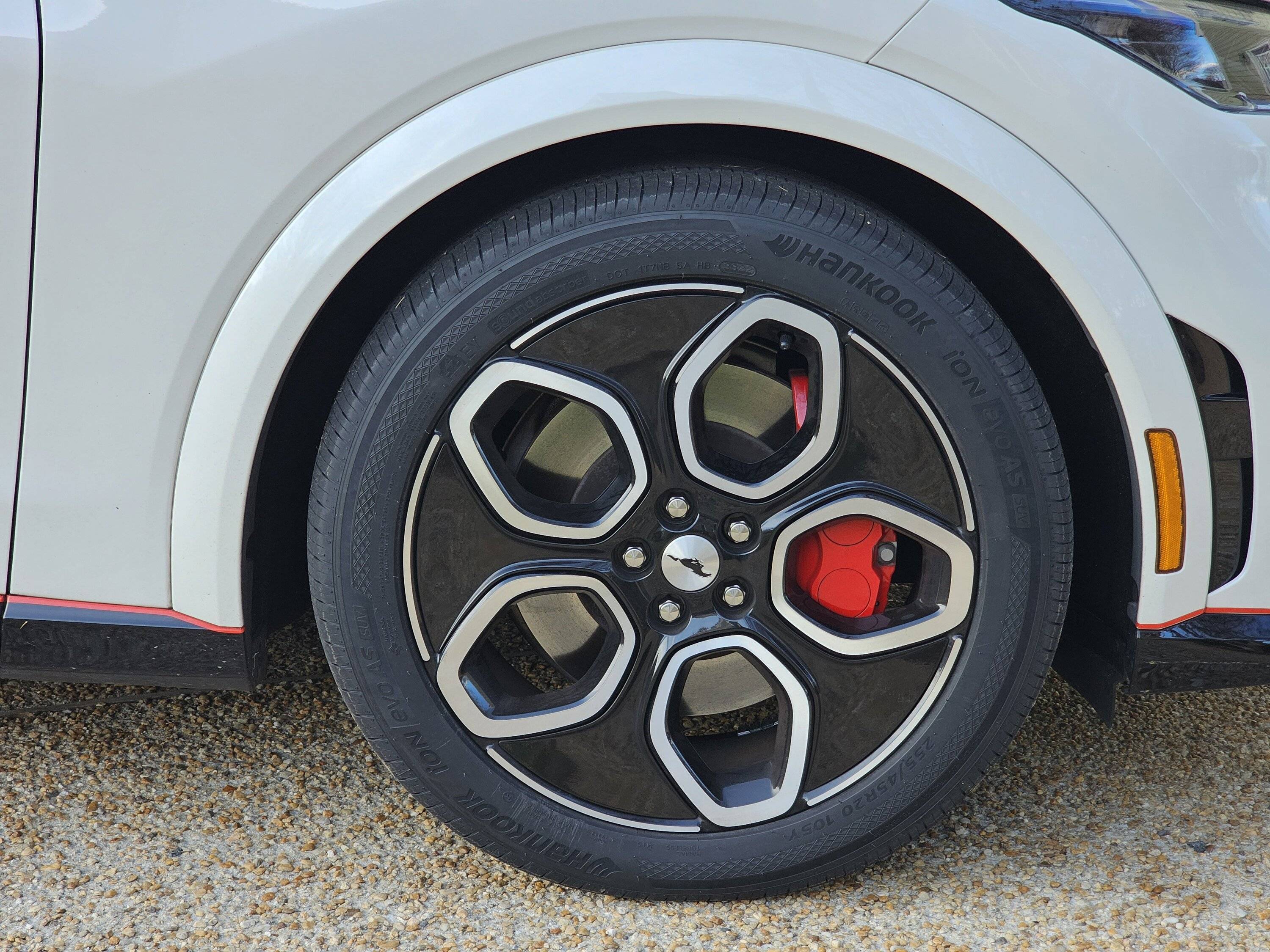
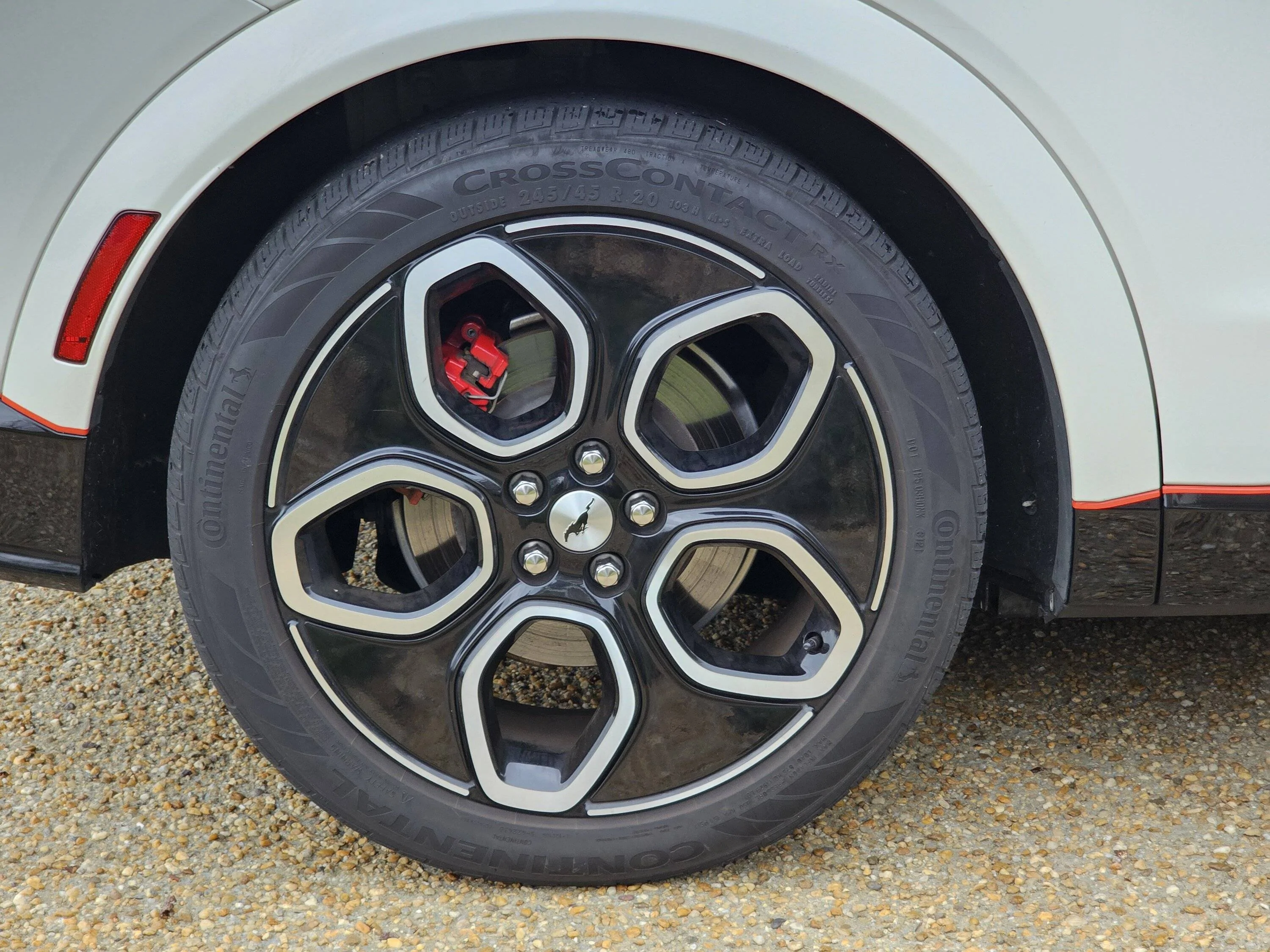
Some of you may be considering putting slightly wider tires on your GT, and I thought this post might help you decide. The OEM size is 245/45 20. I installed 255/45 20 Hankook ion EVO AS SUV tires.
I was hoping slightly larger tires would improve the quality of the ride, maybe even reducing some of the bounciness. Unfortunately, it did not reduce the bounciness, but ride quality is better.
I should qualify that: it has not so far at the same tire pressure I was running before, 41 psi. Because these tires have a higher load rating, I understand you can safely lower the pressure to 38 psi. I will try that after running them at 41 for a while, and post my impressions. (See below and other posts in the thread.)
I selected the new Hankook Ion tires because I was hoping for better efficiency, better handling, and a quieter ride. I have early impressions of the tires, but I'm going to hold off on those until I have more miles. I will say they are definitely quieter. The OEM tires had 39,000 miles on them so it might not be a fair comparison.
<<Real world efficiency results added further down.>>
245 OEM (front):

255 Hankook:
245 OEM (rear):
255 Hankook:
245 OEM:
255 Hankook:
I didnt take an equivalent OEM version of this Hankook picture:
As expected, the tire sidewall sticks out a little more than the OEMs, which looks better. However, the shorter sidewall on the 245 OEMs looks better, IMO. Oh well.
Also, the tread patten on the Hankook is like a touring tire, and isn't aggressive looking. I guess that is to be expected since that is really what the tire is.
Let me know if you have any questions.
Edit: adding additional info into the OP.
The speed difference between the two tire sizes was more than I expected. With the OEM tires the speed was actually 79 mph when the speedometer showed 80. Now the speed per my phone GPS sometimes shows 79 mph when the speedometer shows 78, and sometimes it matches. Which means it isn't a full 1 mph faster than the speedometer. It is closer to 0.5 mph, because it flips back and forth between being exactly right and 1 mph faster. Using this method, the size difference is 1.5/80 or 1.88%.
Using OBD data, the average speed per the car and GPS speed tracked by the phone, I get a more accurate estimate. According to that, the difference between the OEM and Ions with this size is 2.61%. Approximately.

The size difference also impacts efficiency readings, because now the car is traveling 2.61% more miles than it knows. So, the trip efficiency shown in the car is lower than it is in reality.
Efficiency:
To figure out if these tires are actually more efficient or not, I obviously could not rely on the trip computer. I think it is wrong anyway. In fact, the data I have proves it is wrong. It is a good measure relatively so you can compare between trips, but not as an absolute measurement. The trip display is significantly lower than reality, which could be by design. Maybe Ford engineers figured we would use it to calculate range, and they wanted it to be lower than reality. Who knows?
Anyway, I compared ten 80-mile drives over the exact same road, with very similar traffic, battery temperatures and speed. The trips are about as identical as you can get. Five of the trips are with the OEM tires, five with the slightly larger Ions.
I used OBD data, which IMO is the only way you can really figure out if a tire is more efficient or not.
Here are the results:
There are more miles on the OEM tires because I had to adjust for the incorrect odometer readings. I used 80 miles on the odometer, start to finish, and then adjusted the distance for the 2.61% size difference.
You can see that even though the average speed was higher in the Ion trips, and the average battery temp was lower, they still used less energy over a slightly longer distance. The calculated efficiency improvement based on this real data is 7.62%. That improvement is real, and it is significant.
By the way, for one of the Ion trips the tires were at 34 psi. And even that trip was more efficient than the four of the five OEM tire trips. I may do some more 34 psi testing to see the real impact, but I probably won't. I am happy with the comfort at 41 psi, and I plan to put the Eibach spring on anyway, which will eliminate the need to lower tire pressure.
Not only is range improved by 7.62% with these tires, they are more comfortable and quieter. These are the perfect tires for my use case - lots of highway driving.
Highly recommended!
A couple final thoughts:
I think it is possible the larger tires size has contributed to the efficiency improvement. It is a very small difference, but a taller sidewall means the rotational resistance of the wheel has probably decreased at the same GPS speed. So if you replace your OEM tires with the same size tire, you might not see the same improvement I have.
Also, this is a highway trip test at highway speeds. The results for city driving could be totally different. But I only care about highway efficiency, and it is very difficult to measure city efficiency in the real world anyway. There are way too many variables in stop and go traffic that impact efficiency.
And this comparison is only valid with the GT OEM tires. The Premium models (and others) will have totally different results. I think that is obvious, but just wanted to make it clear.
I was hoping slightly larger tires would improve the quality of the ride, maybe even reducing some of the bounciness. Unfortunately, it did not reduce the bounciness, but ride quality is better.
I should qualify that: it has not so far at the same tire pressure I was running before, 41 psi. Because these tires have a higher load rating, I understand you can safely lower the pressure to 38 psi. I will try that after running them at 41 for a while, and post my impressions. (See below and other posts in the thread.)
I selected the new Hankook Ion tires because I was hoping for better efficiency, better handling, and a quieter ride. I have early impressions of the tires, but I'm going to hold off on those until I have more miles. I will say they are definitely quieter. The OEM tires had 39,000 miles on them so it might not be a fair comparison.
<<Real world efficiency results added further down.>>
245 OEM (front):
255 Hankook:
245 OEM (rear):
255 Hankook:

245 OEM:

255 Hankook:
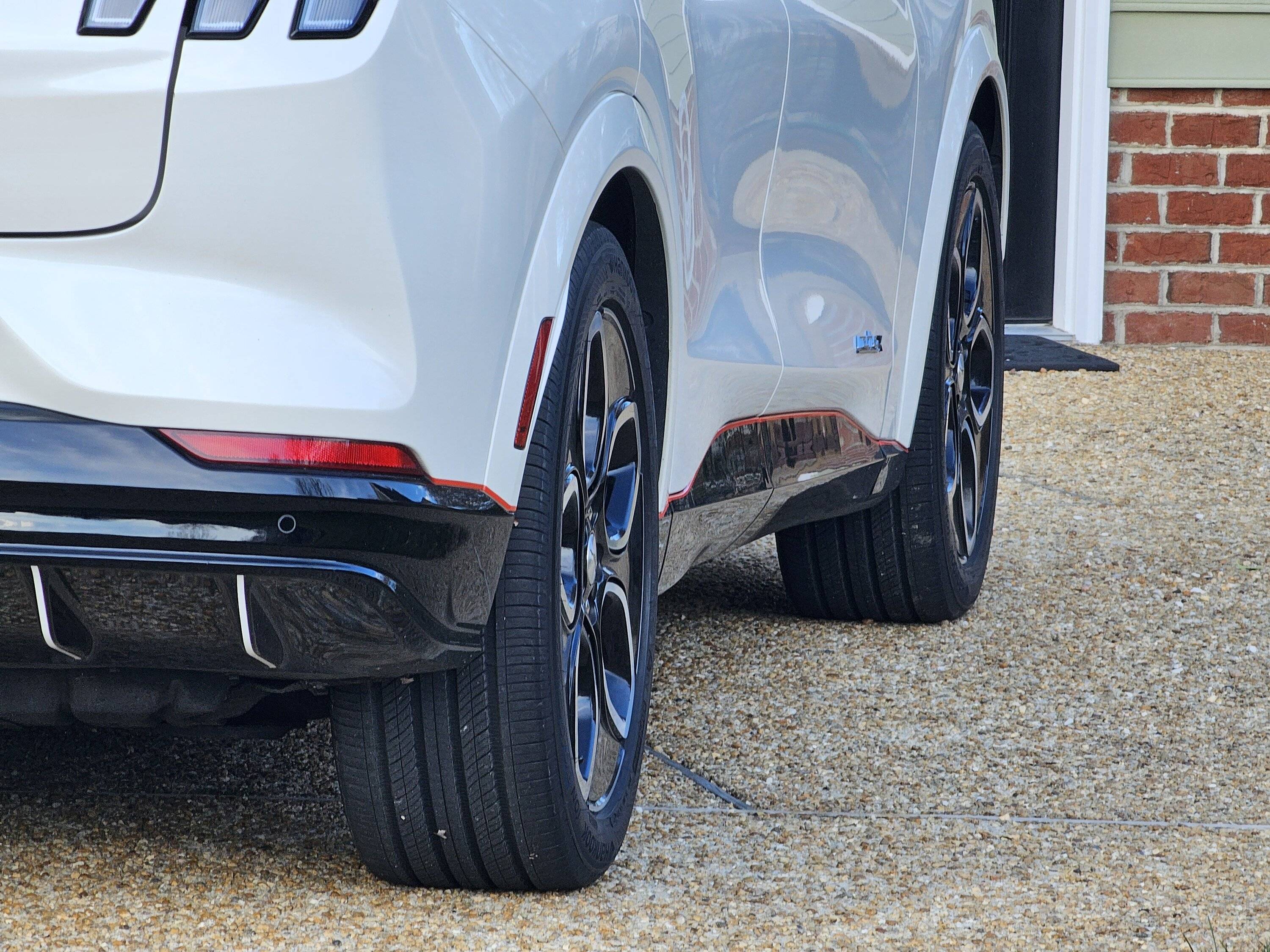
I didnt take an equivalent OEM version of this Hankook picture:
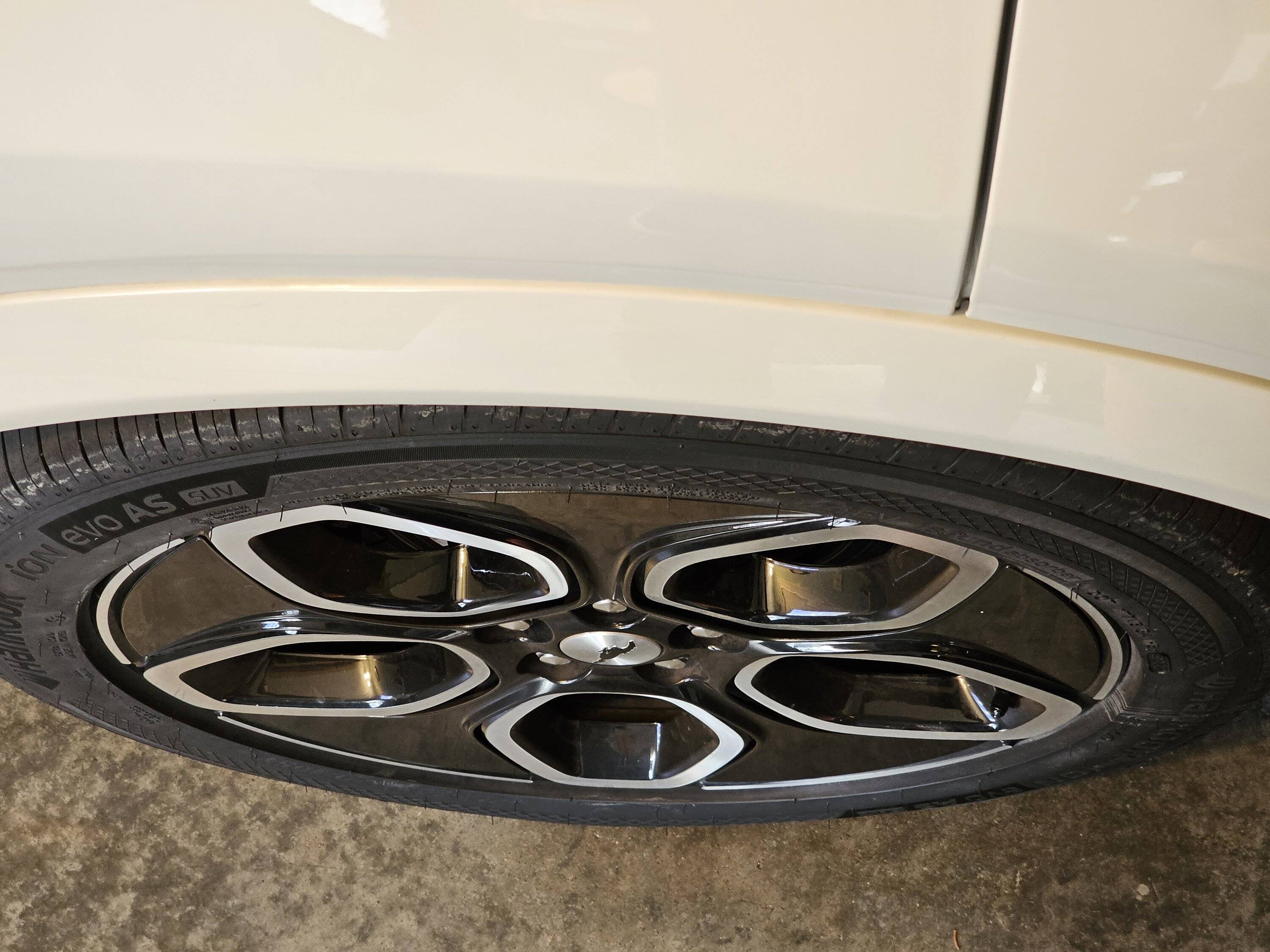
As expected, the tire sidewall sticks out a little more than the OEMs, which looks better. However, the shorter sidewall on the 245 OEMs looks better, IMO. Oh well.
Also, the tread patten on the Hankook is like a touring tire, and isn't aggressive looking. I guess that is to be expected since that is really what the tire is.
Let me know if you have any questions.
Edit: adding additional info into the OP.
The speed difference between the two tire sizes was more than I expected. With the OEM tires the speed was actually 79 mph when the speedometer showed 80. Now the speed per my phone GPS sometimes shows 79 mph when the speedometer shows 78, and sometimes it matches. Which means it isn't a full 1 mph faster than the speedometer. It is closer to 0.5 mph, because it flips back and forth between being exactly right and 1 mph faster. Using this method, the size difference is 1.5/80 or 1.88%.
Using OBD data, the average speed per the car and GPS speed tracked by the phone, I get a more accurate estimate. According to that, the difference between the OEM and Ions with this size is 2.61%. Approximately.
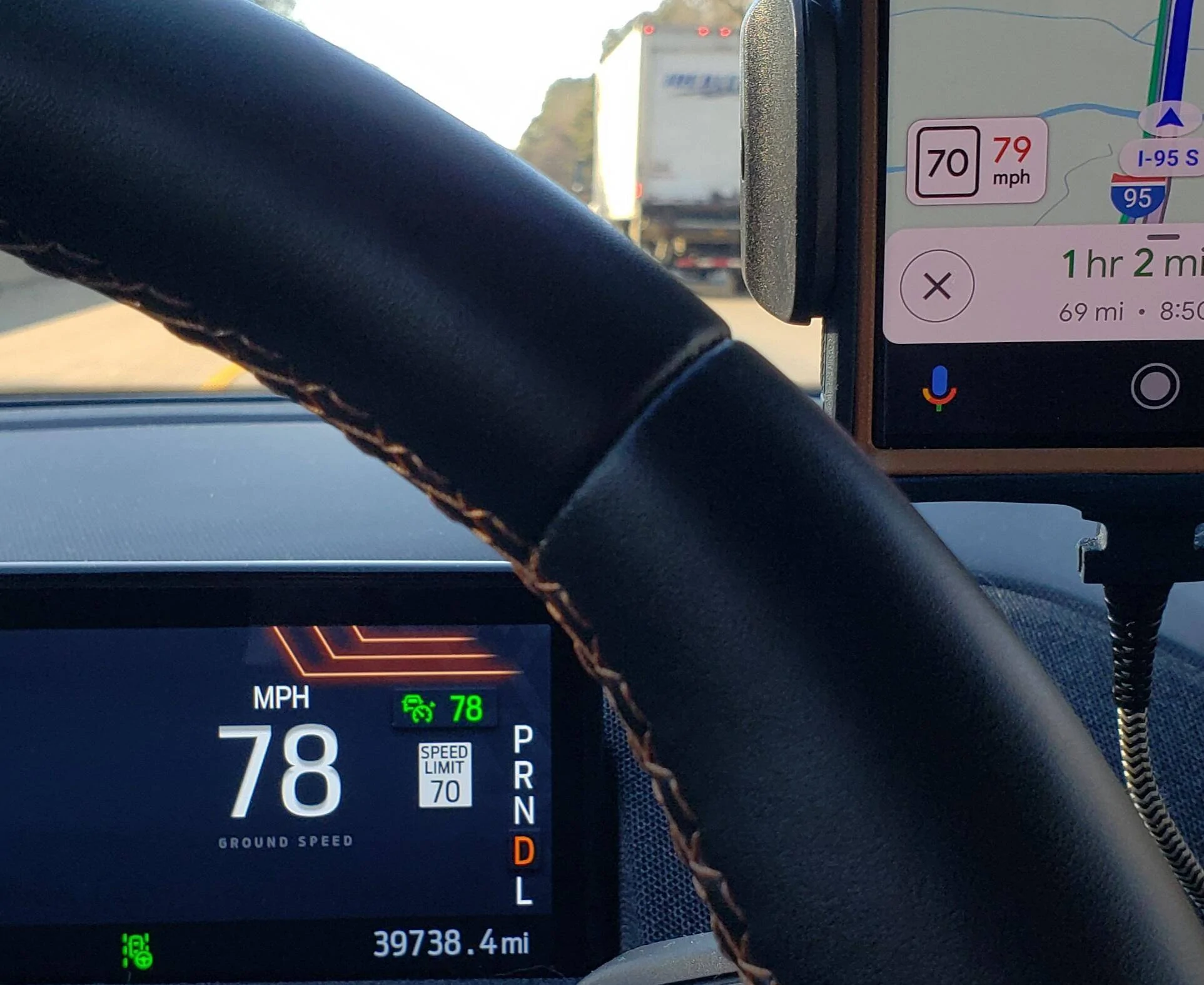
The size difference also impacts efficiency readings, because now the car is traveling 2.61% more miles than it knows. So, the trip efficiency shown in the car is lower than it is in reality.
Efficiency:
To figure out if these tires are actually more efficient or not, I obviously could not rely on the trip computer. I think it is wrong anyway. In fact, the data I have proves it is wrong. It is a good measure relatively so you can compare between trips, but not as an absolute measurement. The trip display is significantly lower than reality, which could be by design. Maybe Ford engineers figured we would use it to calculate range, and they wanted it to be lower than reality. Who knows?
Anyway, I compared ten 80-mile drives over the exact same road, with very similar traffic, battery temperatures and speed. The trips are about as identical as you can get. Five of the trips are with the OEM tires, five with the slightly larger Ions.
I used OBD data, which IMO is the only way you can really figure out if a tire is more efficient or not.
Here are the results:
| Miles Traveled | EtE Start | EtE End | Energy Used | Average HVB Temp | mi/kWh | Average Speed per OBD | Average Speed per GPS | Efficiency Improvement | |
| OEM Tires | 399.9729172 | 403.812 | 252.63 | 151.182 | 74.66 | 2.653 | 69.208 | 69.55 | |
| Hankook | 410.4664319 | 393.318 | 249.37 | 143.948 | 73.04 | 2.854793723 | 69.85070517 | 72.02 | 7.62% |
There are more miles on the OEM tires because I had to adjust for the incorrect odometer readings. I used 80 miles on the odometer, start to finish, and then adjusted the distance for the 2.61% size difference.
You can see that even though the average speed was higher in the Ion trips, and the average battery temp was lower, they still used less energy over a slightly longer distance. The calculated efficiency improvement based on this real data is 7.62%. That improvement is real, and it is significant.
By the way, for one of the Ion trips the tires were at 34 psi. And even that trip was more efficient than the four of the five OEM tire trips. I may do some more 34 psi testing to see the real impact, but I probably won't. I am happy with the comfort at 41 psi, and I plan to put the Eibach spring on anyway, which will eliminate the need to lower tire pressure.
Not only is range improved by 7.62% with these tires, they are more comfortable and quieter. These are the perfect tires for my use case - lots of highway driving.
Highly recommended!
A couple final thoughts:
I think it is possible the larger tires size has contributed to the efficiency improvement. It is a very small difference, but a taller sidewall means the rotational resistance of the wheel has probably decreased at the same GPS speed. So if you replace your OEM tires with the same size tire, you might not see the same improvement I have.
Also, this is a highway trip test at highway speeds. The results for city driving could be totally different. But I only care about highway efficiency, and it is very difficult to measure city efficiency in the real world anyway. There are way too many variables in stop and go traffic that impact efficiency.
And this comparison is only valid with the GT OEM tires. The Premium models (and others) will have totally different results. I think that is obvious, but just wanted to make it clear.
Sponsored
Last edited:


 ?
?