New Hyundai Ioniq 5N: More HP but Less Torque

ridgebackpilot

Well-Known Member
First Name
Michael
Joined
Mar 27, 2022
Threads
39
Messages
573
Reaction score
891
Location
Northern California
Vehicles
2022 MME GTPE; 2022 MME Premium ER
Occupation
Attorney
Country flag
Here's an interesting Car & Driver article on the new Ionic 5N, the performance edition of the Ionic 5.

Although it has far more HP than the GTPE (641 v. 480), it has far less torque (545 lb-ft v. 634 lb-ft). I wonder why?

Frankly, I find my GTPE a far more attractive vehicle than the Hyundai Ionic 5s I've seen at DC fast chargers over the past year. I won't be trading my MME in for this new Ionic 5N, especially if it has less torque!

To say nothing about the silly soundtracks and fake gearshifts available on the Ionic 5N. If I wanted loud engine sounds and a shifter, I'd buy an ICE Shelby Mustang...!
Sponsored

 

jgillmer

Well-Known Member
First Name
Joe
Joined
Jun 26, 2021
Threads
20
Messages
252
Reaction score
145
Location
Alexandria, VA
Vehicles
Shadow Black MME GT w Panoramic Roof & BlueAssist
Occupation
Nonprofit Executive
Country flag
I concur. I'll have to check the specs on volt build. That is one element that annoys me with the MME - the volt build means that charging is significantly slower, especially for EVGo stations that advertise a 200 kWh capability, but only possible w high volt build because they put cheap 198a cables on those stations (and charge by the minute.l to boot).
 
  • Like
Reactions: SWO

BigMach-E

Well-Known Member
Joined
Jul 15, 2021
Threads
58
Messages
1,436
Reaction score
1,645
Location
Bay Area
Vehicles
Mach-E GTPE Shadow Black 2021
Occupation
IT
Country flag
The Ionic 5n will performance-wise eat a GTPE for lunch in almost any metric, as will the TMYP, Polestar 2 Performance, TM3P, Kia EV6 GT. Amongst the “Performance” EVs in the price range, the MME GTPE is seriously lacking, but it does have great seats and looks really good.
 
OP
OP
ridgebackpilot

ridgebackpilot

Well-Known Member
First Name
Michael
Joined
Mar 27, 2022
Threads
39
Messages
573
Reaction score
891
Location
Northern California
Vehicles
2022 MME GTPE; 2022 MME Premium ER
Occupation
Attorney
Country flag
I concur. I'll have to check the specs on volt build. That is one element that annoys me with the MME - the volt build means that charging is significantly slower, especially for EVGo stations that advertise a 200 kWh capability, but only possible w high volt build because they put cheap 198a cables on those stations (and charge by the minute.l to boot).
Agreed; I suspect the Ionic 5N will retain the 800-volt architecture of Hyundai (and Kia), which makes charging potentially faster.

The other advance that I wish we had is superior battery cooling, which may eliminate the performance limits like those we live with...
 

ARK

Well-Known Member
Joined
Aug 21, 2020
Threads
45
Messages
2,938
Reaction score
4,297
Location
Los Angeles
Vehicles
'21 Premium SR AWD
Country flag
Although it has far more HP than the GTPE (641 v. 480), it has far less torque (545 lb-ft v. 634 lb-ft). I wonder why?
Perhaps it’s a battery temperature management issue - by keeping the torque down maybe they can eventually build to a lot more power than if they started off very strong with huge torque right off the bat.


Mach-Lee

Well-Known Member
First Name
Lee
Joined
Jul 16, 2021
Threads
262
Messages
11,381
Reaction score
25,066
Location
Wisconsin
Vehicles
2022 Mach-E Premium AWD
Occupation
Sci/Eng
Country flag
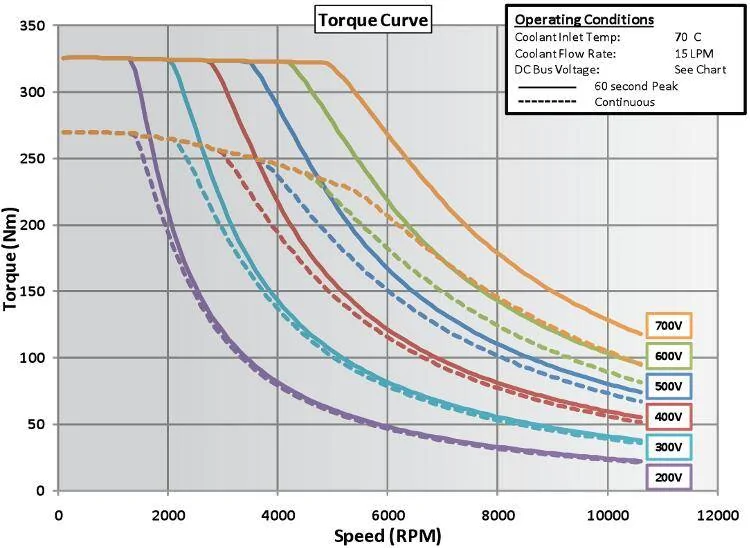
You have to be careful since it's peak torque. Mach-E has a lot of peak torque, but it lasts less than a second. Ioniq 5N has a slightly smaller motor with less peak torque, but due to higher voltage it can have sustained torque and more peak horsepower at higher speeds.

Ford Mustang Mach-E New Hyundai Ioniq 5N: More HP but Less Torque BorgWarner-HVH250-electric-motor-torque-curv


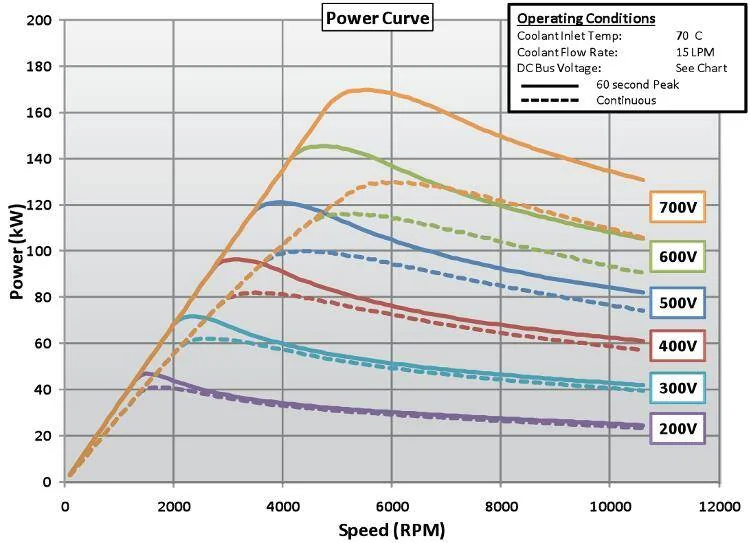
In the above torque curves, notice how higher voltage can maintain peak torque up to higher speeds. Since horsepower is the product of torque and speed, this means a higher voltage motor will have a higher horsepower peak:

Ford Mustang Mach-E New Hyundai Ioniq 5N: More HP but Less Torque BorgWarner-HVH250-electric-motor-power-curv


If you double the voltage, you can double the peak horsepower output with the same size motor. But the peak torque is the same.

So in summary, it's a function of the 800V architecture vs 400V architecture. The Ionic 4N can have 33% more horsepower even though its motor is 15% smaller because of the 800V.
 
Last edited:

Auto Motive

Banned
Banned
First Name
Doug
Joined
May 5, 2021
Threads
4
Messages
664
Reaction score
329
Location
Valencia Pa
Vehicles
2021 mustang mach e GT performance
Occupation
Retired
Country flag
I concur. I'll have to check the specs on volt build. That is one element that annoys me with the MME - the volt build means that charging is significantly slower, especially for EVGo stations that advertise a 200 kWh capability, but only possible w high volt build because they put cheap 198a cables on those stations (and charge by the minute.l to boot).
Agree and if they work at all. We have the GTPE and love it but traveling gives my wife so much anxiety to the next charger hoping it will work and hookup. We decided to get a new model Y AWD long range and glad we did. 300 miles highway at 65. No problem with charger availabilty and they work every time. 150 to 160 miles in 15 minutes. I now drive the GTPE and she loves her new Y. Still waiting for the 5 second power fix.
 

Hammered

Banned
Banned
Joined
Oct 4, 2022
Threads
26
Messages
1,303
Reaction score
1,175
Location
SE US
Vehicles
2022 PB F150, MME GTPE
Country flag
Still waiting for the 5 second power fix.
From publicly available info, it's the battery pack and is present in all of the MMEs as a function of amperage over time. The lower output of the particular model may take more abusing to get it to show up, but all MMEs will have the bars showing up.
 

JohnFoxeSheets

Well-Known Member
First Name
John
Joined
Jan 29, 2022
Threads
28
Messages
3,415
Reaction score
5,514
Location
San Francisco
Website
johnfoxesheets.com
Vehicles
2022 Iced Blue Silver Mach E GT
Occupation
Retired Engineer
Country flag
You have to be careful since it's peak torque. Mach-E has a lot of peak torque, but it lasts less than a second. Ioniq 5N has a slightly smaller motor with less peak torque, but due to higher voltage it can have sustained torque and more peak horsepower at higher speeds.

BorgWarner-HVH250-electric-motor-torque-curve.png


In the above torque curves, notice how higher voltage can maintain peak torque up to higher speeds. Since horsepower is the product of torque and speed, this means a higher voltage motor will have a higher horsepower peak:

BorgWarner-HVH250-electric-motor-power-curve.png


If you double the voltage, you can double the peak horsepower output with the same size motor. But the peak torque is the same.

So in summary, it's a function of the 800V architecture vs 400V architecture. The Ionic 4N can have 33% more horsepower even though its motor is 15% smaller because of the 800V.
Thank you Lee for this thorough explanation! Very helpful.

This all begs the question: are there any compelling reasons to design an EV with anything but 800V (or higher) architecture? I really wonder what are the downsides of 800V battery architecture? There must be some... But on the plus side they charge faster, (presumably) use less copper for the same power input/output, and have high peak horsepower, etc. And as I understand it, the actual battery cells are the same - it's just how they are wired in series that gets to the 800V architecture, right? What am I missing?
 

Mach-Lee

Well-Known Member
First Name
Lee
Joined
Jul 16, 2021
Threads
262
Messages
11,381
Reaction score
25,066
Location
Wisconsin
Vehicles
2022 Mach-E Premium AWD
Occupation
Sci/Eng
Country flag
Thank you Lee for this thorough explanation! Very helpful.

This all begs the question: are there any compelling reasons to design an EV with anything but 800V (or higher) architecture? I really wonder what are the downsides of 800V battery architecture? There must be some... But on the plus side they charge faster, (presumably) use less copper for the same power input/output, and have high peak horsepower, etc. And as I understand it, the actual battery cells are the same - it's just how they are wired in series that gets to the 800V architecture, right? What am I missing?
The downsides are greater costs for the high voltage components due to higher voltage rating required (e.g. gotta use 1000V capacitors instead of 400V ones) and greater component size to accommodate that. The likelihood of having a bad or low capacity cell in the pack is now doubled, so cell quality needs to increase 2x for the same reliability. There is also more cost from having more cell connections in the pack, more balancing circuits, etc.

It’s mostly good things, but a notch up in engineering and component costs. Yes some copper can be saved to balance some of that out. But the market is demanding the performance of 800V systems, so I see everyone going to those for their top-tier EVs. 400V will likely remain for budget $30k EVs.

Supply chain could be another reason, suppliers are still switching over to 800V components. Probably a year or two until there is a robust supply from a variety of companies. Hyuandi and Porsche were early adopters.
 

JohnFoxeSheets

Well-Known Member
First Name
John
Joined
Jan 29, 2022
Threads
28
Messages
3,415
Reaction score
5,514
Location
San Francisco
Website
johnfoxesheets.com
Vehicles
2022 Iced Blue Silver Mach E GT
Occupation
Retired Engineer
Country flag
The downsides are greater costs for the high voltage components due to higher voltage rating required (e.g. gotta use 1000V capacitors instead of 400V ones) and greater component size to accommodate that. The likelihood of having a bad or low capacity cell in the pack is now doubled, so cell quality needs to increase 2x for the same reliability. There is also more cost from having more cell connections in the pack, more balancing circuits, etc.

It’s mostly good things, but a notch up in engineering and component costs. Yes some copper can be saved to balance some of that out. But the market is demanding the performance of 800V systems, so I see everyone going to those for their top-tier EVs. 400V will likely remain for budget $30k EVs.

Supply chain could be another reason, suppliers are still switching over to 800V components. Probably a year or two until there is a robust supply from a variety of companies. Hyuandi and Porsche were early adopters.
Thank you Lee. That all makes sense! I hope Ford gets on the 800V train soon...
 

buzznwood

Well-Known Member
Joined
Nov 14, 2019
Threads
3
Messages
1,163
Reaction score
1,379
Location
california
Vehicles
focus st & GTPE
Country flag
Thank you Lee for this thorough explanation! Very helpful.

This all begs the question: are there any compelling reasons to design an EV with anything but 800V (or higher) architecture? I really wonder what are the downsides of 800V battery architecture? There must be some... But on the plus side they charge faster, (presumably) use less copper for the same power input/output, and have high peak horsepower, etc. And as I understand it, the actual battery cells are the same - it's just how they are wired in series that gets to the 800V architecture, right? What am I missing?
400v is going to become the pushrods tech of EVs. 800v and beyond is the future of the tech. This does not mean 400v will not continue to be used but chances are 400v will start to be reserved for the lower level entry level vehicles and city cars where affordability is a higher propriety than needing a huge range with a massive battery and the fastest possible dc charging.

Hyundai & Kia have shown that 800v is no longer for premium manufactures, it does takes a while for manufactures to shift gears so there will be plenty of models that are due soon sill using 400v but to be competitive going forward in the 300+ miles of range bracket then switching to 800v is a no brainer.

The elephant in the room though is tesla with everyone jumping on board the ncas connector of which there are ZERO v4 superchargers that support 1000v using ncas and just because tesla has a pdf that says it supports 1000v it means nothing as they have also shown a roadster that has yet to materialize. If there is a slow roll out of 4v supercharges then 400v may hang around for a lot longer than needed :(
Sponsored


Top