OP
OP

Mach-Lee
Well-Known Member
- First Name
- Lee
- Joined
- Jul 16, 2021
- Threads
- 262
- Messages
- 11,366
- Reaction score
- 25,029
- Location
- Wisconsin
- Vehicles
- 2022 Mach-E Premium AWD
- Occupation
- Sci/Eng

- Thread starter
- #76
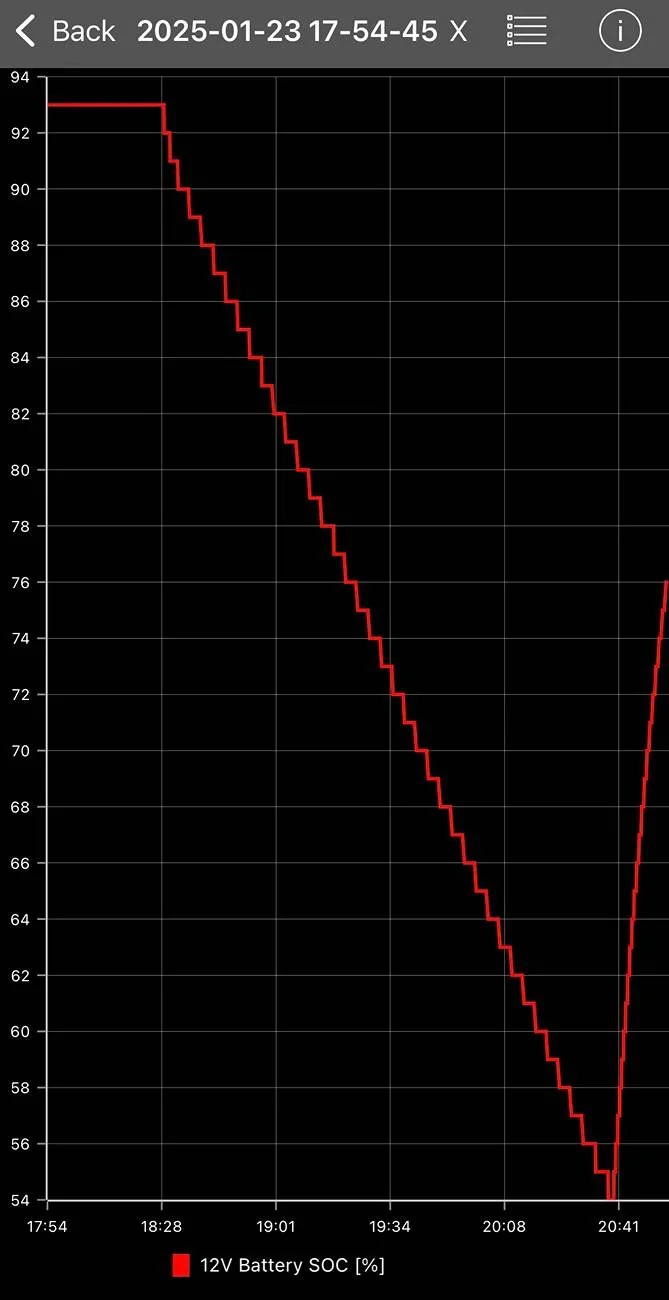
It's very possible the threshold may be affected by battery temperature, rate of draw, or even minimum threshold voltage regardless of SoC. That's how I'd do it to make it smarter. In the winter the LVB should be maintained at a higher level the colder it gets. May have to do some more tests when it's warmer.If you can create a policy taking into account temperature, that would be better. Not sure why you wouldn't, as cold weather effects are also important....
In reality, I think we're all willing to take higher numbers, for reliability, but the reality is we give up things - like losing electrons to firing up the main systems & potentially warming the HVB - and potentially LVB long term health. Reliability is also improved because greater "distance" between when the front 12v frunk popping terminals are active, and the normal SOC.
Anyway, seems a generally good fix, although it would have seemed to me that 45% would have been "good enough".... but certainly 0.0001% getting stuck and not being able to pop the frunk is bad, when you're that person....
Yes, battery has to cycle a little bit to establish the capacity. But the delta V on an AGM is quite high such that a 90% to 50% discharge a couple times should provide plenty of capacity data.The problem is not to determine what percentage is the correct value, but to know what 1% really means. The capacity will change depending on a lot of factors, so 50% one day may mean 100Wh, the other day it might be 80Wh.
To figure this out the BMS needs to monitor charging and discharging over time and make tables depending on temperature, current draw and to calculate degradation. If the battery never is discharged it will never know what 50% means. If the car is parked in a heated garage all day it might never know how low temperature affects it since it will always be charged to 100% when it is cold.
This system is probably really made for start stop systems where it needs to calculate if it can stop the engine and still be able to start again, and might not be suitable at all to monitor battery charge level over several days.
In battery systems like UPSes and memory saying devices there is a programmed full discharged cycle every month to measure and test the full capacity. There is no such thing in a car for obvious reasons, so having this 50% discharge limit is probably to try to have this cycle even when it cannot reach 100% discharge. The lower percent it can discharge to the more it will be able to calculate the full capacity, so there is a tradeoff there which is probably why they choose to to set the limit lower in the first place
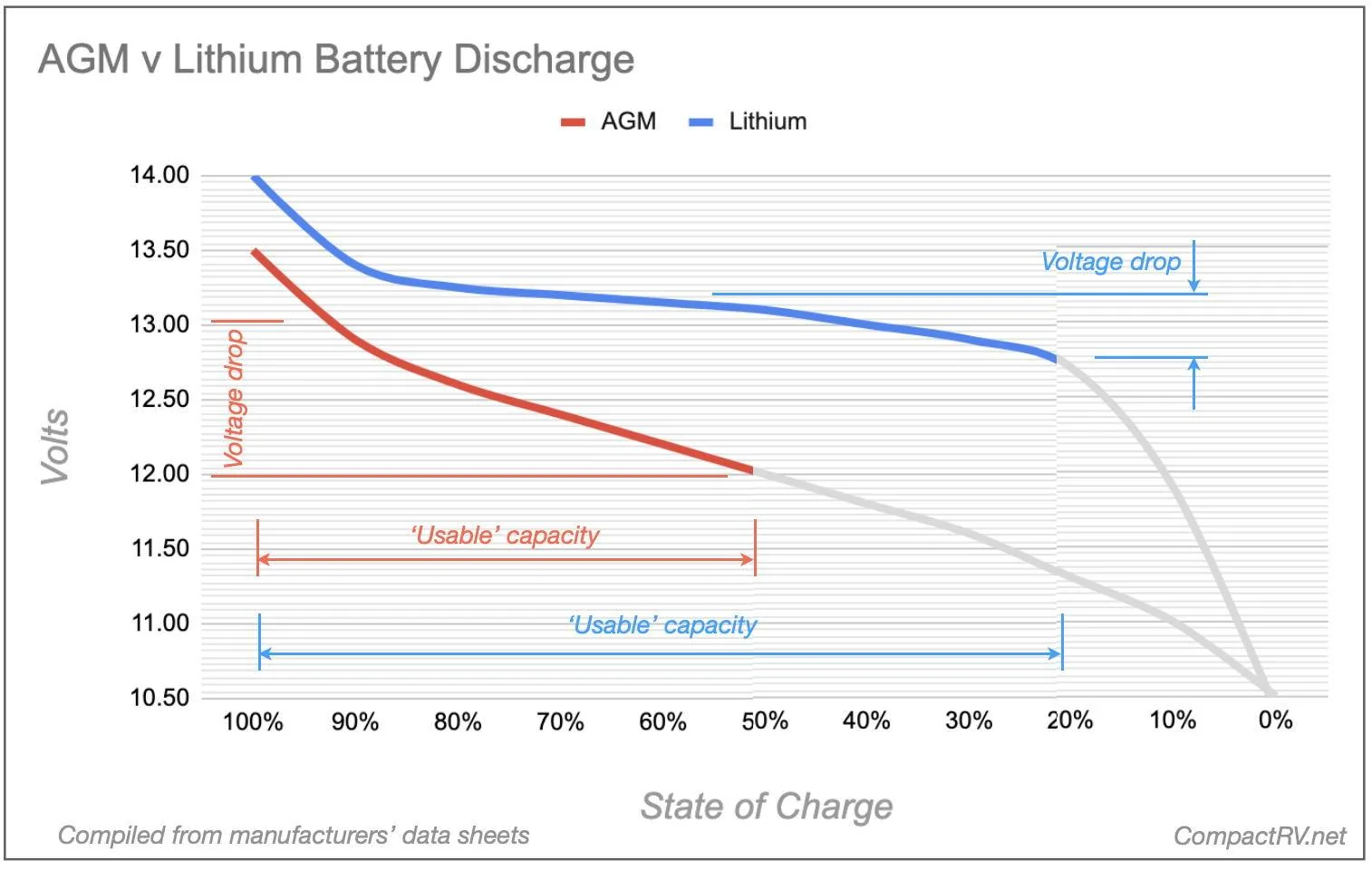
And yes this is the same battery sensor system carried over from start/stop vehicles, but it does also track SoC over days. It makes a measurement every 15 minutes while the car is sleeping (voltage and SoC).
Sponsored