
mkhuffman

Well-Known Member
First Name
Mike
Joined
Nov 19, 2020
Threads
29
Messages
6,875
Reaction score
9,507
Location
Virginia
Vehicles
2025 Rivian R1T Tri-Max, Jeep GC-L, VW Jetta
Country flag
To keep things simple for non-techies, let's just say below 10% indicated. If you want to run it down to below 10% real SoC that would be slightly better.
OK. I am actually doing that and then will let the car sit over night.
Sponsored


AlpaChino

Well-Known Member
First Name
JB
Joined
May 4, 2021
Threads
44
Messages
780
Reaction score
1,927
Location
Indiana
Vehicles
2025 Kia EV9 Land
Country flag
I plan to go through this procedure in the spring. For now, my state of health in Carscanner shows 96%. I have 26k miles, charge to 90% daily and typically charge to 100% only if I'm taking the vehicle out for an extended trip within two hours of reaching 100%, and happens at most twice a month. I've used DCFC 14 times and never DC fast charged past 85%.

Is 96% SOH at this point for a job 1 2021 sound about right? Extrapolating that out, I'd be down 13% in 5 years of ownership, at approximately 86k miles.
 
OP
OP
Mach-Lee

Mach-Lee

Well-Known Member
First Name
Lee
Joined
Jul 16, 2021
Threads
262
Messages
11,345
Reaction score
24,967
Location
Wisconsin
Vehicles
2022 Mach-E Premium AWD
Occupation
Sci/Eng
Country flag
Is 96% SOH at this point for a job 1 2021 sound about right? Extrapolating that out, I'd be down 13% in 5 years of ownership, at approximately 86k miles.
I think that’s right on track, a loss of about 2% per year is expected. Degradation happens faster when the pack is new before leveling off the rest of the pack life.
 

mkhuffman

Well-Known Member
First Name
Mike
Joined
Nov 19, 2020
Threads
29
Messages
6,875
Reaction score
9,507
Location
Virginia
Vehicles
2025 Rivian R1T Tri-Max, Jeep GC-L, VW Jetta
Country flag
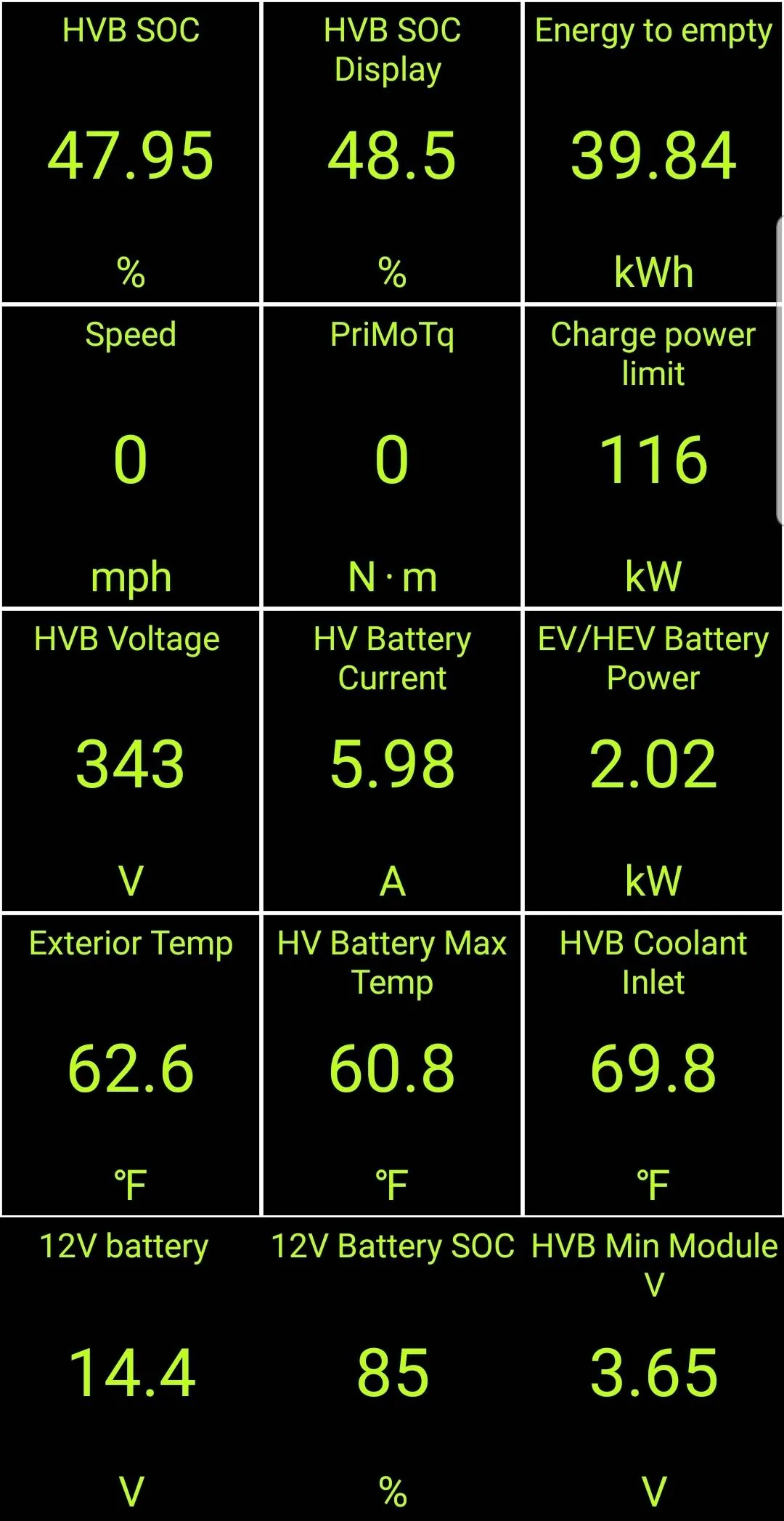
I did the procedure.

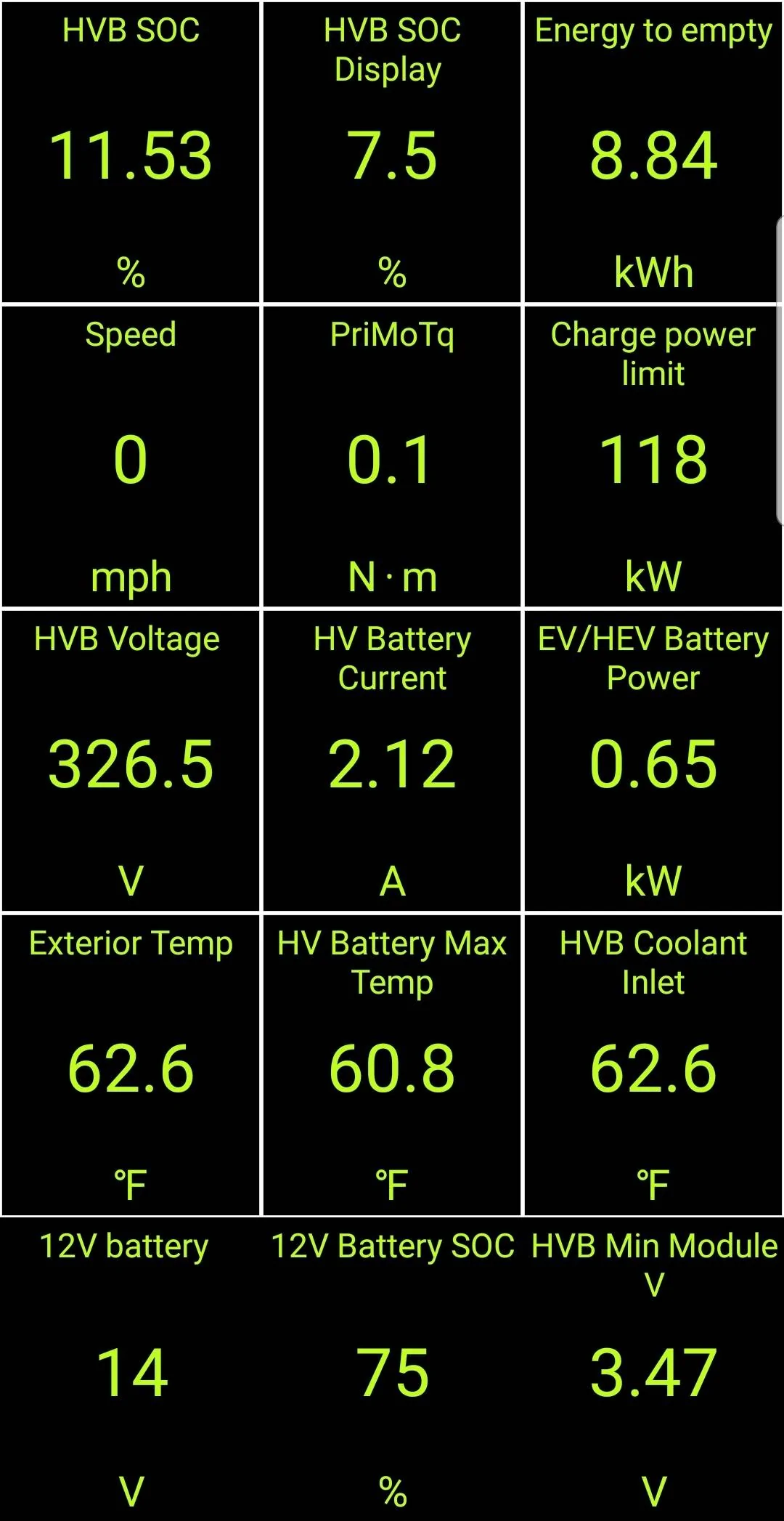
I ran the battery down to around 7.5% SoCD:
Ford Mustang Mach-E HV Battery Calibration Procedure Screenshot_20221203-062436


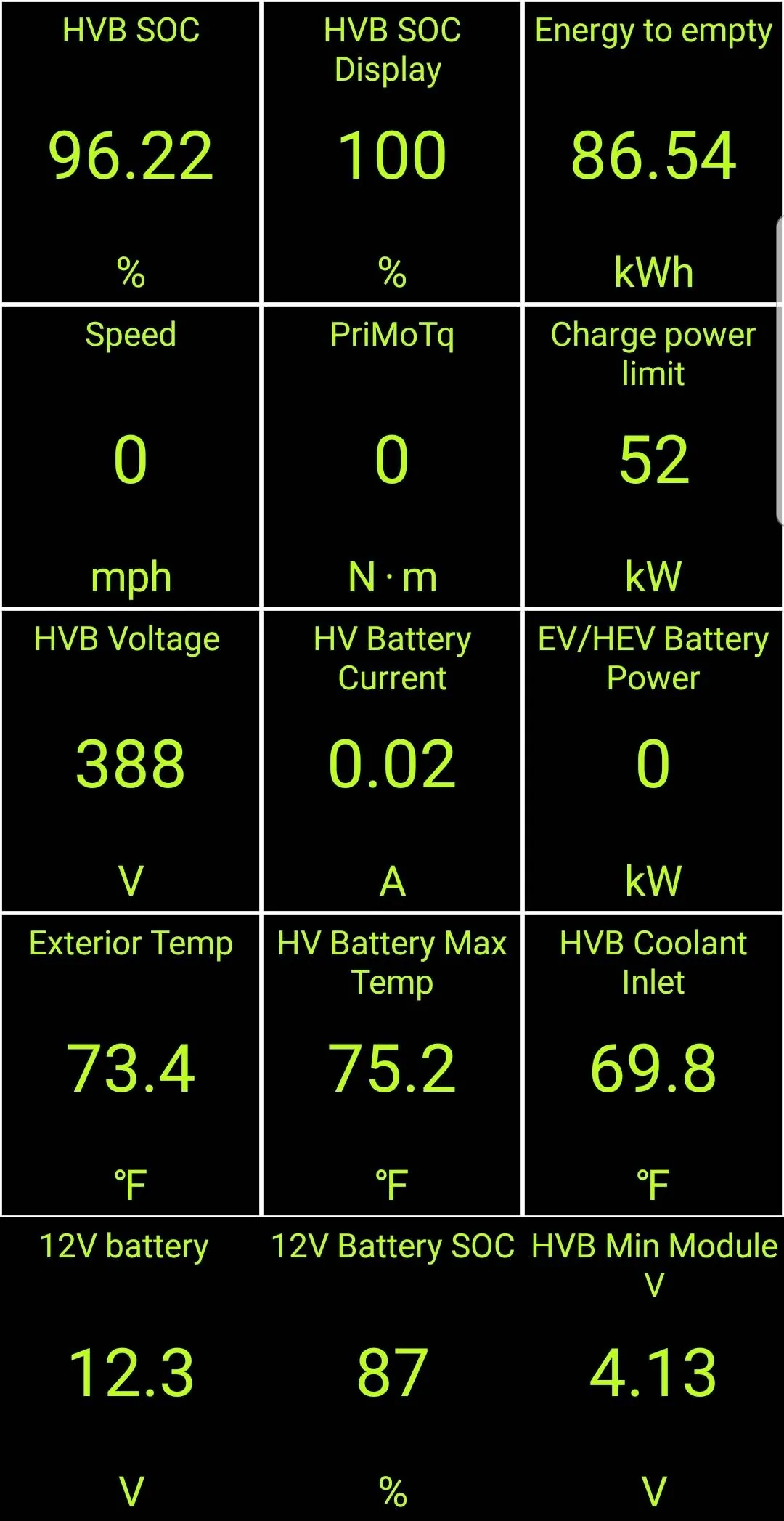
I charged it up to 100% SoCD:
Ford Mustang Mach-E HV Battery Calibration Procedure Screenshot_20221203-154905


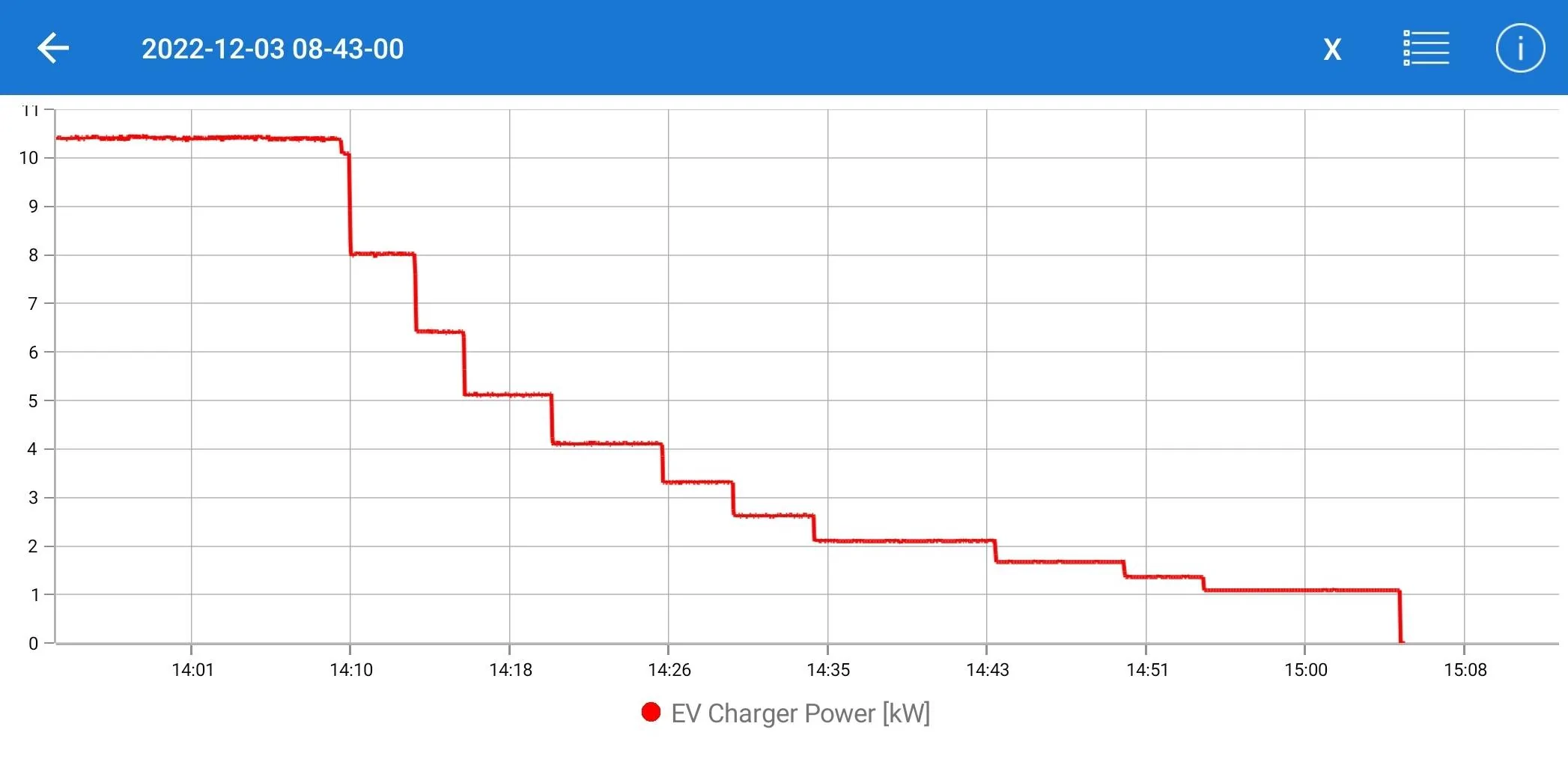
FYI - it took about an hour to get the last few percent up to 100% SoCD:
Ford Mustang Mach-E HV Battery Calibration Procedure Screenshot_20221204-174005


I ran it back down to just below 50%. But I had to charge because I am going out of town or I would have run it lower.

At every step I checked the SoH and it never waivered from 94.5%. It really bothers me that others with more miles have much higher SoH.

Ford Mustang Mach-E HV Battery Calibration Procedure Screenshot_20221204-174323
 
OP
OP
Mach-Lee

Mach-Lee

Well-Known Member
First Name
Lee
Joined
Jul 16, 2021
Threads
262
Messages
11,345
Reaction score
24,967
Location
Wisconsin
Vehicles
2022 Mach-E Premium AWD
Occupation
Sci/Eng
Country flag
I did the procedure.

I ran the battery down to around 7.5% SoCD:
Screenshot_20221203-062436.webp


I charged it up to 100% SoCD:
Screenshot_20221203-154905.webp


FYI - it took about an hour to get the last few percent up to 100% SoCD:
Screenshot_20221204-174005.webp


I ran it back down to just below 50%. But I had to charge because I am going out of town or I would have run it lower.

At every step I checked the SoH and it never waivered from 94.5%. It really bothers me that others with more miles have much higher SoH.

Screenshot_20221204-174323.webp
Thanks for the attempt and report Mike. I'm also surprised the health didn't change at all, that seems like it should change slightly either direction just due to measurement noise. But your 100% 86.5 kWh/91 kWh = 95% which is real close to what it says for SOH. So not sure what to say here, it seems your BMS was already in good calibration or takes much longer to adjust. ?‍♂


Kamuelaflyer

Well-Known Member
First Name
Bill
Joined
Feb 18, 2020
Threads
11
Messages
11,313
Reaction score
22,864
Location
Hawaii
Vehicles
2021 Premium Infinite Blue. ER AWD. 2020 Raptor, 2021 Ranger.
Country flag
First, let me say this is somewhat controversial, as there is no official procedure from Ford for this. However I think it helps to do this periodically, especially in vehicles that don't get the pack exercised very regularly. As in most of my articles, nerd content warning applies here, just focus on the procedure below if you aren't one.

Background: Like virtually all lithium-ion battery systems, the Mach-E uses a battery management system (BMS) to estimate the amount of energy in the battery pack, which is used to display the state of charge % and the range. The system does a pretty good job, but over time the calibration of the BMS can drift, especially in vehicles where the battery is always kept in the middle of the range (which is good battery practice). This can cause the capacity estimate to become more inaccurate with time, which affects the displayed % and range. Most BMS systems are programmed to be conservative, which means the capacity and range is typically underreported when the BMS has drifted. Similar battery calibration procedures have been successful in improving range estimates in other EVs such as Teslas.

Please Note: The displayed range on the Mach-E GOM is heavily affected by driving habits and outdoor temp, BMS calibration is a much smaller factor compared to these. Do not do this just because your range dropped suddenly, that's almost certainly because the outdoor temp decreased and calibration will not help that. Range drop due to temps below 55ÂşF is perfectly normal has been well documented elsewhere on the forum.

Benefit: You may see a 1-6% capacity/range indication improvement (not verified or guaranteed) after a BMS calibration.

It's important to understand that performing a BMS calibration does not physically restore lost battery capacity (which is gone forever), it merely updates the computer estimate of capacity only so that it is more accurate. The battery has whatever intrinsic capacity is currently has regardless of what anyone says, does, or thinks (including the GOM), so you could argue it's best to not think about BMS drift and just go about life unless you are concerned with accuracy.

Disadvantage: Performing a battery calibration involves pushing the pack to extreme states of charge, which can degrade it very slightly each time. Therefore you should only perform this procedure sparingly. If you are ultra-concerned about your battery health and feel like you have plenty of range, then don't do this.

I recommend you perform this procedure every 6 months, especially if you never charge to 100%. Every spring and fall is a good time. It's not necessary if you take regular trips where you hit extremes of charge.

Procedure:
  1. Charge the vehicle to your normal level (e.g. 90%).
  2. Drive the vehicle until the battery is down to 10% or less.
  3. Park the vehicle and let the battery rest for at least 5 hours (preferably overnight)
  4. Level 2 charge all the way to 100% in one session without interruption.
  5. Leave the vehicle plugged in and let the battery rest for 2 hours after 100% is reached.
  6. (Optional) With a scan tool, read the kWh to empty and state of health parameters.
  7. Drive without charging until battery is below 50% (10-20% recommended)
  8. Charge the vehicle back up to your normal level.
It's fine if you do this over a period of days, just observe the steps and don't charge in between. FYI it can take several hours to charge from 95-100% if the pack is out of calibration, so plan for an extra long time to reach 100%. Do not use remote start or preconditioning during calibration. The rest periods (bold) at low and high SoC are very important to wait for so the BMS has time to read all the cell voltages accurately. It's best to do this when the temperatures are moderate (55-85ÂşF) in the spring and fall. Try to drive moderately, avoid heavy accelerations while calibrating. Parking the vehicle overnight at 10% will not harm the battery, the cell voltages are still plenty high so nothing detrimental will happen. After you charge to 100% and wait 2 hours, you do want to drive the vehicle so it doesn't sit at 100% for longer than necessary since that is stressful on the cells.

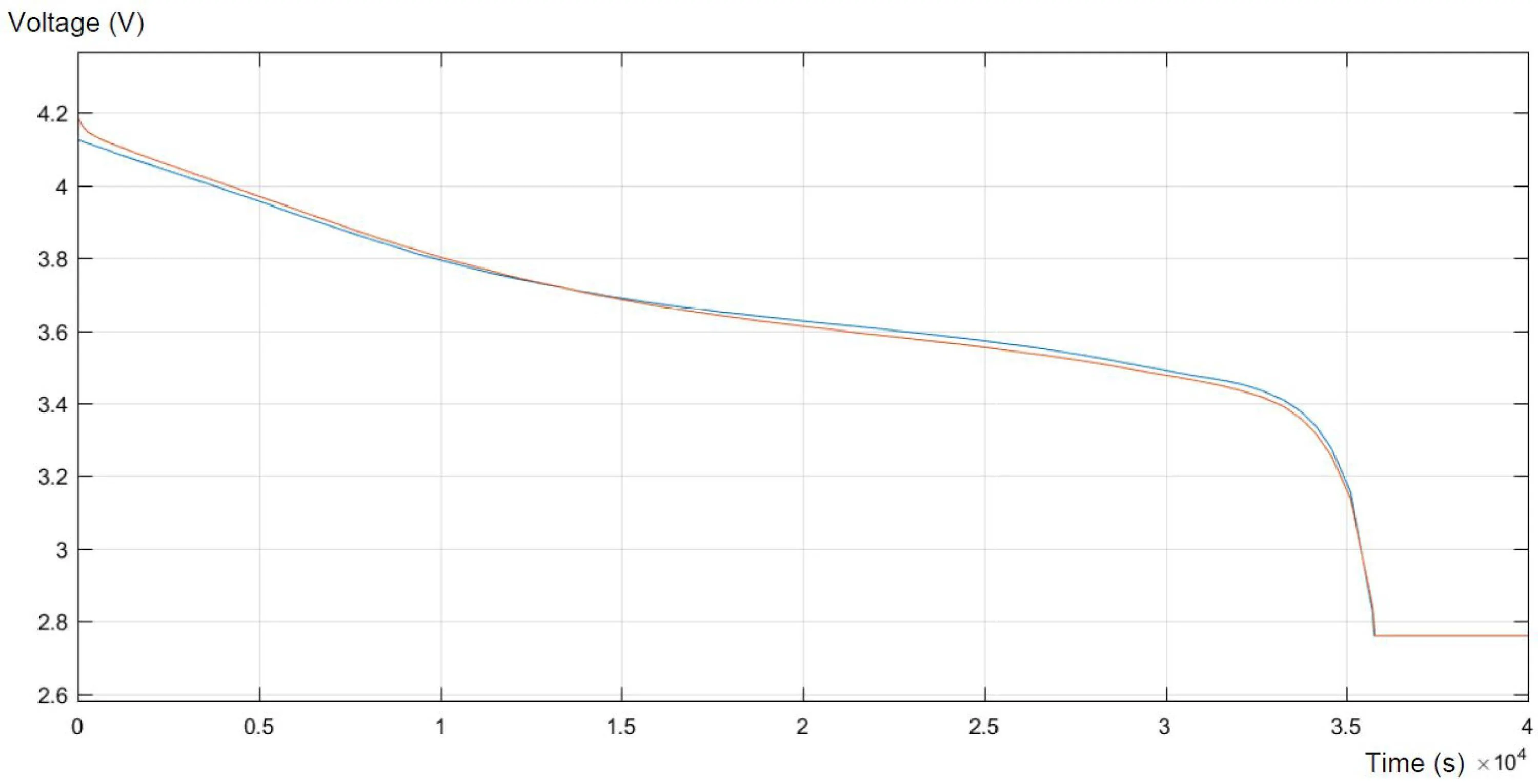
More Background: The BMS assumes the average user will charge up to 100% occasionally for trips, and also drains the battery below 20% periodically. When this doesn't occur regularly, the BMS drift can increase due to the very flat nature of the lithium discharge curve (see below figure). It's very difficult to estimate the actual state of charge in the 20-50% region, it could be off by upwards of 10% based off voltage alone. The BMS employs coulomb counting (via a current sensor) to improve the accuracy here, but that's the aspect most affected by drift since small errors in current measurement accumulate over time. Therefore spending some time above 90% and below 10% where the voltage curve has the greatest slope is important for the BMS to get a good read on the battery SoC. Some cell balancing will also occur during the rest periods at high and low SoC, which improves the estimates of total pack capacity.

NMC voltage curve.webp


Last, a reminder that outside of calibration and trips, it's good practice to always keep the battery between 20-90% for maximum longevity, and charge to the lowest level you need for everyday use. Users that follow good charging practices actually have the most need to do a battery calibration periodically as explained above.
I just completed this yesterday. It took awhile as I don’t drive daily.

Some background: I live at 4400 feet on the western flank of Maunakea. There are two ways into the subdivision. One is a constant 7 mile climb of between a 3% and 5% climb and is used when coming from the north. The other can be used when coming from the south. It is a 15 mile drive with the first 13 miles a climb. Gradient in that drive range from 6% to just over 10% (Briefly in 2 spots), average gradient is about 7%. There are no freeways here. Driving style: usually in unbridled (Premium awd er), I don’t drive like a grandpa, but I don’t drive like I stole it either.

Prior to 3.6.2 my GOM estimate at full was 212 miles. My lifetime average miles per kWh was 3.3 though. 212 mile range was misleading. After 3.6.2 the GOM initially estimated 293 miles. Also misleading. Before starting this calibration I had the impression that 100% was going to settle down in the high 270 range. I think 250 to the 270s are decent range estimates considering the climb I need to make coming home from anywhere.

After running through this the calculated range number appears to be in the low to mid 280s (it’s not at 80% yet to make the calc). A lot depends upon if I routinely drive the Daniel K Inoyue or not (the steep drive). I tend to not do that unless traffic is heavy going towards the other route.

Things learned:

1. Don’t watch or pay attention to the FordPass range when full estimates when doing the 100% charge. Mine was showing an estimate of 181 miles while going to 100%. My thought was “What have I done?” It ended with a GOM range of 296 on that charge.

2. I have a really old OBD reader. Doesn’t work with Car Scanner. It’s been relegated to the 2006 Tacoma. A new one is enroute for the MME and Raptor.

3. I comfortable with the end results. There are huge variables here. I live on a dormant volcano. It’s steep and cool (low 40s atm). The basic rules are still the same though. Don’t climb the Daniel K with less than 15% soc. You may no make it. Don’t come the other way without a 11% soc.

We will see how this all shakes out again in the spring.
 
Last edited:
OP
OP
Mach-Lee

Mach-Lee

Well-Known Member
First Name
Lee
Joined
Jul 16, 2021
Threads
262
Messages
11,345
Reaction score
24,967
Location
Wisconsin
Vehicles
2022 Mach-E Premium AWD
Occupation
Sci/Eng
Country flag
@mkhuffman FYI a battery capacity test recently showed up in FDRS. I haven't tried it yet but that might be the official Ford way to determine your battery capacity for warranty replacement.
 

mkhuffman

Well-Known Member
First Name
Mike
Joined
Nov 19, 2020
Threads
29
Messages
6,875
Reaction score
9,507
Location
Virginia
Vehicles
2025 Rivian R1T Tri-Max, Jeep GC-L, VW Jetta
Country flag
@mkhuffman FYI a battery capacity test recently showed up in FDRS. I haven't tried it yet but that might be the official Ford way to determine your battery capacity for warranty replacement.
Thanks! This might get me to actually dive into the FDRS fun.

CarScanner says I have 94% SoH, but is that really correct? I checked previous CarScanner logs and in Feb the SoH was 100%. I think maybe my process of charging to 90% every time the SoCD dropped below 80% was a mistake. But isn't that Ford's recommendation?

This week I changed my target charge to 85% and won't plug in until the SoCD drops below 50%. If the SoH levels out at 94%, I will have no way of knowing if it is because the battery "stabilized" there, or if my charging regimen stopped the decline. Arrrg.

Maybe this new FDRS test will clarify my confusion. :rolleyes:
 

JimmyMachE

Well-Known Member
Joined
Jul 21, 2021
Threads
1
Messages
218
Reaction score
124
Location
Montana
Vehicles
Mach E
I think maybe my process of charging to 90% every time the SoCD dropped below 80% was a mistake.
Li-ion batteries are most comfortable around 50% SOC. You could keep the charge level between 40-70% SOC, if that is enough for daily commute.
 

mkhuffman

Well-Known Member
First Name
Mike
Joined
Nov 19, 2020
Threads
29
Messages
6,875
Reaction score
9,507
Location
Virginia
Vehicles
2025 Rivian R1T Tri-Max, Jeep GC-L, VW Jetta
Country flag
Li-ion batteries are most comfortable around 50% SOC. You could keep the charge level between 40-70% SOC, if that is enough for daily commute.
That is true, and I have been aware of that long before getting my car. I was taking Ford's recommendations more seriously with the expectation they know their BMS better than I do.

That may have been a mistake. I have since changed the target charge to 85% and won't plug in until the charge drops below 50%.

For example, the car is currently at 77% SoCD (SoC is less than that, of course). Previously I would have plugged in to get up to 90%, and then it would sit there at 90 for a day or maybe more. Now it is sitting at 77 instead, which is probably better for the battery.

The big drawbacks are more gray bars (less WOT fun) and more time to get the car ready if I have to leave on an emergency trip out of town. Those are big drawbacks, IMO.
 

sukhoi_584th

Well-Known Member
Joined
Sep 29, 2021
Threads
15
Messages
318
Reaction score
302
Location
United States
Vehicles
2022 MME CR1 AWD
Country flag
Any idea how well the calibration process allows the BMS to estimate the very bottom of the SOC? If I take it down to 10% SOC to do the calibration is there confidence the last 10% is actually 10%? Could it actually be 0%? Do you need to go all the way close to 0% to know the true bottom? Or is there enough slope in the graph at 10% it can figure it out?
 

Kamuelaflyer

Well-Known Member
First Name
Bill
Joined
Feb 18, 2020
Threads
11
Messages
11,313
Reaction score
22,864
Location
Hawaii
Vehicles
2021 Premium Infinite Blue. ER AWD. 2020 Raptor, 2021 Ranger.
Country flag
First, let me say this is somewhat controversial, as there is no official procedure from Ford for this. However I think it helps to do this periodically, especially in vehicles that don't get the pack exercised very regularly. As in most of my articles, nerd content warning applies here, just focus on the procedure below if you aren't one.

Background: Like virtually all lithium-ion battery systems, the Mach-E uses a battery management system (BMS) to estimate the amount of energy in the battery pack, which is used to display the state of charge % and the range. The system does a pretty good job, but over time the calibration of the BMS can drift, especially in vehicles where the battery is always kept in the middle of the range (which is good battery practice). This can cause the capacity estimate to become more inaccurate with time, which affects the displayed % and range. Most BMS systems are programmed to be conservative, which means the capacity and range is typically underreported when the BMS has drifted. Similar battery calibration procedures have been successful in improving range estimates in other EVs such as Teslas.

Please Note: The displayed range on the Mach-E GOM is heavily affected by driving habits and outdoor temp, BMS calibration is a much smaller factor compared to these. Do not do this just because your range dropped suddenly, that's almost certainly because the outdoor temp decreased and calibration will not help that. Range drop due to temps below 55ÂşF is perfectly normal has been well documented elsewhere on the forum.

Benefit: You may see a 1-6% capacity/range indication improvement (not verified or guaranteed) after a BMS calibration.

It's important to understand that performing a BMS calibration does not physically restore lost battery capacity (which is gone forever), it merely updates the computer estimate of capacity only so that it is more accurate. The battery has whatever intrinsic capacity is currently has regardless of what anyone says, does, or thinks (including the GOM), so you could argue it's best to not think about BMS drift and just go about life unless you are concerned with accuracy.

Disadvantage: Performing a battery calibration involves pushing the pack to extreme states of charge, which can degrade it very slightly each time. Therefore you should only perform this procedure sparingly. If you are ultra-concerned about your battery health and feel like you have plenty of range, then don't do this.

I recommend you perform this procedure every 6 months, especially if you never charge to 100%. Every spring and fall is a good time. It's not necessary if you take regular trips where you hit extremes of charge.

Procedure:
  1. Charge the vehicle to your normal level (e.g. 90%).
  2. Drive the vehicle until the battery is down to 10% or less.
  3. Park the vehicle and let the battery rest for at least 5 hours (preferably overnight)
  4. Level 2 charge all the way to 100% in one session without interruption.
  5. Leave the vehicle plugged in and let the battery rest for 2 hours after 100% is reached.
  6. (Optional) With a scan tool, read the kWh to empty and state of health parameters.
  7. Drive without charging until battery is below 50% (10-20% recommended)
  8. Charge the vehicle back up to your normal level.
It's fine if you do this over a period of days, just observe the steps and don't charge in between. FYI it can take several hours to charge from 95-100% if the pack is out of calibration, so plan for an extra long time to reach 100%. Do not use remote start or preconditioning during calibration. The rest periods (bold) at low and high SoC are very important to wait for so the BMS has time to read all the cell voltages accurately. It's best to do this when the temperatures are moderate (55-85ÂşF) in the spring and fall. Try to drive moderately, avoid heavy accelerations while calibrating. Parking the vehicle overnight at 10% will not harm the battery, the cell voltages are still plenty high so nothing detrimental will happen. After you charge to 100% and wait 2 hours, you do want to drive the vehicle so it doesn't sit at 100% for longer than necessary since that is stressful on the cells.

More Background: The BMS assumes the average user will charge up to 100% occasionally for trips, and also drains the battery below 20% periodically. When this doesn't occur regularly, the BMS drift can increase due to the very flat nature of the lithium discharge curve (see below figure). It's very difficult to estimate the actual state of charge in the 20-50% region, it could be off by upwards of 10% based off voltage alone. The BMS employs coulomb counting (via a current sensor) to improve the accuracy here, but that's the aspect most affected by drift since small errors in current measurement accumulate over time. Therefore spending some time above 90% and below 10% where the voltage curve has the greatest slope is important for the BMS to get a good read on the battery SoC. Some cell balancing will also occur during the rest periods at high and low SoC, which improves the estimates of total pack capacity.

NMC voltage curve.webp


Last, a reminder that outside of calibration and trips, it's good practice to always keep the battery between 20-90% for maximum longevity, and charge to the lowest level you need for everyday use. Users that follow good charging practices actually have the most need to do a battery calibration periodically as explained above.
Just did this for the second time since @Mach-Lee posted it. I had a nearly 36 hour wait from the time the car reached 100% and it was driven due to an illness (the forum avatar cat is not well). The GOM reading was 283 miles on my 2021 ER AWD with battery health at 98%. Not bad for a 35 month old car.
 
Last edited:

HuntingPudel

Well-Known Member
First Name
Steve
Joined
Mar 23, 2021
Threads
88
Messages
12,932
Reaction score
17,376
Location
Bay Area, CA
Vehicles
2024 MME GT with Performance Upgrade, 1979 Fire-Am, 1972 K/5 Blazer
Occupation
Engineering
Country flag
Just did this for the second time since @Mach-Lee posted it. I had a nearly 36 hour wait from the time the car reached 100% and it was driven due to an illness (the forum avatar cat is not well). The GOM reading was 283 miles on my 2021 ER AWD with battery health at 98%. Not bad for a 35 month old car.
Give your kitty a hug from Grady. ??
 

Kamuelaflyer

Well-Known Member
First Name
Bill
Joined
Feb 18, 2020
Threads
11
Messages
11,313
Reaction score
22,864
Location
Hawaii
Vehicles
2021 Premium Infinite Blue. ER AWD. 2020 Raptor, 2021 Ranger.
Country flag
Give your kitty a hug from Grady. ??
Thank you. She is an old lady (13!) and has been living with hyperthyroidism for at least 2 years. While she took a significant turn for the worse this past weekend, the game isn’t over yet.
Sponsored


Top