EV Owners Not Happy With Home Charging, Either

EVandSolar

Well-Known Member
Joined
Jan 21, 2023
Threads
0
Messages
112
Reaction score
129
Location
United States
Vehicles
Kia Niro EV, Tesla M3, Ioniq PHEV(daughter)
Occupation
Medical
Country flag
Wow look at Grizzl-E at the top of the pack right underneath Tesla!
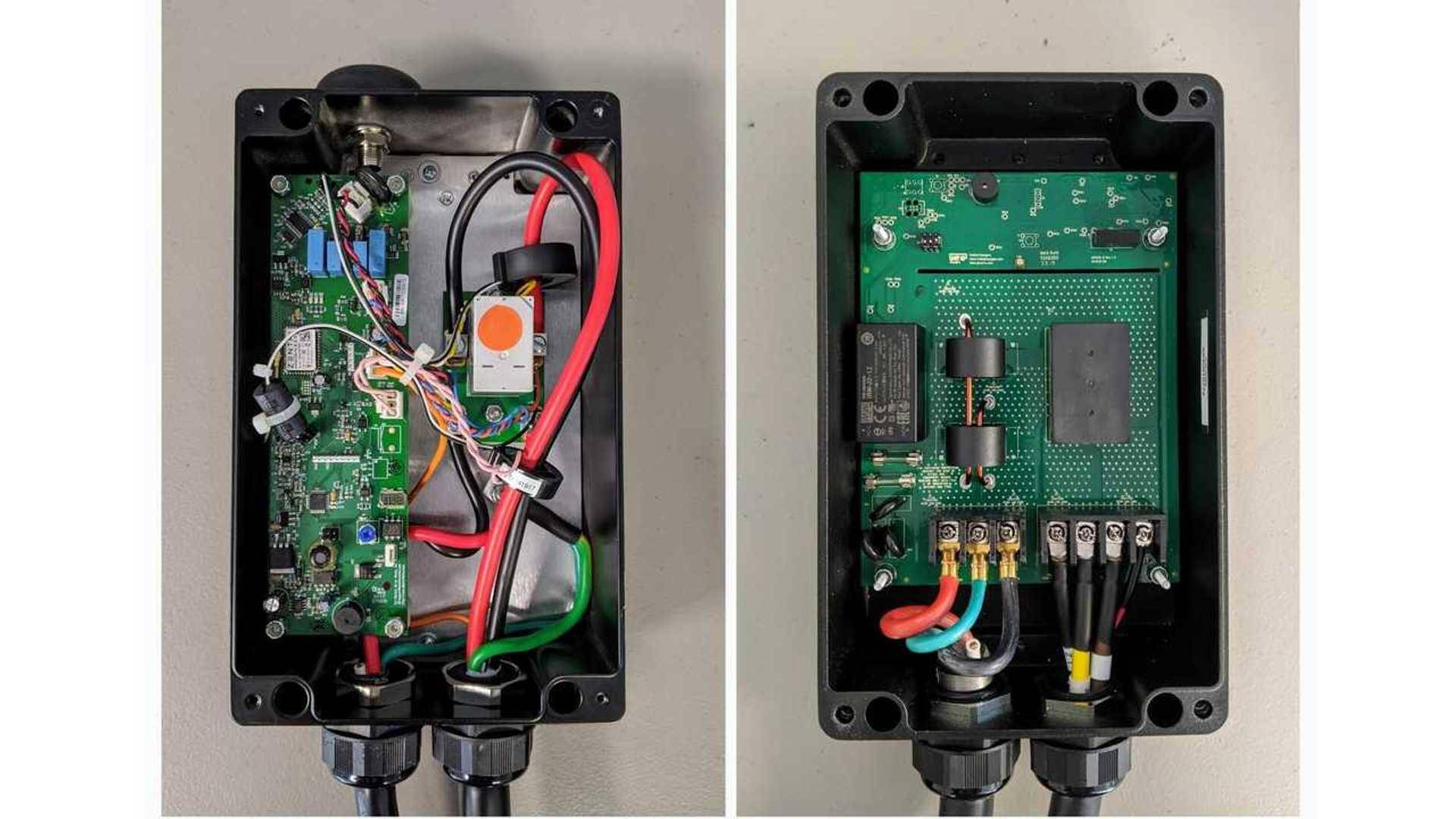
I bought a Grizzle charger in large part due to a photo showing the internal wiring of the charger. The Grizzle looks like a professional electrical engineer with extreme attention to detail and wiring "hygiene" designed the wiring....a competitor looked....well, scary is probably the right word. Grizzle-E on the right by the way:

Ford Mustang Mach-E EV Owners Not Happy With Home Charging, Either 1680137225373

I was like, hmmm, which one of these do I want sending 10,000 watts for hours and hours and hours daily, under my daughters bedroom, to my EV????

Count me as one who is 100% satisfied with EV charging at home. We have one charger for both EV's...if we both drive, one plugs in after work, the other before bed. I've forgotten to plug in the 2nd car before bed before(usually mine), but its not big deal since I can commute 2-3 days in a row without charging(I charge to 55% daily). When that has occasionally happened, I plug in when I get up, which gives me 10kW before work. My commute uses about 15.

I have considering buying a 2nd charger and getting it wired up, just for the sake of super lazy ridiculous uber consumption convenience. Honestly though, I can get a 2nd charger put in for about $5-$600 after tax credits including the cost of the charger. I'm considering it because one of my kids might end up with a PHEV and will also need to charge daily or every other day. Don't want to juggle three cars on one charger.
Sponsored

 
Last edited:
Fixbear

Well-Known Member
First Name
Frank
Joined
Jun 15, 2022
Threads
5
Messages
642
Reaction score
276
Location
ADK. foothills, NY
Vehicles
2001 SelectMachE4 SR , Mini SE
Occupation
retired, Construction Mechanic, Refrigeration tech, Ford, GMC, Chevy tech,
Country flag
I think it's a fair way of looking at it, but it's not an efficiency concern. It's a charge speed concern. Unless you go out and unplug when the car reaches your preferred state of charge, those tasks are still going to draw power from the grid regardless of the EVSE being used.
I live where it's below 40F at night 7 to 8 months of the year. We have 2 EV's and use a Grizzl-e Duo. They are plugged in nightly until we get warmer nights. Basically growing season from 3rd week of May to 2nd week of September. During that time we only need to charge twice a week with the Mach-E. But semi-daily with the Mini Cooper.
 

Fixbear

Well-Known Member
First Name
Frank
Joined
Jun 15, 2022
Threads
5
Messages
642
Reaction score
276
Location
ADK. foothills, NY
Vehicles
2001 SelectMachE4 SR , Mini SE
Occupation
retired, Construction Mechanic, Refrigeration tech, Ford, GMC, Chevy tech,
Country flag
I should also add that winter power bill is roughly $100 per month for the cars. When my son had his Volvo, we were paying $150 per week for Gas. Volvos like 93 octane. Son's commute is 60 miles. Wife has to go to her mothers house to take care of her twice per day, 16 miles. But we also live in a hilly region. Let alone DR's and market trips.
 

CurtW

Well-Known Member
First Name
Curt
Joined
Feb 23, 2023
Threads
6
Messages
124
Reaction score
247
Location
Northwest AR
Vehicles
2022 GTPE
Country flag
I think the idea of needing L2, L3, or DCFC for most use cases is overblown.
Agreed. I installed L2 because I wanted it. Didn't need it - L1 was more than adequate. Nothing but a first world problem. Luckily for me, I got a first world solution! I can't imagine installing faster charging, at least not with just one EV in the garage.


bshaw

Well-Known Member
Joined
May 18, 2020
Threads
14
Messages
1,562
Reaction score
2,181
Location
Boston, MA
Vehicles
2021 Mustang Mach E 4X (Job 1)
Country flag
In your experience, any reason to upgrade the Ford MME L2 charger if only charging a single EV?
Lots of people have reported problems with the Ford Mobile charger wearing out more quickly than it should. Particularly in higher temps, the unit will overheat and charge very slowly or not at all. I keep the mobile charger in my trunk in case I need an L1 charge on the road, and installed a permanent L2 at home.
 

AKgrampy

Well-Known Member
First Name
Mike
Joined
Jan 29, 2022
Threads
7
Messages
3,519
Reaction score
3,590
Location
Fairbanks, Alaska
Vehicles
Ford Expedition, Ford F-150, Mach E GT
Occupation
Retired
Country flag
I think it's a fair way of looking at it, but it's not an efficiency concern. It's a charge speed concern. Unless you go out and unplug when the car reaches your preferred state of charge, those tasks are still going to draw power from the grid regardless of the EVSE being used.
Not to belabor the point but with L1 you will be be billed for 10 kWh for every 7 kWh of battery charge and for L2 it is for every 9 kWh. The forum member I spoke with previously about this did not drive much and their power was only 6 cents (I wish!) If you use 20kW a day and have rates like mine, 25 cents, then L1 loses an additional 4 kw a day or a dollar a day. So as I originally said no big deal but it all come down to what is important to a person conservation-wise (no judgement.) I was just surprised when I learned this and felt it was another potential issue for apartment dwellers.
 

theriddler

Well-Known Member
First Name
Patrick
Joined
Nov 10, 2020
Threads
1
Messages
134
Reaction score
126
Location
Louisville, KY
Vehicles
‘23 F-150 Lightning Lariat Extended Range
Occupation
Retired
Country flag
I have been completely happy with my ChargePoint.
 

AKgrampy

Well-Known Member
First Name
Mike
Joined
Jan 29, 2022
Threads
7
Messages
3,519
Reaction score
3,590
Location
Fairbanks, Alaska
Vehicles
Ford Expedition, Ford F-150, Mach E GT
Occupation
Retired
Country flag
I have been charging 2 EV on a 30a circuit for over a year now.

There is no need to switch plugs in the middle of the night, my wife plugs in when she gets home and I switch to my car before bed.

It would work fine for us and I imagine for most if there was a single charger that had two charge handles like the Grizzl-e Duo even at 16a.
It may make a difference for someone with significant TOU billing differential and they wanted to only charge between say 12 and 6 AM.
 

BTRYPWRDPONY

Well-Known Member
First Name
JAY
Joined
Aug 11, 2021
Threads
12
Messages
269
Reaction score
165
Location
CHICAGO, IL
Vehicles
2022 MachE GTPE DMG
Country flag
It's just like politics. People that are die-hard ICE look to demonize EV's and offer up partial truths. Then their followers add falsehoods that they honestly believe with nothing to back it up. I've had non-EV owners tell me it cost more to fill my Mach-E than they pay for gas. I tell them my actual cost and they don't believe me. I walk away. They are hard set on what they have heard without confirming the facts. The old saying, you can lead a horse to water, but you can't make him drink.
I had the same issue earlier this week, I'm in the mid-west, told this guy it cost me $3.80 to charge from 62% to 90% . He didn't believe me so I showed him my Com-ED app that shows KW used and at what cost. I signed up for their EV package (which is real time charges) charging from 12am-7am I pay an average 1.4 cents per kw.. I used to spen $80-100 week on gas with my Honda Passport---My electric bill has gone up maybe $40-50 a month.
 

EVandSolar

Well-Known Member
Joined
Jan 21, 2023
Threads
0
Messages
112
Reaction score
129
Location
United States
Vehicles
Kia Niro EV, Tesla M3, Ioniq PHEV(daughter)
Occupation
Medical
Country flag
In your experience, any reason to upgrade the Ford MME L2 charger if only charging a single EV?
If someone is able to charge at around 30 amps or higher, I think it's tough to justify spending money to charge any faster. Heck, even if someone can only charge at 24 amps(such as on an existing 30 amp outlet), not sure there's much justification to spend money for anything else.

My installation was very cheap....I had a 50 amp circuit installed to support my 40 amp Grizzle-E with a 45+ foot run from my electrical panel for $350........

Our Kia can only charge at 7.5kW max so 32 amps on 40 amp service would have been plenty, but I went with 50 amp because it was cheap and I wanted to have the extra capacity just in case. Does it seem to make much difference charging at 7.5kW for the Kia or 10kW for the T? Hasn't really mattered.
 
OP
OP
HuntingPudel

HuntingPudel

Well-Known Member
First Name
Steve
Joined
Mar 23, 2021
Threads
88
Messages
12,927
Reaction score
17,370
Location
Bay Area, CA
Vehicles
2024 MME GT with Performance Upgrade, 1979 Fire-Am, 1972 K/5 Blazer
Occupation
Engineering
Country flag
Not to belabor the point but with L1 you will be be billed for 10 kWh for every 7 kWh of battery charge and for L2 it is for every 9 kWh. The forum member I spoke with previously about this did not drive much and their power was only 6 cents (I wish!) If you use 20kW a day and have rates like mine, 25 cents, then L1 loses an additional 4 kw a day or a dollar a day. So as I originally said no big deal but it all come down to what is important to a person conservation-wise (no judgement.) I was just surprised when I learned this and felt it was another potential issue for apartment dwellers.
On top of this, the MME will not precondition when on L1, only on L2. ??
 

RickMachE

Well-Known Member
Joined
Jul 1, 2021
Threads
267
Messages
17,897
Reaction score
27,849
Location
SE MI
Vehicles
2022 Mach-E Premium 4X, 2022 Lightning Lariat ER
Country flag
One of the biggest challenges for EV acceptance by the masses is educating the masses, and the biggest obstacle to that is the inability to educate a significant portion of the masses because they lack the intelligence to be educated.

Note - I refer to no one on this forum in that comment.

Another challenge is taking the title of an "article" and drawing conclusions from it. The survey showed that the number one issue people had with home level 2 charging was electric rates, not charging speed. And, we know, many people don't even know what they pay for electricity, asking "why did my electric bill go up" and such.

But they don't expand on that, the explanation still refers to costs, not speed.

It's also a problem to see satisfaction across brands when almost no one has actually compared them, they've just used one.

Not so much recently, but there used to people on here always recommending the 60A circuit hardwired to a 48A EVSE. They would call it "future proofing", which its not really.

Probably something in between 16A and 48A is the sweet spot. By my calculations, 16A @ 240V would take close to 24-hours if you needed to recharge an extended range battery from a very low level.
32A / 240V works overnight in typical situations, which is probably why Ford picked that amperage for the included charger.
How often does someone charge from nearly 0 to 100?

Even if arriving late and only getting 8 hours of charging in before having to leave the next day that gives 80+ miles of range.

That 80+ miles covers the vast majority of peoples daily drive with room to cover range anxiety and weather range reduction.

I think the call for 60a is more about range anxiety.
Future proofing is defined as proofing, well, for the future. Why did I get a 60amp circuit with a 48 amp charger? Because, when/if I have two EVs, I can split the charging and get 24amps to each. Or, I buy a Lightning, I can charge at 48amps just for it.

The Ford Mobile Charger provides 30amps (not 32), or 7.2kW, i.e. 6.4 or so to the vehicle. That's the roughly 20 miles per hour of charging, which yes, is good for most people nightly.

But...

Now add in the depths of winter, where that 3.0 miles per kWh drops to 2.3 in the dead of winter. And a person that's not knowledgeable about departure times. Now, that 8 hours of charging, instead of providing 160 miles, provides 123. Maybe not enough on a 50 mile each way drive, in a snowstorm, with no preconditioning.

And, if I get a Lighting, that 1.7 highway becomes 1.2. So getting 6.4kW per hour is 87 miles in summer, and 61 in winter. Maybe not so good.

But future proofing is in fact future proofing. The argument to save a few dollars by running a smaller circuit if the box can support a 60amp circuit is crazy. The incremental wire cost is minimal.


I have been charging 2 EV on a 30a circuit for over a year now.

There is no need to switch plugs in the middle of the night, my wife plugs in when she gets home and I switch to my car before bed.

It would work fine for us and I imagine for most if there was a single charger that had two charge handles like the Grizzl-e Duo even at 16a.
Not if I own a Lightning.

Sure, if the commute is short it doesn't matter. But again, when the question is what circuit should I install?, I think the answer is 60amps for the ability to charge at 48amp in the future.

And, as @AKgrampy points out, some people have limited off-peak charging periods, some as short as 4 hours.
 

kdonnel

Well-Known Member
Joined
Oct 31, 2021
Threads
35
Messages
1,147
Reaction score
1,665
Location
Metro Atlanta
Vehicles
2022 CA Route 1, 2020 Bolt EV
Country flag
One of the biggest challenges for EV acceptance by the masses is educating the masses, and the biggest obstacle to that is the inability to educate a significant portion of the masses because they lack the intelligence to be educated.

Note - I refer to no one on this forum in that comment.

Another challenge is taking the title of an "article" and drawing conclusions from it. The survey showed that the number one issue people had with home level 2 charging was electric rates, not charging speed. And, we know, many people don't even know what they pay for electricity, asking "why did my electric bill go up" and such.

But they don't expand on that, the explanation still refers to costs, not speed.

It's also a problem to see satisfaction across brands when almost no one has actually compared them, they've just used one.


Future proofing is defined as proofing, well, for the future. Why did I get a 60amp circuit with a 48 amp charger? Because, when/if I have two EVs, I can split the charging and get 24amps to each. Or, I buy a Lightning, I can charge at 48amps just for it.

The Ford Mobile Charger provides 30amps (not 32), or 7.2kW, i.e. 6.4 or so to the vehicle. That's the roughly 20 miles per hour of charging, which yes, is good for most people nightly.

But...

Now add in the depths of winter, where that 3.0 miles per kWh drops to 2.3 in the dead of winter. And a person that's not knowledgeable about departure times. Now, that 8 hours of charging, instead of providing 160 miles, provides 123. Maybe not enough on a 50 mile each way drive, in a snowstorm, with no preconditioning.

And, if I get a Lighting, that 1.7 highway becomes 1.2. So getting 6.4kW per hour is 87 miles in summer, and 61 in winter. Maybe not so good.

But future proofing is in fact future proofing. The argument to save a few dollars by running a smaller circuit if the box can support a 60amp circuit is crazy. The incremental wire cost is minimal.


Not if I own a Lightning.

Sure, if the commute is short it doesn't matter. But again, when the question is what circuit should I install?, I think the answer is 60amps for the ability to charge at 48amp in the future.

And, as @AKgrampy points out, some people have limited off-peak charging periods, some as short as 4 hours.
I'm trying to look at it from a widespread adoption point of view.

There will always be cases where faster is better, but I think that slower is fine for the vast majority of people.

If people are sitting on the sideline reading that they need 60a charging that requires expensive upgrades at their home they might remain on the sideline instead of moving to an EV.
Sponsored


Top