Compatibility Question

TRP

Well-Known Member
First Name
Tim
Joined
Jun 23, 2021
Threads
77
Messages
1,265
Reaction score
1,459
Location
37841
Vehicles
Mach E P4x, Ford F150
Country flag
With all the talk of outlet fires/failures and what not...............I want to make sure I do the right thing.

So......Just bought the wife a 2023 Nissan Ariya, I believe it charges at 32amp max. We are upgrading our electric service to 200 amp and trying to decide on an appropriate EVSE. Strongly leaning towards a hardwired installation at 48amp.

I just want to make sure this is not an issue for her car. A google search says it will be fine...but...trust issues with that info

What say you?
Sponsored
 

Blue highway

Well-Known Member
First Name
Steve
Joined
Oct 15, 2021
Threads
5
Messages
2,701
Reaction score
4,250
Location
Oregon
Vehicles
Mach E Premium SR RWD
Country flag
Having an EVSE that is capable of supplying 48A does not mean that the car will ask for 48A. The Car and EVSE handshake on the amount of amps the car will draw from the EVSE up to the maximum amount of current the EVSE can supply. Depending on the car and EVSE, each can be set for a maximum current level.

When it comes to wiring, it is a good idea to wire the EVSE for the maximum amount of Amps the EVSE can draw. The EVSE does not know if it is connected to wiring capable of 48A or 20A... so be safe and wire the EVSE for the highest amperage the EVSE can deliver.

Hardwiring is inherently more robust electrically than using an outlet as there are less electrical joints in the circuit. Each joint (connection of a wire to a screw or a socket to a pin introduces some resistance and therefore heat)
 
OP
OP

TRP

Well-Known Member
First Name
Tim
Joined
Jun 23, 2021
Threads
77
Messages
1,265
Reaction score
1,459
Location
37841
Vehicles
Mach E P4x, Ford F150
Country flag
Having an EVSE that is capable of supplying 48A does not mean that the car will ask for 48A. The Car and EVSE handshake on the amount of amps the car will draw from the EVSE up to the maximum amount of current the EVSE can supply. Depending on the car and EVSE, each can be set for a maximum current level.

When it comes to wiring, it is a good idea to wire the EVSE for the maximum amount of Amps the EVSE can draw. The EVSE does not know if it is connected to wiring capable of 48A or 20A... so be safe and wire the EVSE for the highest amperage the EVSE can deliver.

Hardwiring is inherently more robust electrically than using an outlet as there are less electrical joints in the circuit. Each joint (connection of a wire to a screw or a socket to a pin introduces some resistance and therefore heat)

Thank you. I am admittedly electrically challenged, so it is best I ask before I tell an electrician what I want/need.
 

HuntingPudel

Well-Known Member
First Name
Steve
Joined
Mar 23, 2021
Threads
89
Messages
12,952
Reaction score
17,407
Location
Bay Area, CA
Vehicles
2024 MME GT with Performance Upgrade, 1979 Fire-Am, 1972 K/5 Blazer
Occupation
Engineering
Country flag
If the electrician is worth his salt you can tell him that your EVSE draws 48A continuously. From that he/she should know that it needs to be hard-wired with 6AWG copper wire. Most EVSEs also include wiring instructions so also present him/her with the instructions. ??
 
OP
OP

TRP

Well-Known Member
First Name
Tim
Joined
Jun 23, 2021
Threads
77
Messages
1,265
Reaction score
1,459
Location
37841
Vehicles
Mach E P4x, Ford F150
Country flag
If the electrician is worth his salt you can tell him that your EVSE draws 48A continuously. From that he/she should know that it needs to be hard-wired with 6AWG copper wire. Most EVSEs also include wiring instructions so also present him/her with the instructions. ??
I will do exactly that


Larry Paul

Well-Known Member
First Name
Larry
Joined
Aug 27, 2021
Threads
24
Messages
929
Reaction score
1,051
Location
Southern California
Vehicles
MME-GTPE, Sunbeam Tiger w1970 Boss302, 2002Rav4EV
Country flag
Having driven EVs for over 26 years, I recommend putting in the wiring for the largest charger you may need, but there are advantages to installing a lower power draw charger.

not in any specific order:

1) If you have solar and want to charge during the day-off the sun, peak solar output may limit how many hours a faster charger like one that draws 48A can charge during peak energy generation times. A colleague with a Tesla was struggling to charge during power outages from the sun /generator until I showed them the slider that would enable the car to draw less power during charging. Something finally enabled in the 2025 MME, but most EVs don’t have that.

2) How fast do you need to charge While at home? If your car is recharged in 4 hours overnight or 2 hours overnight-what does that matter? If you can recover 16 miles while you sleep, does it really matter if the car is fully charged at home the next day? How often does one drive more that 100 miles the day after driving more than 100 miles the next day, that does not have access to DCFC?

3) Batteries will last longer with less stress and in less heat. Faster charging=more heat And stress (see point number2)

4) What other devices do you have that may run at the same time? AC, pool pump, oven, stove, 2nd or 3rd EV -now or in the future? I have had 4 EV chargers going at once and that happened because I never installed an EVSE that could deliver more that 32A (7.2kW). 200A is to the whole house… how much power in the garage? Is it a sub panel?

My2 cents.
 
OP
OP

TRP

Well-Known Member
First Name
Tim
Joined
Jun 23, 2021
Threads
77
Messages
1,265
Reaction score
1,459
Location
37841
Vehicles
Mach E P4x, Ford F150
Country flag
4) What other devices do you have that may run at the same time? AC, pool pump, oven, stove, 2nd or 3rd EV -now or in the future? I have had 4 EV chargers going at once and that happened because I never installed an EVSE that could deliver more that 32A (7.2kW). 200A is to the whole house… how much power in the garage? Is it a sub panel?

My2 cents.
Garage will have 2 garage door openers, a couple of overhead lights, 3 or 4 outlets, and a 40 or 48amp EVSE (I own a 40amp now). 2 EVs but no need to charge at the same time. I also need space to eventually run a couple of outlets to a patio area. I think a 100amp sub panel is needed.
 

luckie

Well-Known Member
First Name
Doug
Joined
Apr 6, 2022
Threads
18
Messages
422
Reaction score
459
Location
Michigan, USA
Vehicles
2021 Mach-E Silver AWD Select SR, traded for, 2025 Mach-E Green AWD Premium ER
Occupation
Professor
Country flag
Garage will have 2 garage door openers, a couple of overhead lights, 3 or 4 outlets, and a 40 or 48amp EVSE (I own a 40amp now). 2 EVs but no need to charge at the same time. I also need space to eventually run a couple of outlets to a patio area. I think a 100amp sub panel is needed.
Could get a Grizzl-E duo (one charger with two cables).
 
  • Like
Reactions: TRP

Larry Paul

Well-Known Member
First Name
Larry
Joined
Aug 27, 2021
Threads
24
Messages
929
Reaction score
1,051
Location
Southern California
Vehicles
MME-GTPE, Sunbeam Tiger w1970 Boss302, 2002Rav4EV
Country flag
Garage will have 2 garage door openers, a couple of overhead lights, 3 or 4 outlets, and a 40 or 48amp EVSE (I own a 40amp now). 2 EVs but no need to charge at the same time. I also need space to eventually run a couple of outlets to a patio area. I think a 100amp sub panel is needed.
A 100A sub panel has a max continuous load of 80A. So if you ever want to charge two at the same time and either one is a 48A, the other cannot be a 40A.

My main point is do you need a 40 or 48A charger at home if the car will have enough power by the morning for the next days's task. Think about the use of the car and potential of needing 2 or more EV's to charge at the same time.
 

moog

Banned
Banned
Joined
Feb 12, 2024
Threads
3
Messages
304
Reaction score
809
Location
california
Vehicles
2022 Mustang MachE Premium AWD Extended Range
Country flag
Best rule to follow: Hardwire it.

Second best rule to follow: Hardwire it.

Also....torque those screws to spec.
 

Larry Paul

Well-Known Member
First Name
Larry
Joined
Aug 27, 2021
Threads
24
Messages
929
Reaction score
1,051
Location
Southern California
Vehicles
MME-GTPE, Sunbeam Tiger w1970 Boss302, 2002Rav4EV
Country flag
Best rule to follow: Hardwire it.

Second best rule to follow: Hardwire it.

Also....torque those screws to spec.
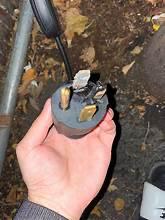
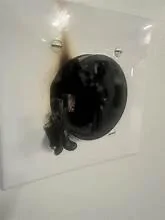
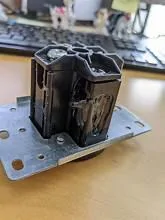
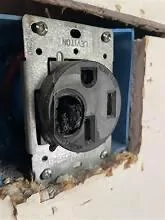
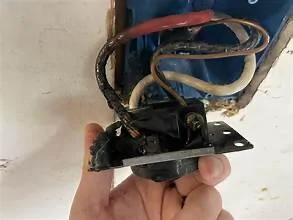
While hardwiring is the safest, I will add, IF you are going to use a plug/socket and not hardwire it, I would strongly recommend that you use a very high quality items from a reputable supplier. What you don't want is this:
Ford Mustang Mach-E Compatibility Question 1751043386524-or
Ford Mustang Mach-E Compatibility Question 1751043400069-xd
Ford Mustang Mach-E Compatibility Question 1751043411890-oy
Ford Mustang Mach-E Compatibility Question 1751043501929-g8
Ford Mustang Mach-E Compatibility Question 1751043509478-zd
Ford Mustang Mach-E Compatibility Question 1751043517969-s0


You get the point.

With all of that said, While I have used both hardwired and receptacles, but since the NEC changed to allow connectors I tend to only install receptacles, but only use Leviton heavy duty parts and have never had an issue. I also don't ever draw over 32A with my EVSE equipment and I do not often unplug the L50-14 (so I probably could use a hardwired connection).

Here is one reference.
https://shalasalon.com/heavy-duty-nema-14-50-receptacle/
 

fkyct

Well-Known Member
First Name
jerry
Joined
Feb 26, 2025
Threads
1
Messages
68
Reaction score
99
Location
florida
Vehicles
2023 Lightning 2023 Tesla Model Y
Occupation
retired
With all the talk of outlet fires/failures and what not...............I want to make sure I do the right thing.

So......Just bought the wife a 2023 Nissan Ariya, I believe it charges at 32amp max. We are upgrading our electric service to 200 amp and trying to decide on an appropriate EVSE. Strongly leaning towards a hardwired installation at 48amp.

I just want to make sure this is not an issue for her car. A google search says it will be fine...but...trust issues with that info

What say you?

Congratulations on the new Ariya.

Any EV car will communicate with the charger and limit the charger output to the most the car can take. I believe the Ariya is limited to 32 or 30 amps, as was my Nissan Leaf.

You are smart installing a 48 amp hard wired EVSE aka "Charger" so when you get your next EV you can charge at 48 amps. The electrician will know when reading the installation instructions for the charger that the 48 amp charger needs a 60 amp circuit.
 
  • Like
Reactions: TRP

fkyct

Well-Known Member
First Name
jerry
Joined
Feb 26, 2025
Threads
1
Messages
68
Reaction score
99
Location
florida
Vehicles
2023 Lightning 2023 Tesla Model Y
Occupation
retired
With all the talk of outlet fires/failures and what not...............I want to make sure I do the right thing.

So......Just bought the wife a 2023 Nissan Ariya, I believe it charges at 32amp max. We are upgrading our electric service to 200 amp and trying to decide on an appropriate EVSE. Strongly leaning towards a hardwired installation at 48amp.

I just want to make sure this is not an issue for her car. A google search says it will be fine...but...trust issues with that info

What say you?
As far as EVSE aka "chargers" goes, I always recommend the Tesla UNIVERSAL Wall connector. It can charge most any EVSE, (J1772 and TESLA NACS). It has a 4 year warranty.

Eventually all new EVs with have Tesla NACS Charging ports. The UNIVERSAL Wall connector has both plugs attached without having to fumble for an adaptor.

 
  • Like
Reactions: TRP

Larry Paul

Well-Known Member
First Name
Larry
Joined
Aug 27, 2021
Threads
24
Messages
929
Reaction score
1,051
Location
Southern California
Vehicles
MME-GTPE, Sunbeam Tiger w1970 Boss302, 2002Rav4EV
Country flag
If the electrician is worth his salt you can tell him that your EVSE draws 48A continuously. From that he/she should know that it needs to be hard-wired with 6AWG copper wire. Most EVSEs also include wiring instructions so also present him/her with the instructions. ??
I always have the electrician use 6AWG wire for my wiring that I only use a 32A EVSE on. Don’t save money on smaller gage wire.
You have me beat my 22 years!! Damn, talk about an early adopter!!!
22 years is also amazing and way cool.

We are also still driving our 1 owner 2002 Rav4EV- with batteries also made in 2002 and designed over 30 years ago (NiMh)

It has been 26 years with a car with my name on it in our driveway (started with a Honda EV Plus), but my first behind the wheel was the fall of 1996...when I test drove a GM EV1. My life changed like a light switch a few seconds after leaving the Saturn dealership.

https://www.smerconish.com/exclusive-content/25-years-of-driving-electric-vehicles/
Sponsored


Top