
Driving Data for 45 Trips. Mach-E's Efficiency as a Function of Temperature and Speed.
hawkeye3point1
Well-Known Member
- Joined
- Nov 13, 2021
- Threads
- 0
- Messages
- 480
- Reaction score
- 460
- Location
- NH
- Vehicles
- Space White ER RWD, Born on 12 Aug. '21

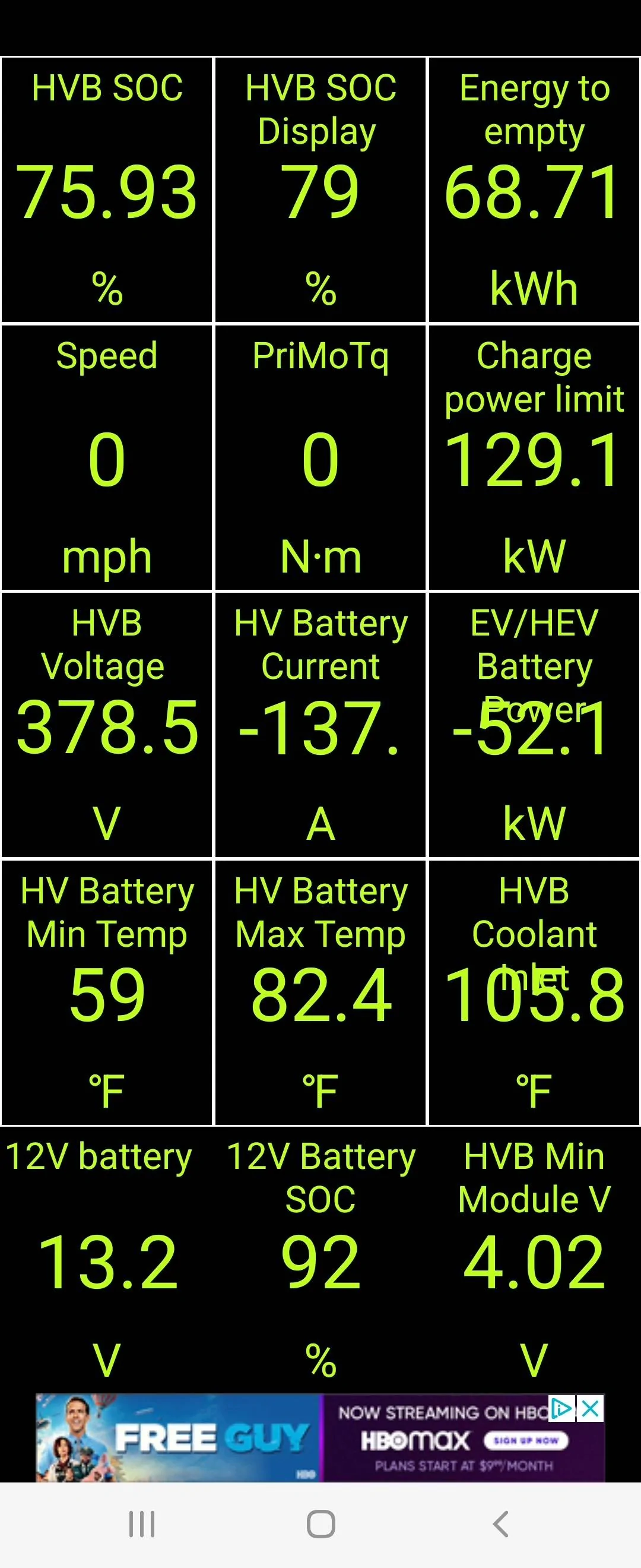
Many of us use a mobile app like CarScanner or Torque with an OBD scan device, see below. Plenty of topics on this in the forum. Do some research first as you want to avoid 12v drain that they can cause.I realize capacity is affected by temp, but I don't have a way to view actual battery capacity, what is this scan tool you speak of? How is it calculating the kWh used?
Thanks for collecting and sharing your info, every perspective helps. Other factors to consider - wind resistance or rain will skew comparisons as will elevation obviously.

JSeis
Well-Known Member
?, you drive like I do. On a rural road I average 46-50 mph in a 44 mile commute (88 rt). I precondition and in the morning I’m always .5 kWh greater than evening return.
I too was surprised at the modest decline in Mi/KWh temperature. Rain, headwinds, and humidity impact energy use. I’m either constantly turning defog on and off or leaving E-heat at 67 and living with 10%-15% more to climate. All in all, the gas savings are outstanding and with power at $.0634/KWh.
I averaged 3.5 mi/KWh in 35,000+ miles. Net gas savings in gas (23 mpg Ford Adrenalin) was about $7,000.00.
I too was surprised at the modest decline in Mi/KWh temperature. Rain, headwinds, and humidity impact energy use. I’m either constantly turning defog on and off or leaving E-heat at 67 and living with 10%-15% more to climate. All in all, the gas savings are outstanding and with power at $.0634/KWh.
I averaged 3.5 mi/KWh in 35,000+ miles. Net gas savings in gas (23 mpg Ford Adrenalin) was about $7,000.00.

alexgorod
Well-Known Member
- First Name
- Alex
- Joined
- Jul 27, 2021
- Threads
- 21
- Messages
- 1,304
- Reaction score
- 1,400
- Location
- Michigan
- Vehicles
- 21 Job 2 MME Premium SR AWD (21 CR-V - wife's)
- Occupation
- DBA
And most importantly, make sure that OBD device works with EVs; I bought one first that doesn't and had to return it.Many of us use a mobile app like CarScanner or Torque with an OBD scan device, see below. Plenty of topics on this in the forum. Do some research first as you want to avoid 12v drain that they can cause.
I recently got this one -
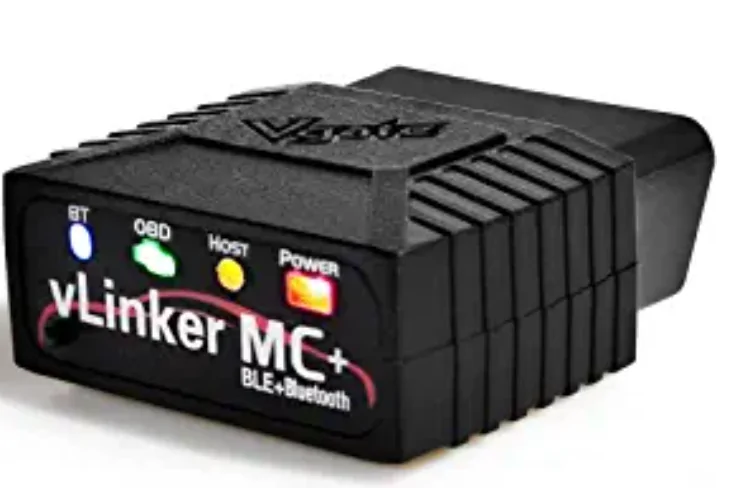
https://www.amazon.com/dp/B088LW211V?ref=ppx_yo2ov_dt_b_product_details&th=1 and use an old phone with CarScanner app
My biggest surprise so far was that it's not 68 KWh battery, at least in near-freezing temperatures, it's actually below 60
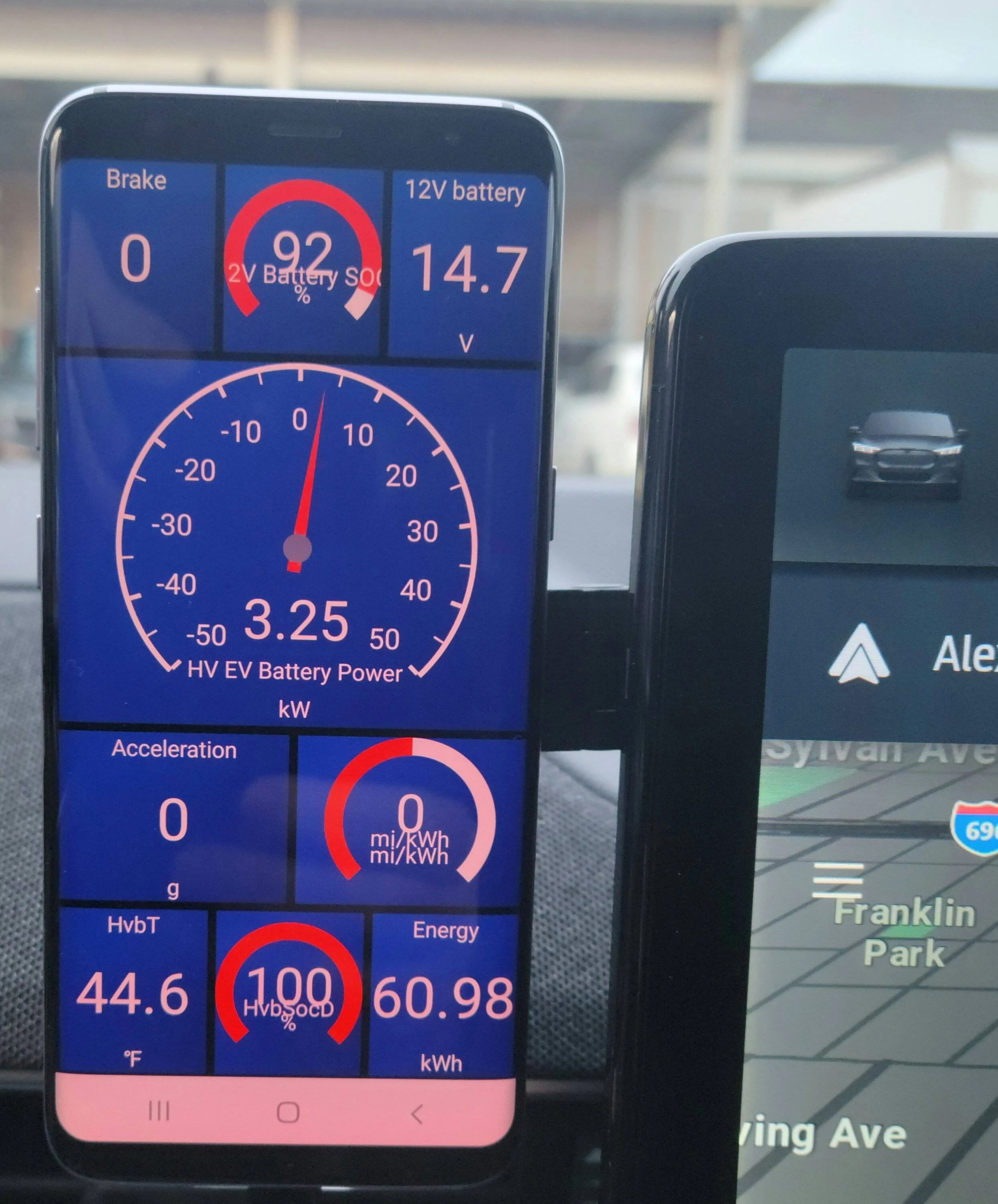
Btw, I use this phone holder and found it quite convenient -

https://www.amazon.com/dp/B0B6HZB7L2?psc=1&ref=ppx_yo2ov_dt_b_product_details
Last edited:
Terence Murphy
Well-Known Member
- First Name
- Terence
- Joined
- Oct 12, 2022
- Threads
- 1
- Messages
- 65
- Reaction score
- 53
- Location
- Maryland
- Vehicles
- 2021 Job 2 MME Premium ER AWD
- Occupation
- Computer scientist
The FordPass app reports kWh used per trip, and doesn’t obviously seem affected by the bug with including miles from the previous trip(s). Has anyone checked how accurate it is vs using a scanner?
For the OP, it looks like it keeps data for the last month, so you could backfill some data onto your charts.
For the OP, it looks like it keeps data for the last month, so you could backfill some data onto your charts.
HuntingPudel
Well-Known Member
- First Name
- Steve
- Joined
- Mar 23, 2021
- Threads
- 88
- Messages
- 12,927
- Reaction score
- 17,370
- Location
- Bay Area, CA
- Vehicles
- 2024 MME GT with Performance Upgrade, 1979 Fire-Am, 1972 K/5 Blazer
- Occupation
- Engineering
LOL I bought one about 6 months before I took delivery of my MME. It worked in my Fusion Energi. It actually also works in the MME, but it does not work with CarScanner. The app that it works with doesn't report nearly as much stuff as CarScanner, so I bought a different one so I could use CarScanner. ??And most importantly, make sure that OBD device works with EVs; I bought one first that doesn't and had to return it.
<SNIP>
Buzz
Well-Known Member
- Thread starter
- #22
Interesting! The battery is actually 75.7 kWh with 68 useable. I’m surprised that it’s that much less than advertised at 61 kWh. Maybe because it’s 45 outside and that’s the reduction in capacity noted? I assumed when researching the vehicle that the blocked 10% capacity was a safeguard for those charging to 100% and that it would absorb the impact of temperature. I wonder why it’s actually blocked.And most importantly, make sure that OBD device works with EVs; I bought one first that doesn't and had to return it.
I recently got this one -

https://www.amazon.com/dp/B088LW211V?ref=ppx_yo2ov_dt_b_product_details&th=1 and use an old phone with CarScanner app
My biggest surprise so far was that it's not 68 KWh battery, at least in near-freezing temperatures, it's actually below 60

Btw, I use this phone holder and found it quite convenient -

https://www.amazon.com/dp/B0B6HZB7L2?psc=1&ref=ppx_yo2ov_dt_b_product_details
Have you noted any 12v draw with that unit? Why not just use the phone you carry around with you?
HuntingPudel
Well-Known Member
- First Name
- Steve
- Joined
- Mar 23, 2021
- Threads
- 88
- Messages
- 12,927
- Reaction score
- 17,370
- Location
- Bay Area, CA
- Vehicles
- 2024 MME GT with Performance Upgrade, 1979 Fire-Am, 1972 K/5 Blazer
- Occupation
- Engineering
There are several reasons to reserve capacity on a battery. The first is simply because they want to ensure that the battery never gets charged to 100% of physical capacity for longevity reasons. The next would be to allow reallocation of capacity as the battery ages. There are other reasons as well, including thermal, recharge (regenerative braking) at high SoC management, etc. ??Interesting! The battery is actually 75.7 kWh with 68 useable. I’m surprised that it’s that much less than advertised at 61 kWh. Maybe because it’s 45 outside and that’s the reduction in capacity noted? I assumed when researching the vehicle that the blocked 10% capacity was a safeguard for those charging to 100% and that it would absorb the impact of temperature. I wonder why it’s actually blocked.
Have you noted any 12v draw with that unit? Why not just use the phone you carry around with you?
alexgorod
Well-Known Member
- First Name
- Alex
- Joined
- Jul 27, 2021
- Threads
- 21
- Messages
- 1,304
- Reaction score
- 1,400
- Location
- Michigan
- Vehicles
- 21 Job 2 MME Premium SR AWD (21 CR-V - wife's)
- Occupation
- DBA
If the phone stays connected - yes. It's not a big deal for an hour or so, if it stays for a few hours - FordPass and the car pop up a message that the electrical drain is detected. I normally shut the phone down if I'm not planning to drive for a few hours. With the phone off, or disconnected from the unit I didn't notice any effect on the battery.Have you noted any 12v draw with that unit? Why not just use the phone you carry around with you?
I didn't try to use my current phone to see if it can handle the simultaneous connections to the car and the OBD. With the current sloppy wireless Android Auto, and available spare phone, I don't want to risk it.

dbsb3233
Well-Known Member
- First Name
- TimCO
- Joined
- Dec 30, 2019
- Threads
- 56
- Messages
- 10,100
- Reaction score
- 11,965
- Location
- Colorado, USA
- Vehicles
- 2021 Mustang Mach-E FE, 2025 Porche Macan Electric
- Occupation
- Retired
High speed absolutely has a big impact on mileage. But 3.4 MPK vs 2.8 for the difference between 65 MPH vs 60 sounds unusually large (18% less). Something doesn't sound quite right there. The 2.8 sounds reasonable but 3.4 seems high.Speed - I was really surprised at the impact speed has on consumption. Obviously, the data is a little confounded by outside temp, but I was hoping to wash that out with repeats and randomization. The difference between 65 mph and 70 mph is huge! I should get ~40 miles more per full charge by doing 65mph, 3.4 mi/kWh vs. 2.8 mi/kWh. I found that really surprising! So yeah, on my daily commute, I am that guy doing 65 mph... ?
For comparison, in my AWD ER, we do a lot of road trips between CO and NV, with half the miles on 80 MPH interstates in UT. I set a trip meter each time. We usually average 2.8 MPK (2.7 was the worst in the winter, 3.0 was the best in the summer).
Of course, that also includes some stretches at 75 MPH, some at 65, and a little city driving too. The overall average speed is probably more like 72 over the roughly 800 miles each way.
The all-80 MPH legs can easily fall to 2.2-2.5 MPK though. Mileage seems to degrade exponentially above maybe 60 MPH.
Howard
Well-Known Member
- First Name
- Howard
- Joined
- Jun 1, 2022
- Threads
- 0
- Messages
- 220
- Reaction score
- 189
- Location
- West TN
- Vehicles
- '23 Premium RWD ER CG Mach E & '25 Blazer RS EV
I've been monitoring my AWD SR MME the last four weeks or so via Carscanner app on my 160 mile daily commutes. One of the parameters I put on my dashboard is coolant heater power. Our morning temperatures have ranged from 18F to 60F during this time. I have a departure time set with cabin temperature set to 70F. Once I get on the road I turn on E-heat with dash vents only active and recirc on. Over the 1.5 hour drive to work, the E-heat power pulls between 0 to 0.84 kw. On coldest trips home in the afternoon, I use the same settings (with no departure time); initially, until the cabin gets warm, E-heat pulls up to 7-8 kw for about 4 minutes. Once cabin is warm, E-heat goes back to <1 kw power used. The lowest trip efficiency I've had was around 2.9 when morning temperatures were in the high teens. The lowest 100% range value I've seen so far has been 209 miles. Most mornings it is between 217 to 229 miles. On the colder mornings in the teens, I would see a 4-6% loss due to exterior temperature effects and 2-3% on climate use effects. I haven't charted anything as I'm mostly just seeing what I can expect as we go through our first winter with the MME. So far no major complaints and no range anxiety lol.

mkhuffman
Well-Known Member
- First Name
- Mike
- Joined
- Nov 19, 2020
- Threads
- 29
- Messages
- 6,875
- Reaction score
- 9,507
- Location
- Virginia
- Vehicles
- 2025 Rivian R1T Tri-Max, Jeep GC-L, VW Jetta
I might try this, or just feet instead of dash vents. The key is probably turning on recirculating.Once I get on the road I turn on E-heat with dash vents only active and recirc on.
With recirculating turned on, don't you get glass fogging?
Mach-Lee
Well-Known Member
- First Name
- Lee
- Joined
- Jul 16, 2021
- Threads
- 262
- Messages
- 11,344
- Reaction score
- 24,963
- Location
- Wisconsin
- Vehicles
- 2022 Mach-E Premium AWD
- Occupation
- Sci/Eng
I think others have given good responses already. I have an OBDLink MX+ and I use the Car Scanner app as shown in the other posts.Thank for the input, Lee!
I realize capacity is affected by temp, but I don't have a way to view actual battery capacity, what is this scan tool you speak of? How is it calculating the kWh used?
Let me know what that tool is. If it's reasonably priced, and doesn't require disassembly of the vehicle to use it, I might throw that into the mix.
Supposedly this (Face+Recirc) is a "loophole" in the HVAC programming that allows recirc to stay active indefinitely (I haven't tried it yet since I'm fine with AUTO). But yes with no fresh air you would get fogging eventually. Below about 15ºF the fogging will probably get bad in about 5-10 minutes.I might try this, or just feet instead of dash vents. The key is probably turning on recirculating.
With recirculating turned on, don't you get glass fogging?
It's probably something I wouldn't use much unless I was very concerned about making it somewhere.
Howard
Well-Known Member
- First Name
- Howard
- Joined
- Jun 1, 2022
- Threads
- 0
- Messages
- 220
- Reaction score
- 189
- Location
- West TN
- Vehicles
- '23 Premium RWD ER CG Mach E & '25 Blazer RS EV
@mkhuffman: Recirc will time out if you have anything other than dash vents selected. Found this out by trial and error over the last month. If windows fog, switch to defrost, clear windows, and switch back to dash vents and recirc. Another member reported that they could switch from dash vents, e-heat, and recirc to max defrost and let windows defog. They would then turn off max defrost and it would switch back to dash vents, e-heat, and recirc. I have not tried this yet as it hasn't been cold enough here to need heat this past week.
Edit: Recirc does not time out if you have dash vents, e-heat, and recirc on for your settings. I have run with recirc on continuously for 1 hr 45 minutes.
Edit: Recirc does not time out if you have dash vents, e-heat, and recirc on for your settings. I have run with recirc on continuously for 1 hr 45 minutes.
Buzz
Well-Known Member
- Thread starter
- #30
Seeing mid threes isn’t uncommon for me at 65 mph (which is posted highway speed limit around here). I run minimal climate on my daily commute(different when the wife’s in the car), and the drive is pretty flat. Almost 80 of my 83 mile drive is highway. Colder temps have dropped me into the low threes at 65. Of course there are exceptions, like wind and such that push me into the high twos.High speed absolutely has a big impact on mileage. But 3.4 MPK vs 2.8 for the difference between 65 MPH vs 60 sounds unusually large (18% less). Something doesn't sound quite right there. The 2.8 sounds reasonable but 3.4 seems high.
Sponsored
Similar threads


- Replies
- 14
- Views
- 2,340


- Replies
- 58
- Views
- 17,186

