phidauex
Well-Known Member
- First Name
- Sam
- Joined
- Dec 8, 2020
- Threads
- 17
- Messages
- 967
- Reaction score
- 1,843
- Location
- Colorado
- Vehicles
- 2021 MachE 4EX, 2006 Prius, 1997 Tacoma
- Occupation
- Renewable Energy Engineer

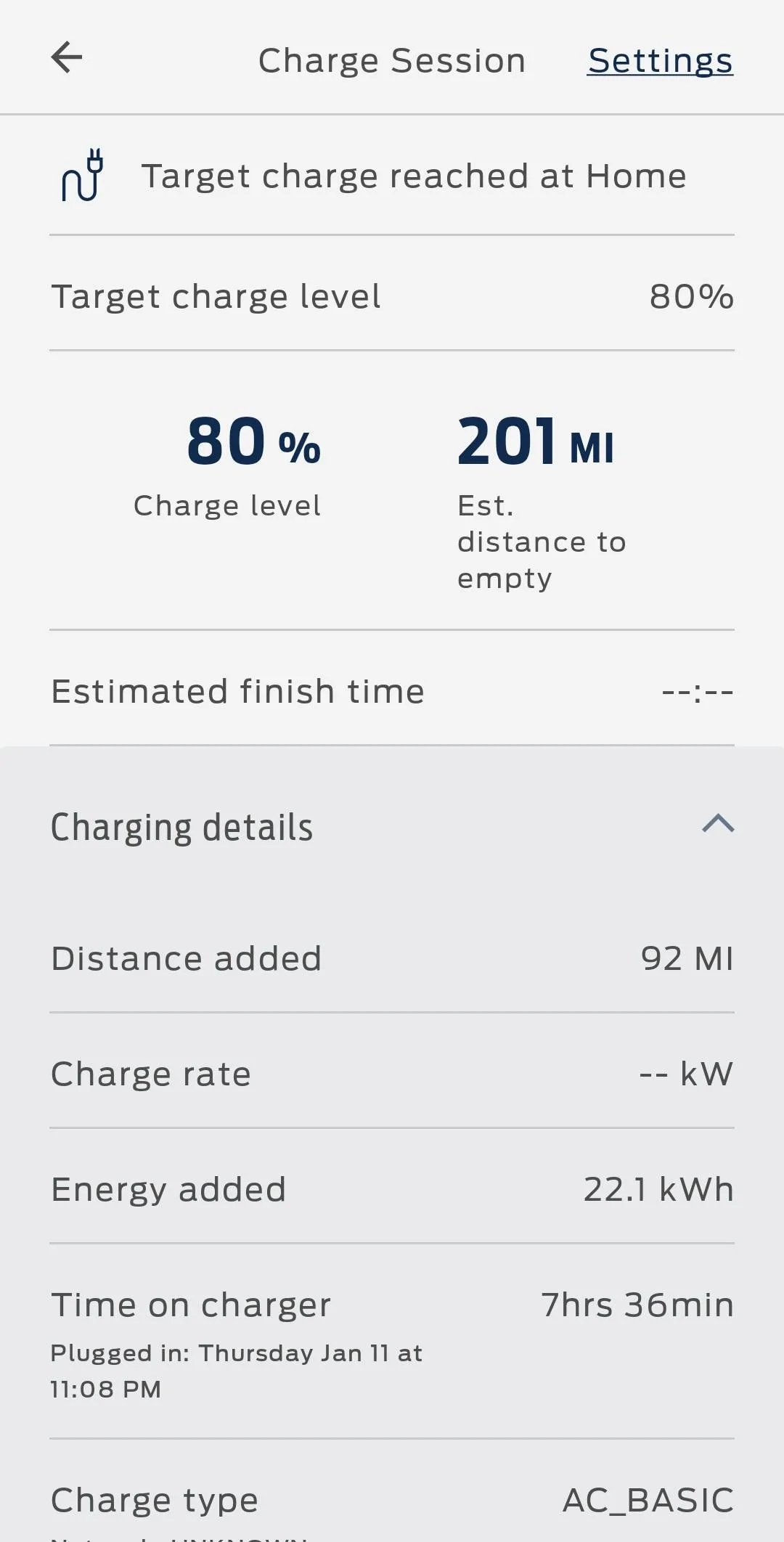
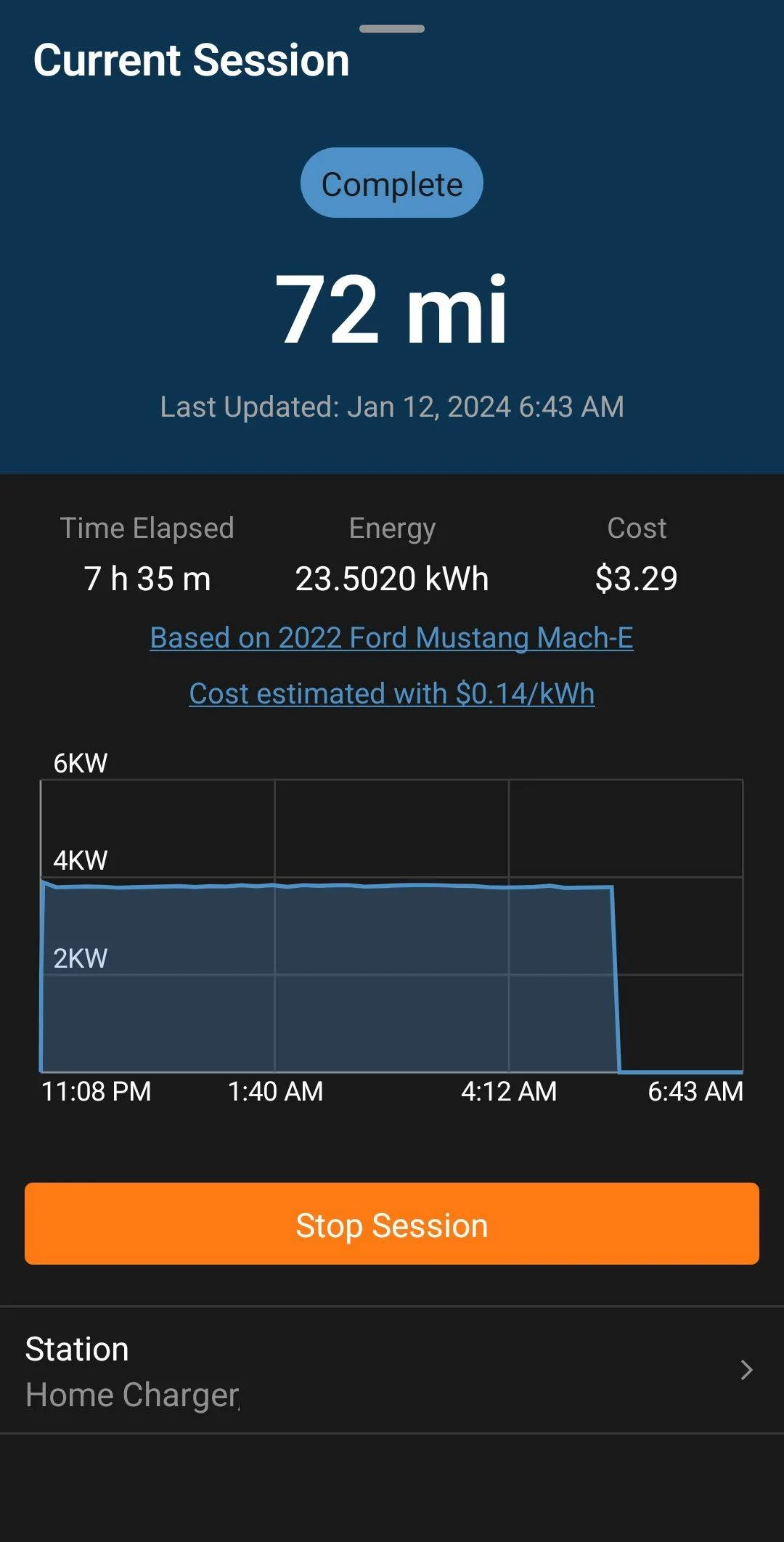
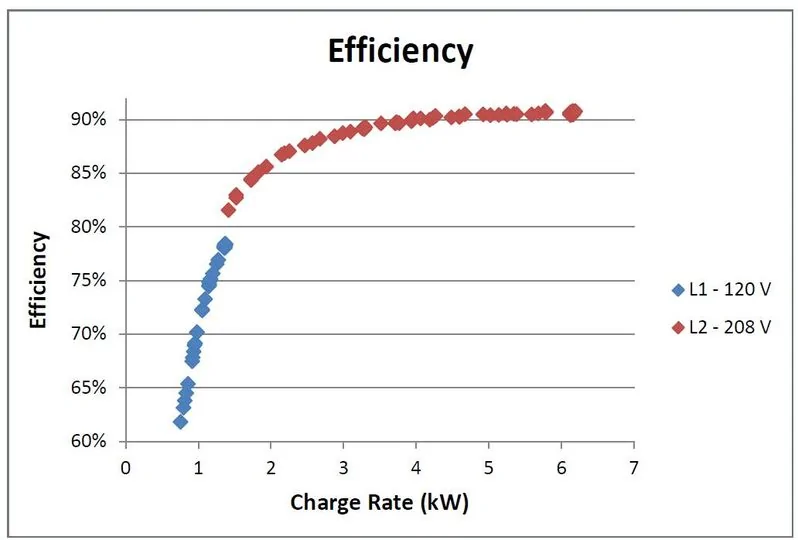
Nice work, appreciate the confirmation! I agree that the difference is due to the fixed overhead of the charging operations plus the charger itself. Efficiency graphs that show a rise in efficiency, a flat zone, then a gradual drop at the far upper end can usually be represented as the sum of two losses, a fixed loss and an I^2*R loss, where the fixed loss dominates at low power, and the I^2*R loss dominate at high power.
But one thing I've reminded people of a lot in terms of losses is that a 40A 240V charger, while powerful for a home appliance, is still quite wimpy compared to the size of the battery. That is only 9.6kW, or less than 0.1C charge rate on the battery, which is extremely gentle. Intentionally going down to a lower charge current than that doesn't get you anything in terms of battery longevity. If you had a 300A charger at home I might recommend you dial it back for daily use, but 40A is still a very easy charge.
But one thing I've reminded people of a lot in terms of losses is that a 40A 240V charger, while powerful for a home appliance, is still quite wimpy compared to the size of the battery. That is only 9.6kW, or less than 0.1C charge rate on the battery, which is extremely gentle. Intentionally going down to a lower charge current than that doesn't get you anything in terms of battery longevity. If you had a 300A charger at home I might recommend you dial it back for daily use, but 40A is still a very easy charge.
Sponsored