ChasingCoral
Well-Known Member
- First Name
- Mark
- Joined
- Feb 3, 2020
- Threads
- 502
- Messages
- 14,318
- Reaction score
- 28,677
- Location
- Maryland
- Vehicles
- 2021 GB E4X FE, 2022 F-150 Lightning Lariat ER
- Occupation
- Retired oceanographer

- Thread starter
- #1
We are on our second multi-month road trip in the Lightning pulling our 24' travel trailer. My thanks to @Ford Motor Company for providing us with one of the prototype NACS to CCS1 adapters and an early install of the PowerUp and backend certificate for Plug & Charge. The trip traveled south from Maryland to the Georgia coast, west to the Florida Gulf coast, and we are ending our westward journey in Texas for the eclipse in April. After that we'll head home via an inland (more northerly) route once the weather's warmer.
We've been charging on Superchargers for about ten days now, and here's the good and the bad, many are exactly as expected.
Good:
Bad:
The next few days of our trip will be along the Florida panhandle, hugging the Gulf coast through Apalachicola, Panama City, and across to Pensacola. This would not have been possible without the adapter. In fact, it will require both Superchargers and CCS DCFCs. Usual range is about 100 miles between charges but is usually dictated by the spacing between chargers, not the battery.
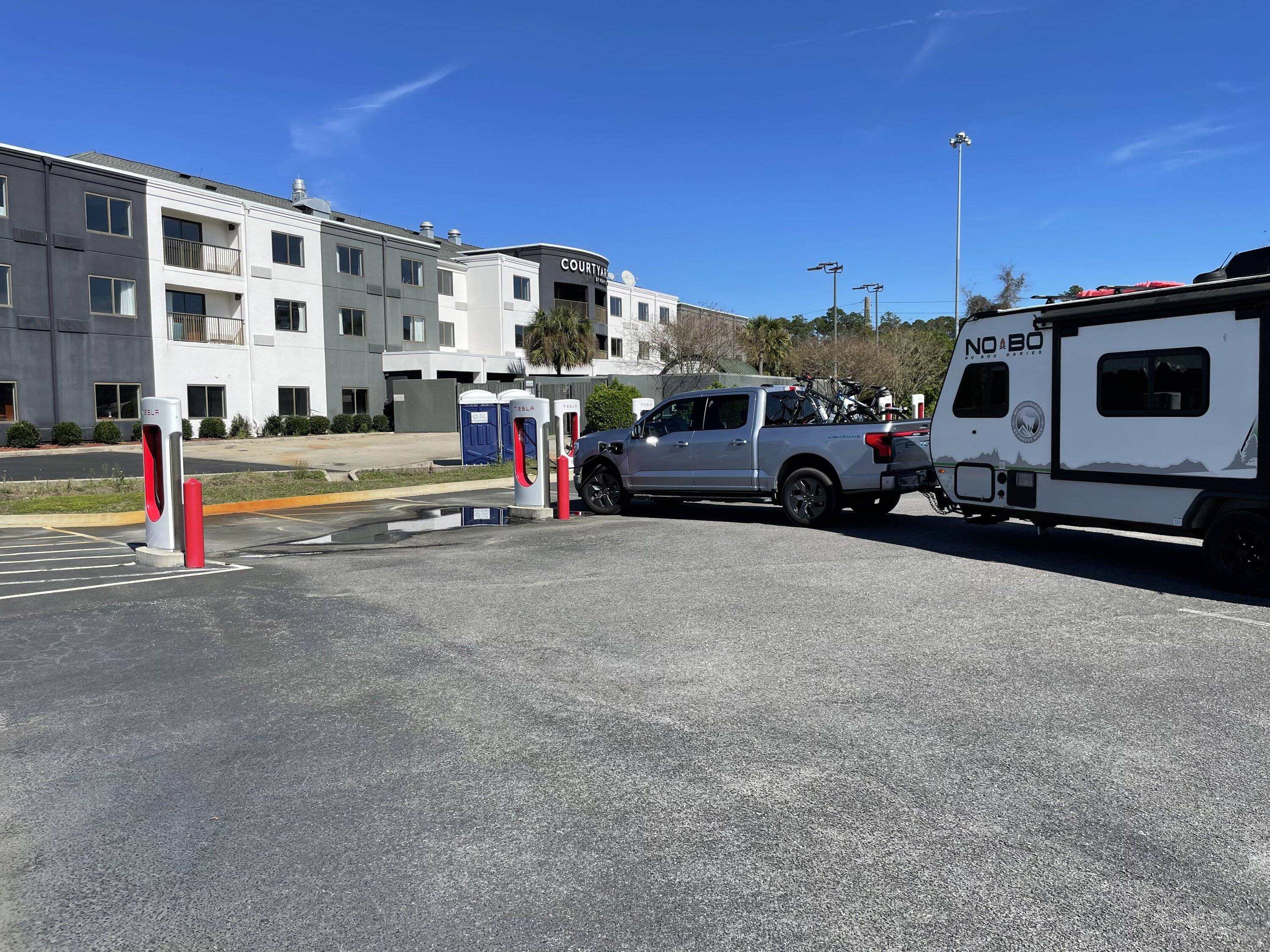
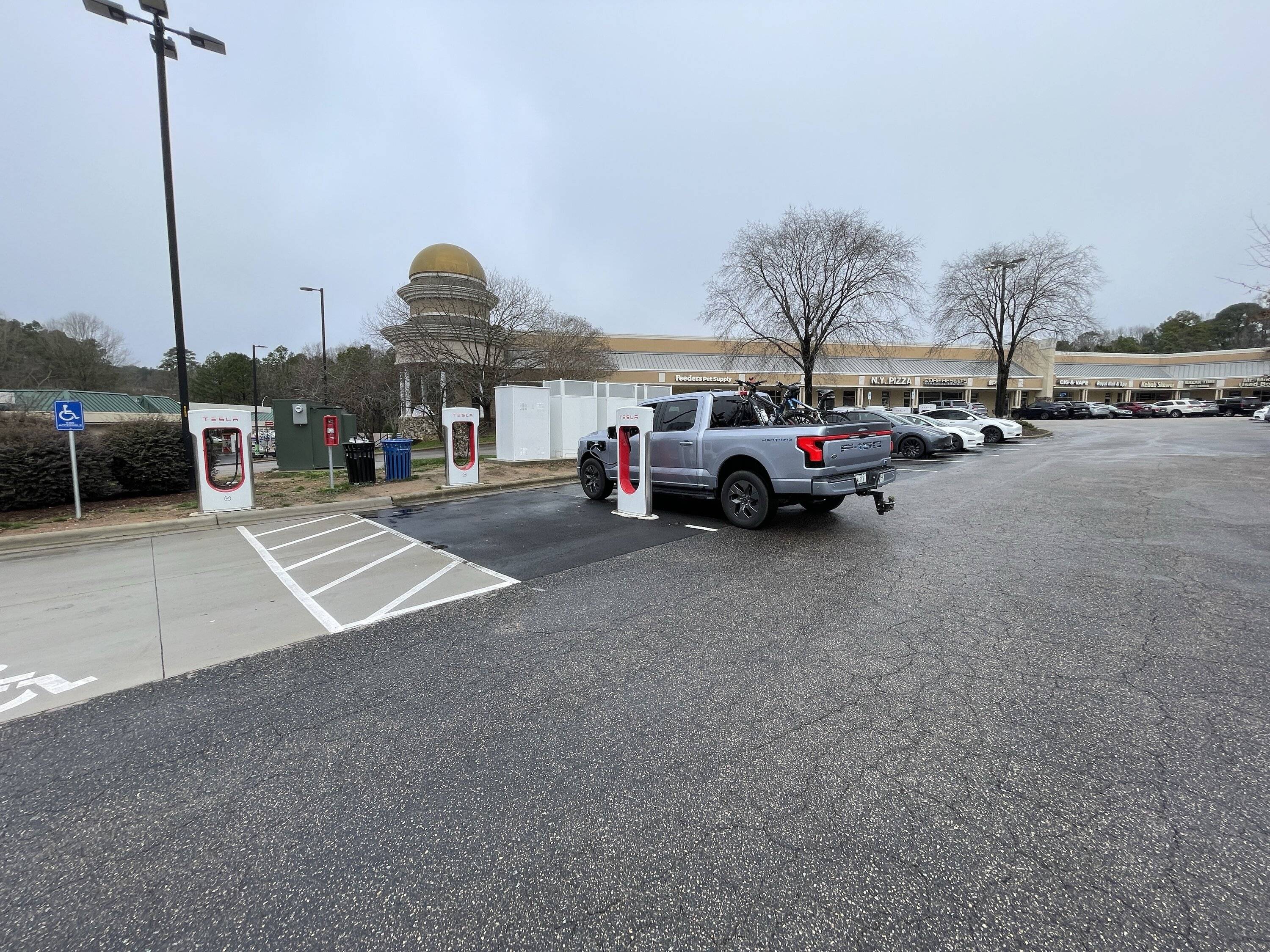
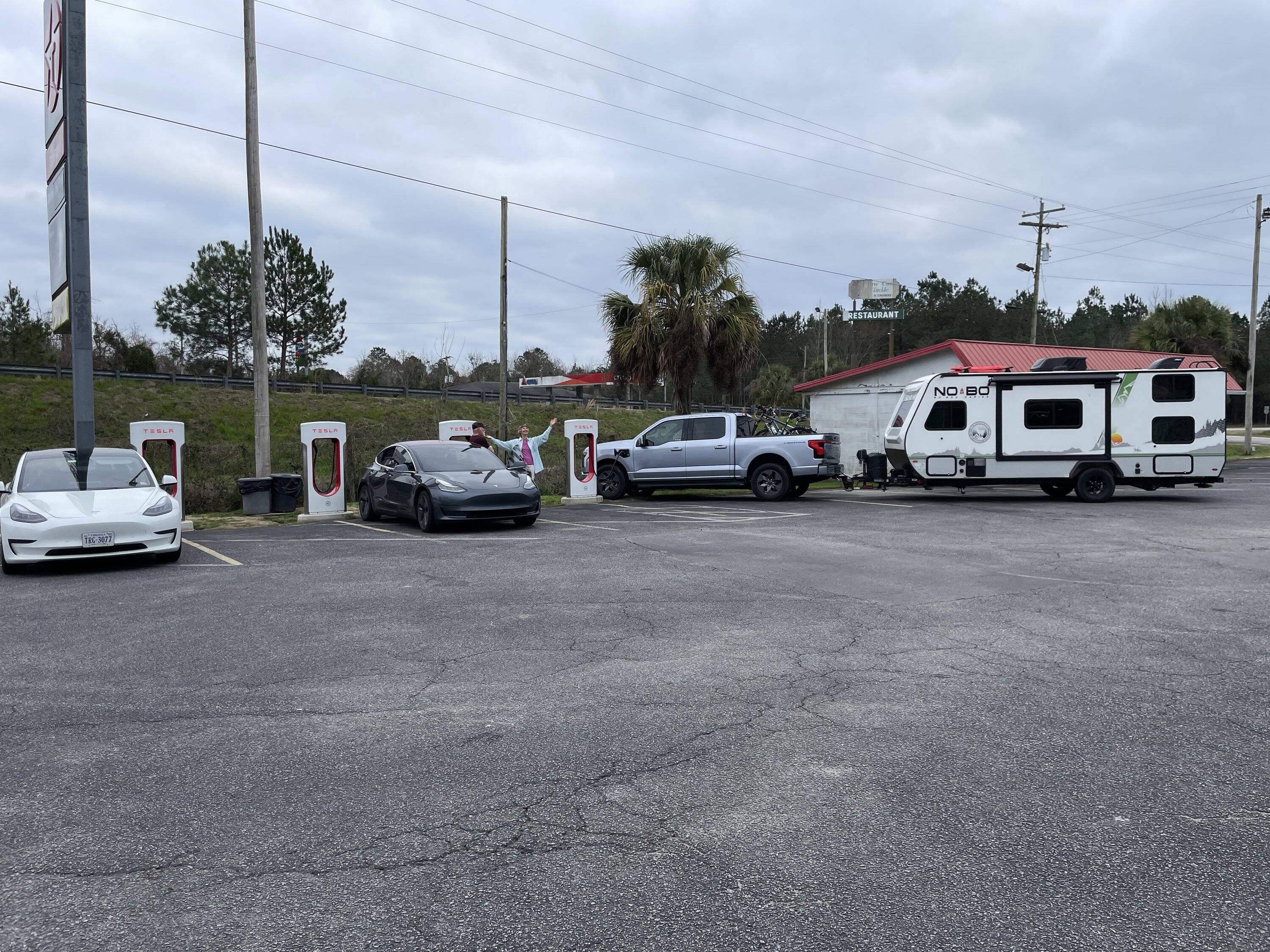
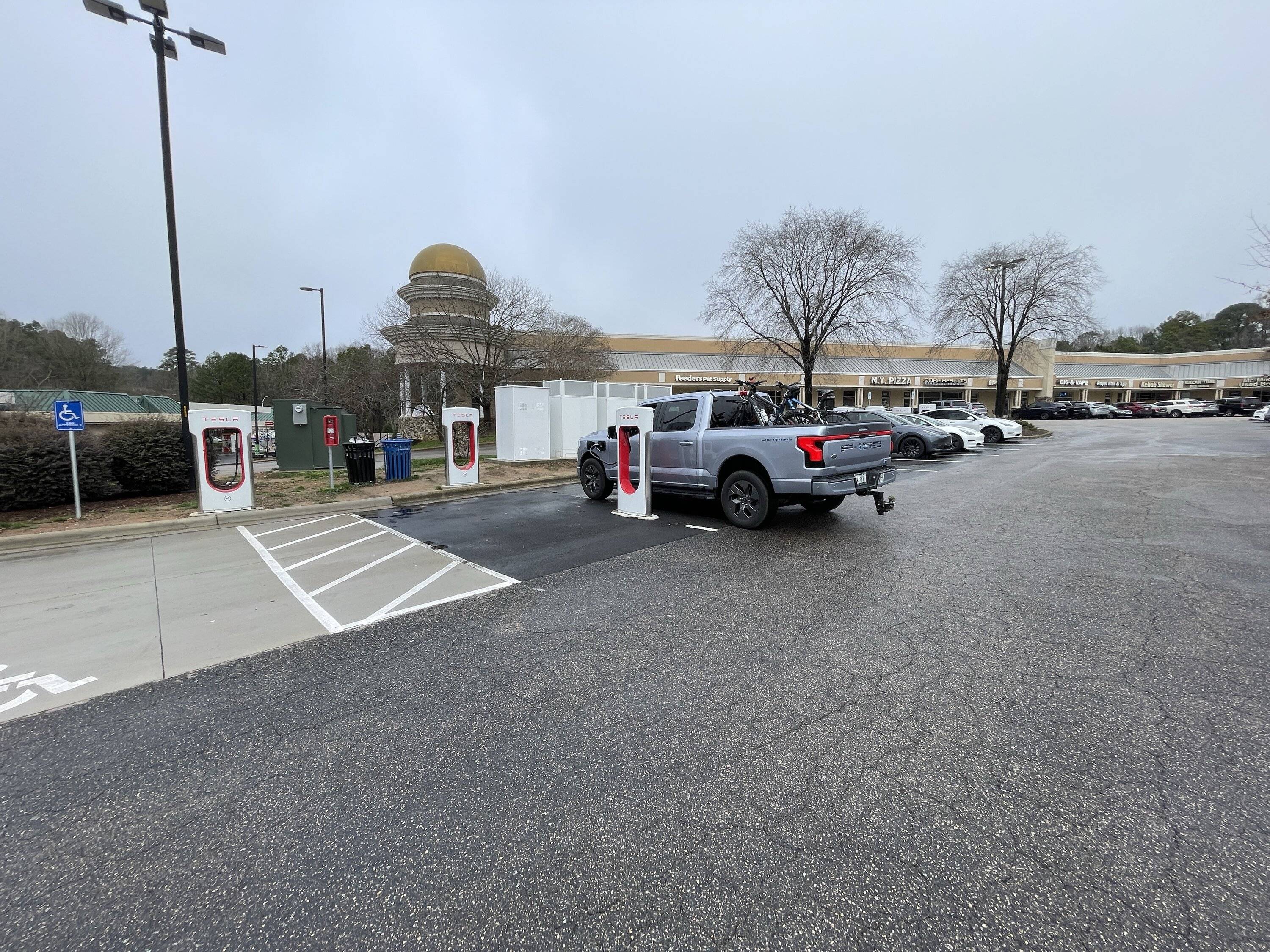
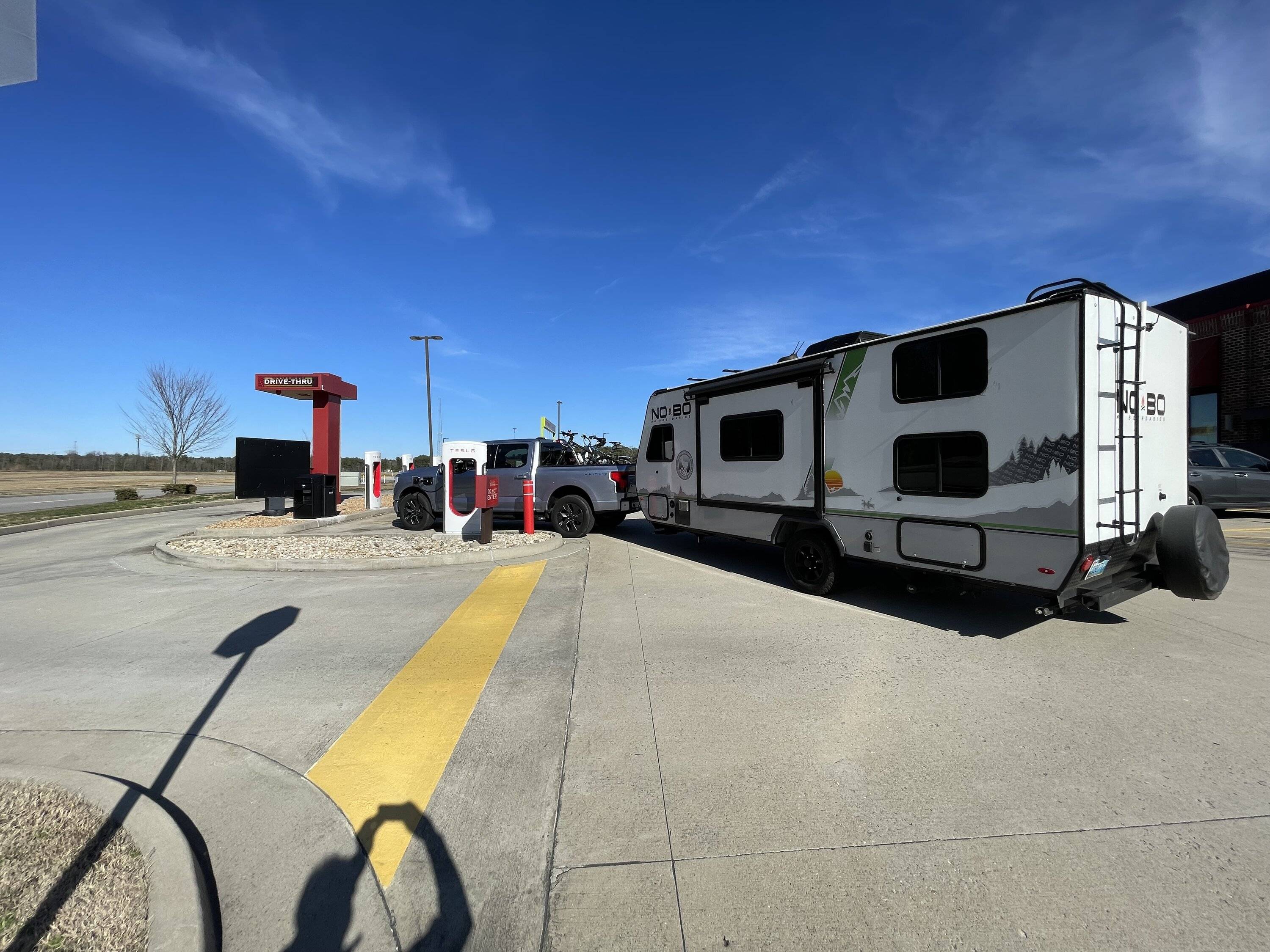
Here are a number of photos of our creative parking. We have not had to unhook to charge yet. The picture of our Lightning charging without the trailer was a session when running around Raleigh without the trailer.It still shows how Lightnings without trailers benefit from the "side saddle" chargers.

We've been charging on Superchargers for about ten days now, and here's the good and the bad, many are exactly as expected.
Good:
- Superchargers are much more reliable than the CCS networks. I've rarely seen a dead charger and the app notifies you in advance which one is dead so you can avoid it.
- Charging session initiation is faster using the Tesla app than any other app except perhaps ChargePoint.
- Charging session initiation is faster using Plug & Charge with Tesla than with Electrify America.
- Plug & Charge with Tesla has worked every time.
- A large percentage of sites have one or two "side-mounted" chargers that are more friendly for Ford EVs and EVs pulling trailers.
- There has always been room to charge despite issues of charge ports and cable length.
- There are generally more Superchargers than CCS chargers.
- The combination of Superchargers and CCS chargers has opened up routes I couldn't have taken last year.
- I've had several good discussions with Tesla drivers who have been happy to see this move. No one has been upset (yet).
Bad:
- Creative parking is a must as
- Ford EVs have their charge ports in the wrong place for Tesla chargers.
- Cables are too short.
- Lack of displays on v3 chargers means you have to rely on the Tesla and Ford Pass apps for lots of things:
- If a charger is down, only the Tesla app really tells you.
- Your FordPass app is all you have to tell you your charging speed and %SOC
- Tesla discount charging requires activation of charging sessions in the app -- P&C will only give you the retail price (just like EA).
- A problem had cropped us so that I could P&C at Superchargers but not at EA chargers. Ford seems to have fixed this by adjusting the certificates on the back end.
- We have found a number of supercharger locations not open to Fords. The only reliable way to know is to check the Tesla app. We've had useable Tesla chargers not show up in Charge Assist and chargers found in Charge Assist that were not useable.
The next few days of our trip will be along the Florida panhandle, hugging the Gulf coast through Apalachicola, Panama City, and across to Pensacola. This would not have been possible without the adapter. In fact, it will require both Superchargers and CCS DCFCs. Usual range is about 100 miles between charges but is usually dictated by the spacing between chargers, not the battery.
Here are a number of photos of our creative parking. We have not had to unhook to charge yet. The picture of our Lightning charging without the trailer was a session when running around Raleigh without the trailer.It still shows how Lightnings without trailers benefit from the "side saddle" chargers.
Sponsored