RobbertPatrison
Well-Known Member
- Joined
- Mar 24, 2022
- Threads
- 13
- Messages
- 187
- Reaction score
- 492
- Location
- Silicon Valley, California
- Vehicles
- Ice White Mustang Mach-E

- Thread starter
- #1
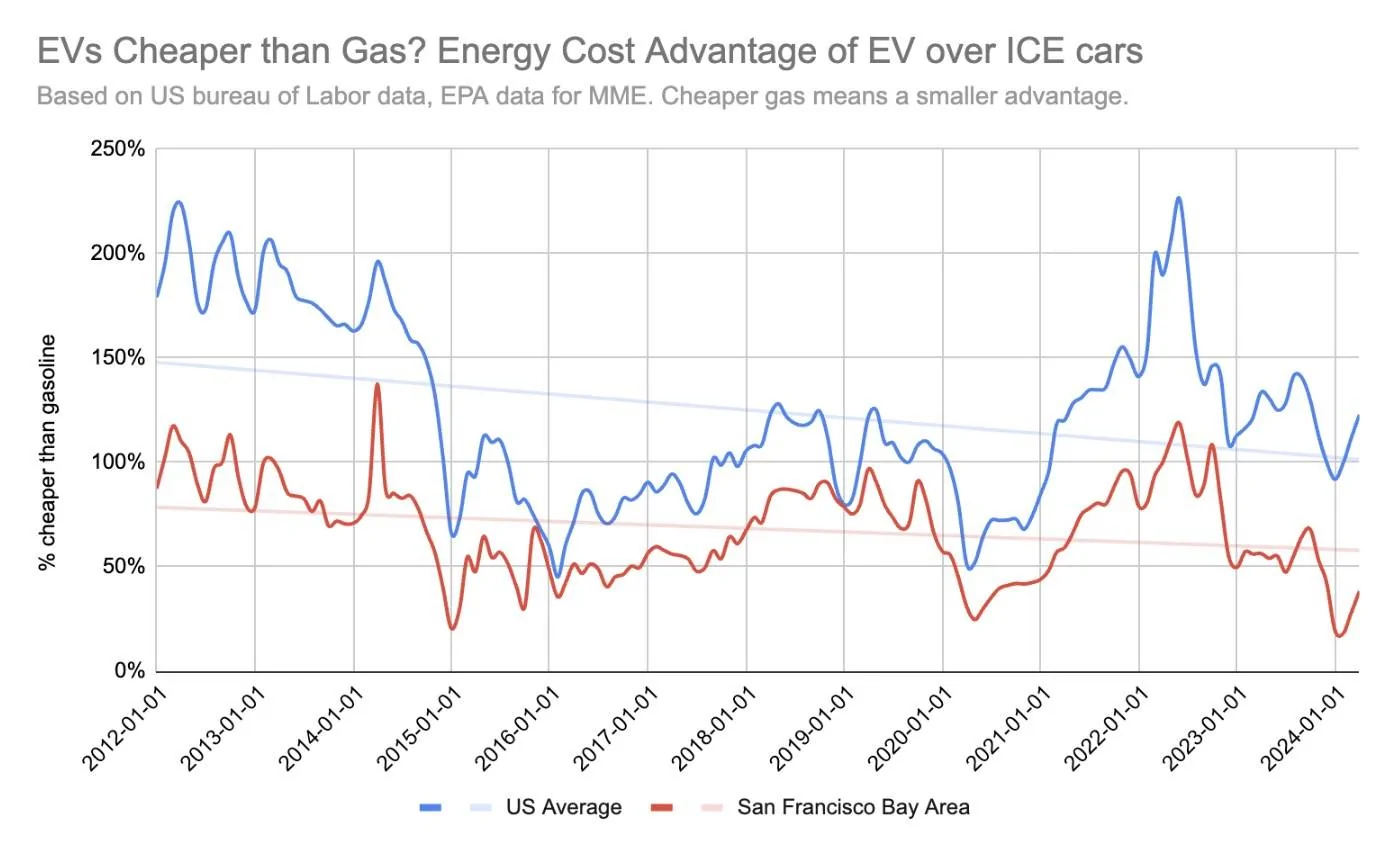
Our electric Mach-E remains a more economical choice on a per-mile basis compared to gasoline-powered cars, despite a narrowing of the cost gap. An EV like the MME has an average energy cost that's roughly 100% lower (twice as cheap) per mile driven when compared to traditional internal combustion engine vehicles.
However, this advantage has shrunk from a previous high of 150% due to a faster rise in average electricity rates compared to gasoline prices. This chart illustrates this fluctuation in cost advantage based on gas price movements.

The chart is based on detailed monthly data downloaded from the US Bureau of Labor website. I took the EPA usage of 26 MPG for a new ICE car and 2.8 miles/kWh for the electric MME. The data will not be much different for typical EVs.
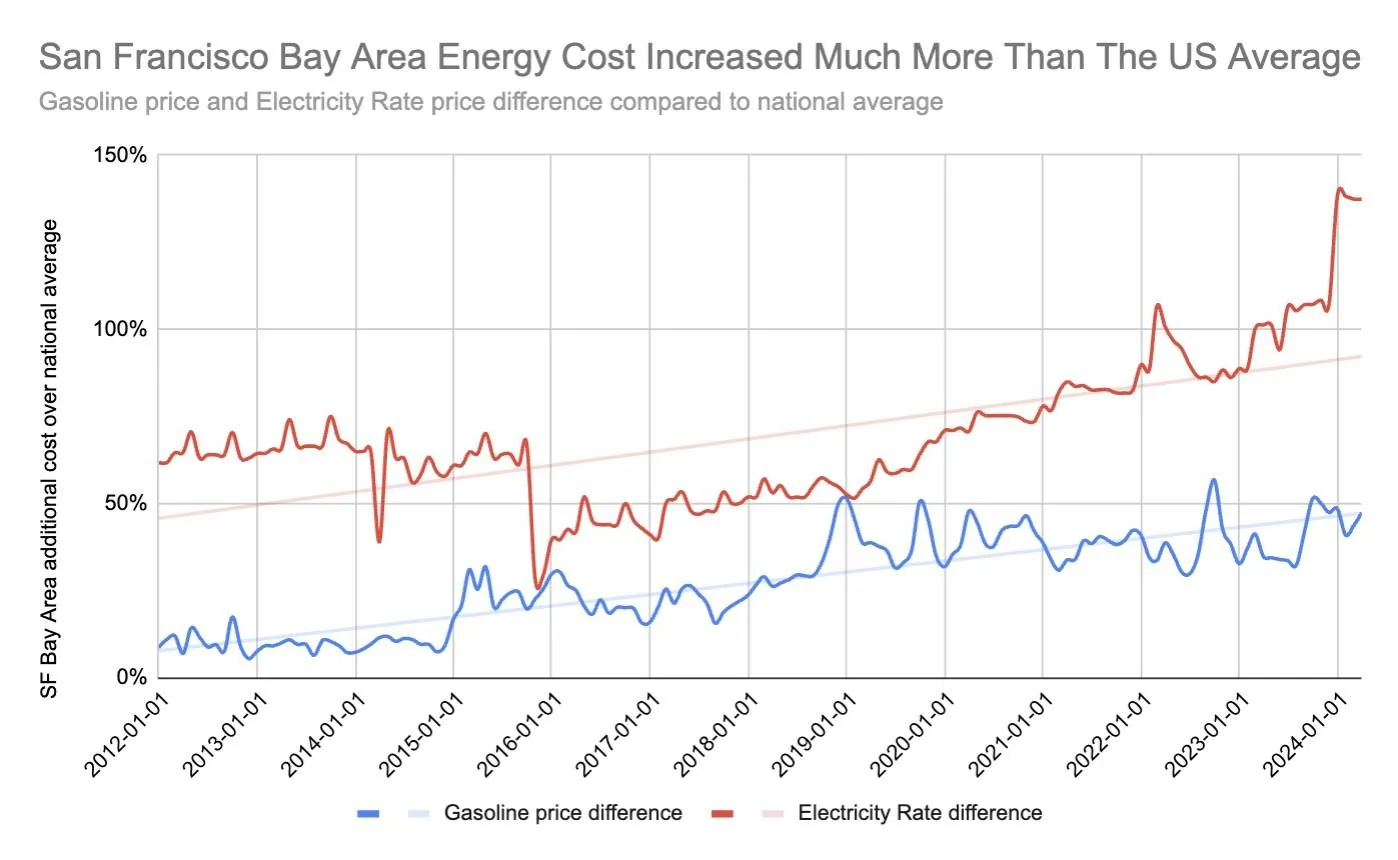
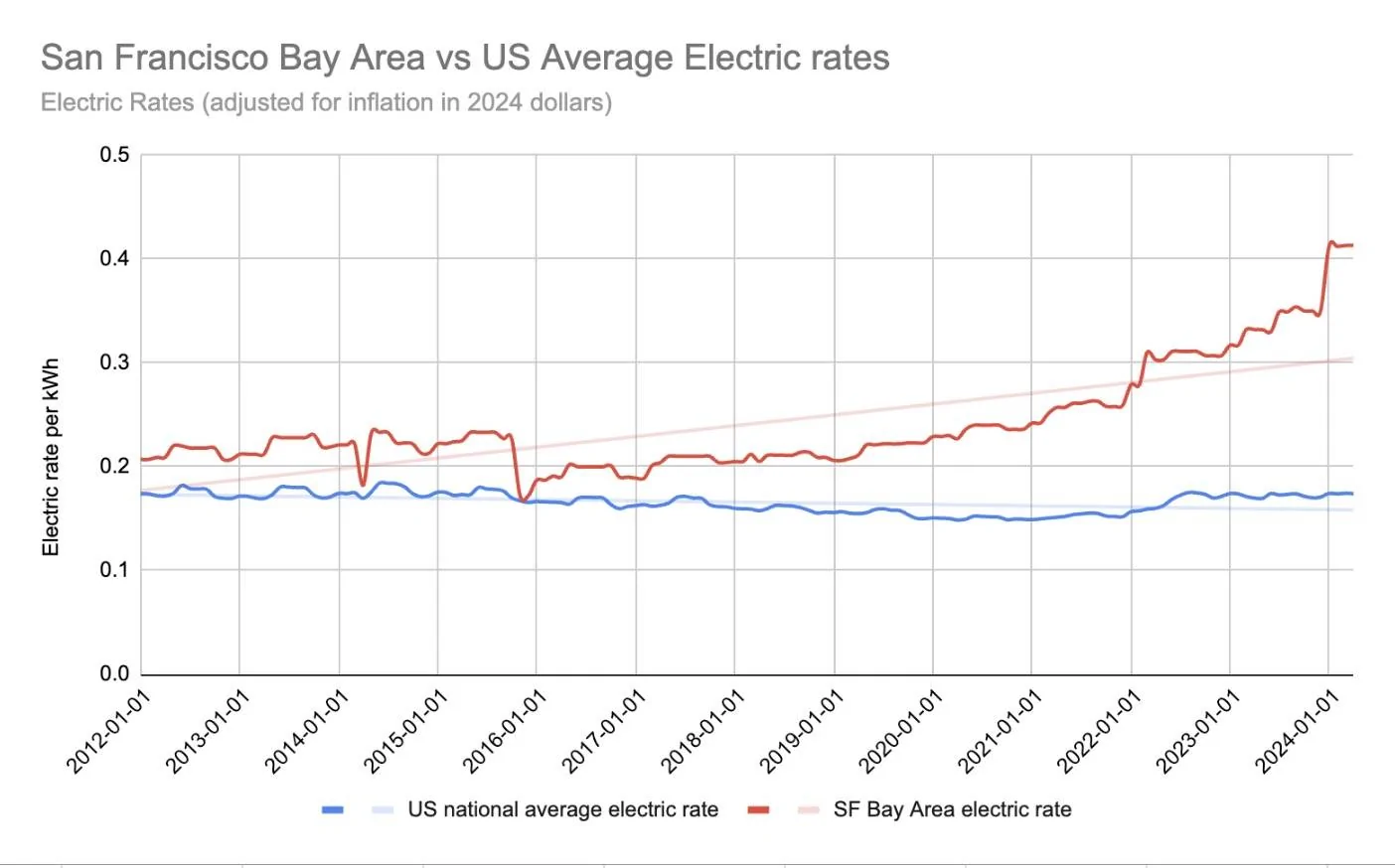
Your individual mileage advantage varies depending on what you would pay for gas and are paying for electricity. My MME is only 50% cheaper because I live in Silicon Valley where our energy monopolist PG&E has jacked up prices dramatically. Currently, my household electric gate is a whopping $0.41/kWh, 137% more than the national average:

The inflated rates of PG&E significantly impact the overall cost savings.
When adjusted for inflation, national average electricity rates have remained relatively stable over the past twelve years, with the exception of Silicon Valley.

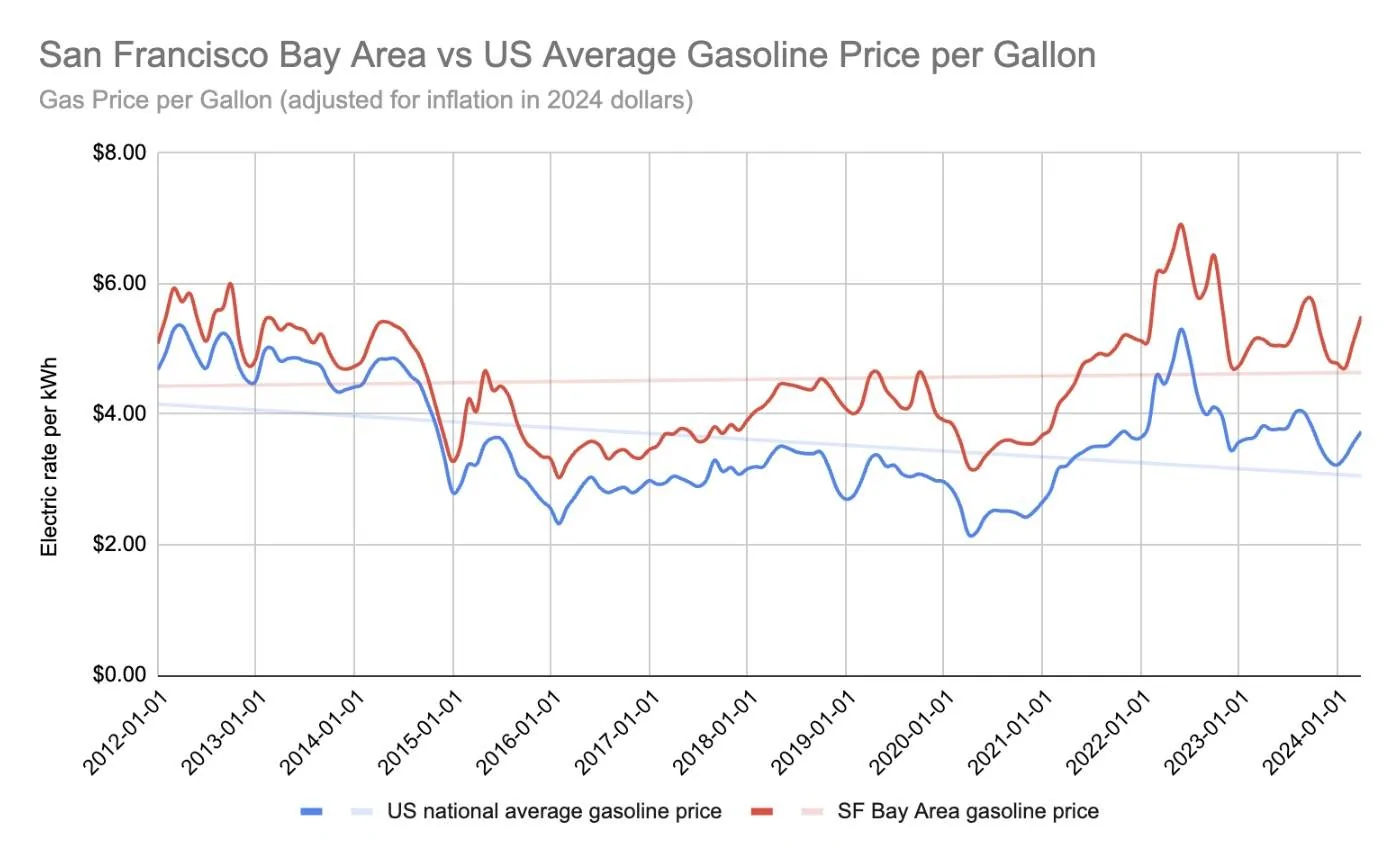
Conversely, gasoline prices have actually decreased compared to 2012, except for the Bay Area:

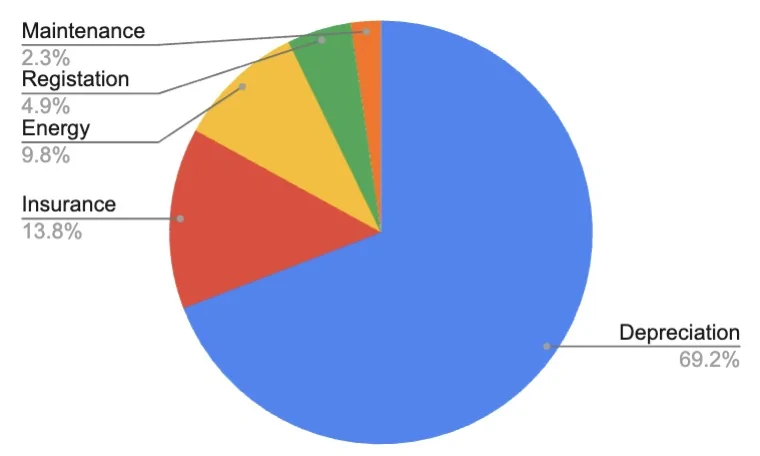
Despite the rise in electricity rates, EVs continue to be the more economical option in terms of energy cost. However, energy cost is just one smaller factor influencing total ownership costs. Depreciation dominates:

However, this advantage has shrunk from a previous high of 150% due to a faster rise in average electricity rates compared to gasoline prices. This chart illustrates this fluctuation in cost advantage based on gas price movements.
The chart is based on detailed monthly data downloaded from the US Bureau of Labor website. I took the EPA usage of 26 MPG for a new ICE car and 2.8 miles/kWh for the electric MME. The data will not be much different for typical EVs.
Your individual mileage advantage varies depending on what you would pay for gas and are paying for electricity. My MME is only 50% cheaper because I live in Silicon Valley where our energy monopolist PG&E has jacked up prices dramatically. Currently, my household electric gate is a whopping $0.41/kWh, 137% more than the national average:
The inflated rates of PG&E significantly impact the overall cost savings.
When adjusted for inflation, national average electricity rates have remained relatively stable over the past twelve years, with the exception of Silicon Valley.
Conversely, gasoline prices have actually decreased compared to 2012, except for the Bay Area:
Despite the rise in electricity rates, EVs continue to be the more economical option in terms of energy cost. However, energy cost is just one smaller factor influencing total ownership costs. Depreciation dominates:
Sponsored
Last edited:
 ?
?