

NY_Cade69
Well-Known Member
Just grin and say "There are a lot of hot guys in evs out there"She laughed and said - "yeah, well I look awesome in this big truck and your space ship sounds g@y when you drive by"

Sponsored
Just grin and say "There are a lot of hot guys in evs out there"She laughed and said - "yeah, well I look awesome in this big truck and your space ship sounds g@y when you drive by"
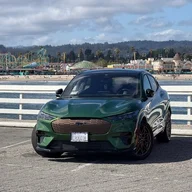

Nobody looks good in a big, smelly, noisy truck. Nobody ever has. Nobody ever will. And why is your wife using 'gay' as a slur? Homophobia is even less attractive than "eco"deisel trucks.She laughed and said - "yeah, well I look awesome in this big truck and your space ship sounds g@y when you drive by"





You need a good attorney, like those who advocate for dads’ rights. You’ll get full custody and void any prenups, especially if you show the judge all the bruises. Just be brave! You’re not only doing it for yourself, but for all the men out there.I tried to use logic and even showed her this: https://www.switch2zero.com/resources/blogs/diesel-vs-electric-cars
She laughed and said - "yeah, well I look awesome in this big truck and your space ship sounds g@y when you drive by"
I don't think I am winning anything today, might just go back to bed and see how tomorrow pans out.

This is the only correct answer.Just say “Yes, dear” and move on.
My wife bought and owns a 2020 F-150 Raptor. Performance Blue. Fully loaded. It’s hers. I’m allowed to wash and detail it. The end.I've seen plenty of ladies that looked very attractive as Copilot or Pilot of a good Ole American pickup truck

Speaking of co-pilot...I love the idea of BlueCruise while eating a cheeseburger.Geeez guys.
Have you never had the pleasure of marital banter? It's some of that spice of life. The best kind.
And although I'm an old geezer way past my prime, I've seen plenty of ladies that looked very attractive as Copilot or Pilot of a good Ole American pickup truck.
Never been to a county fair? Or a rodeo?
Your wife is right, always...Terminology is different between generations, even emojis.
Generation Common Interpretation of Baby Boomers (1946–1964) "Looks good," "I agree," "Message received." Usually seen as positive and efficient. Generation X (1965–1980) Similar to Boomers. Often means approval, acknowledgment, or "thanks." Little emotional meaning attached. Millennials (1981–1996) Mixed. Can be genuine approval, but may also feel somewhat impersonal depending on context. Generation Z (1997–2012) More likely to interpret it as cold, dismissive, passive-aggressive, or ending a conversation, especially in casual chats.
So while you think of it as homophobic and rude, other people do not.
Generation Common Experience with the Word "Gay" Baby Boomers Originally knew "gay" to mean "happy" or "carefree." By adulthood it primarily meant homosexual. Generally used literally rather than as slang. Generation X Grew up during the 1980s–90s when "gay" was often used as a casual insult meaning "stupid," "lame," or "uncool," even when not referring to sexual orientation. Millennials Many used "that's so gay" as slang in middle and high school during the late 1990s and early 2000s. Over time, awareness grew that this usage was hurtful, and many stopped using it. Generation Z Generally understands "gay" almost exclusively as referring to sexual orientation or LGBTQ+ identity. Using it as a synonym for "bad" or "stupid" is much less common and is often viewed as offensive.
So, step off your high horse/pony and see that this thread is meant for playful banter between spouses and acquiring actual talking points to help justify why my car is better than hers.
On this, I will conceed!Your wife is right, always...
Ain't no way anyhing is better than a pickup in Texas...
Except, perhaps In and Out in any other state...
This is a pathetic excuse to continue doing what one has always done, regardless of the fact that we live in a constantly changing society. What it actually means is "I'm going to say whatever I want, and I don't care if it does harm to others."Terminology is different between generations, even emojis.
I'm definitively Gen X, born in '74. I vividly remember when using the word 'gay' as an insult was common, and widely considered acceptable "banter." That was decades ago - I was still an ignorant kid at the time (yes, I'm including my 20s as "ignorant kid" period). It has long been considered unacceptable by most to use a person's immutable traits as an insult. I prefer to grow over time and not to use my generation as an excuse for shitty behavior, so I simply don't do that anymore. Neither should anyone else who wants to be a decent person. It's not difficult to give it up.So while you think of it as homophobic and rude, other people do not.
No.So, step off your high horse/pony and see that this thread is meant for playful banter between spouses and acquiring actual talking points to help justify why my car is better than hers.

Try this,I tried to use logic and even showed her this: https://www.switch2zero.com/resources/blogs/diesel-vs-electric-cars
She laughed and said - "yeah, well I look awesome in this big truck and your space ship sounds g@y when you drive by"
I don't think I am winning anything today, might just go back to bed and see how tomorrow pans out.
Mach-E versus Ram EcoDiesel: when does the EV repay its manufacturing emissions?
I started work on this last night during one of my frequent bouts of cat zoomy-induced insomnia. I went looking for credible lifecycle data rather than another round of “EVs are automatically clean” versus “battery production makes EVs worse forever.” Neither claim survives contact with the numbers.
My comparison is a new 2021–22 Mustang Mach-E AWD Extended Range against a new Ram 1500 EcoDiesel, particularly the 4×4. The result depends on the electrical grid, but the Mach-E has a greenhouse-gas break-even point even on Hawai‘i’s relatively carbon-intensive grid.
My conservative estimate is:
After that point, the Mach-E’s cumulative greenhouse-gas emissions are lower, and the difference continues to grow with mileage.
- U.S. average electricity: approximately 20,000–23,000 miles
- Hawai‘i Island electricity: approximately 26,000–30,000 miles
- Hawai‘i statewide-average electricity: approximately 32,000–38,000 miles
TL;DR
Bottom line: Battery production gives the Mach-E a genuine initial emissions disadvantage, but not a permanent one. Even using Hawai‘i’s relatively carbon-intensive electricity and assumptions favorable to the EcoDiesel, the Mach-E normally recovers that disadvantage well within the vehicle’s useful life.
- Manufacturing a Mach-E creates more greenhouse-gas emissions than manufacturing a comparable conventional vehicle, primarily because of the battery. Ford estimates the initial disadvantage at approximately 6 metric tons CO₂e.
- The Mach-E then produces much lower emissions per mile. EPA-based estimates are approximately:
- 129 g CO₂e/mile using the U.S. electrical average
- 190 g/mile using EPA’s non-O‘ahu Hawai‘i regional factor
- 234 g/mile using the Hawai‘i statewide average
- A Ram 1500 EcoDiesel produces approximately:
- 424 g CO₂/mile at 24 mpg
- 392 g/mile at 26 mpg
- Under these assumptions, the Mach-E repays its additional manufacturing emissions after approximately:
- 20,000–23,000 miles on the average U.S. grid
- 26,000–30,000 miles using the non-O‘ahu Hawai‘i regional factor
- 32,000–38,000 miles using the Hawai‘i statewide average
- EPA’s non-O‘ahu figure includes Hawai‘i Island, Maui County and the other non-O‘ahu islands. It is a reasonable proxy for Hawai‘i Island, but it is not a HELCO- or Hawai‘i Island-specific measurement.
- The calculation is conservative toward the Ram: it assumes the full-size pickup has the manufacturing footprint of a smaller ICE SUV and excludes oil extraction, refining and diesel delivery emissions.
- At 150,000 miles, using the non-O‘ahu regional electricity factor, the Mach-E finishes approximately 29 metric tons CO₂e ahead of a 24-mpg EcoDiesel—even after accounting for the Mach-E’s higher manufacturing emissions and before adding the upstream diesel-fuel emissions.
- This comparison applies when choosing between two new vehicles. Replacing an already-existing, usable diesel truck with a newly manufactured Mach-E produces a later break-even—approximately 58,000 miles using the same non-O‘ahu regional factor.
Manufacturing emissions
Ford has published a lifecycle calculation specifically using the 2022 Mach-E AWD Extended Range as its EV example. For vehicle materials, manufacturing and end-of-life, Ford uses:
Ford attributes those vehicle-cycle figures to peer-reviewed research by Woody et al. Its complete comparison estimates that the Mach-E avoids 34.6 metric tons of cradle-to-grave CO₂e over 150,000 miles compared with a gasoline Escape AWD.
- Battery-electric SUV: 13.5 metric tons CO₂-equivalent
- Conventional ICE SUV: 7.5 metric tons CO₂e
- Initial EV manufacturing disadvantage: 6.0 metric tons CO₂e
The figures and methodology are on pages 30–31 of Ford’s CDP Climate Report.
There is an important limitation: Ford’s 7.5-ton comparison is a generic ICE SUV—not a Ram 1500. I could not find a credible, model-specific manufacturing lifecycle assessment for the EcoDiesel Ram. A full-size pickup probably requires more material and manufacturing energy than a smaller ICE SUV, so giving the Ram the 7.5-ton figure is a conservative assumption that favors the Ram and delays the calculated EV break-even point.
Energy consumption
The EPA rating for the 2021 Mach-E AWD Extended Range is:
That works out to:
- 37 kWh/100 miles
- 90 MPGe combined
- 270-mile range
37 kWh ÷ 100 miles = 0.37 kWh/mile
The EPA-derived vehicle listing is available here.
EPA’s latest eGRID tables report the following electrical-generation greenhouse-gas intensities:
The underlying data are in EPA’s eGRID 2023 summary tables, with additional information on the EPA eGRID page.
- U.S. average: 770.9 lb CO₂e/MWh
- Hawai‘i Island grid, HIMS: 1,133.3 lb CO₂e/MWh
- Hawai‘i statewide average: 1,394.7 lb CO₂e/MWh
After converting pounds per megawatt-hour to grams per kilowatt-hour and multiplying by 0.37 kWh/mile, the Mach-E produces approximately:
For a car charged on Hawai‘i Island, the HIMS figure is more relevant than the statewide average. O‘ahu’s more fossil-intensive generation raises the statewide figure.
- U.S. grid: 129 g CO₂e/mile
- Hawai‘i Island grid: 190 g CO₂e/mile
- Hawai‘i statewide grid: 234 g CO₂e/mile
EcoDiesel emissions
Depending on configuration, the Ram 1500 EcoDiesel was rated at approximately:
EPA states that burning one gallon of diesel produces 10,180 grams of CO₂. The EPA calculation and explanation are here.
- EcoDiesel 4×4: 24 mpg combined
- More-efficient 4×2 versions: approximately 26 mpg combined
For the 24-mpg 4×4:
10,180 g/gallon ÷ 24 mpg = 424 g CO₂/mile
For a 26-mpg version:
10,180 g/gallon ÷ 26 mpg = 392 g CO₂/mile
Those are tailpipe figures only. They do not include oil extraction, transport, refining or delivery of diesel to the filling station.
Calculating the break-even point
The basic formula is:
Break-even mileage = additional EV manufacturing emissions ÷ operating-emissions advantage per mile
Using Ford’s 6,000-kg initial manufacturing disadvantage for the Mach-E, the 24-mpg EcoDiesel 4×4 produces the following results:
Giving the Ram the more favorable 26-mpg figure moves the break-even points to approximately:
- U.S. grid:
6,000 kg ÷ (0.424 – 0.129 kg/mile) = approximately 20,300 miles- Hawai‘i Island grid:
6,000 kg ÷ (0.424 – 0.190 kg/mile) = approximately 25,600 miles- Hawai‘i statewide grid:
6,000 kg ÷ (0.424 – 0.234 kg/mile) = approximately 31,600 miles
That produces my reasonable conservative range of approximately 26,000–30,000 miles on Hawai‘i Island for the Mach-E versus an EcoDiesel Ram.
- U.S. grid: 22,900 miles
- Hawai‘i Island: 29,800 miles
- Hawai‘i statewide: 38,200 miles
What about producing and delivering the energy?
The calculations above compare power-plant emissions with diesel tailpipe emissions. They do not pretend that electricity magically appears at the outlet or diesel magically appears in the tank.
EPA eGRID includes emissions at electrical generating plants but not every upstream emission from extracting, refining, and transporting their fuel. That omission matters in Hawai‘i because petroleum fuels must be transported here.
Likewise, the diesel calculation excludes extraction, crude-oil transportation, refining and fuel delivery. Those additional emissions can be evaluated using the Department of Energy’s GREET lifecycle model, which is designed for well-to-wheels transportation comparisons.
A completely consistent location-specific well-to-wheels calculation would add upstream emissions to both sides. I have not found a published GREET pathway tailored specifically to a Mach-E charged on the Hawai‘i Island grid and diesel delivered to Hawai‘i. I would rather identify that limitation than manufacture a deceptively precise number.
Adding the omitted fuel-supply emissions is unlikely to reverse the result. Diesel’s upstream emissions are added to its already much higher 392–424 g/mile combustion figure. Hawai‘i electricity also acquires upstream fuel emissions, but the Mach-E only consumes 0.37 kWh per mile and converts that energy to motion much more efficiently.
What happens over the vehicle’s life?
At 150,000 miles, using the Hawai‘i Island grid and a 24-mpg EcoDiesel:
That leaves the Mach-E ahead by approximately 29 metric tons CO₂e, even before adding diesel production and delivery emissions. A cleaner future electrical grid or partial solar charging would increase that advantage.
- Mach-E electricity emissions: approximately 28.5 metric tons CO₂e
- EcoDiesel tailpipe emissions: approximately 63.6 metric tons CO₂
- Mach-E’s additional manufacturing emissions: approximately 6 metric tons
One necessary distinction
This comparison assumes a choice between two newly manufactured vehicles.
Replacing a perfectly usable existing diesel truck with a newly manufactured EV is a different calculation. The existing truck’s manufacturing emissions have already occurred, while the entire new EV manufacturing footprint must be added. Using the full 13.5-ton Mach-E vehicle-cycle figure rather than only its 6-ton disadvantage would move the Hawai‘i Island break-even point to roughly 58,000 miles.
Conversely, if both vehicles already exist, their manufacturing emissions are sunk. From that point forward, the Mach-E has the lower operating greenhouse-gas emissions immediately.
Bottom line
The Mach-E begins life with a real manufacturing-emissions disadvantage, primarily because of its battery. That should not be ignored.
The EcoDiesel has lower manufacturing emissions but substantially higher emissions with every mile driven. Even using assumptions favorable to the Ram, the Mach-E recovers its initial disadvantage at approximately 26,000–30,000 miles on Hawai‘i Island and somewhat earlier on the average U.S. grid.
The exact mile cannot honestly be known without model-specific Ram manufacturing data and a full Hawai‘i-specific well-to-wheels energy analysis. But the available evidence is sufficient to reject the claim that a Mach-E charged in Hawai‘i can never overcome its battery-production emissions. It can, and under conservative assumptions it does so fairly early in a normal vehicle lifetime.
Methodology: I was aware of the existence of the various documents, such as the GREET info and Ford's analysis. I gleaned the appropriate data from the linked sources and fed it into ChatGPT in work mode. Then I did a basic fact check and math check. ChatGPT makes mistakes, and so do I. While the estimates and conclusions are probably reasonably accurate, they reflect my own work, maybe not yours. In addition, this is very much in the measure it with a micrometer and cut it with a meat axe realm of existence. As always, your mileage may vary.

If you’re arguing with your wife, you’ve already lostI tried to use logic and even showed her this: https://www.switch2zero.com/resources/blogs/diesel-vs-electric-cars
She laughed and said - "yeah, well I look awesome in this big truck and your space ship sounds g@y when you drive by"
I don't think I am winning anything today, might just go back to bed and see how tomorrow pans out.


