Ford Charger for Mach-E

Stickboy46

Well-Known Member
Joined
Jan 29, 2020
Threads
0
Messages
209
Reaction score
229
Location
Kansas
Vehicles
2020 Tesla Model 3 AWD LR
Country flag
The point was, chargers aren't free. Someone pays that cost. And you can bet that extra cost will get passed on to customers in some form.

It wouldn't surprise me if a dealership let their own customers plug in to one of their chargers if they happen to be open, if they bought the vehicle there. We see that now with some dealerships giving things like free oil changes and car washes for a year if you bought the car there. But I wouldn't expect to them do that for other dealership's customers (which is what I'm gleaming from your comments, hoping for an extra "network" of chargers).
Well duh they aren't free. They come out of the Dealerships budgets/expenses/profits. It won't get passed on to the consumer on a car purchase unless you let them. You know the MSRP, you simply refuse to pay the extra and buy elsewhere.

And they are pretty much useless if they are only available to the customers of that dealer. A smart dealer uses these to sell more cars. You have a captive audience.
Sponsored

 

Stickboy46

Well-Known Member
Joined
Jan 29, 2020
Threads
0
Messages
209
Reaction score
229
Location
Kansas
Vehicles
2020 Tesla Model 3 AWD LR
Country flag
The dealers will surely have chargers. However, level 2 chargers will be more than adequate for their needs. There is no need for them to have DCFC chargers, unless they want them as a potential revenue stream - which savvy dealerships on major routes could make successful but not out-of-the-way dealerships. If Ford made DCFC a requirement for dealers, they would not get enough dealers to sign up for the program unless they kicked in funding of some sort.
Ford could help facilitate that. Standardize the install. Maybe have a kick back on them. For each BEV sold you get an extra amount back to the dealer up to a certain percentage of the install cost.
 

dbsb3233

Well-Known Member
First Name
TimCO
Joined
Dec 30, 2019
Threads
56
Messages
10,100
Reaction score
11,965
Location
Colorado, USA
Vehicles
2021 Mustang Mach-E FE, 2025 Porche Macan Electric
Occupation
Retired
Country flag
Well duh they aren't free. They come out of the Dealerships budgets/expenses/profits. It won't get passed on to the consumer on a car purchase unless you let them. You know the MSRP, you simply refuse to pay the extra and buy elsewhere.

And they are pretty much useless if they are only available to the customers of that dealer. A smart dealer uses these to sell more cars. You have a captive audience.
Useless to EV buyers that bought at a different dealership?... Yes.

Useless to that dealership?... No.

And again, higher cost structure will get offset somewhere. Maybe not each single item separately, but collectively. Dealerships may recover extra expenses via dealer markups, or in kick-backs from Ford (built into higher MSRP pricing), or in financing, or in lower trade-in values, or in any number of ways, but you can bet that they'll get extra costs recovered. And it's ultimately customers that provide that revenue, one way or the other.
 

Stickboy46

Well-Known Member
Joined
Jan 29, 2020
Threads
0
Messages
209
Reaction score
229
Location
Kansas
Vehicles
2020 Tesla Model 3 AWD LR
Country flag
Useless to EV buyers that bought at a different dealership?... Yes.

Useless to that dealership?... No.

And again, higher cost structure will get offset somewhere. Maybe not each single item separately, but collectively. Dealerships may recover extra expenses via dealer markups, or in kick-backs from Ford (built into higher MSRP pricing), or in financing, or in lower trade-in values, or in any number of ways, but you can bet that they'll get extra costs recovered. And it's ultimately customers that provide that revenue, one way or the other.
Every single way you just listed can be avoided by the customer (except the MSRP increase, but you would know that before you even looked at the car and Ford has to remain competitive so that likely won't happen) So like I said, they can only get that from you if you let them.

The other way it gets paid for... Is by the dealer... In return for increased quantity of future sales.
 

dbsb3233

Well-Known Member
First Name
TimCO
Joined
Dec 30, 2019
Threads
56
Messages
10,100
Reaction score
11,965
Location
Colorado, USA
Vehicles
2021 Mustang Mach-E FE, 2025 Porche Macan Electric
Occupation
Retired
Country flag
Every single way you just listed can be avoided by the customer (except the MSRP increase, but you would know that before you even looked at the car and Ford has to remain competitive so that likely won't happen) So like I said, they can only get that from you if you let them.

The other way it gets paid for... Is by the dealer... In return for increased quantity of future sales.
There's no doubt it pays to shop around for the best deal. I'm not saying it's not. I'm just saying that expecting all dealerships to install public chargers because BEV buyers would like to see more is pretty unlikely. That's added expense that's gotta come from somewhere, and they're not in the business of providing a public refueling service.

And personally I'm hoping Ford doesn't pour a ton of money into subsidizing public chargers either, as that's surely gonna raise the price of their products. I'd rather get a Mach-e at a price that's as low as possible without charging station subsidies built-in. I plan to do nearly 100% of my charging at home, and I think a lot of other buyers will too.


ChasingCoral

Well-Known Member
First Name
Mark
Joined
Feb 3, 2020
Threads
502
Messages
14,306
Reaction score
28,655
Location
Maryland
Vehicles
2021 GB E4X FE, 2022 F-150 Lightning Lariat ER
Occupation
Retired oceanographer
Country flag
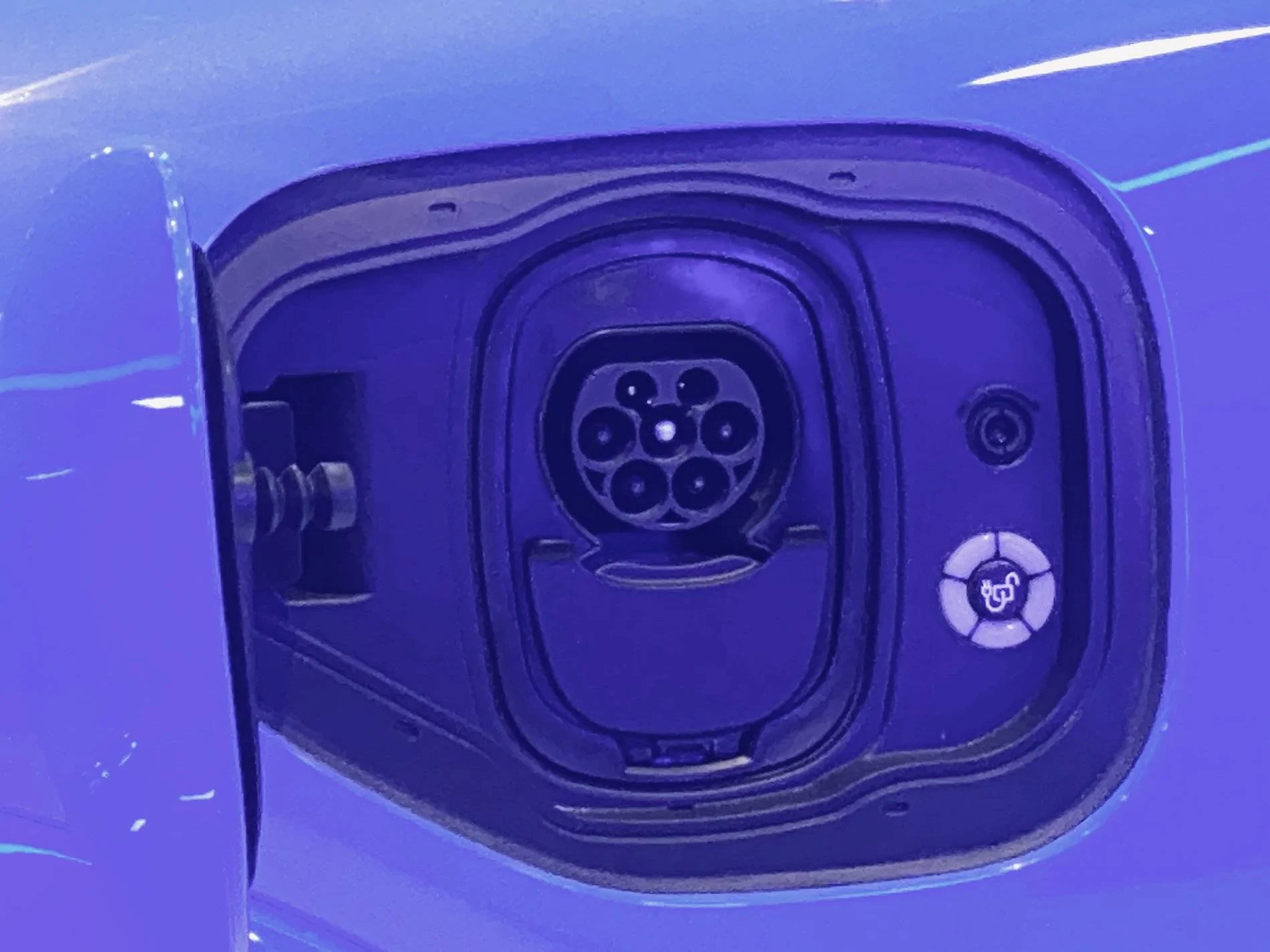
I have a bit of a concern over charging after seeing the MME prototype at the Washington Auto Show. The AC charging port is a SAE J3068 Euro Port not the J1772 that most everyone else has in the US. That means the MME can’t use the J1772 “level 2” chargers common all over the US without using an adapter. That means my home charger I have for my Nissan Leaf won’t fit the MME.

Even more important, the DC “level 3” rapid chargers popping up all over with the US-style CCS Type 1 connectors won’t plug into a MME with its CCS Type 2 port.

Hopefully this is just some sort of Euro prototype car and the J3068/CCS Type 2 are NOT what we'll get in a US build.

Ford Mustang Mach-E Ford Charger for Mach-E F3444677-706D-4914-B20A-8FDA16C3B40D
 

dbsb3233

Well-Known Member
First Name
TimCO
Joined
Dec 30, 2019
Threads
56
Messages
10,100
Reaction score
11,965
Location
Colorado, USA
Vehicles
2021 Mustang Mach-E FE, 2025 Porche Macan Electric
Occupation
Retired
Country flag
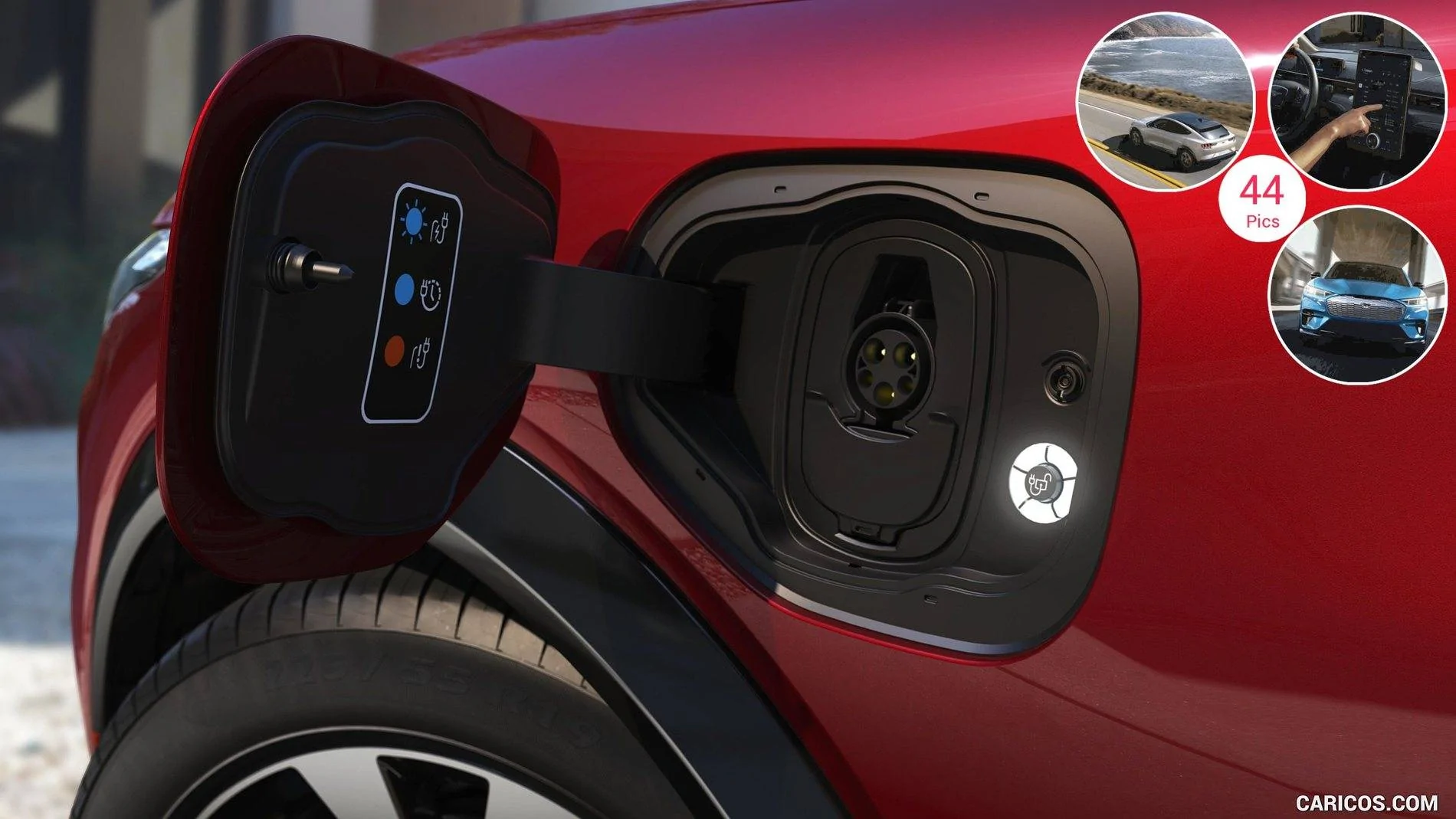
Hopefully this is just some sort of Euro prototype car and the J3068/CCS Type 2 are NOT what we'll get in a US build.
That's my understanding. I've seen pictures with the J1772 too..

Ford Mustang Mach-E Ford Charger for Mach-E 2021_ford_mustang_mach-e_19
 

Deleted member 367

Guest
Basically on the topic of charging, if we have to pay $.41 per kWh for electricity on the road, it will cost more ($41) to go (say) 300 mi in an e-Mustang that in a 35 mpg petro car ($34.28) at (say) $4 a gal, not to mention the petro car may cost at least $20,000 less to buy in the first place. This a fundamental problem for any EV manufacturer. Ford is currently yelling the "sizzel" for all to hear and ignoring the "steak", but when real drivers start driving their real e-Mustangs, these drivers will experience the "steak" when the on-the-road EA bills come in! And they will not be happy. If EA or another Ford charging network try to charge a $1 entrance fee or a $4 mo "convenience" fee (as I have heard rumors), it will be like rubbing salt in your charging-cost wound.

Tesla partially reduces this angst by charging $.28 per kWh (in CA), which of course is less ($28) than the $34.28 cost of gasoline for the same 300 mi trip. Evan at that, Tesla's cost is harder to swallow than the $.13 per kWh charged by my local CA utility (IID) from whoom Tesla buys this electricity. And, for those who are forced to pay (say) $.70 a kWh on the Ford Network, the complaining will get even louder.

So, what is to be done about this problem? Firstly, there definitely needs to be on-the-road charging available, as very few would consider purchasing a $60k auto just to drive around town. A Bolt or Leaf would cover that job at far less cost up front. That leaves either increasing the cost of gasoline (OPEC would love that!) or reducing the cost per kWh of electricity for charging, to make any sense of all this. Don't laugh at this option, IID makes a nice profit charging CA residents $.13 a kWh. And they had to string copper wires to every home!

If Ford ignors this coming problem, they may likely experience a customer headwind that may even exceed the wonderful tailwind that the MACH-e Mustang will surely bring. Ford may feel that they can beat down such a headwind with lots of PR and advertising (an auto manufacturing tradition, I feel), but they may be seriously wrong. Customers can do simple arithmetic, and can also speak very loudly with their wallets.

As a practical matter, it seems to me the only satisfactory option is for Ford to buy one of the charging networks, then lower the price to the same as Tesla charges. Would Ford lose money doing this? Well, consider that Tesla pays $.13 (or possibly less) a kWh for the very electricity it sells to it's customers for $.28, you get the general picture of what could work even better for Ford. The real savings would be quickly felt, and the PR would be amazing. Ford already spends enorrnous funds up front (as does any car manufacturer) so buying an existing network would seem to be quite doable, especially as this cost would be amortizes over years and (likely) over several car models as well. That's my opinion.
 

dbsb3233

Well-Known Member
First Name
TimCO
Joined
Dec 30, 2019
Threads
56
Messages
10,100
Reaction score
11,965
Location
Colorado, USA
Vehicles
2021 Mustang Mach-E FE, 2025 Porche Macan Electric
Occupation
Retired
Country flag
Firstly, there definitely needs to be on-the-road charging available, as very few would consider purchasing a $60k auto just to drive around town. A Bolt or Leaf would cover that job at far less cost up front.
While I agree that there needs to be retail charging available too, the vast majority of BEV charging will take place at home in people's garages, simply because that makes the most sense. And also because choosing a BEV if one can't charge at home is a lot less likely to happen.

Personally I'm in the boat that I expect most will be -- having both a BEV and an ICE in the household. I expect all (or nearly all) of my BEV miles to be around home and charging at home. Road trips will be on the ICE. So to address your $60k comment... the vast majority of our driving will in the Mach-e. That's why I'm OK with that being the $60k vehicle.

I agree with your comment IF being applied to a buyer with only one vehicle though. Road trips and charging (not just station availability, but slow charging and short highway range) require some significant compromising in a BEV. As such, I think the main market will be 2nd car households.

Ford should do just fine selling BEVs to people where a BEV is a good fit for them, and ICE vehicles to people where an ICE vehicle makes more sense. Same as with selling trucks to people where they need a truck, vans to those that need a van, etc.
 

Stickboy46

Well-Known Member
Joined
Jan 29, 2020
Threads
0
Messages
209
Reaction score
229
Location
Kansas
Vehicles
2020 Tesla Model 3 AWD LR
Country flag
Basically on the topic of charging, if we have to pay $.41 per kWh for electricity on the road, it will cost more ($41) to go (say) 300 mi in an e-Mustang that in a 35 mpg petro car ($34.28) at (say) $4 a gal, not to mention the petro car may cost at least $20,000 less to buy in the first place. This a fundamental problem for any EV manufacturer. Ford is currently yelling the "sizzel" for all to hear and ignoring the "steak", but when real drivers start driving their real e-Mustangs, these drivers will experience the "steak" when the on-the-road EA bills come in! And they will not be happy. If EA or another Ford charging network try to charge a $1 entrance fee or a $4 mo "convenience" fee (as I have heard rumors), it will be like rubbing salt in your charging-cost wound.

Tesla partially reduces this angst by charging $.28 per kWh (in CA), which of course is less ($28) than the $34.28 cost of gasoline for the same 300 mi trip. Evan at that, Tesla's cost is harder to swallow than the $.13 per kWh charged by my local CA utility (IID) from whoom Tesla buys this electricity. And, for those who are forced to pay (say) $.70 a kWh on the Ford Network, the complaining will get even louder.

So, what is to be done about this problem? Firstly, there definitely needs to be on-the-road charging available, as very few would consider purchasing a $60k auto just to drive around town. A Bolt or Leaf would cover that job at far less cost up front. That leaves either increasing the cost of gasoline (OPEC would love that!) or reducing the cost per kWh of electricity for charging, to make any sense of all this. Don't laugh at this option, IID makes a nice profit charging CA residents $.13 a kWh. And they had to string copper wires to every home!

If Ford ignors this coming problem, they may likely experience a customer headwind that may even exceed the wonderful tailwind that the MACH-e Mustang will surely bring. Ford may feel that they can beat down such a headwind with lots of PR and advertising (an auto manufacturing tradition, I feel), but they may be seriously wrong. Customers can do simple arithmetic, and can also speak very loudly with their wallets.

As a practical matter, it seems to me the only satisfactory option is for Ford to buy one of the charging networks, then lower the price to the same as Tesla charges. Would Ford lose money doing this? Well, consider that Tesla pays $.13 (or possibly less) a kWh for the very electricity it sells to it's customers for $.28, you get the general picture of what could work even better for Ford. The real savings would be quickly felt, and the PR would be amazing. Ford already spends enorrnous funds up front (as does any car manufacturer) so buying an existing network would seem to be quite doable, especially as this cost would be amortizes over years and (likely) over several car models as well. That's my opinion.
If I charge at home (.08 here) that covers 98% of my gas cost for a year. Sure it might be pricey for the handful of short trips I take in a year but it's still way cheaper running costs. Also, I'm not sure there are that many people that consider the Mach E and the leaf comparable at all. I'd never drive a leaf but the Mach E is intriguing for more than just the electric platform.

Now if you have no way to charge at home... Then yes your complaints are valid and you shouldn't get one.
 

timbop

Well-Known Member
First Name
Tim
Joined
Jan 3, 2020
Threads
65
Messages
6,832
Reaction score
14,036
Location
New Jersey
Vehicles
Solar powered 2021 MME ER RWD (CA RT1)
Occupation
Software Engineer
Country flag
I'm pretty sure your math is off a bit. The E will be more like 3.5 mi/kwhr, and we don't know for sure what kind of buffer the battery is going to have - but that doesn't really matter for this calculation's sake. They published 45 minutes to get 70% range with an ER battery, which would be roughly 190 miles - if their numbers are indeed low then we'll say 200 miles in 43 minutes. EA charges by the minute based on the initial draw current, which will be over 125kw if you are indeed down to 10%. The per minute rate would then be $.70/minute, which works out to $30.10. If you went to EVGo at a 50kw charger the rate would be $.31/minute, but you'd probably be there for more than an hour to get to 80%.


Top