sukhoi_584th
Well-Known Member
- Joined
- Sep 29, 2021
- Threads
- 15
- Messages
- 318
- Reaction score
- 302
- Location
- United States
- Vehicles
- 2022 MME CR1 AWD

Well, departure times require being plugged in, which means wall power will be used and will affect the results. The pack is charged or floated during departure times, even if you don't see a SOC change.@Mach-Lee just curious what's the reason for no departure times and remote start during the discharge portion of the procedure?
Ah I see what you mean about possible effects of the vehicle not being fully ON during discharge. Not sure about departure times requiring being plugged in though. Mine turns on as scheduled most mornings (Ford's crappy servers fail maybe 10% of the time) without being plugged in. You just need to have "Prepare Cabin Off Plug" enabled in the Departure Times section of the app.Well, departure times require being plugged in, which means wall power will be used and will affect the results. The pack is charged or floated during departure times, even if you don't see a SOC change.
Remote start (unplugged) may not activate the full complement of software (since the vehicle is not fully ON) to keep track of energy used, which would also affect results.
My preferred method is to drain it down to 5% in a single long drive.


That is lower than I think it should be, and if I were you, I would also be concerned.Well I finally got around to trying the calibration on my 2023 Select w/LFP. Prior to the calibration I was at a SOH of 93, post calibration I'm at 92....
I assume most of my issues are that my car was built in September of 2023, then sat on a lot until I bought it in March of 24 with 19 miles on it. I have since put almost 6k miles on it, but I think the age of the HVB and sitting on a lot for that long attributed to my SOH.
Am I right in my assumption?
Not a bad idea, I’ll give it a few buck to back sub 50% back to 100% charges and see what I get. If it doesn’t get better I may just leave it be and try not to think about it.That is lower than I think it should be, and if I were you, I would also be concerned.
Since it is LFP, I would continue to charge it to 100% every time you charge. Run it down below 50% and then charge it to 100%. Just keep doing that and checking the SoH. Maybe it needs more time at 100% to get the calibration right. IDK. But I hope you can get that SoH up.
You won’t be able to do a battery calibration then. It doesn’t work with DC charging.I don't have the ability to leave my NMC battery on a level-2 charger long enough to go from 10% to 100%. I only have L1 charging at home. How problematic is it to do that full re-charge on an L3? And maybe only to say 95%, since many DC fast chargers will taper off significantly in the high 90s to protect the battery?

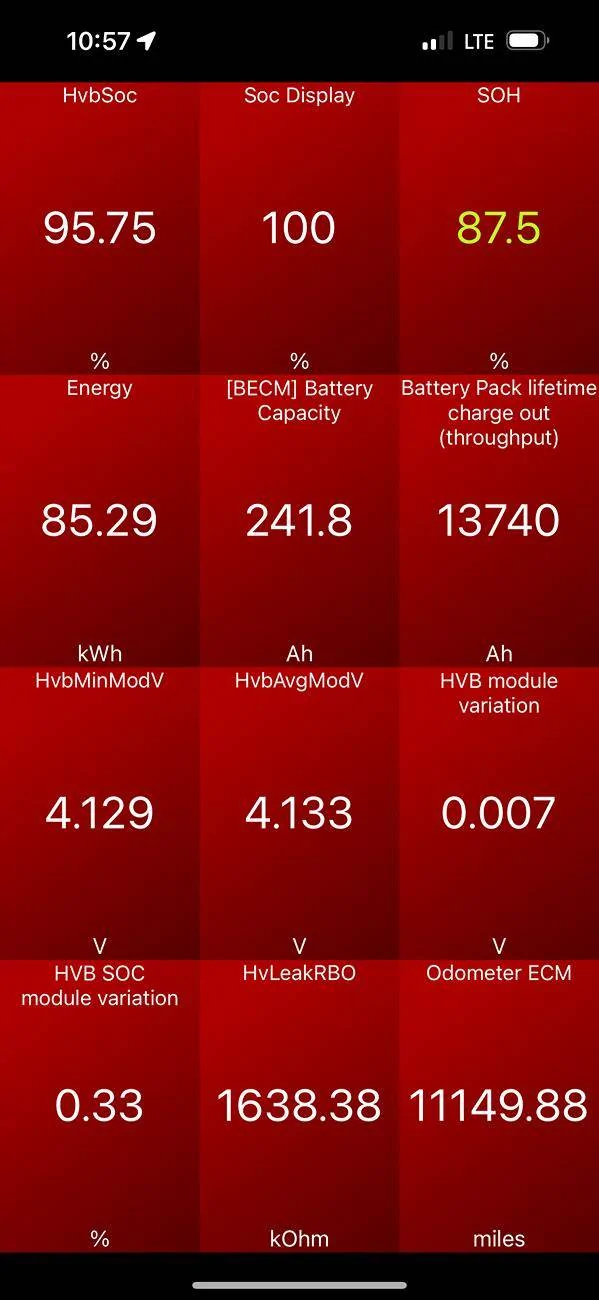
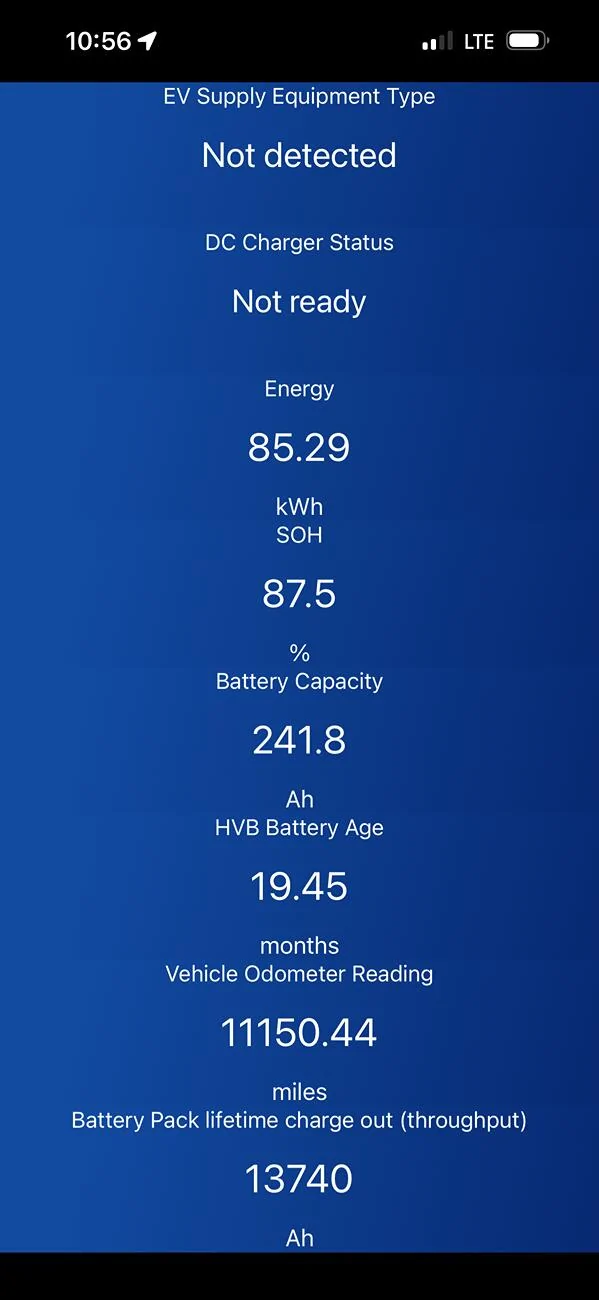
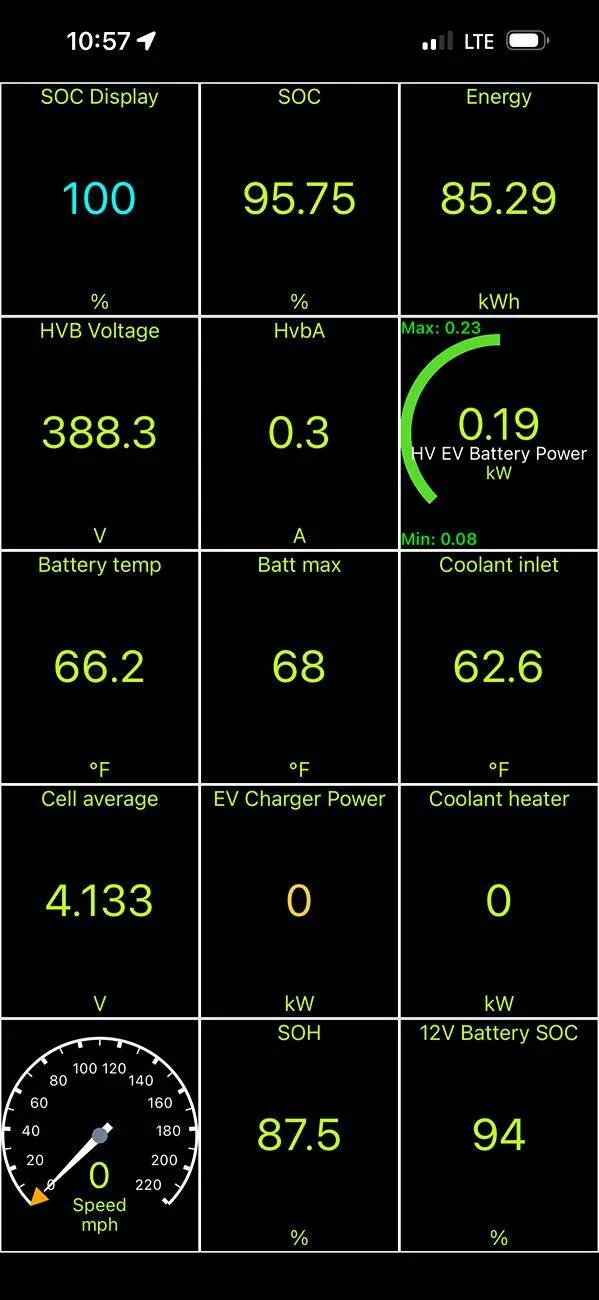



Most likely because the charge session was interrupted. Charge sessions must be continuous and you can't use remote start or departure times because that affects the kWh measurement the car is making. You will need to use an always-on EVSE that doesn't have any limits or schedules.19 month old battery at 87.5 SOH with 12000 miles after calibration. There was 0 change of SOH after calibration. 100-5% At 60+ degrees overnight for low cell measurements. Overnight at 60+ for high cell measurements. What gives?? The charge session did stop at 50% for an hour because that’s my daily limit. My work commute is 25 miles a day.
Results vary. Some people see no change, and some have seen up to 5% improvement doing the procedure a couple times. It does work if the battery is truly out of calibration and the procedure is followed correctly. Seems like most people see 1-2% improvement after doing it once.If, from initial post “ there is no official procedure from Ford for battery calibration.” is this, therefore, not a recalibration of the SoH measure and explains why this procedure largely doesn’t seem to achieve very much that I have read or done ??
85.29/91 = 93.7%. If you are consistently able to charge above 85 kWh, I bet the SoH estimate goes up.19 month old battery at 87.5 SOH with 12000 miles after calibration. There was 0 change of SOH after calibration. 100-5% At 60+ degrees overnight for low cell measurements. Overnight at 60+ for high cell measurements. What gives?? The charge session did stop at 50% for an hour because that’s my daily limit. My work commute is 25 miles a day.
You are correct sir!85.29/91 = 93.7%. If you are consistently able to charge above 85 kWh, I bet the SoH estimate goes up.


I did this procedure over the weekend. When I finished my AWD extended range showed 305 miles on the phone app. When I started the car it showed 289 miles, which dropped to 287 before I got moving. As with the other two times I have charged to 100%, the miles and the percentage did not drop for the first 5 miles or so. I drove 34 miles and the GOM dropped to 91% and 265 miles. So at least initially the GOM was pessimistic. Anyway, I appreciate this procedure being made available to us and that it may help with keeping the range estimate reasonably accurate.First, I'll mention there is no official procedure from Ford for battery calibration. However I think it helps to do this periodically, especially in vehicles that don't get the pack exercised very regularly. Some Mach-E owners have reported up to a 5% improvement in battery State of Health (SoH) after performing this procedure. As in most of my articles, nerd content warning applies here, just focus on the procedure below if you aren't one.
2024 Update: Separate instructions have been added for LFP (Lithium Iron Phosphate) packs. LFP packs need to be charged to 100% at least once a month to maintain basic accuracy. Following the full procedure below will further enhance accuracy.
Background: Like virtually all lithium-ion battery systems, the Mach-E uses a battery management system (BMS) to estimate the amount of energy in the battery pack, which is used to display the state of charge % and the range. The system does a pretty good job, but over time the calibration of the BMS can drift, especially in vehicles where the battery is always kept in the middle of the range (which is good battery practice). This can cause the capacity estimate to become more inaccurate with time, which affects the displayed % and range. Most BMS systems are programmed to be conservative, which means the capacity and range is typically underreported when the BMS has drifted. Similar battery calibration procedures have been successful in improving range estimates in other EVs such as Teslas.
Please Note: The displayed range on the Mach-E GOM is heavily affected by driving habits and outdoor temp, BMS calibration is a much smaller factor compared to these. Do not do this just because your range dropped suddenly, that's almost certainly because the outdoor temp decreased and calibration will not help that. Range drop due to temps below 55ºF is perfectly normal has been well documented elsewhere on the forum.
Benefit: You may see a 0-5% capacity/range indication improvement (not verified or guaranteed) after a BMS calibration.
It's important to understand that performing a BMS calibration does not physically restore lost battery capacity (which is gone forever), it merely updates the computer estimate of capacity only so that it is more accurate. The battery has whatever intrinsic capacity is currently has regardless of what anyone says, does, or thinks (including the GOM), so you could argue it's best to not think about BMS drift and just go about life unless you are concerned with accuracy.
I recommend you perform this procedure every 6 months, especially if you never charge to 100%. Every spring and fall is a good time. It's not necessary if you take regular trips where you hit extremes of charge.
Which pack do I have?
Procedure (NCM packs):
- All Extended Range packs (and GTs) are NCM type
- The LFP pack (72 kWh) is only found in MY 2023.5 and newer Standard Range Mach-E's
- If the 8th digit of the VIN is a 4 or 5, it's a Lithium Iron Phosphate (LFP) battery
- Any other digit or letter besides 4 or 5 means NCM battery
Procedure (LFP packs):
- Charge the vehicle to your normal level (e.g. 90%).
- Drive the vehicle (without charging) until the battery is down to 5% or less.
- Park the vehicle and let the battery rest for at least 5 hours (preferably overnight)
- Level 2 charge all the way to 100% in one session without interruption.
- Leave the vehicle plugged in and let the battery rest for 3+ hours after 100% is reached.
- (Optional) With a scan tool, read the kWh to empty and state of health parameters.
- Drive without charging until battery is below 50% (10% recommended)
- Charge the vehicle back up to your normal level.
- Repeat if desired.
It's fine if you do this over a period of days, just observe the steps and don't charge in between. FYI it can take several hours to charge from 95-100% if the pack is out of calibration, so plan for an extra long time to reach 100%. Do not use remote start or preconditioning during calibration. The rest periods (bold) at low and high SoC are very important to wait for so the BMS has time to read all the cell voltages accurately. It's best to do this when the temperatures are moderate (60-85ºF) in the spring and fall. Try to drive moderately, avoid heavy accelerations while calibrating. Parking the vehicle overnight at 10% will not harm the battery, the cell voltages are still plenty high so nothing detrimental will happen. After you charge to 100% and wait several hours, you do want to drive the vehicle within 24 hours so it doesn't sit at 100% for longer than necessary since that is stressful on the cells.
- Charge the vehicle to 100%.
- Leave the vehicle plugged in and let the battery rest for 3+ hours after 100% is reached.
- Drive the vehicle (without charging) until the battery is down to 40%.
- Level 2 charge all the way to 100% in one session without interruption.
- Leave the vehicle plugged in and let the battery rest for 3+ hours after 100% is reached.
- Drive the vehicle (without charging) until the battery is down to 10% or less.
- Park the vehicle and let the battery rest for at least 5 hours (preferably overnight)
- Charge the vehicle back up to 100% in one session without interruption
- (Optional) With a scan tool, read the kWh to empty and state of health parameters.
- Repeat if desired.
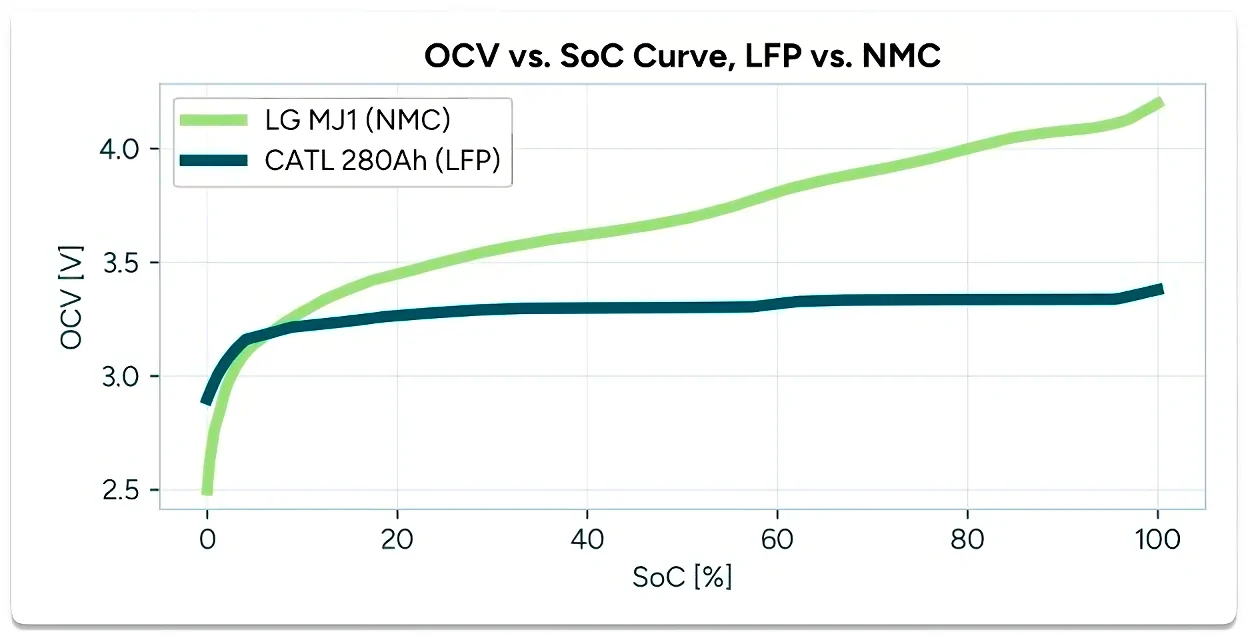
More Background: The BMS assumes the average user will charge up to 100% occasionally for trips, and also drains the battery below 20% periodically. When this doesn't occur regularly, the BMS drift can increase due to the very flat nature of the lithium discharge curve (see below figure). It's very difficult to estimate the actual state of charge in the 10-60% region, it could be off by upwards of 10% based off voltage alone. The BMS employs coulomb counting (via a current sensor) to improve the accuracy here, but that's the aspect most affected by drift since small errors in current measurement accumulate over time. Therefore spending some time above 90% and below 10% where the voltage curve has the greatest slope is important for the BMS to get a good read on the battery SoC. Some cell balancing will also occur during the rest periods at high and low SoC, which improves the estimates of total pack capacity.

The capacity error is even worse with LFP batteries, which have an EVEN FLATTER voltage curve than NCM. This is why they must be charged to 100% regularly. Ford recommends charging the LFP pack to 100% at least once a month, I recommend every week or two. Failure to charge a LFP to 100% for several months can result in you running out of energy MUCH sooner than expected (e.g. you might see a sudden drop from 50% to 1%).
Last, a reminder that outside of calibration and trips, it's good practice to always keep the battery between 20-90% for maximum longevity, and charge to the lowest level you need for everyday use. Users that follow good charging practices actually have the most need to do a battery calibration periodically as explained above.

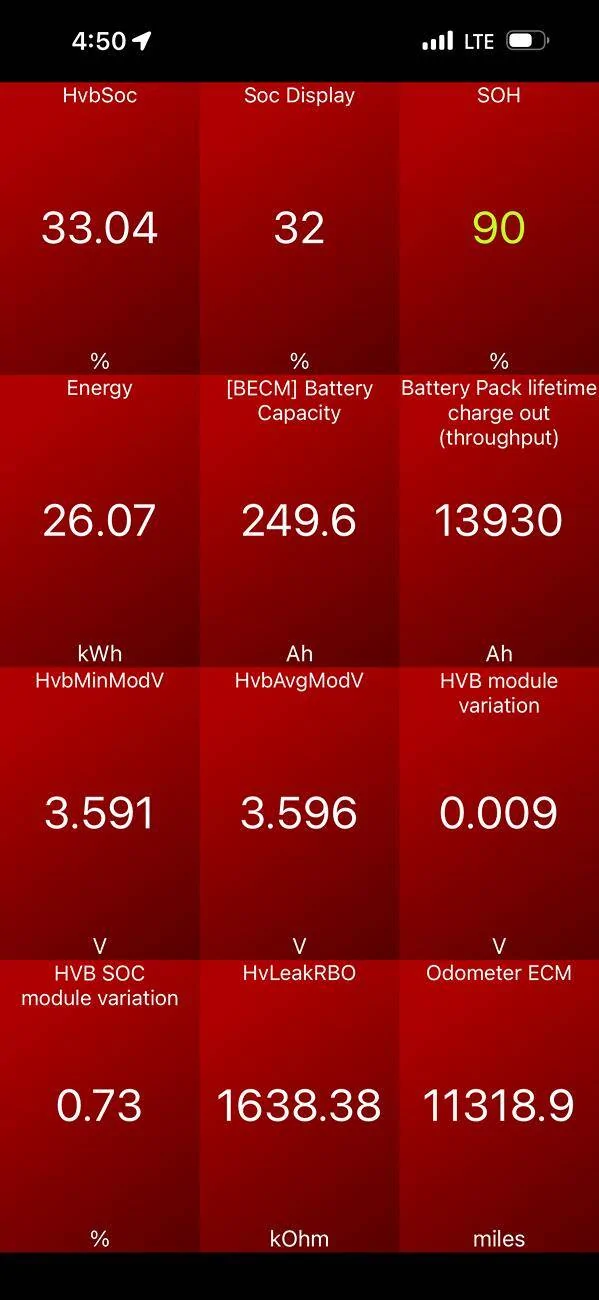
Your SOH surged from 87.5% to 90%, and batttery capacity changed from 241.8 Ah to 249.6 Ah, interesting. Let us know if you see better values after several cycles.