NateZhao
Active Member
- Thread starter
- #1
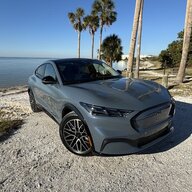
I am Nathan, an MME MY21 RWD ER owner from China. This's my first post.
Let me preface this by saying that the following study is based on Chinese car models. However, I estimate that the differences between Chinese and North American models are not significant.
I've had this car for about three years and driven it 40,000 miles. I've always complained about the suspension performance
1.I completely agree with Mark Boris's conclusion that the rear axle springs are too stiff and the shock absorber damping is too weak. This will lead to a disaster—rear passengers will be thrown into the air when driving quickly over uneven surfaces.
2.The lack of coordination between the front and rear axles is evident in the spring stiffness. Even considering the rear axle's motion ratio, I believe the rear springs are at least 30% stiffer than the front springs. This is likely Ford's intention to improve overall steering performance, which I think is understandable. However, the front axle damping is also very poor. This causes the front axle to drop down and the rear axle to rise up when going over bumps, resulting in a very poor ride.
3.Because the front and rear damping is insufficient, this car experiences significant body roll. The most direct consequence is that even without starting the vehicle, passengers moving around inside will cause noticeable swaying of the car body.
Over the past year, I decided to start with the biggest problem – rear axle bounce. I read Mark Boris's thread, he mentioned the root cause of rear axis bounce is lacking of rebound damping.
In China, there is no Koni Yellow for sell, so I was looking for some other solutions. The best solution is coilover shock absorbers, there are some affordable brands like AGT and BCRacing, but i don't want to lower the ride height and replace OE spring. Another reason is I can't find a professional modification shop. So coiliver is not for me. In the end, I replaced three different rear shock absorbers(OEC shocks for GT/B4/B6), and I'll share my experiences below.
1. OE GT shocks
The reason I replaced these shocks is I heared GT MMEs have a steadier rear axis, so I assume GT shocks' rebound damping is higher. But I was wrong, in fact, there is no difference between GT ones and normal ones on rebound damping(there is no GT PE in China, GT also have unadjustable shocks only). It might be better tires which bring GT a better ride.

2. Bilstein B4
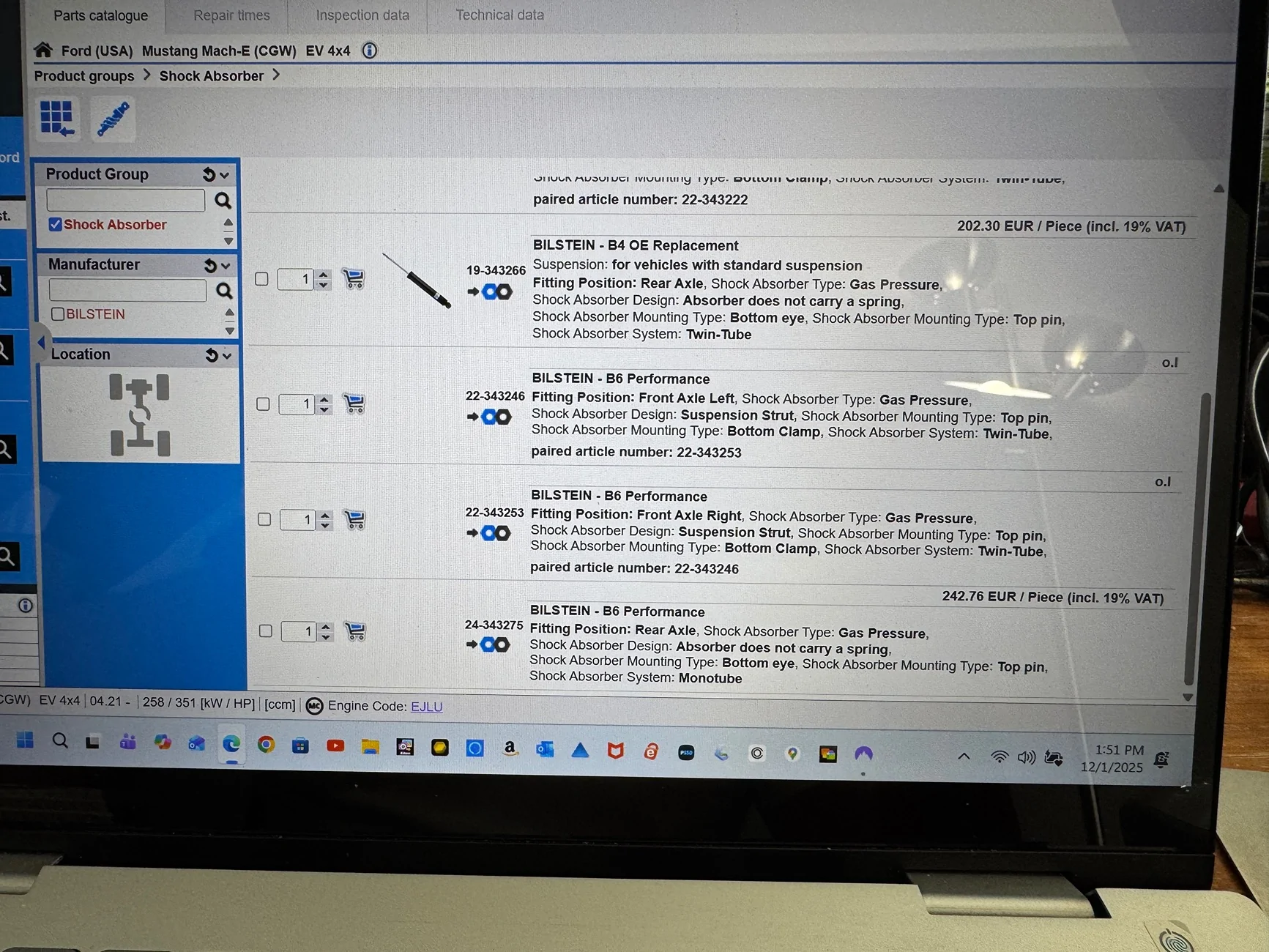
I have installed a pair of them on my MME since 6 months ago. At that time, no B6 is available for MME. Although my engineer friend told me that B4 is an OE replacement part, and Bilstein just used the original data to develop a similar damping product, and that neither of them may have been tested on a real vehicle, I still felt some differences after installing it in my car.
The biggest difference is that I feel the rear axle isn't as exaggerated when going over some bumpy roads. With OE shocks, passengers in the back row will be flying directly in the air. After switching to B4, the feeling improved by about 30%.
The price of a pair of rear B4 is 1k RMB, plus 200 RMB installation cost. It's cheap, but I don't recommend it now because we already has another option, Bilstein B6.

3. Bilstein B6 - 2 rear shocks
Because the B6 is designed to provide greater damping than OE parts, I assumed it would be useful, so I ordered them in June of this year. After three months of production at the German factory and an additional two months of shipping, I received them last month. The price was 2000RMB per pair of rear axles, plus an additional 100RMB for installation.
After installing it, I immediately felt the difference.
First, the rear axle was more resilient and less likely to be thrown off the road.
Secondly, when a person moves inside the vehicle, the swaying of the vehicle body is reduced.
I know this is because the B6 offers stronger damping, both in compress and rebound. But the higher compress damping however lead to more comfort ride. I'm trying to find a word to describe this feeling; in Chinese, it's " tenacity". When going over some speed bumps, I felt that the entire rear axle was softer, and the thumping sound of the tires hitting the ground was reduced.
I'm very satisfied with the result. Although it doesn't completely solve the rear axle bounce problem, I'd say it's 60% better.
It solved the rear axle bounce problem, but the front and rear axles are still quite uncoordinated, especially on some highways in China where the road surface looks smooth, but the whole vehicle is still constantly pitching.
So, I immediately ordered two B6 for the front.
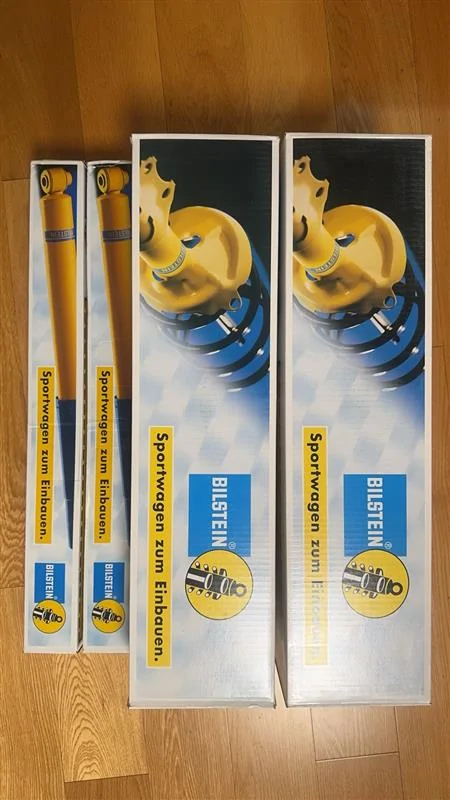
4. A complete set of B6 shock absorbers - 4 shocks
This really excites me because I feel like everything has improved. Compared to the B6, I feel like the stock shock absorbers are untuned.
1. Ride: After switching to the B6, I immediately drove 200km on the highway. The car was very stable, and the annoying pitching was gone. My head could rest comfortably on the headrests without being repeatedly slapped. Even on some less-than-ideal highways, the up-and-down movement of the front and rear axles was relatively smooth and synchronized. Furthermore, road noise has improved; previously, there was noticeable cavity noise from the rear axle, but this has been significantly reduced.
2.Handling: What surprised me even more was the significant improvement in handling. Body roll was much less, giving me a lot of confidence when changing lanes. The most noticeable change was that before, when driving on a sharp bend on a highway ramp that I often take, I felt like the car was going to flip over at 50 kph, but now at 60 kph, I feel the car is still very stable.
3.Dissatisfaction:The only drawback is that on non-highway roads, there is still some slight pitching, but the amplitude is smaller and it converges more easily than before. I think this is due to the difference in spring stiffness between the front and rear axles. Replacing them with Rally springs might be better, but unfortunately, I can't buy Rally springs in China.
In summary, my shock absorbers cost 5,000 RMB, and installation cost an additional 300 RMB. I'd say it's the most worthwhile expense I've ever made in my life. I've heard that in North America, the new MME has retuned its shock absorbers, I don't know how effective it will be, but I hope it will work. For some MY 21, 22, and 23 owners who are dissatisfied with the suspension, I highly recommend the B6.


Additionally, I'd like to share some torque data, which I found after a lot of effort.
Front Axle:
Shock absorber core locking nut: 45 Nm;
Three bolts from the shock absorber to the strut top: 30 Nm;
Two nuts on the left and right strut top levers: 90 Nm;
Nuts on the shock absorber and stabilizer bar linkage: 110 Nm;
Two bolts and nuts on the shock absorber and steering knuckle: 235 Nm;
Bolts on the shock absorber and brake lines: 11 Nm
Rear Axle:
Shock absorber core locking nut: 25 Nm;
The two bolts securing the shock absorber tower and the vehicle body: 110Nm
The long bolt connecting the shock absorber and the lower control arm: 110 Nm
All of the above fasteners can be reused from the original manufacturer's fasteners.
Let me preface this by saying that the following study is based on Chinese car models. However, I estimate that the differences between Chinese and North American models are not significant.
I've had this car for about three years and driven it 40,000 miles. I've always complained about the suspension performance
1.I completely agree with Mark Boris's conclusion that the rear axle springs are too stiff and the shock absorber damping is too weak. This will lead to a disaster—rear passengers will be thrown into the air when driving quickly over uneven surfaces.
2.The lack of coordination between the front and rear axles is evident in the spring stiffness. Even considering the rear axle's motion ratio, I believe the rear springs are at least 30% stiffer than the front springs. This is likely Ford's intention to improve overall steering performance, which I think is understandable. However, the front axle damping is also very poor. This causes the front axle to drop down and the rear axle to rise up when going over bumps, resulting in a very poor ride.
3.Because the front and rear damping is insufficient, this car experiences significant body roll. The most direct consequence is that even without starting the vehicle, passengers moving around inside will cause noticeable swaying of the car body.
Over the past year, I decided to start with the biggest problem – rear axle bounce. I read Mark Boris's thread, he mentioned the root cause of rear axis bounce is lacking of rebound damping.
In China, there is no Koni Yellow for sell, so I was looking for some other solutions. The best solution is coilover shock absorbers, there are some affordable brands like AGT and BCRacing, but i don't want to lower the ride height and replace OE spring. Another reason is I can't find a professional modification shop. So coiliver is not for me. In the end, I replaced three different rear shock absorbers(OEC shocks for GT/B4/B6), and I'll share my experiences below.
1. OE GT shocks
The reason I replaced these shocks is I heared GT MMEs have a steadier rear axis, so I assume GT shocks' rebound damping is higher. But I was wrong, in fact, there is no difference between GT ones and normal ones on rebound damping(there is no GT PE in China, GT also have unadjustable shocks only). It might be better tires which bring GT a better ride.
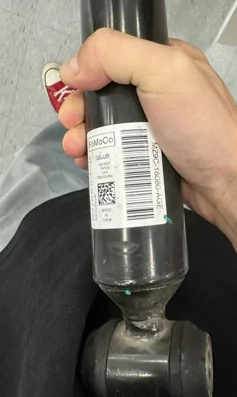
2. Bilstein B4
I have installed a pair of them on my MME since 6 months ago. At that time, no B6 is available for MME. Although my engineer friend told me that B4 is an OE replacement part, and Bilstein just used the original data to develop a similar damping product, and that neither of them may have been tested on a real vehicle, I still felt some differences after installing it in my car.
The biggest difference is that I feel the rear axle isn't as exaggerated when going over some bumpy roads. With OE shocks, passengers in the back row will be flying directly in the air. After switching to B4, the feeling improved by about 30%.
The price of a pair of rear B4 is 1k RMB, plus 200 RMB installation cost. It's cheap, but I don't recommend it now because we already has another option, Bilstein B6.
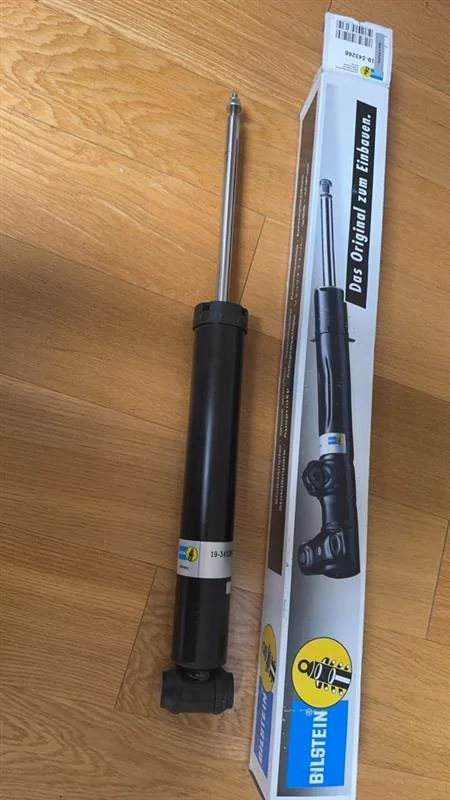
3. Bilstein B6 - 2 rear shocks
Because the B6 is designed to provide greater damping than OE parts, I assumed it would be useful, so I ordered them in June of this year. After three months of production at the German factory and an additional two months of shipping, I received them last month. The price was 2000RMB per pair of rear axles, plus an additional 100RMB for installation.
After installing it, I immediately felt the difference.
First, the rear axle was more resilient and less likely to be thrown off the road.
Secondly, when a person moves inside the vehicle, the swaying of the vehicle body is reduced.
I know this is because the B6 offers stronger damping, both in compress and rebound. But the higher compress damping however lead to more comfort ride. I'm trying to find a word to describe this feeling; in Chinese, it's " tenacity". When going over some speed bumps, I felt that the entire rear axle was softer, and the thumping sound of the tires hitting the ground was reduced.
I'm very satisfied with the result. Although it doesn't completely solve the rear axle bounce problem, I'd say it's 60% better.
It solved the rear axle bounce problem, but the front and rear axles are still quite uncoordinated, especially on some highways in China where the road surface looks smooth, but the whole vehicle is still constantly pitching.
So, I immediately ordered two B6 for the front.
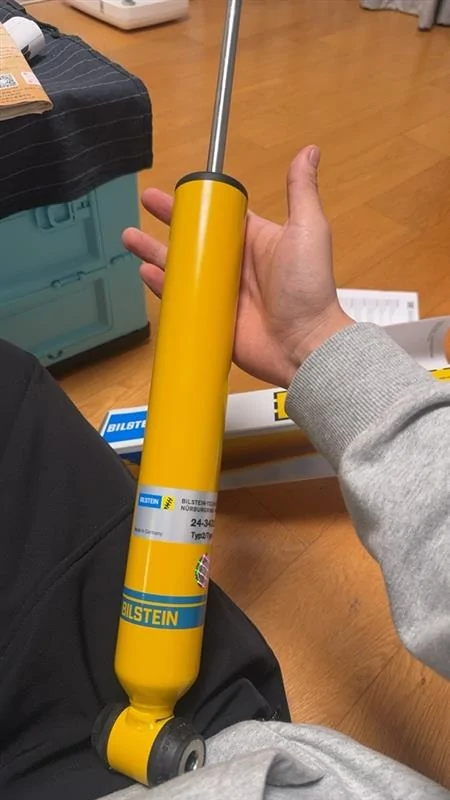
4. A complete set of B6 shock absorbers - 4 shocks
This really excites me because I feel like everything has improved. Compared to the B6, I feel like the stock shock absorbers are untuned.
1. Ride: After switching to the B6, I immediately drove 200km on the highway. The car was very stable, and the annoying pitching was gone. My head could rest comfortably on the headrests without being repeatedly slapped. Even on some less-than-ideal highways, the up-and-down movement of the front and rear axles was relatively smooth and synchronized. Furthermore, road noise has improved; previously, there was noticeable cavity noise from the rear axle, but this has been significantly reduced.
2.Handling: What surprised me even more was the significant improvement in handling. Body roll was much less, giving me a lot of confidence when changing lanes. The most noticeable change was that before, when driving on a sharp bend on a highway ramp that I often take, I felt like the car was going to flip over at 50 kph, but now at 60 kph, I feel the car is still very stable.
3.Dissatisfaction:The only drawback is that on non-highway roads, there is still some slight pitching, but the amplitude is smaller and it converges more easily than before. I think this is due to the difference in spring stiffness between the front and rear axles. Replacing them with Rally springs might be better, but unfortunately, I can't buy Rally springs in China.
In summary, my shock absorbers cost 5,000 RMB, and installation cost an additional 300 RMB. I'd say it's the most worthwhile expense I've ever made in my life. I've heard that in North America, the new MME has retuned its shock absorbers, I don't know how effective it will be, but I hope it will work. For some MY 21, 22, and 23 owners who are dissatisfied with the suspension, I highly recommend the B6.
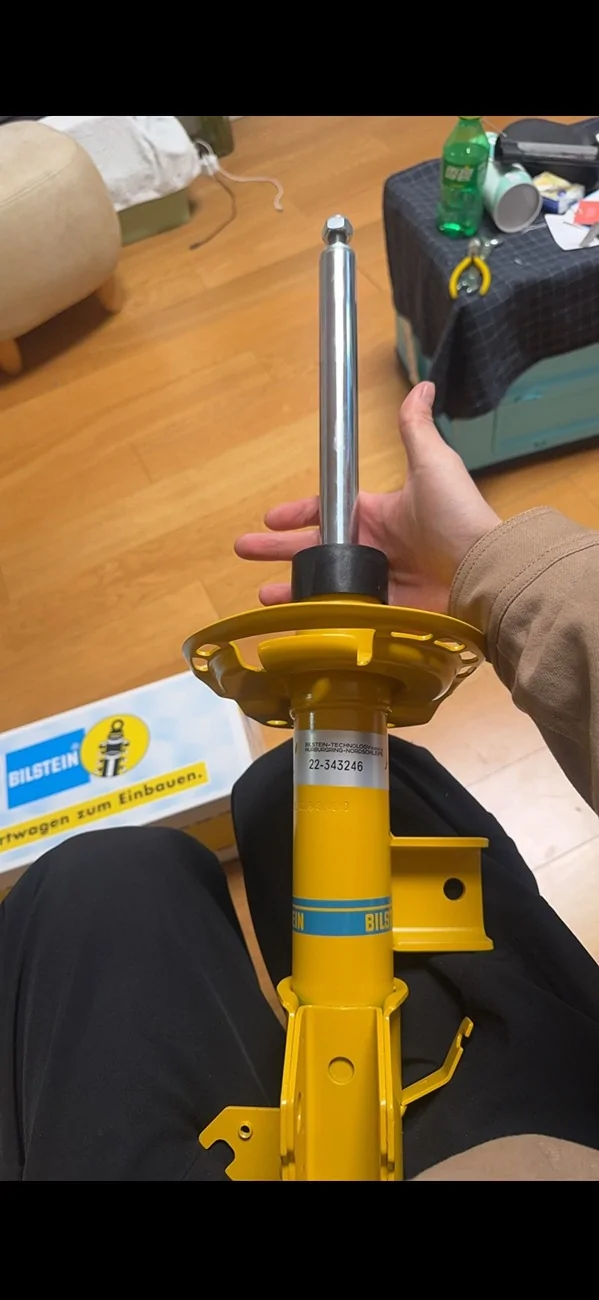
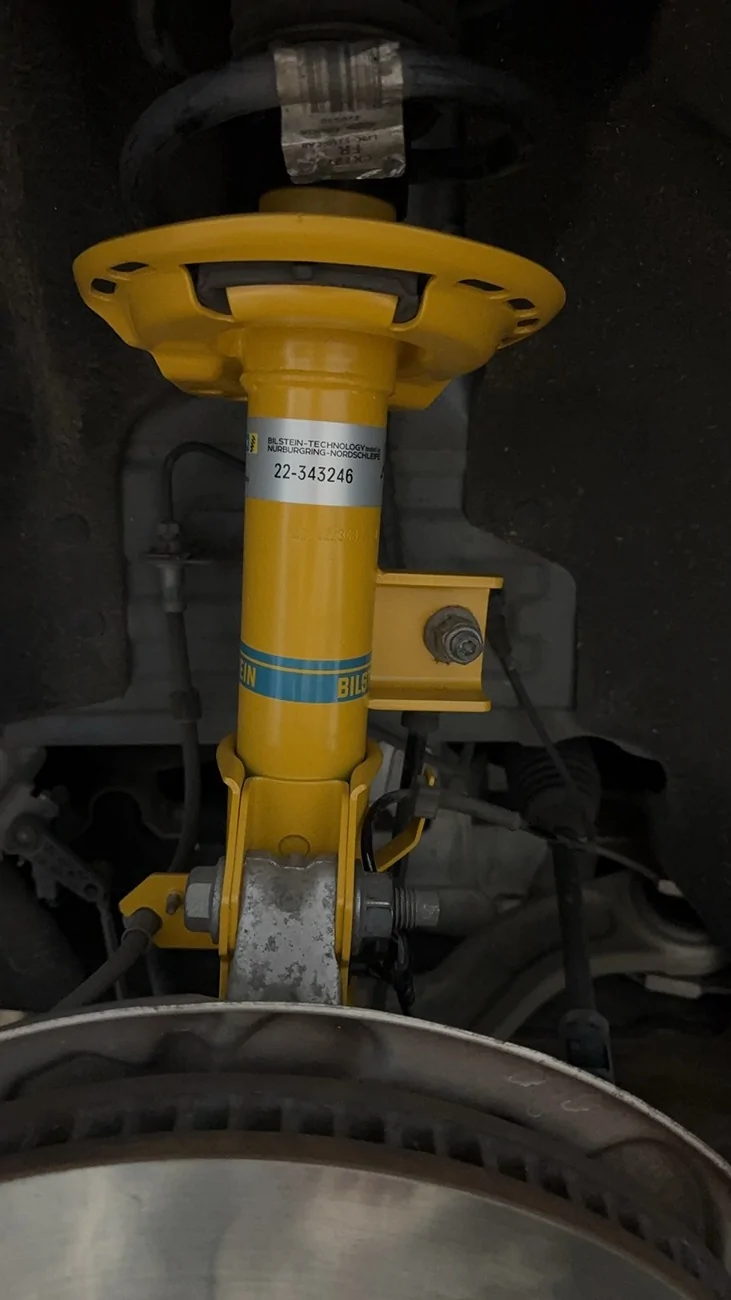
Additionally, I'd like to share some torque data, which I found after a lot of effort.
Front Axle:
Shock absorber core locking nut: 45 Nm;
Three bolts from the shock absorber to the strut top: 30 Nm;
Two nuts on the left and right strut top levers: 90 Nm;
Nuts on the shock absorber and stabilizer bar linkage: 110 Nm;
Two bolts and nuts on the shock absorber and steering knuckle: 235 Nm;
Bolts on the shock absorber and brake lines: 11 Nm
Rear Axle:
Shock absorber core locking nut: 25 Nm;
The two bolts securing the shock absorber tower and the vehicle body: 110Nm
The long bolt connecting the shock absorber and the lower control arm: 110 Nm
All of the above fasteners can be reused from the original manufacturer's fasteners.
Sponsored
Last edited:


 That sounds logical Nathan. I will track the Bilsteins with the goal of getting them here. They would be a finishing touch on my car; I have the Eibach anti-roll bars which transform the car for the better. I second Mark’s thoughts. If you can get the Eibach anti roll bars, Nathan, do it. Unless you experience the difference, it’s hard to believe the change for the better they make. Thanks for your write up.