Is the gt ever going to get a charging curve update?

silverelan

Well-Known Member
Joined
Nov 25, 2019
Threads
131
Messages
3,692
Reaction score
5,404
Location
Seattle
Vehicles
2021 Mustang Mach-E GT, 2019 Bolt EV
Country flag
There's a lot of people more versed in battery chemistry than myself. The 95F temperature has been discussed by myself many times on this forum. Yes, the MME likes to keep temps at a max of 95F.

My understanding is that as temperatures increase above about 77F charging speed is actually reduced. So I assume you are asking why can't the MME let the pack get hotter? Based on my understanding that would actually show things down. There's a crossroad where it's more beneficial to expend energy in cooling than increase temperatures at a slower rate.
Thanks for the explanation. Seems odd to me since I was under the impression that the MME pouch cells were identical to the VW ID.4's.
Sponsored


Mach-Lee

Well-Known Member
First Name
Lee
Joined
Jul 16, 2021
Threads
262
Messages
11,382
Reaction score
25,070
Location
Wisconsin
Vehicles
2022 Mach-E Premium AWD
Occupation
Sci/Eng
Country flag
@DevSecOps, @benk016, @breeves002, @scoopman, maybe you guys would know better than most.

if the MME ER packs are only hitting 33-35C temps while charging, then it seems to me there’s a decent amount of room for increasing the charging power?
The spec for DCFC is 25-45ÂşC. Ford has chosen to target the center of that range, 35ÂşC while DCFC. Since the rate of chemical reactions is proportional to temperature, higher temps allow faster and more efficient charging, but the expense of degrading the cells quicker as well.

The limitations on the charging rate are not due to cell temperature. More likely it is simply limited out of concern for cell durability. The current charging curve is still very conservative, I think it could be improved quite a bit without too many negative consequences. I would like to see a 300A constant current up to 75% or so, and only throttle if the battery temp reaches 40ÂşC.
 

silverelan

Well-Known Member
Joined
Nov 25, 2019
Threads
131
Messages
3,692
Reaction score
5,404
Location
Seattle
Vehicles
2021 Mustang Mach-E GT, 2019 Bolt EV
Country flag
The spec for DCFC is 25-45ÂşC. Ford has chosen to target the center of that range, 35ÂşC while DCFC. Since the rate of chemical reactions is proportional to temperature, higher temps allow faster and more efficient charging, but the expense of degrading the cells quicker as well.

The limitations on the charging rate are not due to cell temperature. More likely it is simply limited out of concern for cell durability. The current charging curve is still very conservative, I think it could be improved quite a bit without too many negative consequences. I would like to see a 300A constant current up to 75% or so, and only throttle if the battery temp reaches 40ÂşC.
from your keyboard to Darren Palmer’s approval stamp.
 

DevSecOps

Well-Known Member
First Name
Todd
Joined
Sep 22, 2021
Threads
69
Messages
4,764
Reaction score
11,624
Location
Sacramento, CA
Vehicles
'21 Audi SQ5 / '23 Rivian R1T / '23 M3P
Occupation
CISO
Country flag
higher temps allow faster and more efficient charging, but the expense of degrading the cells quicker as well.
I was thinking of nickle based batteries .... I knew someone would correct me.

For lithium-ion isn't the limit about 122F before they start gassing off, venting, swelling?
 

Mach-Lee

Well-Known Member
First Name
Lee
Joined
Jul 16, 2021
Threads
262
Messages
11,382
Reaction score
25,070
Location
Wisconsin
Vehicles
2022 Mach-E Premium AWD
Occupation
Sci/Eng
Country flag
I was thinking of nickle based batteries .... I knew someone would correct me.

For lithium-ion isn't the limit about 122F before they start gassing off, venting, swelling?
Yes, slow charge limit is 50ÂşC/122ÂşF. Bad stuff won't start happening until above 55-60ÂşC/131-140ÂşF. Charging at normal temps can sometimes still cause swelling, especially as the cells age.


babgvant

Well-Known Member
First Name
Andrew
Joined
Jan 29, 2022
Threads
10
Messages
158
Reaction score
116
Location
Chicago
Vehicles
Mach-E GT PE
Occupation
Software Developer
Country flag

ridgebackpilot

Well-Known Member
First Name
Michael
Joined
Mar 27, 2022
Threads
39
Messages
573
Reaction score
891
Location
Northern California
Vehicles
2022 MME GTPE; 2022 MME Premium ER
Occupation
Attorney
Country flag
My GTPE was built on 6/30/22 so presumably it has the updated HVBJB hardware and charging curve. It's not subject to the battery contactor recall.

I consistently see charging rates around 40 kW above 80 percent SOC while DCFC on long trips. So newer cars must have the new charge curve baked in.

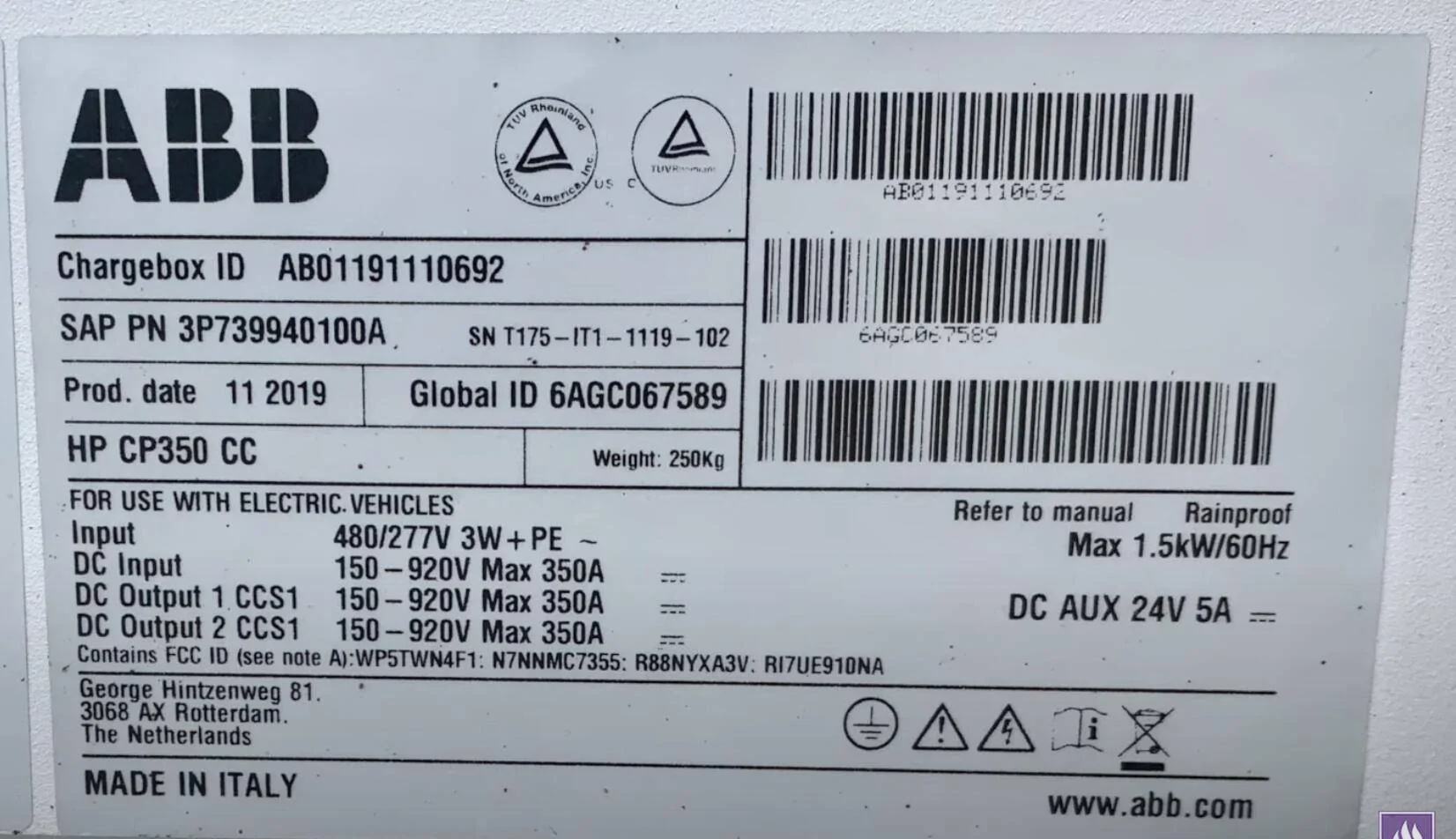
Towards the end of his latest video, Professor John Kelly of Weber State provided a clue why we never see 150 kW or greater charge rates on Electrify America 150 kW DC fast chargers. According to Prof. Kelly, these chargers have an output limit of 350 amps (see attached). 400-volt HVB systems like ours require 375 amps to charge at 150 kW, which the EA chargers can't provide. Thus the highest charge rate we're likely to see from EA 150 kW chargers is around 140 kW. Presumably the 350 kW chargers are rated to deliver far more amps.

Ford Mustang Mach-E Is the gt ever going to get a charging curve update? Screen Shot 2022-08-07 at 10.30.38 AM
 
Last edited:

mkhuffman

Well-Known Member
First Name
Mike
Joined
Nov 19, 2020
Threads
29
Messages
6,878
Reaction score
9,514
Location
Virginia
Vehicles
2025 Rivian R1T Tri-Max, Jeep GC-L, VW Jetta
Country flag
My GTPE was built on 6/30/22 so presumably it has the updated HVBJB hardware and charging curve. It's not subject to the battery contactor recall.

I consistently see charging rates around 40 kW above 80 percent SOC while DCFC on long trips. So newer cars must have the new charge curve baked in.

Towards the end of his latest video, Professor John Kelly of Weber State provided a clue why we never see 150 kW or greater charge rates on Electrify America 150 kW DC fast chargers. According to Prof. Kelly, these chargers have an output limit of 350 amps (see attached). 400-volt HVB systems like ours require 375 amps to charge at 150 kW, which the EA chargers can't provide. Thus the highest charge rate we're likely to see from EA 150 kW chargers is around 140 kW. Presumably the 350 kW chargers are rated to deliver far more amps.

Screen Shot 2022-08-07 at 10.30.38 AM.webp
Another Forum member reported that some newer EA 150kW chargers actually have a 500 Amp limit. It is the older EA chargers that are limited to 350 Amps.
 

YouEeee

Active Member
First Name
Duy
Joined
Mar 12, 2022
Threads
1
Messages
29
Reaction score
15
Location
Anaheim , Ca
Vehicles
2022 ford mustang mach e gt
Country flag
My mach built on 7/29. Mine is shown 38kwh after 80% , it gonna take almost 50 mins to 100% from 80 . Crazy
 

mkhuffman

Well-Known Member
First Name
Mike
Joined
Nov 19, 2020
Threads
29
Messages
6,878
Reaction score
9,514
Location
Virginia
Vehicles
2025 Rivian R1T Tri-Max, Jeep GC-L, VW Jetta
Country flag
My mach built on 7/29. Mine is shown 38kwh after 80% , it gonna take almost 50 mins to 100% from 80 . Crazy
You could be on a crappy DCFC. I assume your mean you car is a 2022 and it definitely has the improved charging curve, so it is most likely the charger that is limiting the power, not your car.

If you mean you have a 2021, you will get the new charging curve in one of the updates is included in the recall software update. I got mine before the recall update, so it is a prior update that is included if you didn't get it before.
 

Maquis

Well-Known Member
First Name
Dave
Joined
Dec 21, 2020
Threads
34
Messages
5,698
Reaction score
8,087
Location
Illinois
Vehicles
2021 Mach E4X, 2023 Lightning Lariat ER
Country flag
My mach built on 7/29. Mine is shown 38kwh after 80% , it gonna take almost 50 mins to 100% from 80 . Crazy
At 38 KW, you will reach 90% in 14 minutes. There will be more slowing once you hit 90%. IMO, there isn’t much of a case to DCFC above 90% except in extreme cases.
The old curve maxed at 12kw above 80%.

You could be on a crappy DCFC. I assume your mean you car is a 2022 and it definitely has the improved charging curve, so it is most likely the charger that is limiting the power, not your car.

If you mean you have a 2021, you will get the new charging curve in one of the updates is included in the recall software update. I got mine before the recall update, so it is a prior update that is included if you didn't get it before.
The new curve gives about 45KW best case above 80%. 38 could be normal variation due to any number of factors.
Sponsored


Top