“Legal” and “illegal” can be nebulous. I’m sure you can see contemporary examples in other areas. Just who do you think is going to “go after the criminals” in Dearborn? Will a posse of Texas rangers burst into the next Ford board meeting and drag all board members back to Texas to be tried for their crimes? (Don’t take that absurd hypothetical seriously, please).
A few dealers may grumble, but nobody’s going to waste money trying to prosecute Ford Motor Company here. Fundamentally, this is no different than a dealer being allowed to sell a Ford GT, or a Shelby Mustang..
“Legal” and “illegal” can be nebulous. I’m sure you can see contemporary examples in other areas. Just who do you think is going to “go after the criminals” in Dearborn? Will a posse of Texas rangers burst into the next Ford board meeting and drag all board members back to Texas to be tried for their crimes? (Don’t take that absurd hypothetical seriously, please).
A few dealers may grumble, but nobody’s going to waste money trying to prosecute Ford Motor Company here. Fundamentally, this is no different than a dealer being allowed to sell a Ford GT, or a Shelby Mustang..
That's detailed in that article... some individual dealers, and at least one state dealer's association.
These legal actions began when the Arkansas Automobile Dealers Association filed a formal complaint against FoMoCo with the state’s motor vehicle commission back in October, and continued after 27 Ford dealers in Illinois also protested the decision with that state’s motor vehicle review board late last week. In New York, four dealers filed a lawsuit against the automaker last week, marking the first legal action taken against the Model e Certification program.
Well, yes, not directly, but that doesn't mean they have no control. Gas prices are quick to adjust when the price of crude goes up, but slow to come down when it falls. The oil companies directly influence prices by controlling refinery capacity. There's no arguing that it makes sense for them to reduce capacity when demand is low, as it was during the pandemic, but it's also true that they benefit greatly when demand increases and the supply is not accordingly increased. Welcome to the world of supply and demand.
That's detailed in that article... some individual dealers, and at least one state dealer's association.
These legal actions began when the Arkansas Automobile Dealers Association filed a formal complaint against FoMoCo with the state’s motor vehicle commission back in October, and continued after 27 Ford dealers in Illinois also protested the decision with that state’s motor vehicle review board late last week. In New York, four dealers filed a lawsuit against the automaker last week, marking the first legal action taken against the Model e Certification program.
I’m not versed in this area, but I still don’t see what the issue is? There was no coercion. Ford has other vehicles, dealers have to qualify to sell, or opt in to sell.
Did you say “… facts are pretty clear…”? Well, why didn’t you say so to begin with. Since the “facts are pretty clear…” we don’t need any crappy legal system and blood-sucking lawyers. If the “facts are clear”, I’m sure ford will stop this highly illegal action immediately and hand-write apology notes to the offended dealers ?
In my limited experience, the facts are NEVER clear.
Well, yes, not directly, but that doesn't mean they have no control. Gas prices are quick to adjust when the price of crude goes up, but slow to come down when it falls. The oil companies directly influence prices by controlling refinery capacity. There's no arguing that it makes sense for them to reduce capacity when demand is low, as it was during the pandemic, but it's also true that they benefit greatly when demand increases and the supply is not accordingly increased. Welcome to the world of supply and demand.
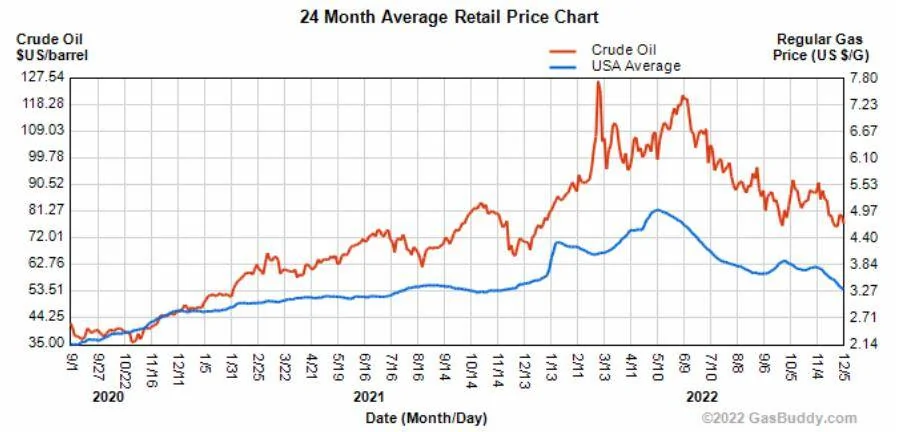
The "quick to adjust up but not down" is a common myth. In fact it's kinda been the opposite the last 2 years (see the chart), although overall it tends to average out about the same both ways.
Yes, each oil company has a little impact on the price by having some control over supply, just like any other business competing in the free market. Whether it be a farmer, an automaker, an oil producer, or a toilet paper maker. But they are competing with each other. And there's hundreds of producers, big and small, competing.
Now, it is a little different because it's a world market with a world price, and there are some international players in it that have significant influence. Like OPEC. And some countries that nationalized their oil industries (like Russia). With over a third of the world supply, they do push the market around some with their collective power to restrict supply at times (although a lot of their members end up cheating on those agreements).
But that's not US producers, or European producers.
I’m not versed in this area, but I still don’t see what the issue is? There was no coercion. Ford has other vehicles, dealers have to qualify to sell, or opt in to sell.
The issue is Ford cutting them off from EV allocations if they don't comply with these expensive requirements (like the DCFC charger), that could be seen as excessive and not actually necessary to sell/service vehicles. Restricting vehicle allocations to dealers is damaging to those dealers.
What it comes down to is what the franchise agreements say, and what the state laws are that regulate dealership agreements. That's probably gonna vary by state. That's contract law, and comes down to whether it's determined that Ford is breaking the contract.
I really don't know, but with multiple dealers in multiple states already filing complaints and even starting lawsuits, I'm guessing they may have a valid case. One or two lone wolves I'd write off, but this sounds more widespread. But I really have no idea what the actual contracts say, or how to read them anyway.