Mach-Lee
Well-Known Member
- First Name
- Lee
- Joined
- Jul 16, 2021
- Threads
- 262
- Messages
- 11,365
- Reaction score
- 25,025
- Location
- Wisconsin
- Vehicles
- 2022 Mach-E Premium AWD
- Occupation
- Sci/Eng

- Thread starter
- #1
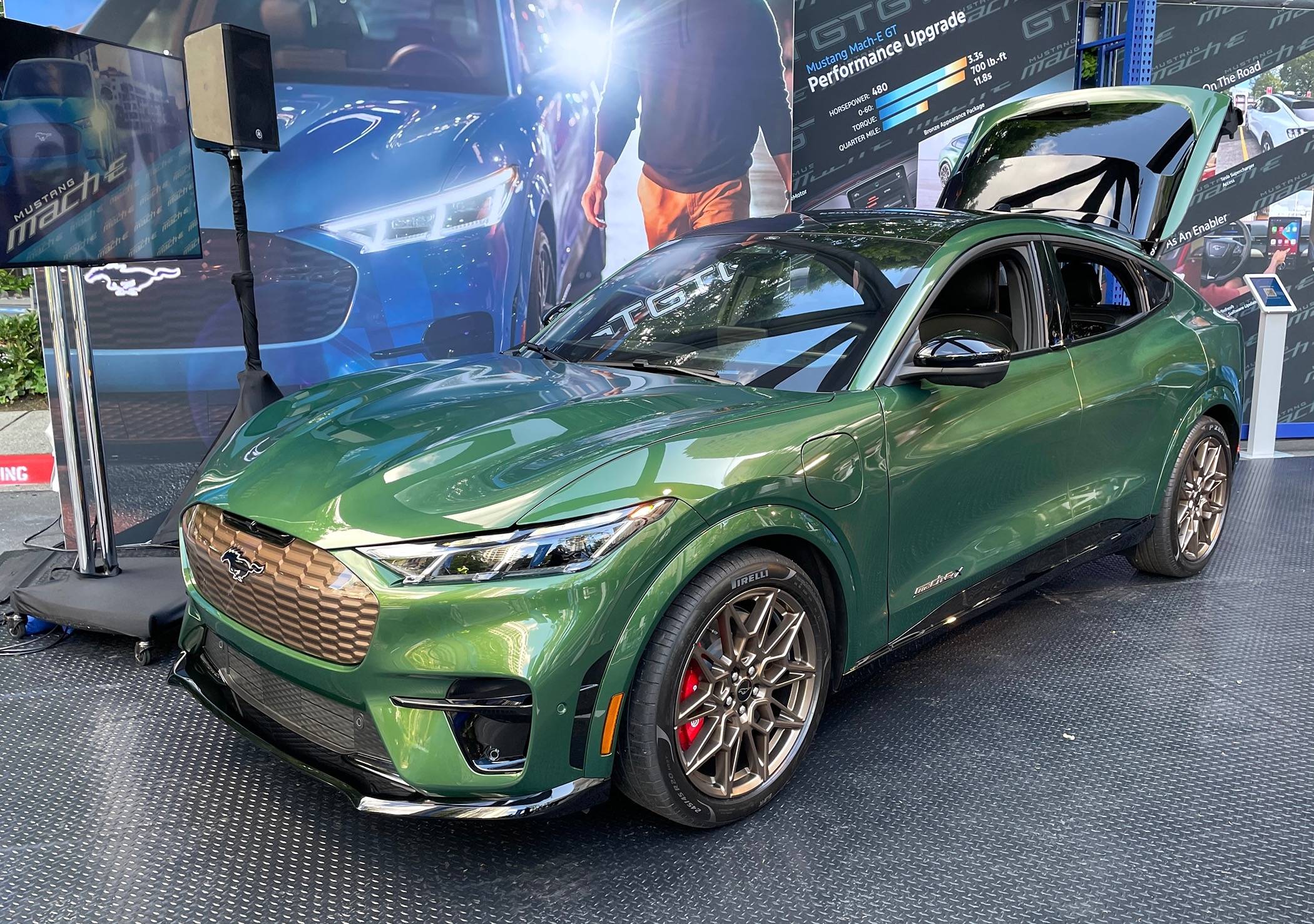
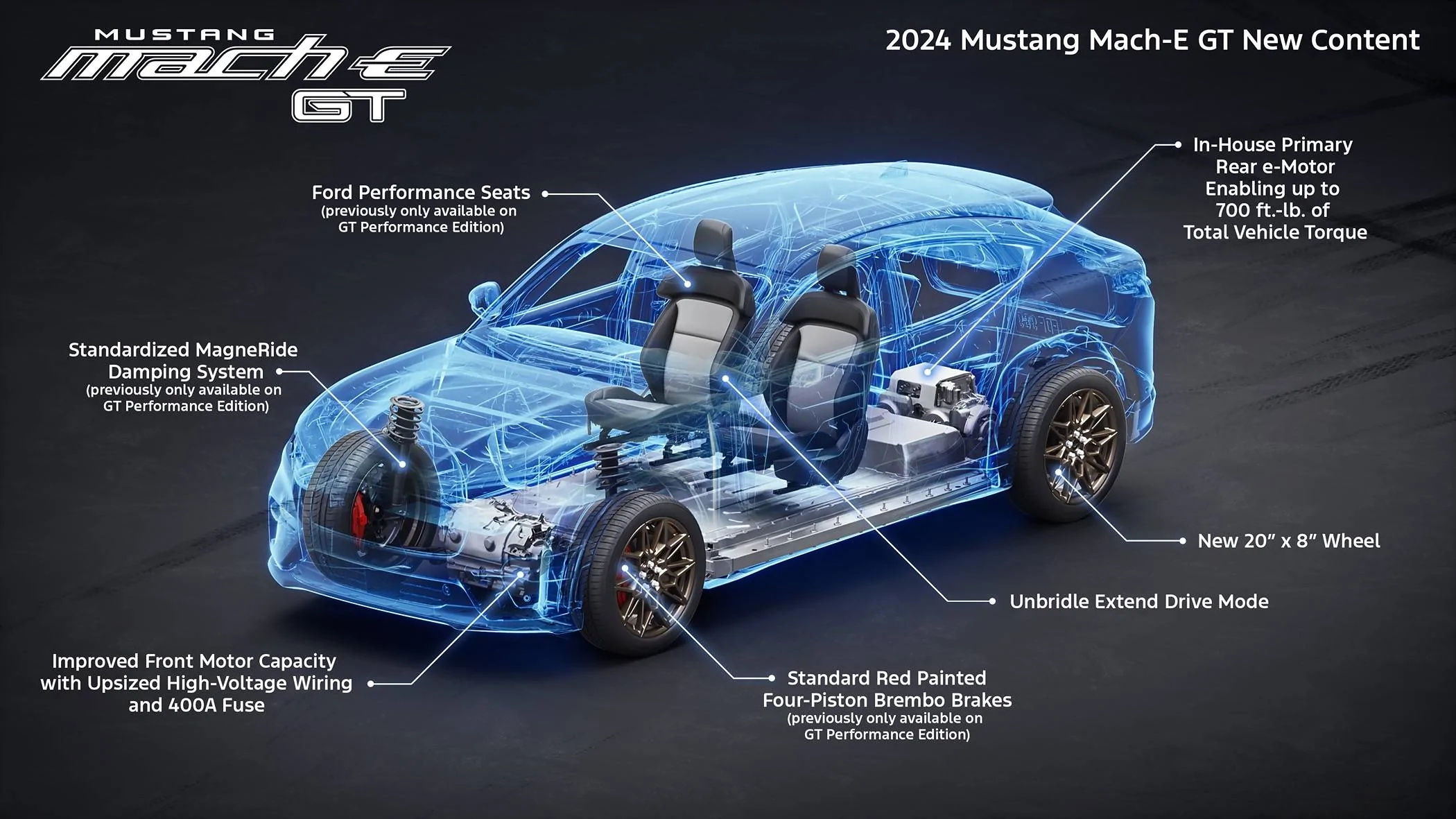
Ford invited me to test the new 2024 Mach-E GT at the Seattle media drive event. I also had the opportunity to speak with some of the engineers about the changes. Here’s what’s new for 2024:


In-House Rear Motor
Ford is now using an in-house rear motor design in all Mach-E models. This is the same motor used in the F-150 Lightning—an important cost-cutting measure that helps improve commonality between vehicle lines. Final drive ratio has increased from 9.05:1 to 9.719:1 allowing more low-end torque output. The new rear motor also allowed some simplification of the rear cradle structure. It’s lighter and slightly more efficient, which helps improve range very slightly. The design is very similar to the outgoing BorgWarner motor with an oil pump (now with external filter), oil to water heat exchanger, and coaxial planetary gearbox.

The front motors in all models are unchanged, still the Magna motor in the base AWD and the BorgWarner motor in GT models.
Upgraded Front Motor Cabling
The front motor fuse in the GT model has gone from 350A to 400A for additional robustness.
CORRECTION: The wire size and output for the front GT motor is unchanged. However, the non-GT AWD models have gotten a front motor upgrade! The motor and cables are larger. As a result, the Premium AWD ER now gets a slight horsepower boost and a decent torque boost with the new motors, which drops the 0-60 down to 4.1 sec.
New Headlights
All Mach-E models will now have the same headlights. The turn signal has been redesigned to look like the other Mustang models with the classic 3-bar sequence. The commonalty across all trims reduces costs.
Unified Thermal Model
This is perhaps the most significant upgrade to the 2024 models. Ford has done extensive testing to develop a unified thermal model in the PCM for every high current-carrying component in the high voltage system including the DC input cables, inverter temps, battery bus bars, and HVBJB contactors. Whereas the previous thermal model was simply based on amperage x time for a worst-case ambient condition, the new thermal model accurately accounts for differences in ambient temperatures and attempts to accurately model actual component temperatures. This means when it’s colder outside, you’ll get sustained performance for longer.
The two places this makes a huge difference are in the DC charge curve speed, and acceleration performance.
Faster DC Charge Speed
The 2024 Mach-E with the extended battery pack will now charge from 10-80% in 36 minutes, which is an improvement over the previous ~45 minute timeframe. Again, this is made possible by the unified thermal model that accurately predicts DC input component temperatures and allows higher amperage to be run safely.
I did not test the charge curve myself, but some of the journalists like Kyle from Out of Spec did. All their tests came in really close to 36 minutes, which is right on spec! Kyle will probably be posting the charge curve on his website soon FYI.
No more GTPE, all GT’s are the same now
The GT Performance Edition has been discontinued, but the extra tech from that model (MagneRide shocks, bigger brakes, and wrap-around seats) is now standard on all GT models. There are also cosmetic changes like a new wheel design and new colors (Eruption Green). Glass roof is now optional.
Performance Upgrade
The GTs now have an optional Performance Upgrade enabled by software. It costs $995 and can be enabled at any time after initial vehicle purchase. This will get you more torque off the line (700 ft-lb vs. 600 ft-lb) and will enhance your 0-60 and ¼ mile times. Total horsepower is still the same (480 HP), the upgrade in torque is mostly at low speed.
Thermal Derate Testing
I know a lot of you are very interested in how the power-limiting is improved on the new GT model, so I tried to give it a really thorough driving test to find the limits. To review, the 2021-2023 GT models suffer from what is known as the “5 second rule”, which means a significant power limit “jail bars” appears after about 5 seconds of full acceleration. This means those models have a pretty good 0-60 MPH time, but after about 60 MPH the power limit kicks in and acceleration is reduced for the rest of the run. Some owners found this extremely disappointing.
Well, I can tell you the power limit is A LOT better now with the new thermal model. You can now do a full 0-80 with zero power limit kicking in. And it’s better than that, you can essentially do a whole ¼ mile run to triple digits with only a bar at the end. It will now do the ¼ mile in only 11.8 seconds at 114 MPH (according to Ford). FYI, I was testing at about 68ºF ambient conditions. I didn’t have a drag strip available, so another outfit will have to verify the ¼ mile times.
If you keep pushing, you’ll eventually get a thermal limit to show up. For me, it essentially took two back-to-back 0-70 MPH runs to get about 6 bars to show up. The jail bars also don’t seem to last nearly as long as before, they go away in maybe only 7 seconds. Generally, it might be more correct to say it has a 15 second rule now instead of 5 second rule.
Just like before, you will still see jail bars for other reasons like the pack being cold or because of low SoC. I think at 50% I was seeing two jail bars.
Unbridled Extend (for doing racetrack laps) works the same way as before, you’ll get a fixed 66% power limit (to start with) and traction control off. The new thermal model should improve Unbridled Extend as well because you’ll have much more headroom before additional power limits come in. That means you should be able to do more laps before noticing a sharp performance decrease. Regen in Unbridled Extend is still limited to a low value for some reason (just enough to control drivetrain lash). Entry conditions for Unbridled Extend have also been expanded, so it should be easier to enter the mode.
My overall impression is 98% of people are going to be happy with the acceleration performance of the GT now. You can pretty much do any maneuver you want (merge on the freeway, pass someone, 0-100 from a stop) the first time without any noticeable power limit. You’d have to be really flogging it on a track or through a mountain pass before you’ll get into severe limits. That’s basically unavoidable, all EVs will run into thermal limits at some point. It’s especially difficult with 400V architecture since 400V pulls twice the amps of 800V (probably like 1200 amps now at peak). But I feel the Mach-E GT is really maxing out the hardware now, I’d almost be concerned if it allowed much more since it’s still using the same LG NCM pack. This thing is plenty quick IMHO.
Driving Impressions
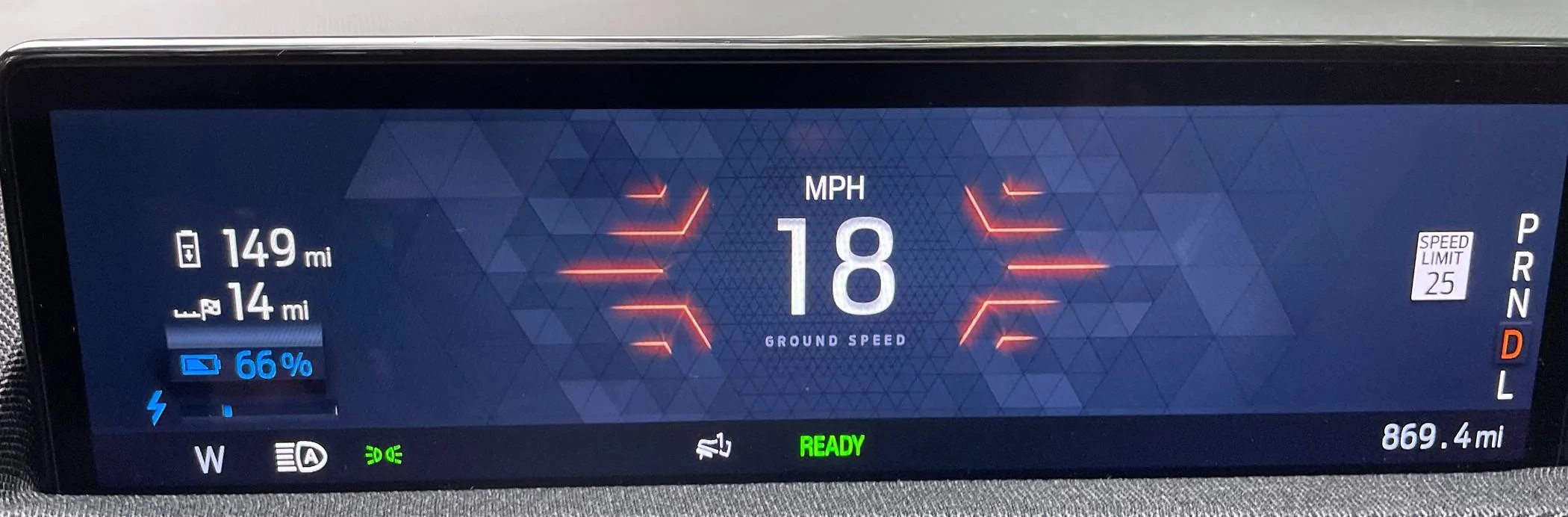
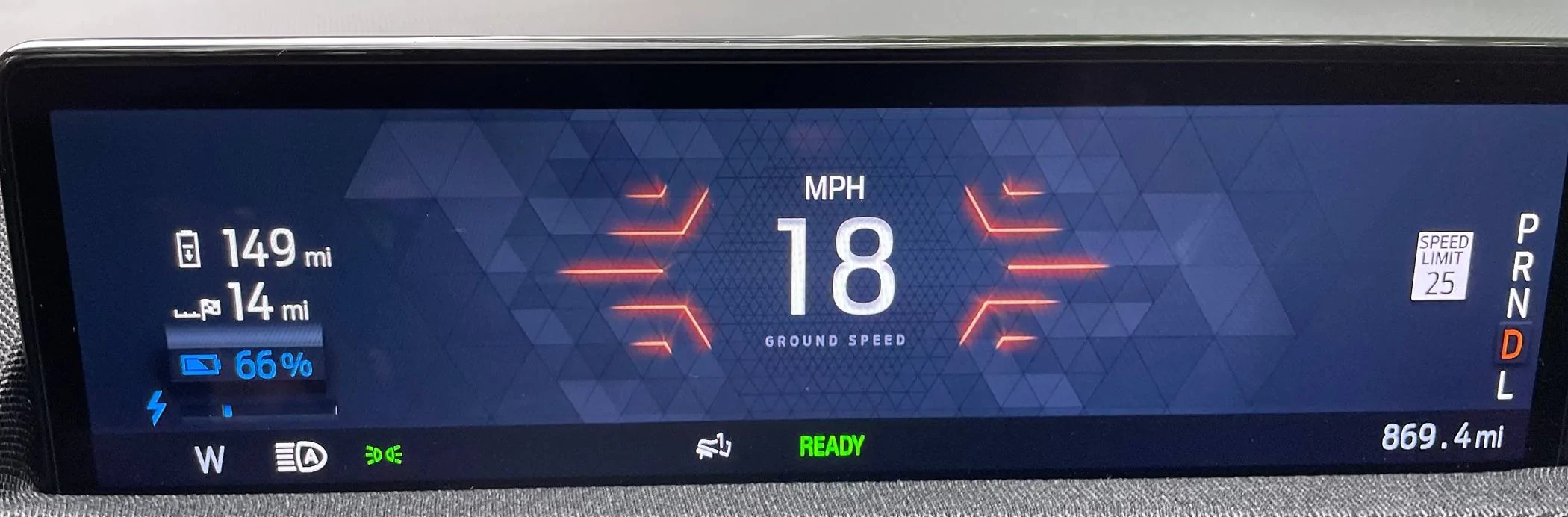
First, I like the wrap-around GT seats, they are pretty comfortable and do a good job holding you in. Everything in the interior is pretty much the same as before. It has the latest UI with the new icons. BTW, the centered speedometer makes a return when ADAS is turned off:

We already talked about the acceleration performance, which is great now. Unfortunately it was raining during my test drive (Seattle…), so I wasn’t able to get a great 0-60 dig due to being traction limited. Especially with the performance upgrade, you’ll want really sticky tires on this thing because traction becomes a big issue off the line. Traction control did an excellent job dealing with the slip however, and still gave some decent acceleration performance in the wet. Yaw while flogging it through a turn is also managed quickly as you’d expect.
The MagneRide suspension also did its thing very well. There is a noticeable difference in the amount of body roll in the different drive modes. Unbridled has high damping levels and keeps the car extremely flat, body roll is almost completely eliminated. Engaged is in the middle, and whisper is the softest. The body roll in whisper was still nothing excessive however, very well controlled. The damper tuning seems pretty good, the algorithms basically give the feel of being critically damped (almost no bounce). My favorite drive mode is still whisper because it gives the softest suspension over bumps and the throttle response is fairly linear. Unbridled is a little too abrupt for me, I’d only use that for performance driving. I still wish you could mix and match your own drive modes rather than being locked into only 3 choices.
Regen levels are still unchanged, and I think that was a missed opportunity. Upgraded power should also come with upgraded regeneration capabilities. The Mach-E has a less-than-desirable regen level in 1PD compared to a lot of other EVs, and I wish they would have added a “High” regen mode in the settings. The new thermal model should make that more possible.
BlueCruise 1.3
The 2024 Mach-E’s come with BlueCruise 1.3, which has assisted lane changes, in-lane repositioning, and enhanced performance on curves without as many dropouts as BC 1.2.
Unfortunately, it was raining during the highway test drive, and I had a lot of trouble getting lane centering and hands-free mode to engage for long because of the spray. When it worked, it did do lane changes and lane shifts like you would expect, and lane position seemed very good. However, I got several “take over immediately” prompts on curves likely because of the rain. Lane changes also failed a few times because it couldn’t see the neighboring lane. I’m not sure why the lane change option was available if it couldn’t see the other lane.
Reduced performance in the rain is understandable, but I think the algorithms are a little bit too picky on the entry conditions for lane centering sometimes. There were several cases where I wasn’t driving behind anyone, straight road, minimal spray, the lane lines were green for lane assist (so it could see the lines) but lane centering refused to engage for what seemed like an eternity. It probably would have been a lot better in the dry.
BlueCruise hands-free still only works on protected-access freeways, I would like to see hands-free work in more places like divided highways with cross streets.
Summary
Overall, the 2024 Mach-E brings some much-needed improvements that should increase the fun factor, efficiency, and convivence with the faster DC charge times. The Mach-E GT with Performance Upgrade ($54,990) is now the quickest Mustang on sale, edging out the Mustang Dark Horse in the ¼ mile.
In-House Rear Motor
Ford is now using an in-house rear motor design in all Mach-E models. This is the same motor used in the F-150 Lightning—an important cost-cutting measure that helps improve commonality between vehicle lines. Final drive ratio has increased from 9.05:1 to 9.719:1 allowing more low-end torque output. The new rear motor also allowed some simplification of the rear cradle structure. It’s lighter and slightly more efficient, which helps improve range very slightly. The design is very similar to the outgoing BorgWarner motor with an oil pump (now with external filter), oil to water heat exchanger, and coaxial planetary gearbox.
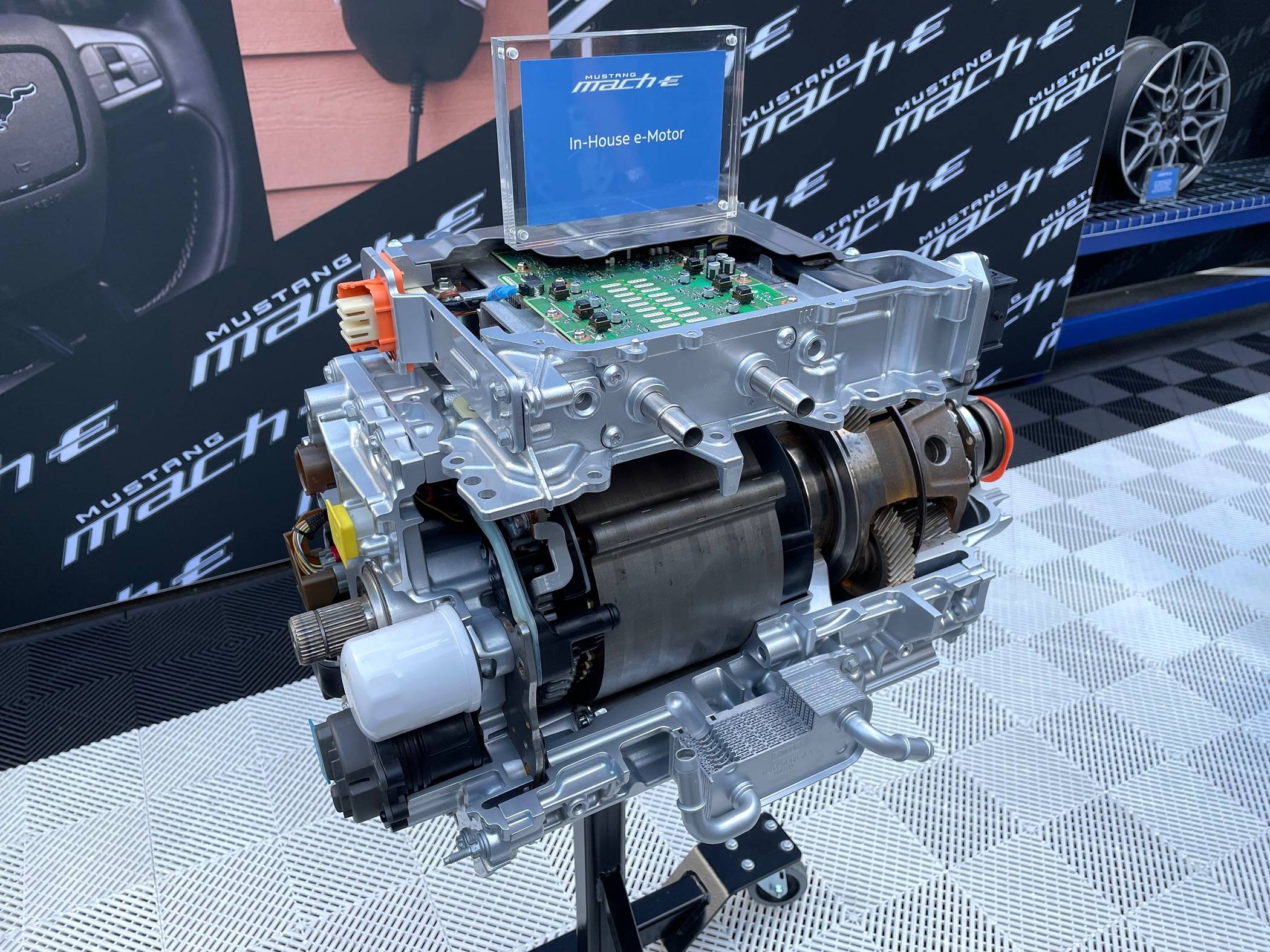
The front motors in all models are unchanged, still the Magna motor in the base AWD and the BorgWarner motor in GT models.
Upgraded Front Motor Cabling
The front motor fuse in the GT model has gone from 350A to 400A for additional robustness.
CORRECTION: The wire size and output for the front GT motor is unchanged. However, the non-GT AWD models have gotten a front motor upgrade! The motor and cables are larger. As a result, the Premium AWD ER now gets a slight horsepower boost and a decent torque boost with the new motors, which drops the 0-60 down to 4.1 sec.
| 2024 Premium AWD ER | 2023 Premium AWD ER | |
| Horsepower | 365 HP | 346 HP |
| Torque | 500 lb-ft | 428 lb-ft |
| 0-60 | 4.1 sec | 4.8 sec |
New Headlights
All Mach-E models will now have the same headlights. The turn signal has been redesigned to look like the other Mustang models with the classic 3-bar sequence. The commonalty across all trims reduces costs.
Unified Thermal Model
This is perhaps the most significant upgrade to the 2024 models. Ford has done extensive testing to develop a unified thermal model in the PCM for every high current-carrying component in the high voltage system including the DC input cables, inverter temps, battery bus bars, and HVBJB contactors. Whereas the previous thermal model was simply based on amperage x time for a worst-case ambient condition, the new thermal model accurately accounts for differences in ambient temperatures and attempts to accurately model actual component temperatures. This means when it’s colder outside, you’ll get sustained performance for longer.
The two places this makes a huge difference are in the DC charge curve speed, and acceleration performance.
Faster DC Charge Speed
The 2024 Mach-E with the extended battery pack will now charge from 10-80% in 36 minutes, which is an improvement over the previous ~45 minute timeframe. Again, this is made possible by the unified thermal model that accurately predicts DC input component temperatures and allows higher amperage to be run safely.
I did not test the charge curve myself, but some of the journalists like Kyle from Out of Spec did. All their tests came in really close to 36 minutes, which is right on spec! Kyle will probably be posting the charge curve on his website soon FYI.
No more GTPE, all GT’s are the same now
The GT Performance Edition has been discontinued, but the extra tech from that model (MagneRide shocks, bigger brakes, and wrap-around seats) is now standard on all GT models. There are also cosmetic changes like a new wheel design and new colors (Eruption Green). Glass roof is now optional.
Performance Upgrade
The GTs now have an optional Performance Upgrade enabled by software. It costs $995 and can be enabled at any time after initial vehicle purchase. This will get you more torque off the line (700 ft-lb vs. 600 ft-lb) and will enhance your 0-60 and ¼ mile times. Total horsepower is still the same (480 HP), the upgrade in torque is mostly at low speed.
| 2024 Mach-E GT Performance Upgrade | 2024 Mach-E GT No Upgrade | 2021-2023 Mach-E GTPE | |
| 0-60 MPH | 3.3 sec | 3.8 sec | 3.5 sec |
| ¼ mile | 11.8 sec @ 114 MPH | 12.4 sec | 12.4 sec @ 103 MPH |
Thermal Derate Testing
I know a lot of you are very interested in how the power-limiting is improved on the new GT model, so I tried to give it a really thorough driving test to find the limits. To review, the 2021-2023 GT models suffer from what is known as the “5 second rule”, which means a significant power limit “jail bars” appears after about 5 seconds of full acceleration. This means those models have a pretty good 0-60 MPH time, but after about 60 MPH the power limit kicks in and acceleration is reduced for the rest of the run. Some owners found this extremely disappointing.
Well, I can tell you the power limit is A LOT better now with the new thermal model. You can now do a full 0-80 with zero power limit kicking in. And it’s better than that, you can essentially do a whole ¼ mile run to triple digits with only a bar at the end. It will now do the ¼ mile in only 11.8 seconds at 114 MPH (according to Ford). FYI, I was testing at about 68ºF ambient conditions. I didn’t have a drag strip available, so another outfit will have to verify the ¼ mile times.
If you keep pushing, you’ll eventually get a thermal limit to show up. For me, it essentially took two back-to-back 0-70 MPH runs to get about 6 bars to show up. The jail bars also don’t seem to last nearly as long as before, they go away in maybe only 7 seconds. Generally, it might be more correct to say it has a 15 second rule now instead of 5 second rule.
Just like before, you will still see jail bars for other reasons like the pack being cold or because of low SoC. I think at 50% I was seeing two jail bars.
Unbridled Extend (for doing racetrack laps) works the same way as before, you’ll get a fixed 66% power limit (to start with) and traction control off. The new thermal model should improve Unbridled Extend as well because you’ll have much more headroom before additional power limits come in. That means you should be able to do more laps before noticing a sharp performance decrease. Regen in Unbridled Extend is still limited to a low value for some reason (just enough to control drivetrain lash). Entry conditions for Unbridled Extend have also been expanded, so it should be easier to enter the mode.
My overall impression is 98% of people are going to be happy with the acceleration performance of the GT now. You can pretty much do any maneuver you want (merge on the freeway, pass someone, 0-100 from a stop) the first time without any noticeable power limit. You’d have to be really flogging it on a track or through a mountain pass before you’ll get into severe limits. That’s basically unavoidable, all EVs will run into thermal limits at some point. It’s especially difficult with 400V architecture since 400V pulls twice the amps of 800V (probably like 1200 amps now at peak). But I feel the Mach-E GT is really maxing out the hardware now, I’d almost be concerned if it allowed much more since it’s still using the same LG NCM pack. This thing is plenty quick IMHO.
Driving Impressions
First, I like the wrap-around GT seats, they are pretty comfortable and do a good job holding you in. Everything in the interior is pretty much the same as before. It has the latest UI with the new icons. BTW, the centered speedometer makes a return when ADAS is turned off:
We already talked about the acceleration performance, which is great now. Unfortunately it was raining during my test drive (Seattle…), so I wasn’t able to get a great 0-60 dig due to being traction limited. Especially with the performance upgrade, you’ll want really sticky tires on this thing because traction becomes a big issue off the line. Traction control did an excellent job dealing with the slip however, and still gave some decent acceleration performance in the wet. Yaw while flogging it through a turn is also managed quickly as you’d expect.
The MagneRide suspension also did its thing very well. There is a noticeable difference in the amount of body roll in the different drive modes. Unbridled has high damping levels and keeps the car extremely flat, body roll is almost completely eliminated. Engaged is in the middle, and whisper is the softest. The body roll in whisper was still nothing excessive however, very well controlled. The damper tuning seems pretty good, the algorithms basically give the feel of being critically damped (almost no bounce). My favorite drive mode is still whisper because it gives the softest suspension over bumps and the throttle response is fairly linear. Unbridled is a little too abrupt for me, I’d only use that for performance driving. I still wish you could mix and match your own drive modes rather than being locked into only 3 choices.
Regen levels are still unchanged, and I think that was a missed opportunity. Upgraded power should also come with upgraded regeneration capabilities. The Mach-E has a less-than-desirable regen level in 1PD compared to a lot of other EVs, and I wish they would have added a “High” regen mode in the settings. The new thermal model should make that more possible.
BlueCruise 1.3
The 2024 Mach-E’s come with BlueCruise 1.3, which has assisted lane changes, in-lane repositioning, and enhanced performance on curves without as many dropouts as BC 1.2.
Unfortunately, it was raining during the highway test drive, and I had a lot of trouble getting lane centering and hands-free mode to engage for long because of the spray. When it worked, it did do lane changes and lane shifts like you would expect, and lane position seemed very good. However, I got several “take over immediately” prompts on curves likely because of the rain. Lane changes also failed a few times because it couldn’t see the neighboring lane. I’m not sure why the lane change option was available if it couldn’t see the other lane.
Reduced performance in the rain is understandable, but I think the algorithms are a little bit too picky on the entry conditions for lane centering sometimes. There were several cases where I wasn’t driving behind anyone, straight road, minimal spray, the lane lines were green for lane assist (so it could see the lines) but lane centering refused to engage for what seemed like an eternity. It probably would have been a lot better in the dry.
BlueCruise hands-free still only works on protected-access freeways, I would like to see hands-free work in more places like divided highways with cross streets.
Summary
Overall, the 2024 Mach-E brings some much-needed improvements that should increase the fun factor, efficiency, and convivence with the faster DC charge times. The Mach-E GT with Performance Upgrade ($54,990) is now the quickest Mustang on sale, edging out the Mustang Dark Horse in the ¼ mile.
Sponsored
Last edited: