Faulty math article on EV v ICE

superdave80

Well-Known Member
First Name
David
Joined
Aug 18, 2022
Threads
5
Messages
1,333
Reaction score
2,027
Location
Santa Rosa, CA
Vehicles
2022 Mach E Select SR RWD
Country flag
They are using a gas price of ~$3.10/gallon and an electricity price of ~$0.38/kWh.
They have an L2 and DC charging rate as part of their analysis. The $.38/kWh is probably for the DC charging scenario.
Sponsored


Guss-E 2021

Well-Known Member
First Name
Pierre
Joined
Aug 12, 2021
Threads
67
Messages
1,895
Reaction score
2,327
Location
New Hampshire
Vehicles
2022 Mach-E Prem AWD ER
Occupation
Compliance Specialist
Country flag
Well there you go. I guess maybe they are assuming you’re living in a state which assesses an added registration fee for EVs to offset lost gas tax revenue.

Adding charger/wiring cost is valid, but would vary wildly from home to home. My house already had a 240v outlet in the garage and I use the free mobile charger. If folks have a breaker box in the garage, it might cost a few hundred dollars to add an outlet. Or over $1,000 if not. So much variability.
It cost me $375 to install a 14-50 NEMA. I get a 30% tax credit for that along with the cost of the EVSE. Does their math take into account the 30% federal tax credit for EVSE purchase and installation?
 

Guss-E 2021

Well-Known Member
First Name
Pierre
Joined
Aug 12, 2021
Threads
67
Messages
1,895
Reaction score
2,327
Location
New Hampshire
Vehicles
2022 Mach-E Prem AWD ER
Occupation
Compliance Specialist
Country flag
Well, one way to make it more fair would be to remove the state gas tax when calculating the per-mile cost for an ICE vehicle.
But the gas tax is a current reality that's not going away. To remove it would be disingenuous. Why don't they remove oil and gas subsidies and determine the real market cost of a refined gallon of gas instead? A quick search reveals the unsubsidized price per gallon would be around $10 to $12.
 

Guss-E 2021

Well-Known Member
First Name
Pierre
Joined
Aug 12, 2021
Threads
67
Messages
1,895
Reaction score
2,327
Location
New Hampshire
Vehicles
2022 Mach-E Prem AWD ER
Occupation
Compliance Specialist
Country flag
I sent a nasty email to the author when I read this. Either shoddy work, or a shill for big oil. My "fuel" cost is right around $0.04 per mile and I pay extra for green upcharges (about $0.13/kWh). My Audi A4 fuel cost was around $0.17/mile (premium) - before the huge gas hike in WA state. And no more oil changes. I don't use fast chargers but with an EA subscription, it's around $0.31/kWh).
Oh I'm sure you were not alone. The fossil fuel lobby and general anti BEV hate crowd (fear of change or progress people) are pushing this sort of click bait constantly. Whatever. It obviously didn't work on anyone in this forum. Consumers are not as dumb as they think we are.
 

Mirak

Banned
Banned
Joined
Oct 8, 2020
Threads
111
Messages
3,754
Reaction score
6,166
Location
Kansas
Vehicles
"Sonic" 2021 MME Grabber Blue First Edition
Country flag
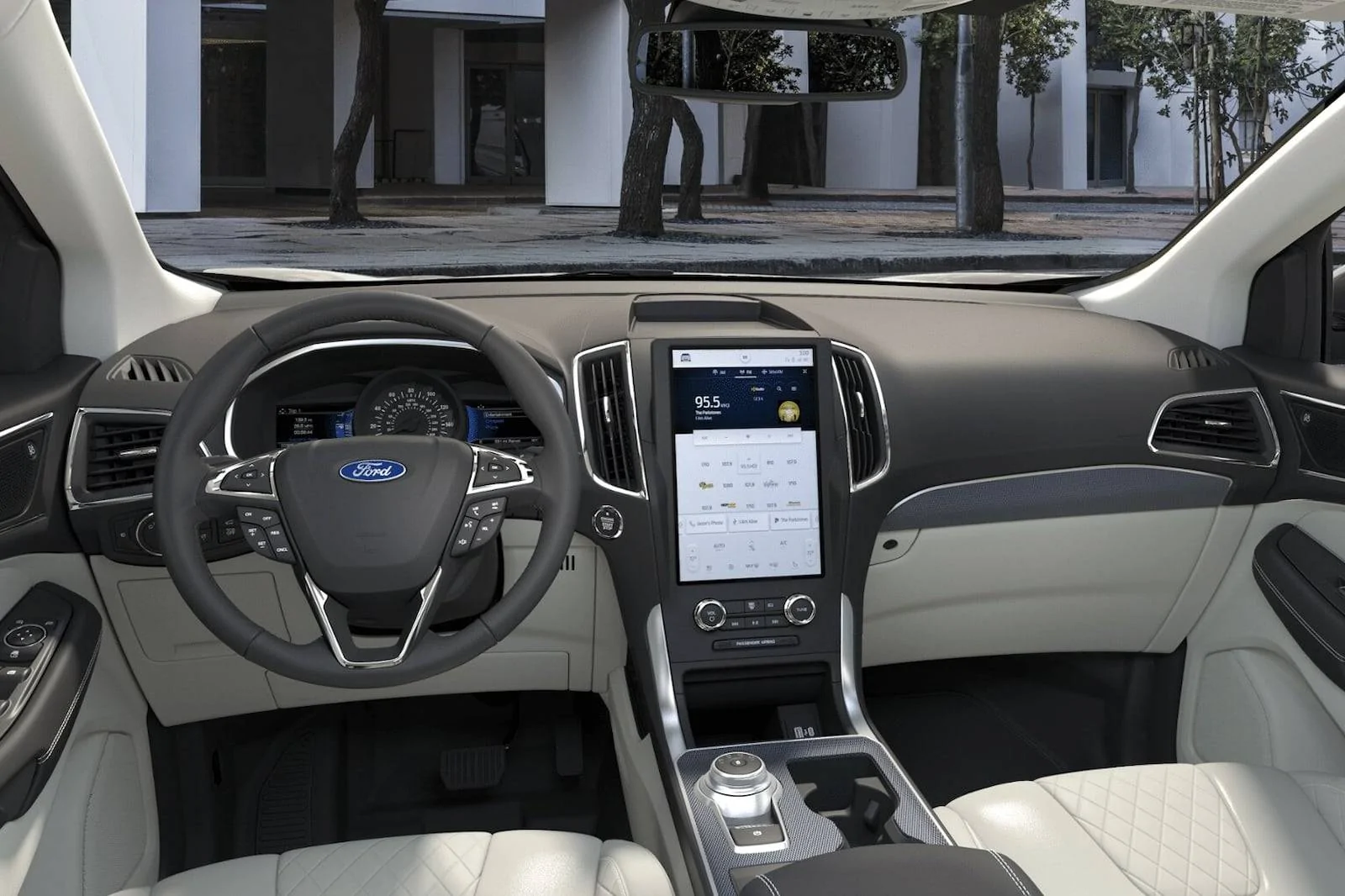
For those looking for the closest comparable ICE to the Mach E, a top-trim Ford Edge is I think as close as you’re gonna get. It’s basically a spot-on match in terms of size and includes a lot of the same tech.

Ford Mustang Mach-E Faulty math article on EV v ICE 1691148954874


Arsenic17

Well-Known Member
First Name
Arsenic
Joined
Sep 23, 2022
Threads
10
Messages
314
Reaction score
257
Location
Denver, CO
Vehicles
MME GT 2023 Vapor Blue
Country flag
They are skewing the results on both sides of the argument. Not sure how they could get it that wrong unless there was political motivation?

They are using a gas price of ~$3.10/gallon and an electricity price of ~$0.38/kWh. The average US gas price is in fact $3.86 right now, while average electricity price is $0.17.

Reality:

It takes $13.78 per 100 miles to fill up your Subaru Outback or Equinox right now.
It takes $5.61 per 100 miles to fill up your Mach-E.

Gas car is 2.5x more expensive.

The only time electric vehicles are more expensive is when using public charges, and usually only DCFC which are ~$0.45. That bumps up the Mach-E 100 mile fill-up to $14.52.
They have an L2 and DC charging rate as part of their analysis. The $.38/kWh is probably for the DC charging scenario.
Not sure, but my math came from their paragraph where they talk about charging Mach-E at home:

"Charging.... at home will run about $12.62 per 100 miles"

MME has EPA efficiency of 3 mi/kWh, so 100 miles would require 33 kWh of energy. $12.62 Ă· 33 = $0.38. That is the home price they are using. There would also be 10% loss when charging so it would be more like 36 kWh needed, so the rate they are using is slightly lower, but no where near the national average electricity rate.
 

NoMoPetrol

Active Member
First Name
Scott
Joined
Sep 30, 2022
Threads
0
Messages
28
Reaction score
13
Location
Riverside CA
Vehicles
2013Tesla Model S, 2017 Chevy Bolt
Occupation
Retired
Country flag
I seriously can't get their math to work they quote charging at home and charging at a public station yet their numbers don't make sense when using the charge from home numbers.


For example:

Charging any of these vehicles at home will run about $12.62 per 100 miles while fueling one at a gas station may run about $11.08.

I think the about is using 37 cents a kilowatt hour or thereabouts, which for home charging is way out of line.

They're using bad numbers to make a bad point that's not true. Most people who have electric cars recharge at home where it is far cheaper than gas.


https://www.businessinsider.com/ev-charging-cost-versus-gas-car-truck-suv-2023-7
Gee. Another FUD article. We keep two EVs on the road for a total increase in electricity charges of $60-95/month. And we manage that without all the convoluted math.
 

1969Camaro

Well-Known Member
First Name
Joe
Joined
Aug 26, 2021
Threads
12
Messages
313
Reaction score
295
Location
Scottsdale AZ
Vehicles
2021 Mach E Premium, 2018 Prius Prime, 1969 Camaro
Occupation
Engineer
Country flag
I seriously can't get their math to work they quote charging at home and charging at a public station yet their numbers don't make sense when using the charge from home numbers.


For example:

Charging any of these vehicles at home will run about $12.62 per 100 miles while fueling one at a gas station may run about $11.08.

I think the about is using 37 cents a kilowatt hour or thereabouts, which for home charging is way out of line.

They're using bad numbers to make a bad point that's not true. Most people who have electric cars recharge at home where it is far cheaper than gas.


https://www.businessinsider.com/ev-charging-cost-versus-gas-car-truck-suv-2023-7
Lots of EV owners charge during off peak. My off peak in AZ is 3.2 cents/KW
 

curtisfinney

Well-Known Member
First Name
Curtis
Joined
Dec 16, 2022
Threads
4
Messages
229
Reaction score
188
Location
Minneapolis, MN
Vehicles
Volvo V60, Subaru Forestor, 2023 Mustang Mach E
Occupation
Chemical Engineer
Country flag
Doesn’t matter. 30% heavier. End of discussion.
Does anyone have data on how often EV drivers change their tires compared with driving style, weight, and tire type? While I agree that EVs on the whole can wear tires faster. I think the rate is not well understood as well as other factors to mitigate this.

I also think regardless of the propulsion system, we need to develop environmentally friendly tires.
 

GreaseMonkey

Well-Known Member
First Name
Steve
Joined
Oct 3, 2021
Threads
21
Messages
3,234
Reaction score
5,174
Location
Chicago, IL
Vehicles
24 Mach-E GT
Country flag
Does anyone have data on how often EV drivers change their tires compared with driving style, weight, and tire type? While I agree that EVs on the whole can wear tires faster. I think the rate is not well understood as well as other factors to mitigate this.

I also think regardless of the propulsion system, we need to develop environmentally friendly tires.
Agreed. I also think that we are in the first inning of EV-specific tire development cycle. As more tire companies take the EV market seriously, we will see massive improvements in tire tech across various dimensions: wear, rolling resistance, noise, etc.
 
OP
OP
Nygman

Nygman

Well-Known Member
Joined
Sep 15, 2022
Threads
18
Messages
247
Reaction score
208
Location
New York
Vehicles
2025 Ford Mustang MachE GT Performance Upgrade
Occupation
Tax
Country flag
I think my main problem here is they're not saying they're comparing cost of ownership between EV and ICE, they're saying that it cost more to fuel an EV than an ICE car. They're not saying total cost of ownership is higher. To me total cost of ownership of the electric car includes the differential and price if any between the two types, any charging infrastructure needed, road tax differences, and factors in depreciation and tax credits that are available. Included in total cost of ownership is a fuel component, which is either the cost of the fuel, gasoline, you put in your car or the cost of the electric you put in the car. This article headline states most cars still cost more to charge and to fill up with gas. Based on that title it should just be focusing on the cost of fuel and only the cost of fuel without regard to the cost of the vehicle, charging infrastructure or taxes. If they want to include those items, along with depreciation, maybe they should look at sample cost of ownership over a 3 to 5-year period factoring in everything, including 10,000 miles a year. There are models that they can run to do this comparison accurately. If then the article said cost of ownership over 5 years is more for an EV and took those things into account, that would be different.

I would like to know how the total cost of ownership per mile fares between the two types of cars, and maybe even include hybrids in that. Using 10,000 mi a year over 5 years, with depreciation models, average service costs, taxes, EV infrastructure, we can get a good idea of the actual savings achieve via electric cars. I think Tessa does some fuzzy math around this, but as it's Tesla and they have skin in the game I don't think that can be trusted. However it is no reason why independent testing and analytic services couldn't calculate all this and let us know.

To say that most cars cause more to charge than to fill up with gas as your headline, is irresponsible and wrong, and honestly bad journalism.
 

superdave80

Well-Known Member
First Name
David
Joined
Aug 18, 2022
Threads
5
Messages
1,333
Reaction score
2,027
Location
Santa Rosa, CA
Vehicles
2022 Mach E Select SR RWD
Country flag
"Charging.... at home will run about $12.62 per 100 miles"
There also added two other items besides just electricity costs:

1. Annual registration fees specific to EVs. This is complete BS, as this is not a 'fueling' cost, but they added it anyways since ICE vehicles pay a fuel tax.
2. Home charger/wiring costs. This one is valid, but the cost they added was WAY too high ($350/year).
 

superdave80

Well-Known Member
First Name
David
Joined
Aug 18, 2022
Threads
5
Messages
1,333
Reaction score
2,027
Location
Santa Rosa, CA
Vehicles
2022 Mach E Select SR RWD
Country flag
My off peak in AZ is 3.2 cents/KW
So California is even dumber than I thought. They want to force everybody into EVs, but our lowest off-peak rate for PG&E is $.27/kWh. And then they jack up our peak rates by 50%, so you don' really save much anyways.
 

superdave80

Well-Known Member
First Name
David
Joined
Aug 18, 2022
Threads
5
Messages
1,333
Reaction score
2,027
Location
Santa Rosa, CA
Vehicles
2022 Mach E Select SR RWD
Country flag
Doesn’t matter. 30% heavier. End of discussion.
Doesn't matter. Better, more reactive traction control leads to less wear. End of discussion.

" Tires on a modern electric car will wear down much slower than in a car with a traditional internal combustion engine. This is due to good traction control. The driver assist systems reduce slipping by utilizing the electric motor's rapid power adjustment. This system is much quicker than in ICE vehicles, where it is based on braking and limiting engine RPM, Liukkula says."

https://www.nokiantyres.com/company...s-in-reality-tires-will-last-for-a-long-time/

Ok, this may or may not be true. I'm just posting this to let you know that there are a lot of factors that go into tire wear. Until someone does some comprehensive studies on this issue, I'm not going to just assume that my EV tires wear out quicker than ICE tires, just because my vehicle is heavier.

Remember the myth about brakes wearing out faster due to 'more weight'? But then it turned out to be the complete opposite (brakes last far longer on EV).
 

Arsenic17

Well-Known Member
First Name
Arsenic
Joined
Sep 23, 2022
Threads
10
Messages
314
Reaction score
257
Location
Denver, CO
Vehicles
MME GT 2023 Vapor Blue
Country flag
There also added two other items besides just electricity costs:

1. Annual registration fees specific to EVs. This is complete BS, as this is not a 'fueling' cost, but they added it anyways since ICE vehicles pay a fuel tax.
2. Home charger/wiring costs. This one is valid, but the cost they added was WAY too high ($350/year).
1. OK I am fine with the fuel tax being added into the comparison here. I cant find my registration, but I dont believe the "EV fee" in my state was above $100, but obviously it will vary by state. 10,000 miles per year / $100 = 1 cent per mile tax. So for 100 miles of range, that will be an extra $1 of cost on the EV.

2. Agree on this and that is should not be included. $350 per year is insane. Most people can get a charger for $500 and get it installed for $500 or less. That $1000 cost should be split across at least 10 years of usage, if not 15+ years. Again another $75 to 100 per year add-on for the EV, adding $1 per 100 miles.


Seems they also are not putting any value on the time spent at fueling stations. The average ICE driver will spend several hours per year at a gas station fueling their car. An EV driver that only charges at home spends basically no time. What value do they put on the average person's time per hour?
Sponsored


Top