
360alaska
Well-Known Member
- First Name
- Josh
- Joined
- Aug 21, 2023
- Threads
- 4
- Messages
- 89
- Reaction score
- 123
- Location
- Northwest Louisiana
- Vehicles
- 2021 MACH-E RWD, 2019 Model 3, 1997 Ranger 4.0

- Thread starter
- #1
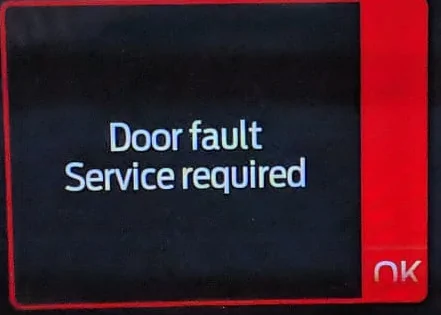
I wanted to write this to give an idea of how to replace a door latch. I was driving the car and this image appeared:

Here is an idea of how it's done:
1. Connect FDRS and initiate module replacement to capture pre-replacement as-built data.
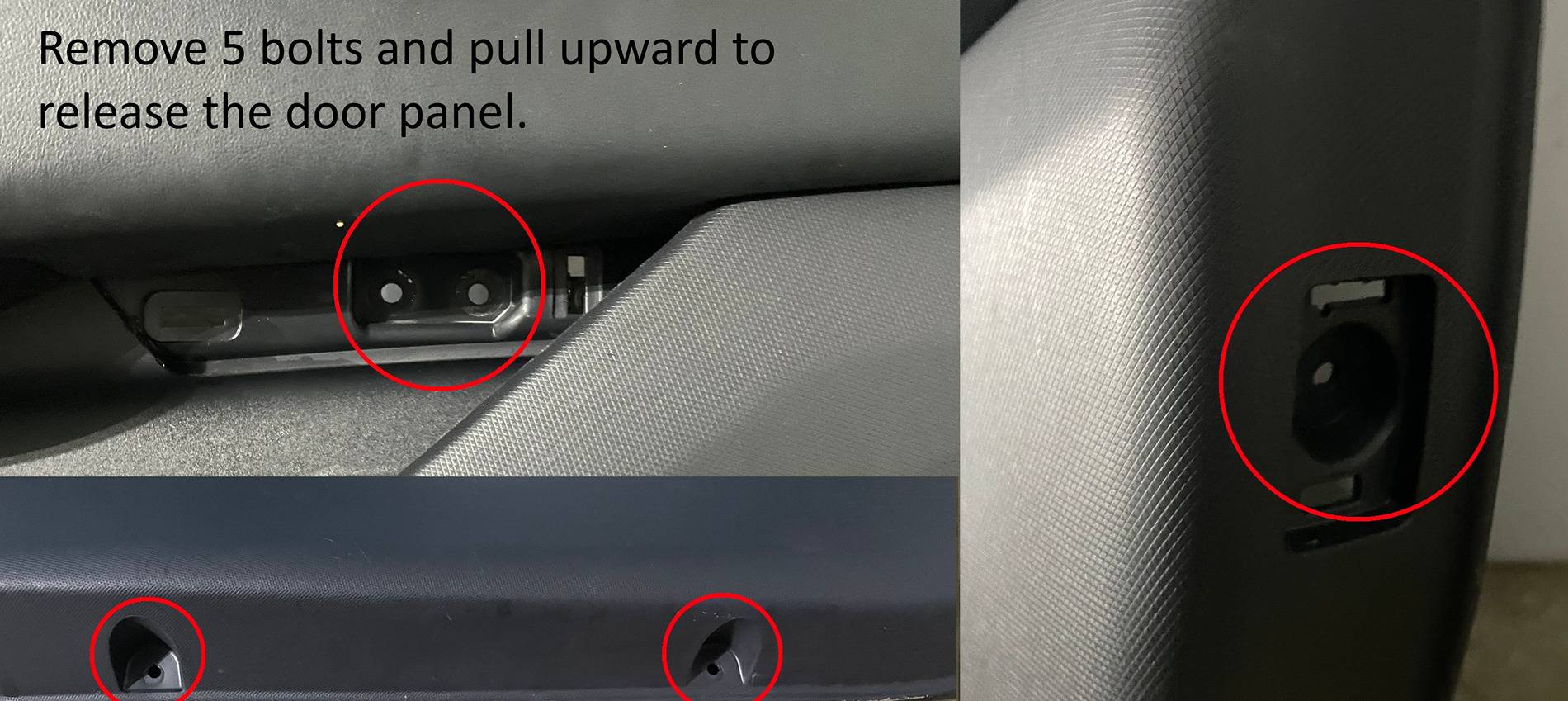
2. Take off the door panel by removing bolts and prying up. Lower the window until the retention pins align with the service cutout.
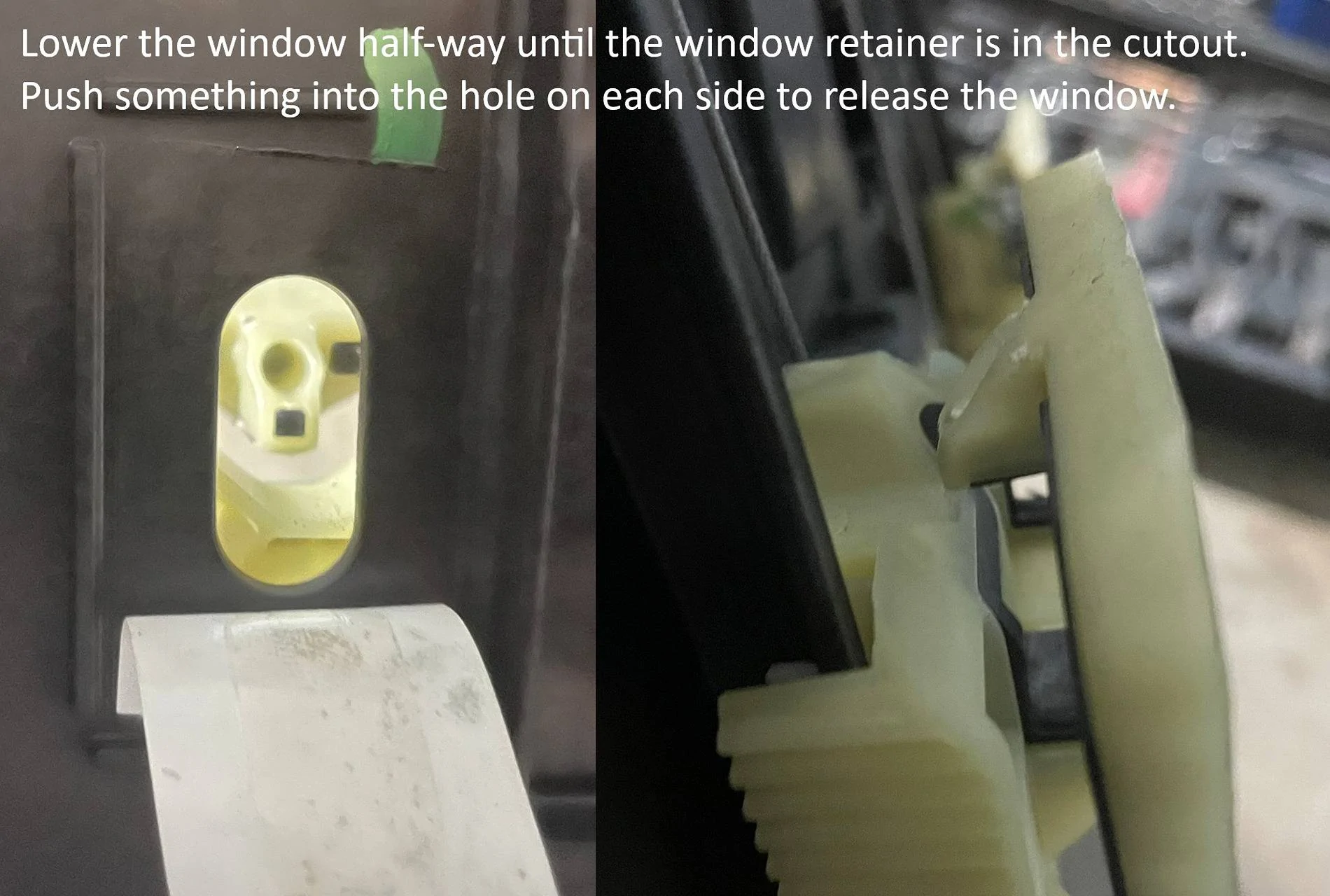
3. Carefully remove the window from the door by depressing the retention clips with a punch or screwdriver. remove it and set it aside in a safe spot.
4. Disconnect the 12V battery. Wait 10 minutes for safety.
5. Unplug all wires connected to components on the window regulator.
6. Remove the window regulator by turning and pulling out the cams and unbolting the top two bolts under the yellow covers.
7. Remove two bolts to detach the right section of the window track.
8. Access and remove either the presenter or the door latch, as needed.
2. Take off the door panel by removing bolts and prying up. Lower the window until the retention pins align with the service cutout.

3. Carefully remove the window from the door by depressing the retention clips with a punch or screwdriver. remove it and set it aside in a safe spot.

5. Unplug all wires connected to components on the window regulator.

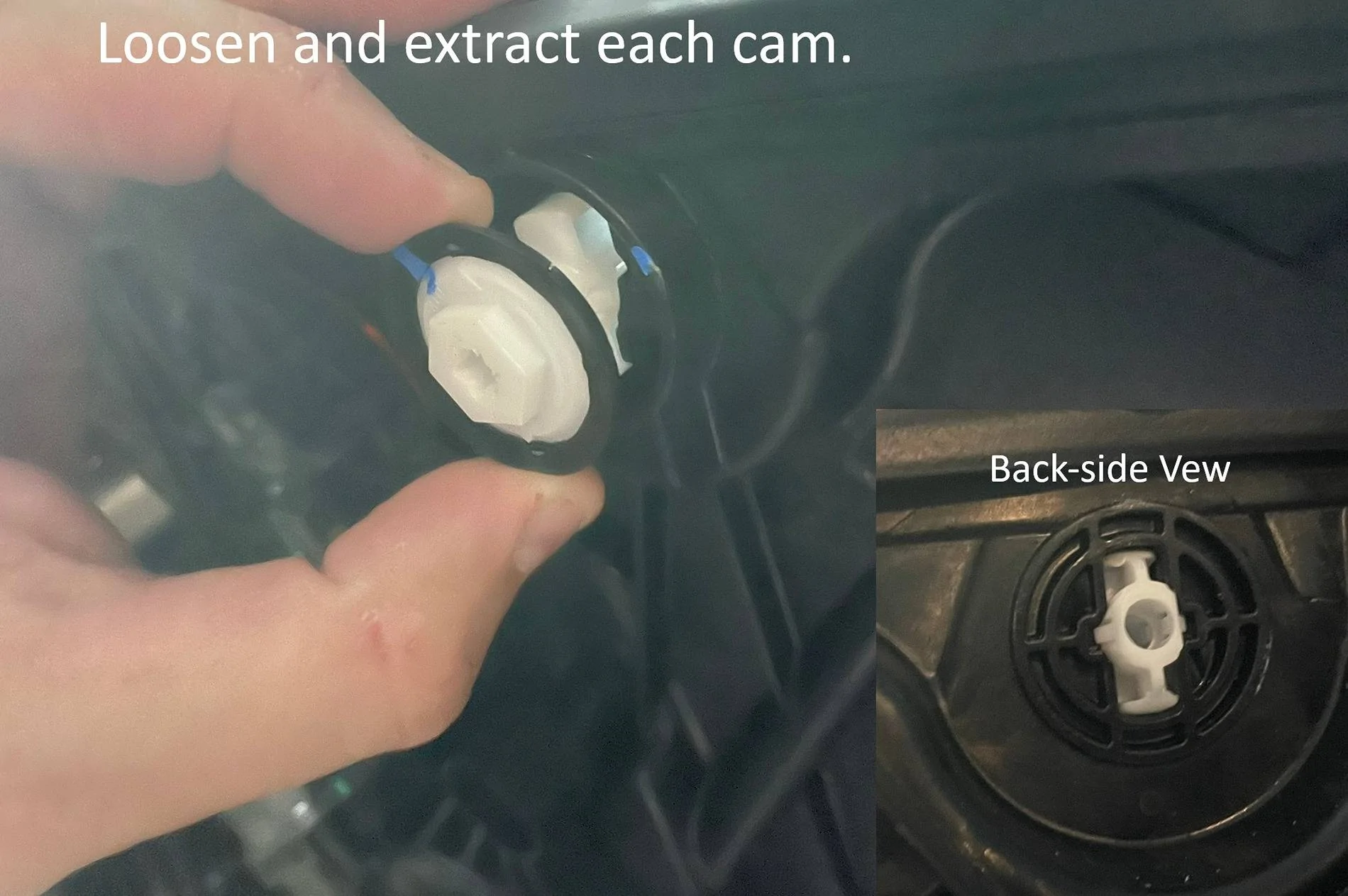
6. Remove the window regulator by turning and pulling out the cams and unbolting the top two bolts under the yellow covers.

7. Remove two bolts to detach the right section of the window track.

8. Access and remove either the presenter or the door latch, as needed.
Failure Analysis:
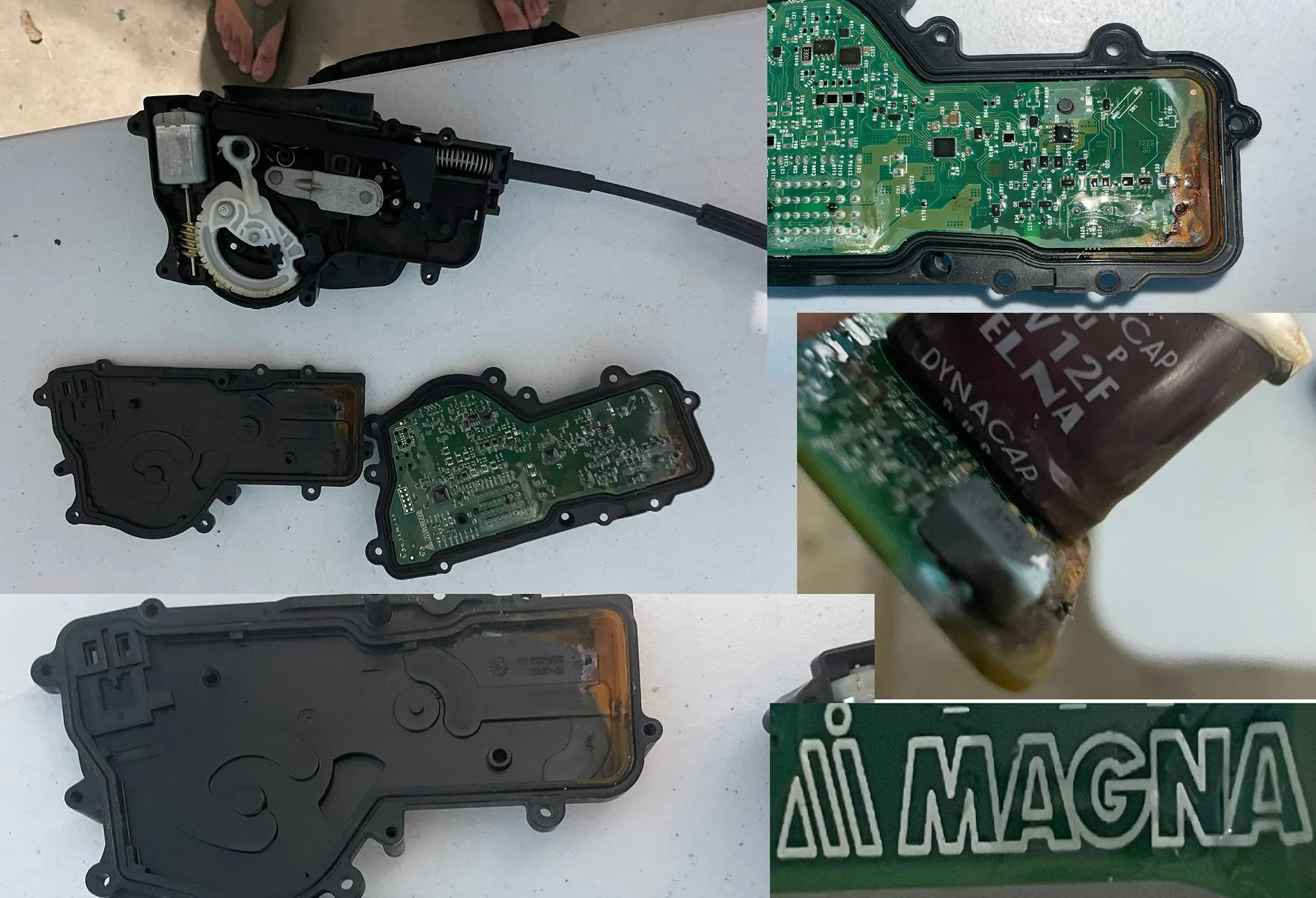
The failure likely occurred due to a design oversight in the module's water management. While the electrical portion of the module includes an O-ring seal theoretically designed to prevent water ingress, it lacks an effective means of water egress. Once moisture enters, it has no way to escape. This situation exemplifies a principle famously stated by a popular YouTube home building channel: "If it can't dry, it dies." In this case, the trapped moisture probably led to the deterioration and eventual failure of the electrical components.

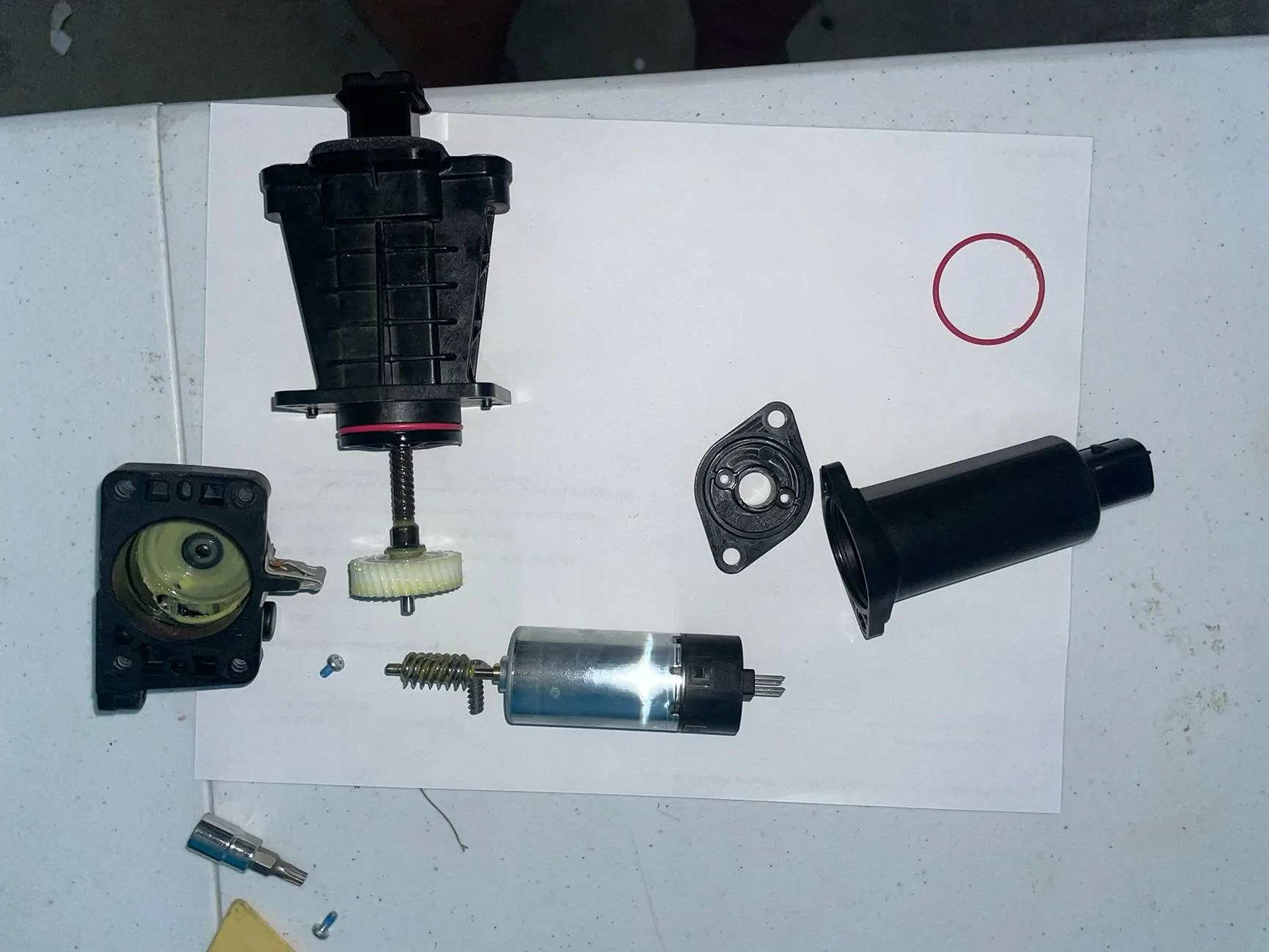
The presenter was working properly, but I changed it as well since I was in there, I took it a apart for fun:
Here is an idea of how it's done:
1. Connect FDRS and initiate module replacement to capture pre-replacement as-built data.
2. Take off the door panel by removing bolts and prying up. Lower the window until the retention pins align with the service cutout.
3. Carefully remove the window from the door by depressing the retention clips with a punch or screwdriver. remove it and set it aside in a safe spot.
4. Disconnect the 12V battery. Wait 10 minutes for safety.
5. Unplug all wires connected to components on the window regulator.
6. Remove the window regulator by turning and pulling out the cams and unbolting the top two bolts under the yellow covers.
7. Remove two bolts to detach the right section of the window track.
8. Access and remove either the presenter or the door latch, as needed.
2. Take off the door panel by removing bolts and prying up. Lower the window until the retention pins align with the service cutout.
3. Carefully remove the window from the door by depressing the retention clips with a punch or screwdriver. remove it and set it aside in a safe spot.
5. Unplug all wires connected to components on the window regulator.

6. Remove the window regulator by turning and pulling out the cams and unbolting the top two bolts under the yellow covers.
7. Remove two bolts to detach the right section of the window track.
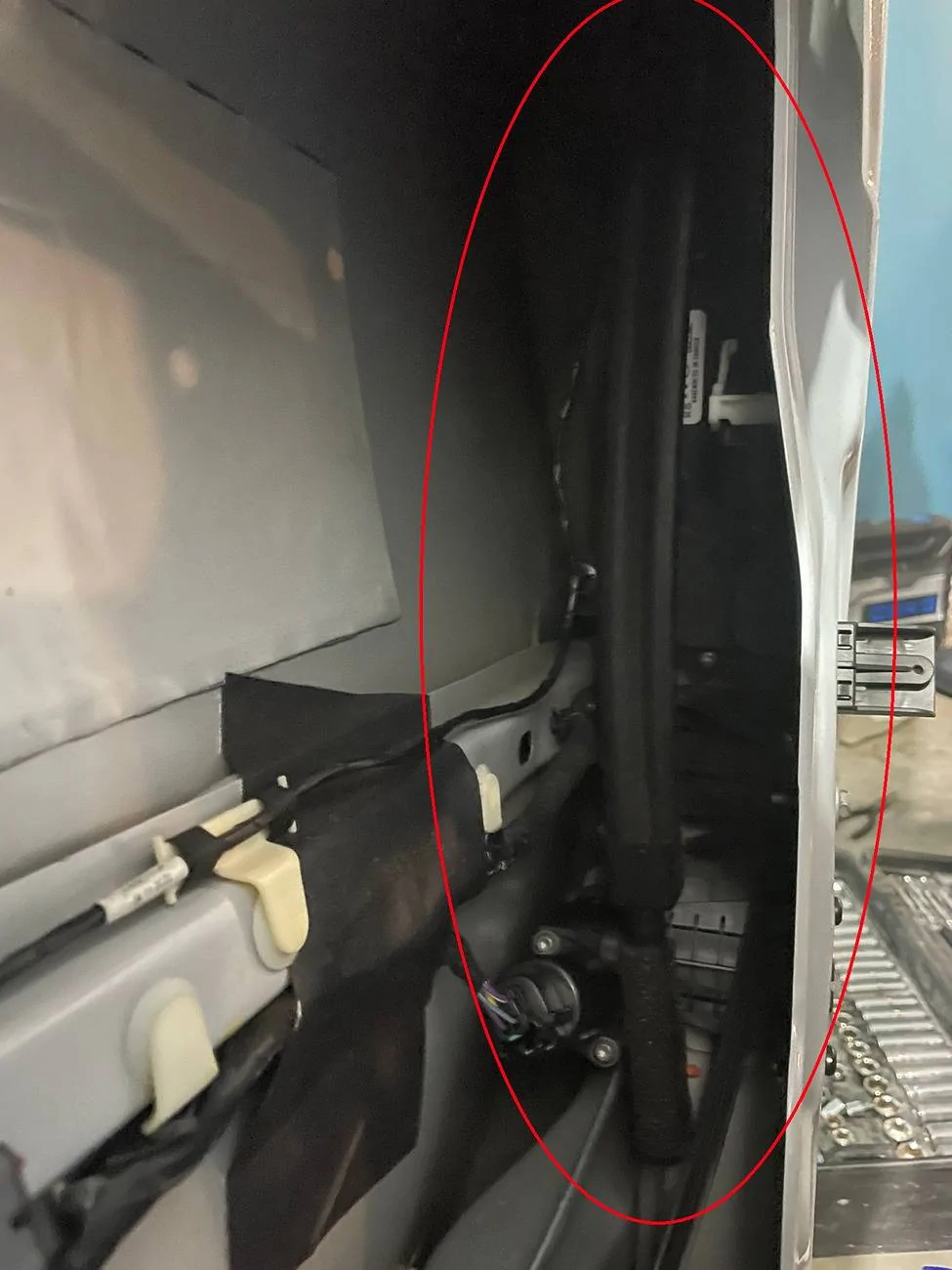
8. Access and remove either the presenter or the door latch, as needed.
Failure Analysis:
The failure likely occurred due to a design oversight in the module's water management. While the electrical portion of the module includes an O-ring seal theoretically designed to prevent water ingress, it lacks an effective means of water egress. Once moisture enters, it has no way to escape. This situation exemplifies a principle famously stated by a popular YouTube home building channel: "If it can't dry, it dies." In this case, the trapped moisture probably led to the deterioration and eventual failure of the electrical components.
The presenter was working properly, but I changed it as well since I was in there, I took it a apart for fun:
Sponsored
Attachments
-
3.4 MB Views: 167
Last edited: