
PSA: Buy an Industrial 14-50 Receptacle

Scooby24

Well-Known Member
First Name
Greg
Joined
Jul 2, 2021
Threads
29
Messages
2,123
Reaction score
3,296
Location
Olathe, KS
Vehicles
'25 BMW i4 M50; '25 MME GT
Occupation
Healthcare IT
Country flag
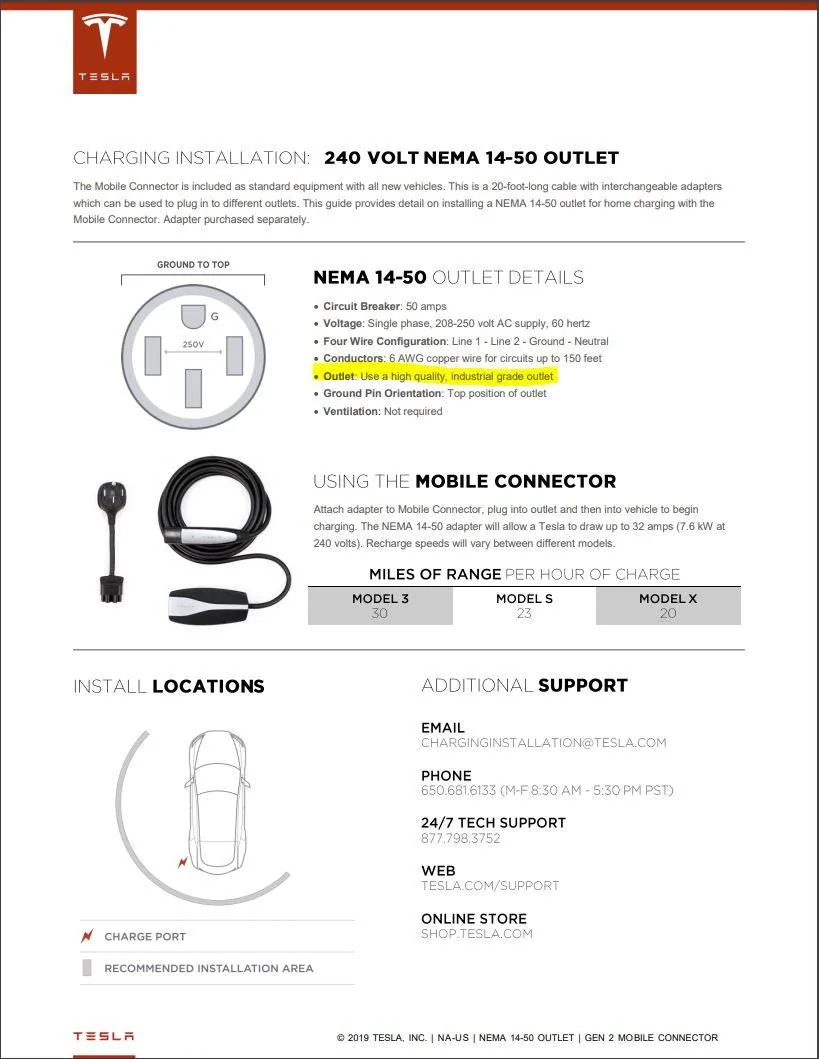
When doing your 240v install, either yourself or working with your electrician, make sure you are installing an industrial receptacle and not a commercial one.

Commercial receptacles are not intended for high current draw for sustained periods of time. If you got the receptacle from Home Depot/Lowes/Menards you can probably assume it's commercial grade.

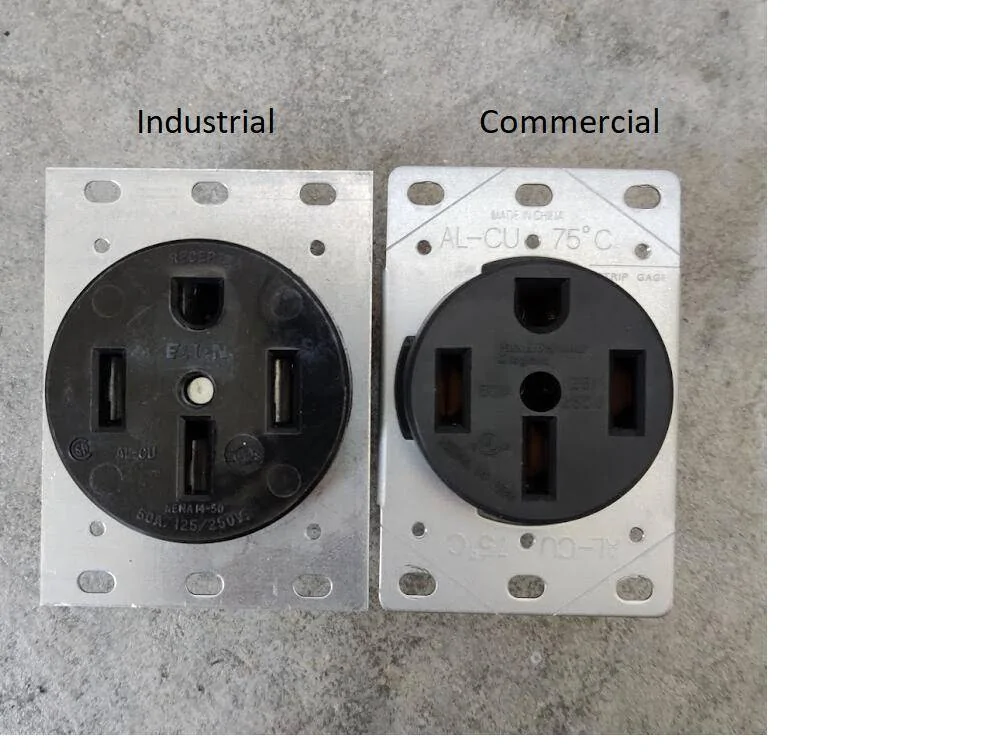
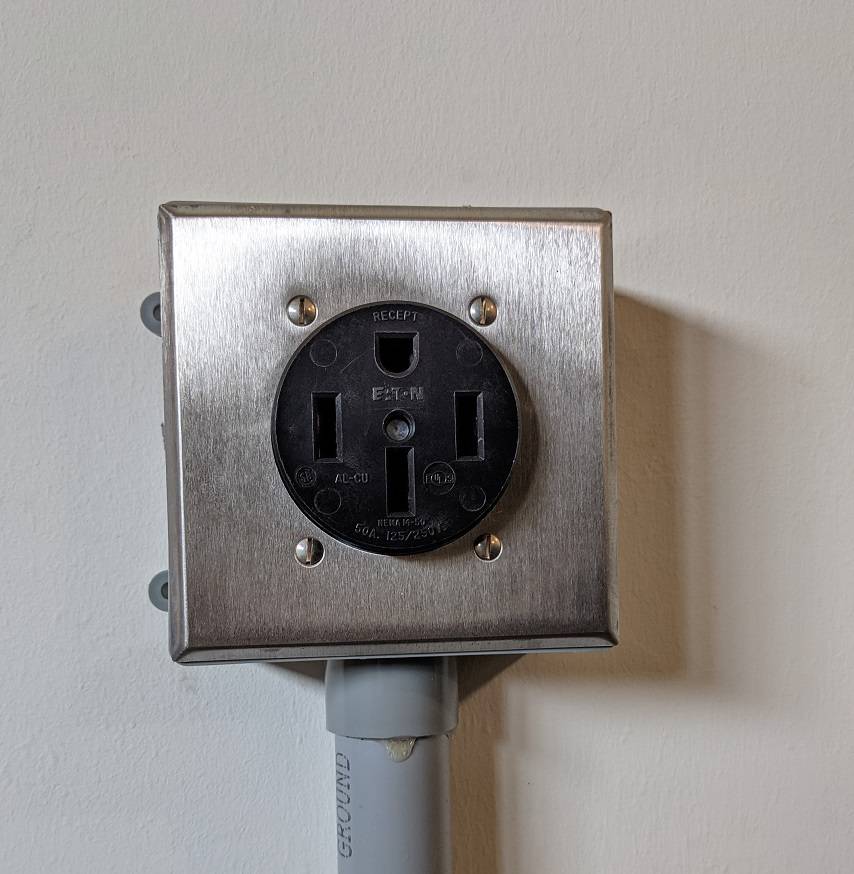
Cooper/Eaton 5745N or Hubbell HBL9450A are examples of proper receptacles. An Industrial grade outlet will have a larger face which requires a receptacle cover with a 2.48" ID hole. (Mulberry 97223 for example)

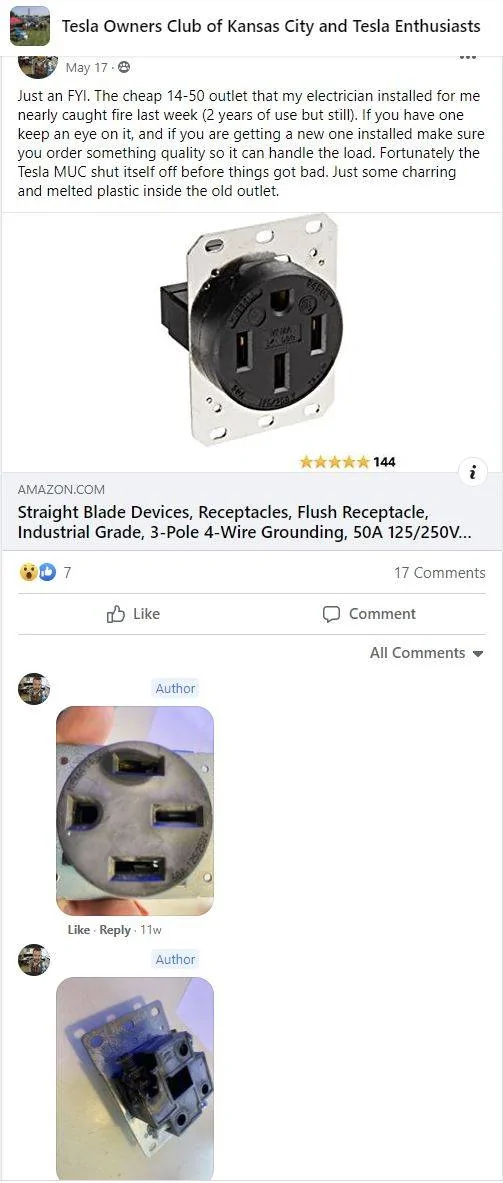
I installed mine last year and at the time asked our local Telsa facebook group if I should be using Industrial. Several chimed in saying it wasn't necessary. Follow up a year later and one of those guys made this post.... and these stories are everywhere. Spend the little bit extra and upgrade. It's not worth the risk and there are too many of these stories of folks thinking they'll be fine and rolling the dice and then this happens.

Ford Mustang Mach-E PSA: Buy an Industrial 14-50 Receptacle lH7gn1D


Here's a visual difference
Ford Mustang Mach-E PSA: Buy an Industrial 14-50 Receptacle E6S6ac8


Ford Mustang Mach-E PSA: Buy an Industrial 14-50 Receptacle qy1C6wQ
Sponsored


Maquis

Well-Known Member
First Name
Dave
Joined
Dec 21, 2020
Threads
34
Messages
5,696
Reaction score
8,082
Location
Illinois
Vehicles
2021 Mach E4X, 2023 Lightning Lariat ER
Country flag
I’d really like to see that failed receptacle first hand. From the picture, it appears to me that the heating originated on the wiring side only on one terminal. This is common when the screw is not properly torqued.
 
OP
OP
Scooby24

Scooby24

Well-Known Member
First Name
Greg
Joined
Jul 2, 2021
Threads
29
Messages
2,123
Reaction score
3,296
Location
Olathe, KS
Vehicles
'25 BMW i4 M50; '25 MME GT
Occupation
Healthcare IT
Country flag
I’d really like to see that failed receptacle first hand. From the picture, it appears to me that the heating originated on the wiring side only on one terminal. This is common when the screw is not properly torqued.
This is the argument everyone tries...it's not an issue with the torque...it's the sustained current. The Levitons like this one above seem to fail very often which is probably highlighting a poorer design, but these stories are literally...everywhere.

They are always...always always always commercial grade receptacles. Can't find a single instance of a melted industrial grade.
 
Last edited:

ZuleMME

Well-Known Member
First Name
Zule
Joined
Apr 23, 2021
Threads
10
Messages
1,018
Reaction score
1,487
Location
Denver, CO
Vehicles
21' Job1 P4X MME, 22' MYP
Occupation
Implementation Engineer
Country flag
This is the argument everyone tries...it's not an issue with the torque...it's the sustained current. The Levitons like this one above seem to fail very often which is probably highlighting a poorer design, but these stores are literally...everywhere.

They are always...always always always commercial grade receptacles. Can't find a single instance of a melted industrial grade.
That just doesn't align with the melting on only one terminal though. If it's both it's a materials issue. But only on one (2 contacts are needed to make the circuit, furthermore they alternate which is which being AC) it proves a connection issue. Or the vehicle is drawing more from 1 phase than the other. But that's even more concerning... Unless you think they have half better plastic then the other side.


macchiaz-o

Well-Known Member
First Name
Jonathan
Joined
Nov 25, 2019
Threads
171
Messages
8,580
Reaction score
15,988
Location
}not/A/gr8'Place.2.store-mEyePassword{
Vehicles
MY21 J1 Premium RWD SR
Country flag
This is the argument everyone tries...it's not an issue with the torque...it's the sustained current. The Levitons like this one above seem to fail very often which is probably highlighting a poorer design, but these stores are literally...everywhere.

They are always...always always always commercial grade receptacles. Can't find a single instance of a melted industrial grade.
What percentage of residential EV owners have an industrial grade 14-50R installed? My guess is well below one percent. And those that bother to find and buy the far more rare and expensive option for "fire safety reasons" are also more likely to install it correctly.

If there were large numbers of industrial grade 14-50 receptacles installed into residential garages and used nightly for 40A EV charging, then maybe the reports of failures would not be limited to commercial grade receptacles?
 
OP
OP
Scooby24

Scooby24

Well-Known Member
First Name
Greg
Joined
Jul 2, 2021
Threads
29
Messages
2,123
Reaction score
3,296
Location
Olathe, KS
Vehicles
'25 BMW i4 M50; '25 MME GT
Occupation
Healthcare IT
Country flag
That just doesn't align with the melting on only one terminal though. If it's both it's a materials issue. But only on one (2 contacts are needed to make the circuit, furthermore they alternate which is which being AC) it proves a connection issue. Or the vehicle is drawing more from 1 phase than the other. But that's even more concerning... Unless you think they have half better plastic then the other side.
When you're pushing electrical right to the edge of failure, I suspect the slightest variation of draw/temps would cause one connection point to fail sooner than the other. And at least with the Tesla chargers, most of them seem to shut off quickly so you don't end up with a runaway fire.
 

AzCoronaDog

Well-Known Member
First Name
Jeff
Joined
Feb 26, 2021
Threads
7
Messages
236
Reaction score
511
Location
Scottsdale, AZ
Vehicles
'12 Porsche 911 Cabriolet, '21 MME, '17 Yukon XL
Country flag
Sorry, but I have to raise the BS flag on the main point in this post about continuous use.
Any electrical receptacle MUST be capable of handling the rated amperage continuously, period.
Anything less means it is not rated for that amperage!

The difference in the grades has to do with how long they last, not how much current they can draw. Here is a great site explaining this: https://www.electricalexperts.com/blog/2017/april/electricians-explain-the-3-types-of-residential-/

Of course there are always going to be some manufacturing defects, and buying a quality brand should reduce the chance of getting a faulty one.

The main issue really is that every receptacle has a lifespan, and also has a limited number of times it can be plugged and unplugged before the connection quality starts to degrade. Environmental factors effect the lifetime too. I would like to know where this failed connector was installed, and how often was it plugged and unplugged?

If you are going to plug and unplug a mobile type EVSE every day, then you should absolutely go for an industrial grade receptacle. If you are plugging in a wall mounted EVSE that will rarely if ever be unplugged, a commercial grade will be fine.

Either way, it is important to check plugs and outlets for damage on a regular basis. Hopefully the failure mentioned here also caused the breaker to trip. If not, that is another issue altogether.
 

ZuleMME

Well-Known Member
First Name
Zule
Joined
Apr 23, 2021
Threads
10
Messages
1,018
Reaction score
1,487
Location
Denver, CO
Vehicles
21' Job1 P4X MME, 22' MYP
Occupation
Implementation Engineer
Country flag
Yea I'd moreso suspect either a loose conductor as previously suggested or worse, an aluminum conductor (that outlet SAYS it's AL rated though) due to crazy wire prices lately. Look at that backside picture. It's obvious that is where the heat was generating.
 
OP
OP
Scooby24

Scooby24

Well-Known Member
First Name
Greg
Joined
Jul 2, 2021
Threads
29
Messages
2,123
Reaction score
3,296
Location
Olathe, KS
Vehicles
'25 BMW i4 M50; '25 MME GT
Occupation
Healthcare IT
Country flag
What percentage of residential EV owners have an industrial grade 14-50R installed? My guess is well below one percent. And those that bother to find and buy the far more rare and expensive option for "fire safety reasons" are also more likely to install it correctly.

If there were large numbers of industrial grade 14-50 receptacles installed into residential garages and used nightly for 40A EV charging, then maybe the reports of failures would not be limited to commercial grade receptacles?
I would hope quite a few since Tesla has been recommending these spec'd receptacles with their install instructions for years and there's been enough meltdowns with commercial receptacles to put 2+2 together.

Ford Mustang Mach-E PSA: Buy an Industrial 14-50 Receptacle H6hIJlE


Now...I'm sure there's a small chance you'd be fine with something like 8 awg wire instead of 6, or a 45 amp breaker instead of 50...or a commercial grade outlet instead of industrial.

But why would you take that chance when the specs are outlined for you and recommend industrial (and there are zero examples of failures with industrial receptacles)
 
OP
OP
Scooby24

Scooby24

Well-Known Member
First Name
Greg
Joined
Jul 2, 2021
Threads
29
Messages
2,123
Reaction score
3,296
Location
Olathe, KS
Vehicles
'25 BMW i4 M50; '25 MME GT
Occupation
Healthcare IT
Country flag
Sorry, but I have to raise the BS flag on the main point in this post about continuous use.
Any electrical receptacle MUST be capable of handling the rated amperage continuously, period.
Anything less means it is not rated for that amperage!

The difference in the grades has to do with how long they last, not how much current they can draw. Here is a great site explaining this: https://www.electricalexperts.com/blog/2017/april/electricians-explain-the-3-types-of-residential-/

Of course there are always going to be some manufacturing defects, and buying a quality brand should reduce the chance of getting a faulty one.

The main issue really is that every receptacle has a lifespan, and also has a limited number of times it can be plugged and unplugged before the connection quality starts to degrade. Environmental factors effect the lifetime too. I would like to know where this failed connector was installed, and how often was it plugged and unplugged?

If you are going to plug and unplug a mobile type EVSE every day, then you should absolutely go for an industrial grade receptacle. If you are plugging in a wall mounted EVSE that will rarely if ever be unplugged, a commercial grade will be fine.

Either way, it is important to check plugs and outlets for damage on a regular basis. Hopefully the failure mentioned here also caused the breaker to trip. If not, that is another issue altogether.
Being able to withstand sustained peak power is exactly what differentiates quality in outlets (that and connector plug cycling) The industrial grade receptacles have glass/ceramic insulators that are designed to withstand max amperage draw for extended periods of time. Commercial grades are not as their intended use have products that don't draw max amperage for sustained periods of time. This is EXACTLY why there are different grades of connectors.

https://www.seahurst.com/nema-14-50-tesla/

Third, the reliability of charging on a NEMA 14-50 outlet is limited by design and quality of the outlet your electrician buys. There is a $15 (Leviton brand) residential grade NEMA 14-50 outlet sold at Home Depot that is not sufficient to support daily vehicle charging. The Leviton outlet has fiberglass insulators that tend to melt out after a few months of vehicle charging. The outlets are not designed specifically for EV charging; they are designed for plugging in RVs and range ovens. Ranges will pull max power once in a while when we roast a turkey, but EV charging will be pulling maximum amperage for hours on end every night. For this heavy use, we recommend an industrial grade NEMA 14-50 outlet
 
Last edited:

Motomax

Well-Known Member
First Name
Max
Joined
Jul 19, 2021
Threads
5
Messages
1,019
Reaction score
1,027
Location
California
Vehicles
VW GLI, 4Runner
Country flag
I’d really like to see that failed receptacle first hand. From the picture, it appears to me that the heating originated on the wiring side only on one terminal. This is common when the screw is not properly torqued.
Also the type and size of wiring could be useful information. Aluminum wiring can loosen up over time which would cause this type of failure too.
 

ZuleMME

Well-Known Member
First Name
Zule
Joined
Apr 23, 2021
Threads
10
Messages
1,018
Reaction score
1,487
Location
Denver, CO
Vehicles
21' Job1 P4X MME, 22' MYP
Occupation
Implementation Engineer
Country flag
Being able to withstand sustained peak power is exactly what differentiates quality in outlets (that and connector plug cycling) The industrial grade receptacles have glass/ceramic insulators that are designed to withstand max amperage draw for extended periods of time. Commercial grades are not as their intended use have products that don't draw max amperage for suspended periods of time. This is EXACTLY why there are different grades of connectors.

https://www.seahurst.com/nema-14-50-tesla/
I wonder how many of these people are pulling 48A out of the 50A outlet. It's only rated for 80% at sustained loads or 40A... Too many variables we don't know that the people seeing these issues aren't forthcoming with the details. If the outlet couldn't handle what the NEC says IT HAS TO there would be lawsuits left and right.
 
OP
OP
Scooby24

Scooby24

Well-Known Member
First Name
Greg
Joined
Jul 2, 2021
Threads
29
Messages
2,123
Reaction score
3,296
Location
Olathe, KS
Vehicles
'25 BMW i4 M50; '25 MME GT
Occupation
Healthcare IT
Country flag
I wonder how many of these people are pulling 48A out of the 50A outlet. It's only rated for 80% at sustained loads or 40A... Too many variables we don't know that the people seeing these issues aren't forthcoming with the details. If the outlet couldn't handle what the NEC says IT HAS TO there would be lawsuits left and right.
UL won't let you pull 48A from a 14-50. Any 48a EVSEs are hardwired.


Top