Glenn C
Member
- First Name
- Glenn
- Joined
- Apr 16, 2022
- Threads
- 2
- Messages
- 23
- Reaction score
- 17
- Location
- Bryn Mawr, PA
- Vehicles
- 2022 Mustang Mach-E Premium

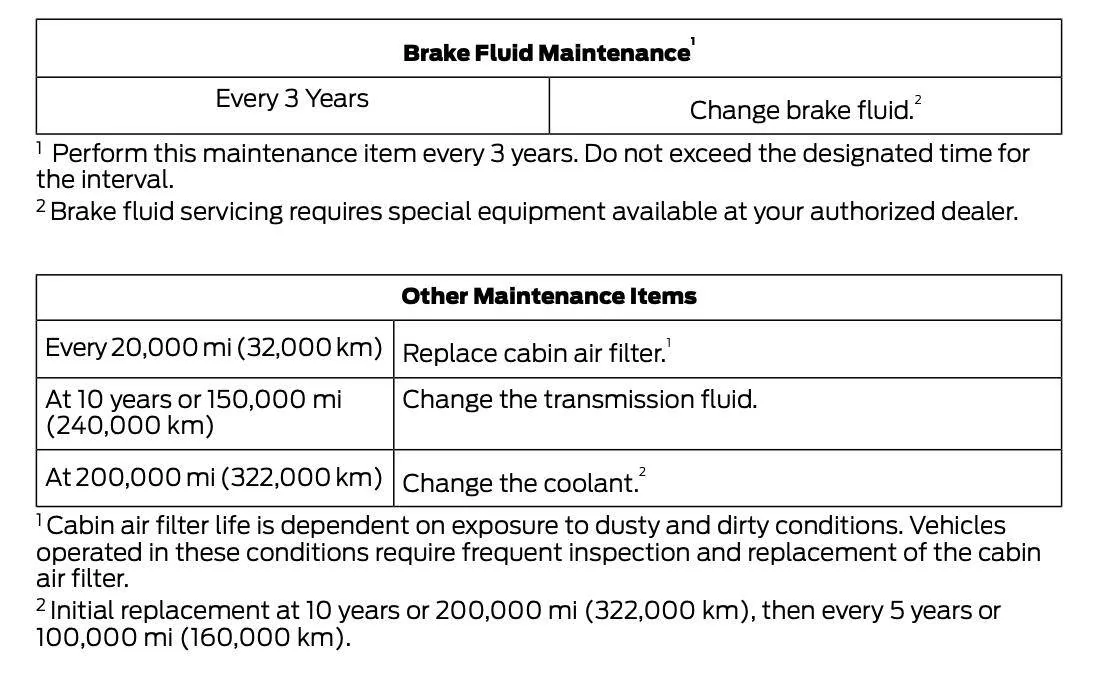
DOT 3, 4 & (I think) 5.1 are made with glycol ethers which are hydroscopic. They were used because of their boiling point, the hydroscopoic nature is an undesirable property but glycol ethers are cheap compared to compounds with similar boiling points. The only water that sould get into the system either comes from contamination or from the huidity in the air that is sucked in as pads wear and the fluid level drops. I suspect the 3 year change recommenndation was developed empirically because the glycol ethers used were by-products (I worked for years at a chemical company that produced them) and have impuruties that oxidized to acids that caused corrision, much like old coolant formulations based on ethylene glycol did in the coolong systems. DOT 5 Silicone fluids don't have this issue, but they require more expensive elastomers in the seals.I had to Google the "for safety reasons" comment. I've been working on cars for the better part of 4 decades and have been flushing brake systems for nearly as long. I've never read anywhere in any technical documentation or the numerous repair manuals I've collected over the years that stated brake fluid is purposefully formulated to absorb water (and especially for "safety reasons"). My understanding has always been, brake fluid chemicals absorb water over time and require changing because the absorbed water (a) can lead to internal corrosion of the brake system, and (b) can create reduced braking effectiveness at high fluid temperatures if the air trapped in the fluid boils (turns to gas vapor) and causes a "spongey pedal".
Too my astonishment a Google search did bring up the idea DOT 3, DOT 4, and DOT 5.1 are formulated to suspend water in the fluid to prevent "pooling" in the system and reduce the chance of corrosion forming in the brake components. I found the "pooling" phenomenon is discussed in relationship to DOT5 fluid, which is silicone based and doesn't absorb water, which makes sense. But DOT 3/4/5.1 being purposefully formulated to absorb water "for safety reasons" (i.e. corrosion prevention via "pooling") I'm not buying that argument. The internet is full of misinformation.
Sponsored