Upgraded NEMA 14-50 to Hardwire Possible More Voltage Drop

Aubury

Well-Known Member
Joined
Dec 4, 2023
Threads
3
Messages
230
Reaction score
272
Location
Dearborn, MI
Vehicles
2023 Mach E Premium - Grabber Blue
Country flag
I just upgraded my NEMA 14-50 outlet to a hardwire install. I didn't trust the outlet the electricians had used for my outlet, even though it currently looks fine. They used 4/3 aluminum SER to terminate into the outlet, so I got some 6/2 MC cable to pigtail from the junction box into the charger. I used a couple of Polaris IT-4B terminals to connect the aluminum cable to the copper cable that goes into the Chargepoint. I terminated the SER neutral with a wire nut and electrical tape.

My charger has a dedicated power meter for better TOD rates so I get a pretty accurate readout on what the system is pulling. Chargepoint would report on the 14-40 I was charging at 9.5kW, which means at 240V 40A I was losing about 100 watts to voltage drop. Now with the hardwire I'm seeing 11.4kW at the meter and 11.2kW reported from Chargepoint. That's double the amount of power lost to voltage drop across the power cabling vs when I was using the 14-50 outlet. I checked the voltage at the breaker and the terminal block inside the Chargepoint. It was ~241V and ~237V, so at 48A that's about the 200 watts of loss I'm seeing. Reducing to 40A to match what i got with the outlet I see similar losses, so more than I had before. I also measured the voltage across the Polaris connectors and it was identical to the 237V at the terminal block so I think those connections are good. Everything inside the junction box was slightly warm but nothing felt hot to the touch after about 30 minutes of charging. The Polaris connectors and breaker are all torqued to the manufacturer spec

This install goes from the outside of my house to a detached garage, the cable run is probably about 60 ft. Measuring the voltage shows a 1.7% voltage drop across the run from the breaker to the EVSE terminal block. Any ideas why I could be seeing more power loss across the cable vs what I had with the outlet and is this amount of voltage drop/power loss of any concern?
Sponsored

 
Last edited:
Jtbuster

Well-Known Member
First Name
Brian oConnor
Joined
May 7, 2022
Threads
6
Messages
278
Reaction score
156
Location
Calif
Vehicles
Mach e
Country flag
Need more information here.


QUOTE="Jtbuster, post: 753378, member: 12136"]
Quote:


“The code is very clear that you cannot install an evse that pulls 48 amps on 6-2. The issue is that that clarity requires looking at several different places in the code book and understanding the difference between maximum over current device and minimum circuit ampacity.


An EVSE is considered a continuous load.


NEC Article 100 defines continuous loads as loads that are expected to run continuously for 3hrs or more .


The minimum circuit ampacity (amount of current wire has to be rated for) is 125 percent of the continuous load, in this case 48*1.25= 60amps


NEC 210.19(A)(1) code reference for that.


Romex cable can only be used at the 60 degree c rating on the NEC ampacity tables.


NEC article 334.80 code reference for that.


Then, we need to look at the NEC ampacity tables. At 60c, #6 (6/2NM cable) is only rated for 55 amps. Commonly, people misapply the round up rule that allows you to round up the over current device (breaker) past the MOCP calculation to the next standard breaker size, which for 55 amps could be 60. However, we are calculating minimum circuit ampacity, not maximum over current protection, so the round up rule does not come to play.


So our options are to use 4/2NM which is rated at 70amps @ 60c (which is impossible to find) or to use #6thhn, which can be rated at 75c as long as the breaker and evse terminals are also rated at 75c (most are) which is rated at 65 amps.


NEC 310.16 reference for that.”
 

Maquis

Well-Known Member
First Name
Dave
Joined
Dec 21, 2020
Threads
34
Messages
5,698
Reaction score
8,087
Location
Illinois
Vehicles
2021 Mach E4X, 2023 Lightning Lariat ER
Country flag
Need more information here.


QUOTE="Jtbuster, post: 753378, member: 12136"]
Quote:


“The code is very clear that you cannot install an evse that pulls 48 amps on 6-2. The issue is that that clarity requires looking at several different places in the code book and understanding the difference between maximum over current device and minimum circuit ampacity.


An EVSE is considered a continuous load.


NEC Article 100 defines continuous loads as loads that are expected to run continuously for 3hrs or more .


The minimum circuit ampacity (amount of current wire has to be rated for) is 125 percent of the continuous load, in this case 48*1.25= 60amps


NEC 210.19(A)(1) code reference for that.


Romex cable can only be used at the 60 degree c rating on the NEC ampacity tables.


NEC article 334.80 code reference for that.


Then, we need to look at the NEC ampacity tables. At 60c, #6 (6/2NM cable) is only rated for 55 amps. Commonly, people misapply the round up rule that allows you to round up the over current device (breaker) past the MOCP calculation to the next standard breaker size, which for 55 amps could be 60. However, we are calculating minimum circuit ampacity, not maximum over current protection, so the round up rule does not come to play.


So our options are to use 4/2NM which is rated at 70amps @ 60c (which is impossible to find) or to use #6thhn, which can be rated at 75c as long as the breaker and evse terminals are also rated at 75c (most are) which is rated at 65 amps.


NEC 310.16 reference for that.”
He ran MC, not Romex. It’s fine.
 

Maquis

Well-Known Member
First Name
Dave
Joined
Dec 21, 2020
Threads
34
Messages
5,698
Reaction score
8,087
Location
Illinois
Vehicles
2021 Mach E4X, 2023 Lightning Lariat ER
Country flag
The only explanation for what you’re reporting is that something either wasn’t or isn’t being measured accurately enough.
These numbers don’t concern me, but if you want more peace of mind, use an IR thermometer to check all connections.
 
OP
OP

Aubury

Well-Known Member
Joined
Dec 4, 2023
Threads
3
Messages
230
Reaction score
272
Location
Dearborn, MI
Vehicles
2023 Mach E Premium - Grabber Blue
Country flag
The only explanation for what you’re reporting is that something either wasn’t or isn’t being measured accurately enough.
These numbers don’t concern me, but if you want more peace of mind, use an IR thermometer to check all connections.

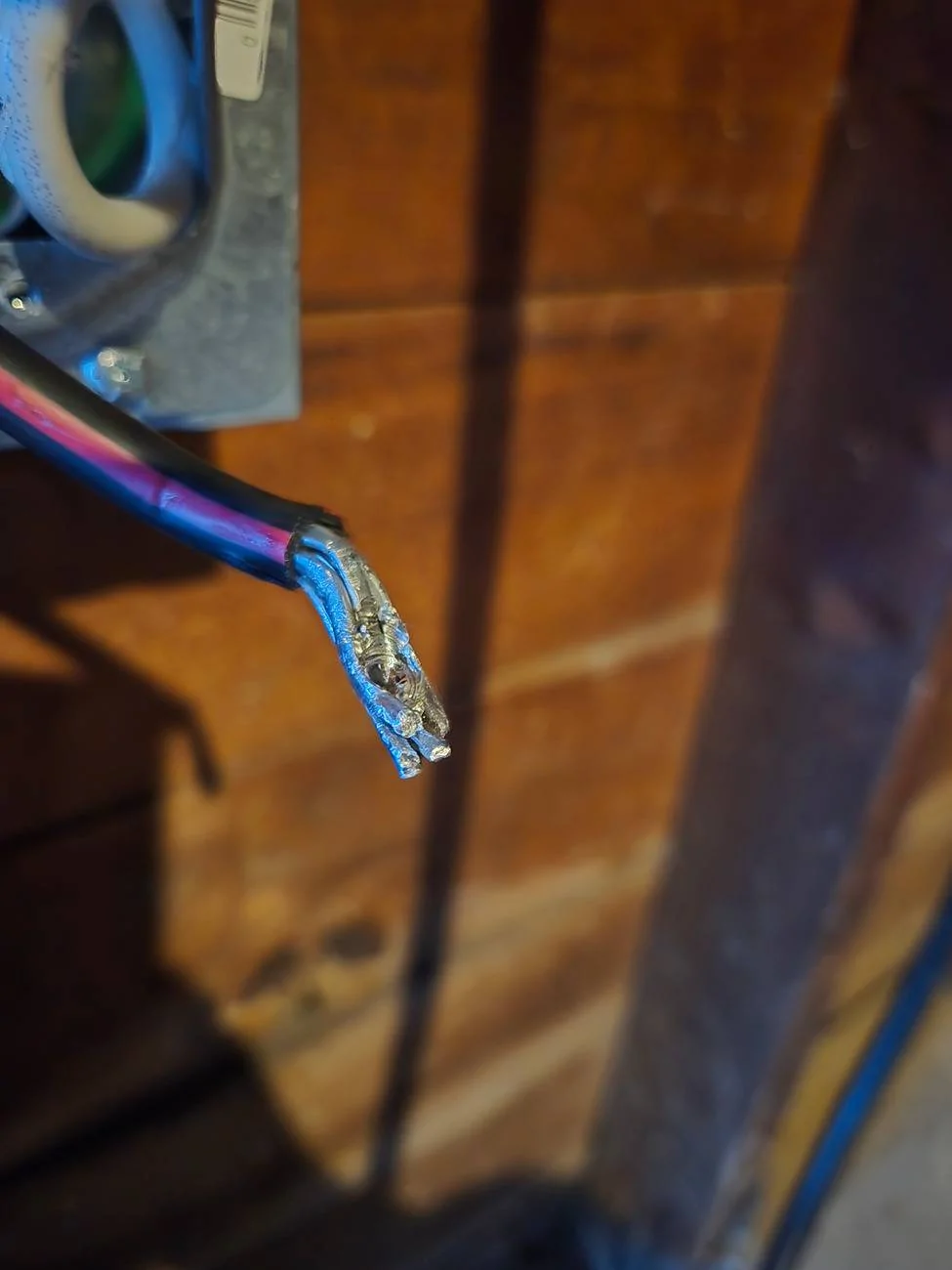
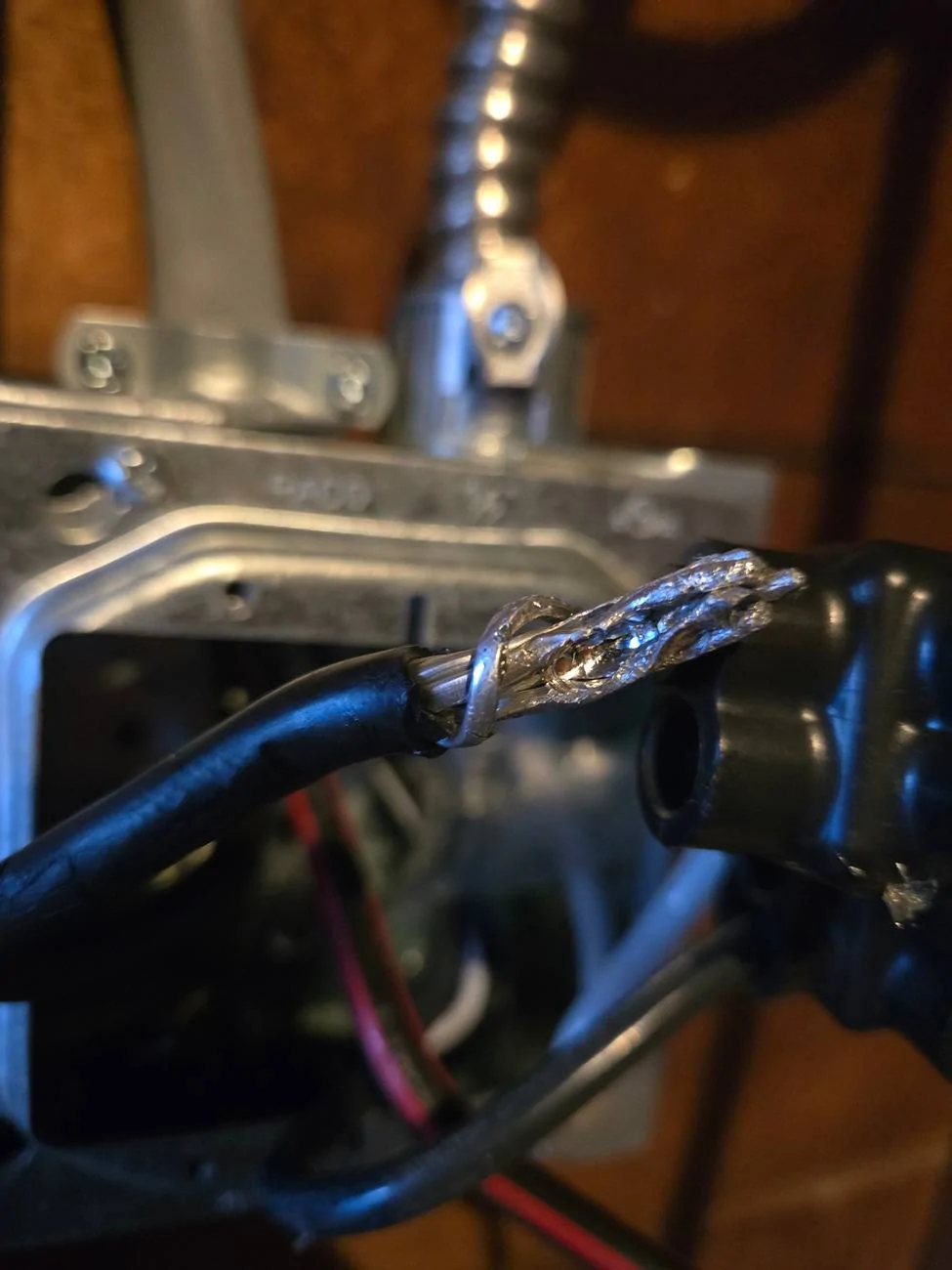
Ok, that's good to hear. I did take apart the Polaris connectors to take a look at those connections andI'm not sure, maybe I crushed the aluminum wire? I torqued the wire down to the spec provided by Polaris but maybe that was too much?

Ford Mustang Mach-E Upgraded NEMA 14-50 to Hardwire Possible More Voltage Drop 1000008462
Ford Mustang Mach-E Upgraded NEMA 14-50 to Hardwire Possible More Voltage Drop 1000008464


Maquis

Well-Known Member
First Name
Dave
Joined
Dec 21, 2020
Threads
34
Messages
5,698
Reaction score
8,087
Location
Illinois
Vehicles
2021 Mach E4X, 2023 Lightning Lariat ER
Country flag
Ok, that's good to hear. I did take apart the Polaris connectors to take a look at those connections andI'm not sure, maybe I crushed the aluminum wire? I torqued the wire down to the spec provided by Polaris but maybe that was too much?

1000008462.jpg
1000008464.jpg
Are those connectors rated CU/AL? If so, the specified torque should be fine. Is the torque driver calibrated?
 
OP
OP

Aubury

Well-Known Member
Joined
Dec 4, 2023
Threads
3
Messages
230
Reaction score
272
Location
Dearborn, MI
Vehicles
2023 Mach E Premium - Grabber Blue
Country flag
Are those connectors rated CU/AL? If so, the specified torque should be fine. Is the torque driver calibrated?
They are indeed dual rated. I don't know if the driver is calibrated, I just got it specifically for this project.
 

Maquis

Well-Known Member
First Name
Dave
Joined
Dec 21, 2020
Threads
34
Messages
5,698
Reaction score
8,087
Location
Illinois
Vehicles
2021 Mach E4X, 2023 Lightning Lariat ER
Country flag
They are indeed dual rated. I don't know if the driver is calibrated, I just got it specifically for this project.
If it’s new, it should be calibrated.
I’d put it back together (cut off and re-strip the aluminum conductors), run at full load for an hour, and take some temp measurements. Temperature differences are more indicative than absolutes. For example, if both connectors are 135F, it’s probably OK, but if one is 130 and the other 100, it’s time to dig deeper.
You could also do a fall of potential test across the Polaris connectors. Put a probe of your voltmeter on each side. You should be seeing millivolts, and the measurements across each one should be really close.
 
OP
OP

Aubury

Well-Known Member
Joined
Dec 4, 2023
Threads
3
Messages
230
Reaction score
272
Location
Dearborn, MI
Vehicles
2023 Mach E Premium - Grabber Blue
Country flag
If it’s new, it should be calibrated.
I’d put it back together (cut off and re-strip the aluminum conductors), run at full load for an hour, and take some temp measurements. Temperature differences are more indicative than absolutes. For example, if both connectors are 135F, it’s probably OK, but if one is 130 and the other 100, it’s time to dig deeper.
You could also do a fall of potential test across the Polaris connectors. Put a probe of your voltmeter on each side. You should be seeing millivolts, and the measurements across each one should be really close.
I restripped, noalox'd, and reconnected the aluminum side with the same results. I measured both continuity and voltage across the wires in the connector. Got the beep/0 ohms, and measured like 4-5 mV across so I think the connector is good.

I also let it charge for an hour and measured some wire along the run as well as the connectors I know of. They all felt pretty cool to the touch. No connectors or wire measured more than the mid 80sF. In fact, the hottest points i measured were the circuit breaker and the cable that went from the EVSE into the car. Those measured about high 80sF and mid 90sF respectively, so all well within acceptable temperatures. Ambient temps would be around 68F when I checked.

I also remembered my home automation system logs the power draw reported by my EVSE and I had a record going back 1 year so I looked at some charge sessions in the past and I see a ton of points where the power draw is basically identical to what I'm seeing when I reduce the EVSE down to 40A limit.
 

AKgrampy

Well-Known Member
First Name
Mike
Joined
Jan 29, 2022
Threads
7
Messages
3,528
Reaction score
3,601
Location
Fairbanks, Alaska
Vehicles
Ford Expedition, Ford F-150, Mach E GT
Occupation
Retired
Country flag
Here is something to consider - power loss is current squared times resistance. 48 X 48 =2,304 and 40 X 40 =1,600 so you might expect at a 50% increase in losses due to the increased current.
 

hayhayday

Active Member
First Name
hayden
Joined
Feb 10, 2022
Threads
0
Messages
38
Reaction score
19
Location
Petaluma
Vehicles
22 GT
Country flag
I have almost the same setup ~40ft #4 ser + polaris + few feet of #6 thhn and have always had 1-2% voltage drop depending on the current.
Some of the drop will be on the utility drop, 60ft of #4 al at 40 amps should drop ~1% add in additional drop from transfromer to your home etc and 1.7% seems reasonable. I have dropped 6-7v to ~234v when charging both cars and running oven\heatpumps in winter and was at ~236v at the meter so most of the drop wasnt on my side.
 
Last edited:

Mach-Lee

Well-Known Member
First Name
Lee
Joined
Jul 16, 2021
Threads
262
Messages
11,382
Reaction score
25,071
Location
Wisconsin
Vehicles
2022 Mach-E Premium AWD
Occupation
Sci/Eng
Country flag
Heat will tell the story. So if you checked the temp of all your connections and they aren’t excessively hot after several hours of 40+ amp charging, then you’re good.

I had a bad plug that got a prong up to 150°F. Plug was burning hot, but luckily, I caught it before it degraded further and melted anything.
Sponsored


Top