music_cities
Well-Known Member
- Joined
- Nov 7, 2023
- Threads
- 53
- Messages
- 673
- Reaction score
- 679
- Location
- Calgary, Canada
- Vehicles
- Mach E 2022 GT

I have a 2022 GT which supposedly only has the 5KW heater, not the 7 (or 8) kW heater introduced in 2023.5 nor the heat pump introduced in 2025.Hi Friends,
For those of you who own both an EV and an ICE vehicle and live in what I’ll call the “frozen tundra” (roughly north of the 45th parallel): when you’re heading out on a 3–5 hour winter road trip, which vehicle do you choose?
This isn’t about what’s technically possible - it’s about what’s practical and enjoyable.
From my experience with a 2021 Mach-E ER, the car can’t supply heat to the battery inlet and the cabin at the same time - it’s one or the other. The inlet temp (confirmed via Car Scanner) gets absolutely nothing if the Cabin Heater is turned on, even when there is only a minor kW heater draw for the Cabin Heat). So if I want to properly precondition for DCFC the battery en-route, I need to turn the cabin heat off entirely for a while to allow it to heat the battery.
Here’s how different temperature ranges feel to me in real-world use - and where I start questioning whether the EV or the ICE makes more sense:
Scenario A) –10°C (14°F)
Some range loss, but the battery isn’t deep-frozen on arrival at DCFC, so it warms fairly quickly. Preheating for fast charging helps if you’re on a tight schedule. EV still feels easy.
Scenario B) –15°C (5°F)
Preheating becomes increasingly important. Cabin heat often needs to be turned off briefly to get meaningful heat into the battery before charging.
Scenario C) –20°C (–4°F)
This is my personal “fork in the road.” Either accept noticeably slower charging, or sacrifice your comfort in the cabin to prioritize warming the battery.
Scenario D) –25°C (–13°F)
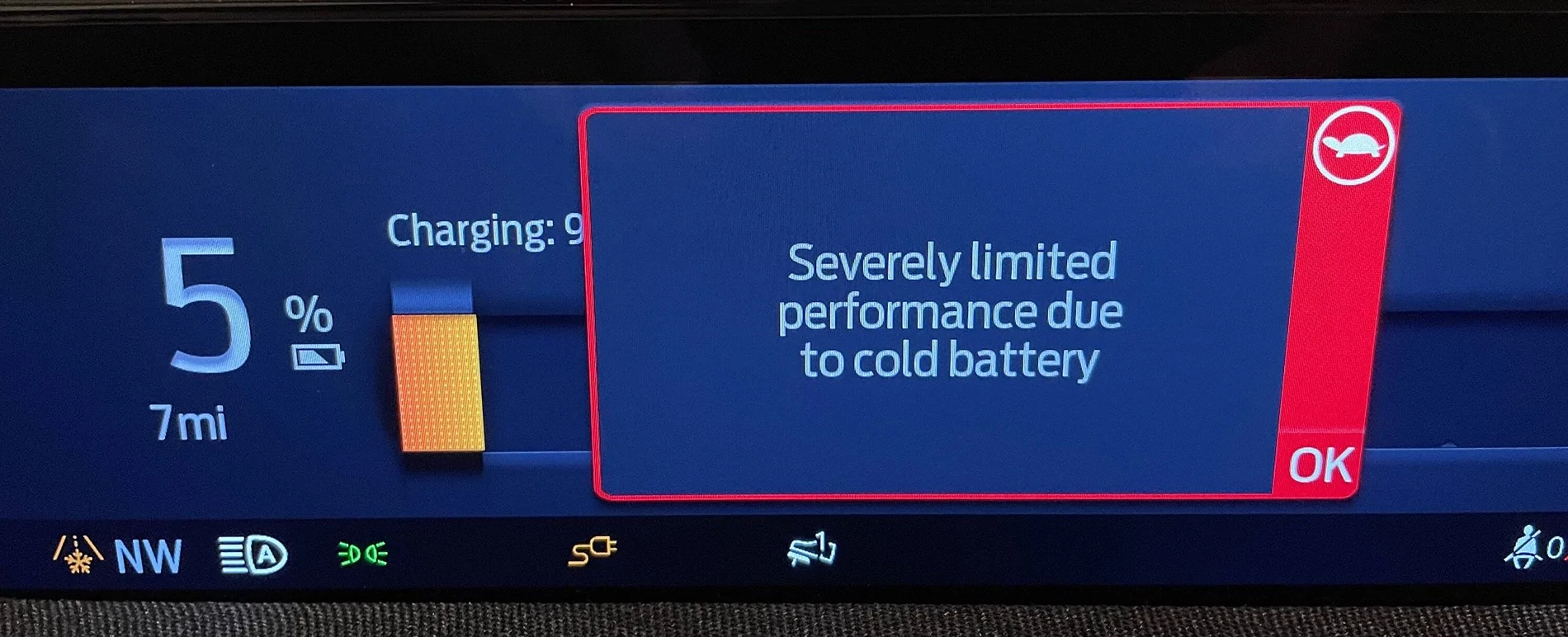
This is the coldest I’ve done personally, and it felt borderline. The cabin never fully reached normal comfort (because the car decided for me that heating the battery was necessary and not just a nice-to-have for DCFC). Don't even think about battery preconditioning for DCFC en route in fact. Charging stops were roughly 2–2.5× slower - the first ~15 minutes were mostly spent heating the battery (often I would exit the vehicle since cabin heat had to stay off and grab a coffee somewhere). Cold-gating further limited charge rates to protect the battery.
Scenario E) –30°C (–22°F)
Unknown - haven’t tested yet.
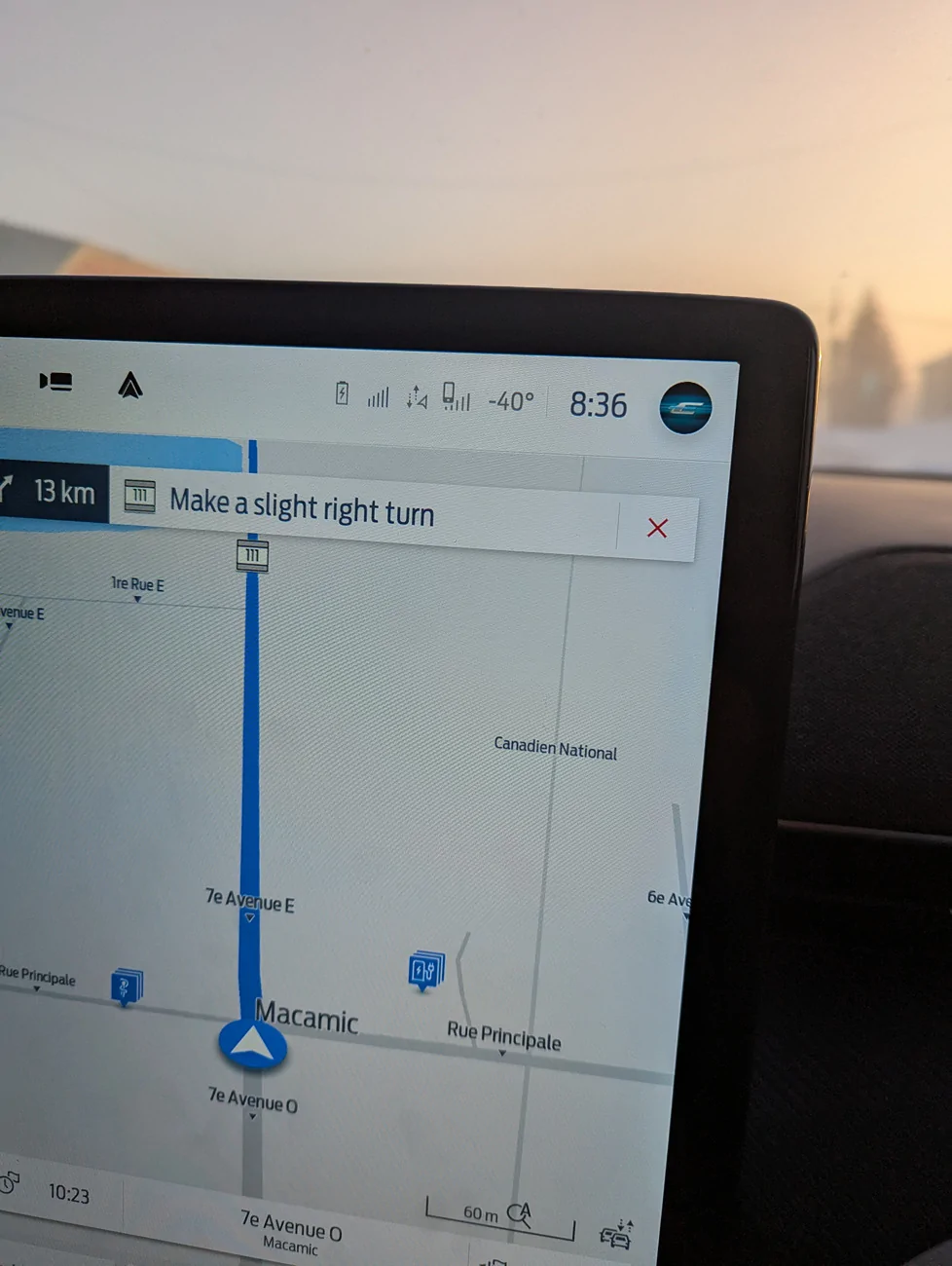
Scenario F) –35°C (–31°F)
Hard pass? ICE territory?
I’m curious where everyone else falls: At which temperature do you still prefer the EV for winter road trips, and where does the ICE start to make more sense for you?
Below -25C I'm really unlikely to make a 3-5 hour trip, in any vehicle. But, if I really *had* to travel, I would probably choose the EV because gas vehicles often don't start in cold weather, especially if they are MY 2005, like my 4Runner. I would just plan some nice warm meals at welcoming restaurants beside fast chargers, and not worry about how long it takes to charge. I'd rather enjoy a good meal than worry about whether my gas car will start.
Now for my real experience, for my 1-2 hour trips I always choose the EV. I have had to make an emergency trip at -30C and choose the EV. I pre-condition the car and break out my 12V heated blanket. Of course I dress for the weather, my mom didn't raise any fools. With the 12V heated blanket, the heated seats, and the heated steering wheel I usually put the cabin temperature set point at 16.5C.
Sponsored