I prefer to use the inverse: miles or kilometers per kWh which is easier to understand and compare with miles per gallon for the gas engine cars. The average value is about 3 miles per kWh, so if the Mach-E can meet or pass this number, it is considered efficient, and the higher the better. If the 98 kWh battery can run for 300 miles, that is better than 3 miles per kWh (actually 3.4). Then if your EVSE can report how many kWh it has charged the battery, then by multiplying by that number gives you the range. Simple!
Counting watts per mile is like counting quarts or liters of gasoline per mile, and is quite confusing.
I thought the same when I first tried to understand my Tesla 3 "economy" gage. But as Whr is more commonly used in the e-car biz than kWhr, using kWh per mile gives numbers like 0.3 or so, and fractions like that are considered difficult to with. The standard(?) became Wh per mile. Each way is just a measure of economy anyway. I think of 300 Whr per mile as equivilant to (say) 25 mpg in a 25mpg-rated petro car. Easy enough.
I thought the same when I first tried to understand my Tesla 3 "economy" gage. But as Whr is more commonly used in the e-car biz than kWhr, using kWh per mile gives numbers like 0.3 or so, and fractions like that are considered difficult to with. The standard(?) became Wh per mile. Each way is just a measure of economy anyway. I think of 300 Whr per mile as equivilant to (say) 25 mpg in a 25mpg-rated petro car. Easy enough.
I'm with Raymond on this one. I really wish the common measure would simply be the logical extension of MPG, thus miles per kWh (MPK). I think that would help bridge the gap to mainstream acceptance in the US too. But alas, the inverse seems to have caught on within BEV circles (no doubt due largely to Tesla's use of it). And I guess Europe is used to the inverse as well.
I get your point about the number ranges being easier to discuss without needing decimal points. 320 is easier to say than 3.15. I just hate having to grab the calculator and doing the conversion every time we talk about it. ?
I hope the Mach-e either displays both, or has a setting to pick which one we prefer to see.
Speed limits seem to be mere suggestions here in the US.
I only do 5 over the speed limit, except in Detroit where the limit is 55 and everyone does 75, there I'll do 65 so I don't get completely run over. Everyone but the semi trucks passes me.
Anyone know if the assisted (hands free) driving features always “follow the speed limit”, or can you configure it to go X over the speed limit? I am guessing adaptive cruise control prefers to stay at whatever speed you originally set it to, when able, but not sure how configurable “self-driving” will be.
It will be annoying if it never wants to ever bend the rules (in places where everyone breaks the rules).
Anyone know if the assisted (hands free) driving features always “follow the speed limit”, or can you configure it to go X over the speed limit? I am guessing adaptive cruise control prefers to stay at whatever speed you originally set it to, when able, but not sure how configurable “self-driving” will be.
It will be annoying if it never wants to ever bend the rules (in places where everyone breaks the rules).
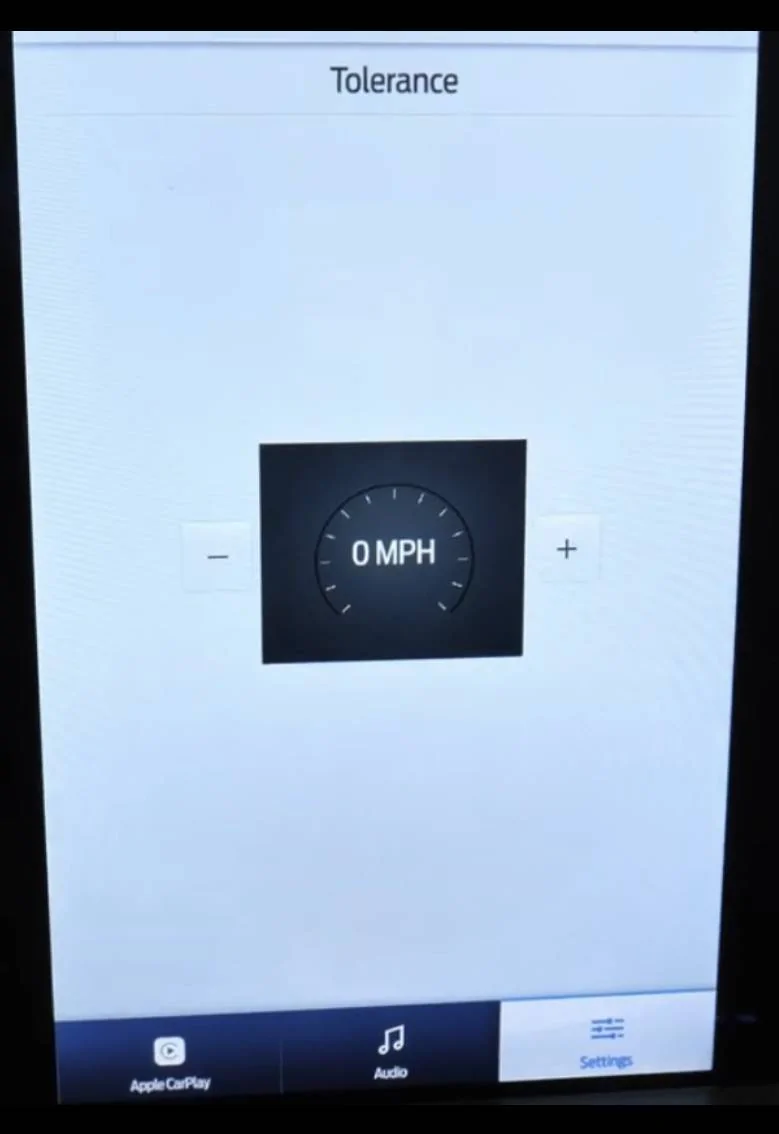
I was watching this video about the co-pilot 360. I noticed that there was a tolerance setting for the intelligent adaptive cruise control speed limit detection. You could set your speed to automatically be above or below the posted speed. I imagine the Mach-E would have the same capability.
Around the 5:14 mark he started going over the settings.
I was watching this video about the co-pilot 360. I noticed that there was a tolerance setting for the intelligent adaptation cruise control speed limit detection. You could set your speed to automatically be above or below the posted speed. I imagine the Mach-E would have the same capability.
Around the 5:14 mark he started going over the settings.
Wow, that is a great video. Thank you! It looks like everything is highly configurable so you can have it behave the way you want. Good to know! I have an over 10 year old dumb car right now, so all these technology features are new and intriguing to me. Even a simple backup camera is pretty new to me and only used briefly in rental cars.
They can really help with safety when used properly, but I worry some people will abuse it and try to treat driver assistance features like “lane keeping” as “self-driving” and let themselves get too distracted/reliant on it instead of using it as a safety net. But that is really a topic for a different thread.
I think that depends on how/where you drive. The EPA testing method I think is more tilted towards highway driving. WLTP method puts more emphasis towards stop and go city driving than highway. So if you drive more high speed and less start/stopping... maybe look more towards the EPA estimates (or less). If you do more city driving, stop and go, then lean towards the WTLP estimates.
I would like to thank you all (marcel, dbsb3233, hybrid2bev, eager2own) for your response! I received an answer from a Ford spokesperson yesterday that both set my mind to rest and inspired some research The "regulatory cycles" are different when it comes to WPA and WLTP (you probably new that!). So 300 miles EPA target in the US (Mach E RWD ER) would equal 370 miles/600 kilometres WLTP for Europe.
So if we, from the example above, divide 370 miles WLTP by 300 miles WPA, we get a ratio of 1,23 - which doesn't seem unreasonable. And 370 miles multiplied by 1,6 equals 592 kilometres (close to the 600 kilometre targeted driving range that the RWD ER is marketed with in Europe).
My mistake was that I thought it was as simple as multiplying WPA miles driving range by 1,6 to get the WLTP kilometre driving range ...






 The "regulatory cycles" are different when it comes to WPA and WLTP (you probably new that!). So 300 miles EPA target in the US (Mach E RWD ER) would equal 370 miles/600 kilometres WLTP for Europe.


