Mach E Fast Charging Rate

silverelan

Well-Known Member
Joined
Nov 25, 2019
Threads
131
Messages
3,687
Reaction score
5,392
Location
Seattle
Vehicles
2021 Mustang Mach-E GT, 2019 Bolt EV
Country flag
I'm not a battery expert like some on this forum, but I do know a little about Lithium-Ion batteries. As a cargo pilot, I am trained annually on different hazmat. I know the one thing you do not want is a thermal runaway in a battery. Once it starts in one cell, it will carry over to other cells and other batteries. So I understand limiting the power in recharging to prevent this.

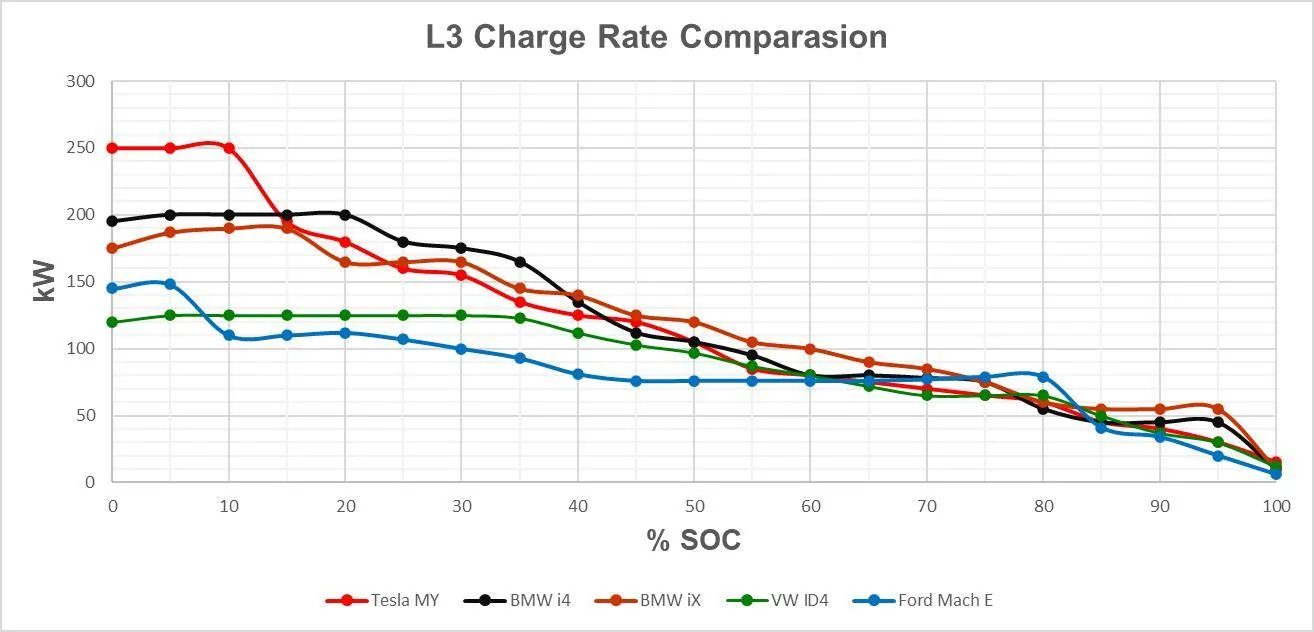
To see how the Mach E compares to other vehicles, I plotted the Mach E against other 400V systems. I left out Porche and Audi since since they are 800V, and I wanted an apple-to-apple comparison. Disclaimer: I used charging curves I've found online (other than the MME) so I don't know the accuracy of the other vehicles. What I found was the Mach E was last (blue line). Taking into account not knowing the exact chemistry Ford uses in their batteries, I would say they still have room to increase the rate and stay safe doing it. Hopefully we'll get another OTA update to increase the rate this year.

That said, I love the car, and do not regret buying it. 99% of my driving is commuting to and from work. I would buy it all over again. However, on a really long trip in the winter, I would take my ICE F150. :p

1673727555832.png
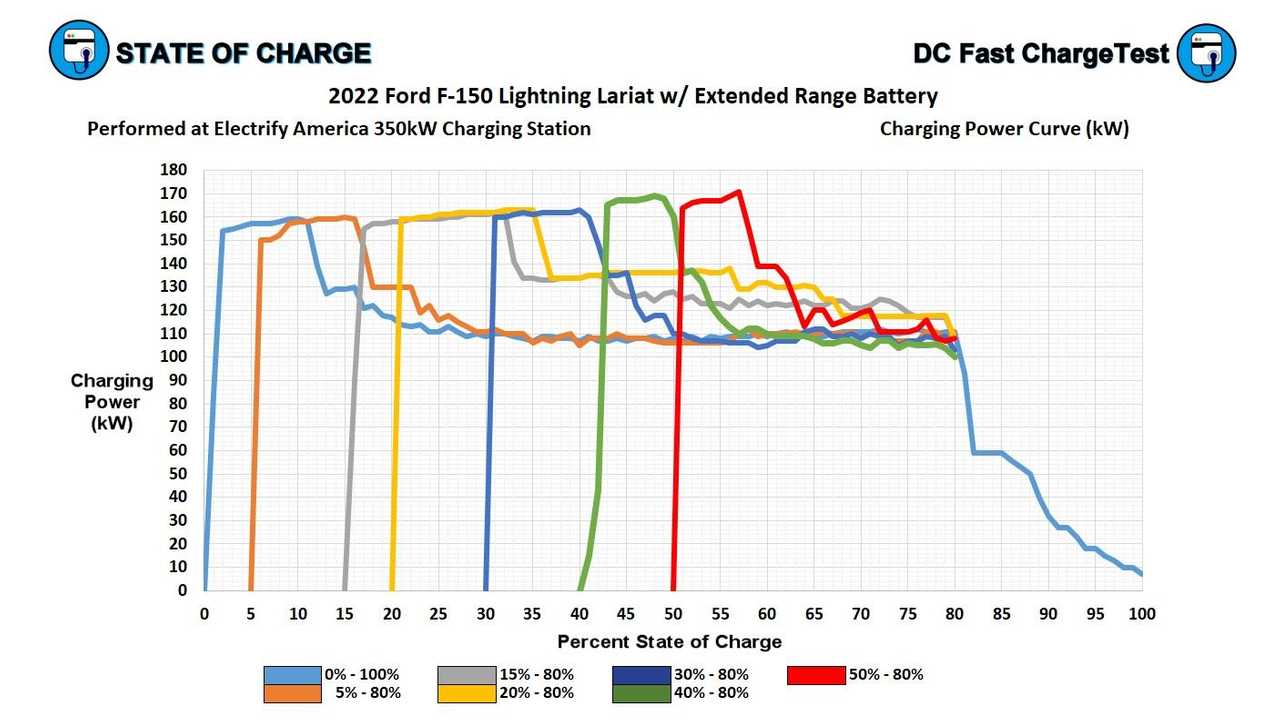
The MME and the Lightning share the same time-based “sprint” charging strategy. That is, they charge basically the same whether plugged in at 5% or 50% and everywhere in between.

The benefit of this strategy is that drivers can immediately take advantage of max charging speeds at a relatively high SoC. Getting 130+kW at 45% is glorious and it follows the same sprint profile as if it was at a lower SoC. Compare this strategy against a linear profile and you can see that you get the same twenty minutes 40-80% time as the Tesla Model Y.

I wish we had a flatter charge profile at a higher kW for a shorter time going 10% -> 80%. 30 mins should be the target for the MME which would make it more competitive in its category.

source Tom Moloughney, InsideEVs
Ford Mustang Mach-E Mach E Fast Charging Rate 2971DA68-4A5E-4106-AB97-FD1A2FF6133B


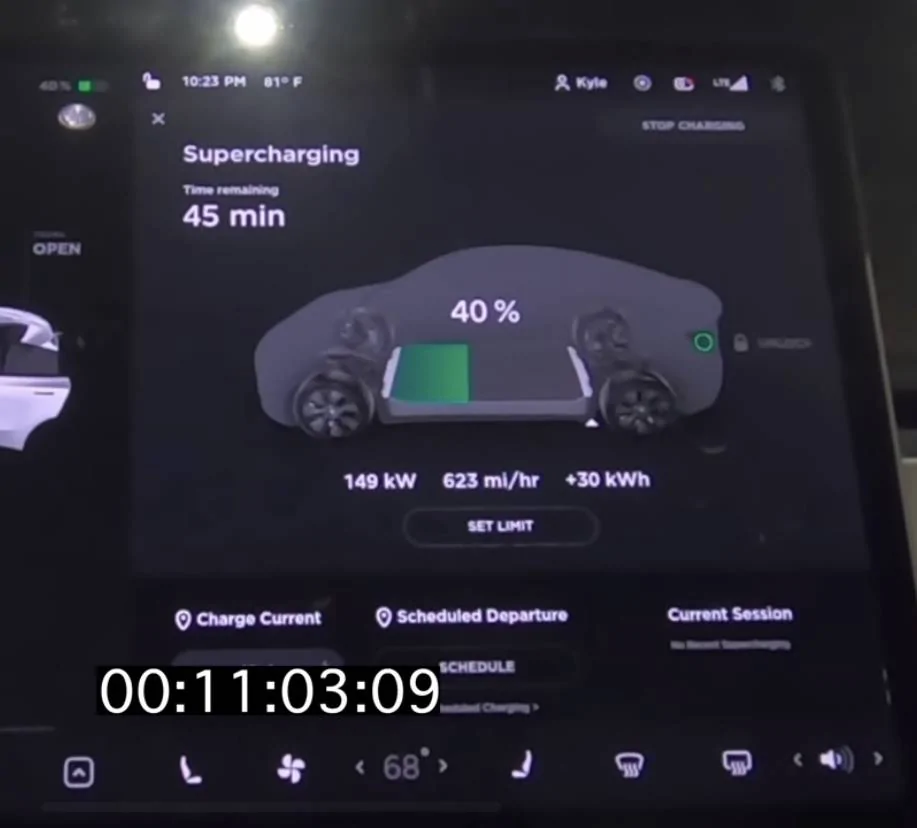
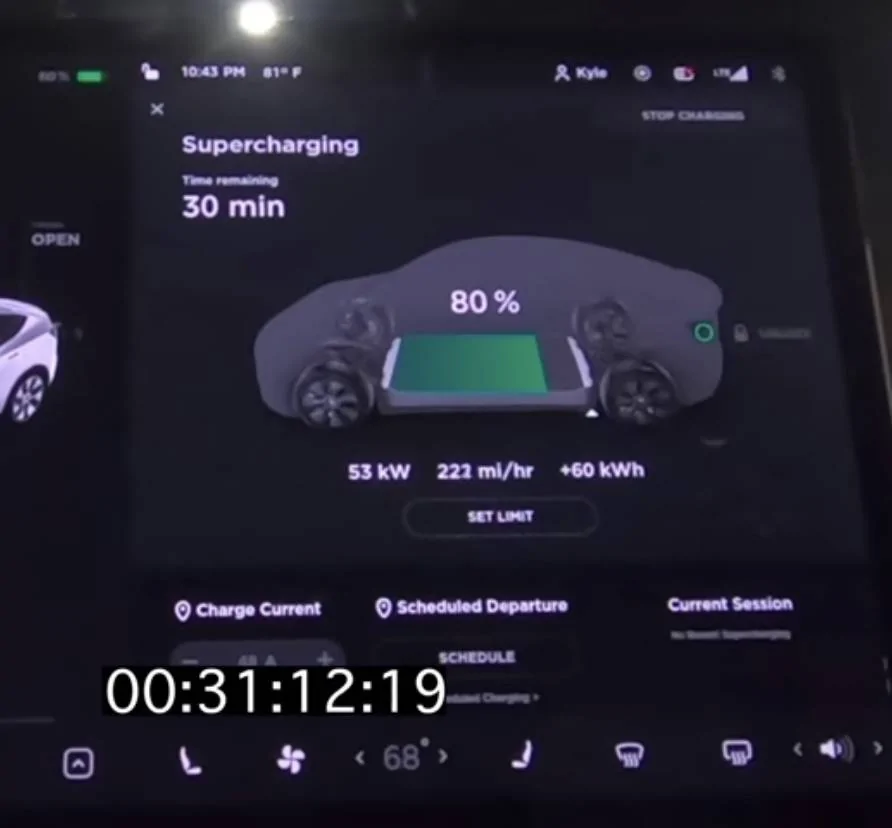
Source @OutofSpecKyle
40% to 80%
Ford Mustang Mach-E Mach E Fast Charging Rate DE2A39CD-CC98-4818-862C-50E6E79C0AA6
Ford Mustang Mach-E Mach E Fast Charging Rate 798D6450-8C34-477B-928F-FC4FAC4C0F37
Sponsored


21st Century Pony

Well-Known Member
First Name
Martin
Joined
May 21, 2022
Threads
36
Messages
1,976
Reaction score
2,243
Location
Arlington, Virginia
Vehicles
formerly Ford Mustang Mach E 2022 Premium AWD ER, now a li'l bit of Lightning ER
Country flag
I have just over 20K on my Mach E, and nearly 50% of the miles are long distance trips... one was over 2,000 miles last month across New England in very cold conditions.

My advice (worth exactly nothing on the market haha ;)):

1. Cold weather eats your range estimations. When you find your SOC shrinking faster than you can accept, slow down to 65 MPH. I normally drive 80+ MPH and I've learned that at about 65 MPH, the battery energy burn is slow enough so that the Speedometer and the range estimators become almost accurate. At 80+, well, not so much... especially in Winter.

2. The heated seats and the heated steering wheel are your friends to conserve battery energy and battery range, especially in Winter. I personally slip on a sweatshirt and use these two comfort devices exclusively unless the windows start fogging.

3. Indiana utility regulations make DCFC charging in Indiana, in my experience, significantly cheaper than in, for example, Ohio or Maryland. Electricity provision is after all regulated by state utility commissions. Check with other states on your route like Illinois... I'd charge as much as I could in Indiana on a trip like yours.

4. Plan for occasional unpredictable crowding at DCFC stations, especially on a holiday. Rare but it does happen... everyone is cool and nice but it can eat into the trip time.

5. I have found that once the charge rate drops below 30 kWh at a DCFC, it is just better to move on to the next charging waypoint rather than eking out minimal amperes for another hour. That's just my experience and preference.

6. Do Not ignore the occasional L2 240V charging stations... they are more prevalent than people realize. You will likely want to / plan to eat sometime, right? Why not charge at a nearby L2 station for those 40 minutes? This is where the TeslaTap device really shines, as there are more Tesla L2 stations sprinkled about (and free) than regular L2 stations. For example, I often eat at Freddy's Burgers in Radcliff Kentucky after working out at the Fort Know gym... they have one Tesla L2, and I TeslaTap into it every time. I suggest the 60 amp TeslaTap to future-proof your investment.

7. I have learned to steel my nerves and go as low as single digit miles / single digit SOC before charging. There is a cushion below zero, likely for idjits like me - it's a small cushion but it is there. Something like 6 - 7 miles. Never went into that cushion, but I have gone as low as "3 miles remaining". What's a little frisson, right? ;-)

Finally, having spent most of the past 3 months in Louisville visiting / bothering my adult son, I think I might have seen your red GT on the Watterson one sunny day late last year... in the St. Matthews area. If you ever see a star white Premium with black bumper stripes on the doors, honk... that's me.
 

21st Century Pony

Well-Known Member
First Name
Martin
Joined
May 21, 2022
Threads
36
Messages
1,976
Reaction score
2,243
Location
Arlington, Virginia
Vehicles
formerly Ford Mustang Mach E 2022 Premium AWD ER, now a li'l bit of Lightning ER
Country flag
I have had my Mach E for about a month now. I have been using it for commuting to work, and have been charging mostly at home. I did a fast charge at the EA facility in Clarksville, IN just to make sure it worked, and my Ford 250 kWh worked as well. The rate was lower than I thought.

I live in Lousivlle, KY and I have a trip to St Louis I would like to take in the MME, and I was curious how much time to budget for charging stops. I plan on charging to 100% at home for this trip. The first stop from my house to the EA in Clarksville is about 20 miles. It took me about 8% to get there. I wanted to see how long it would take to get from about 92% to 95-97%. The next stop is the EA facility in Mt Vernon, IL. It is about 186 miles from Clarksville, IN on I-64, and no other L3 chargers are on I-64 along the way. I could detour if needed, but that is not optimum. The L3 in Jasper, IN is a 34 mile round trip detour and only 50kW, the one in Evansville is a 60 mi round trip detour.

So, I drove to car to get the car down as low a charge as I was comfortable with, and got it to 3% SOC on the display. I then settled in for a long charge all the way to 100%, and got my pencil ready to chart this. I know the Ford updated the charging rate last fall, but couldn't find any data, so I plotted my own. Conditions at th time was 48 deg F outside temperature, battery temperature started at 51.8 deg.

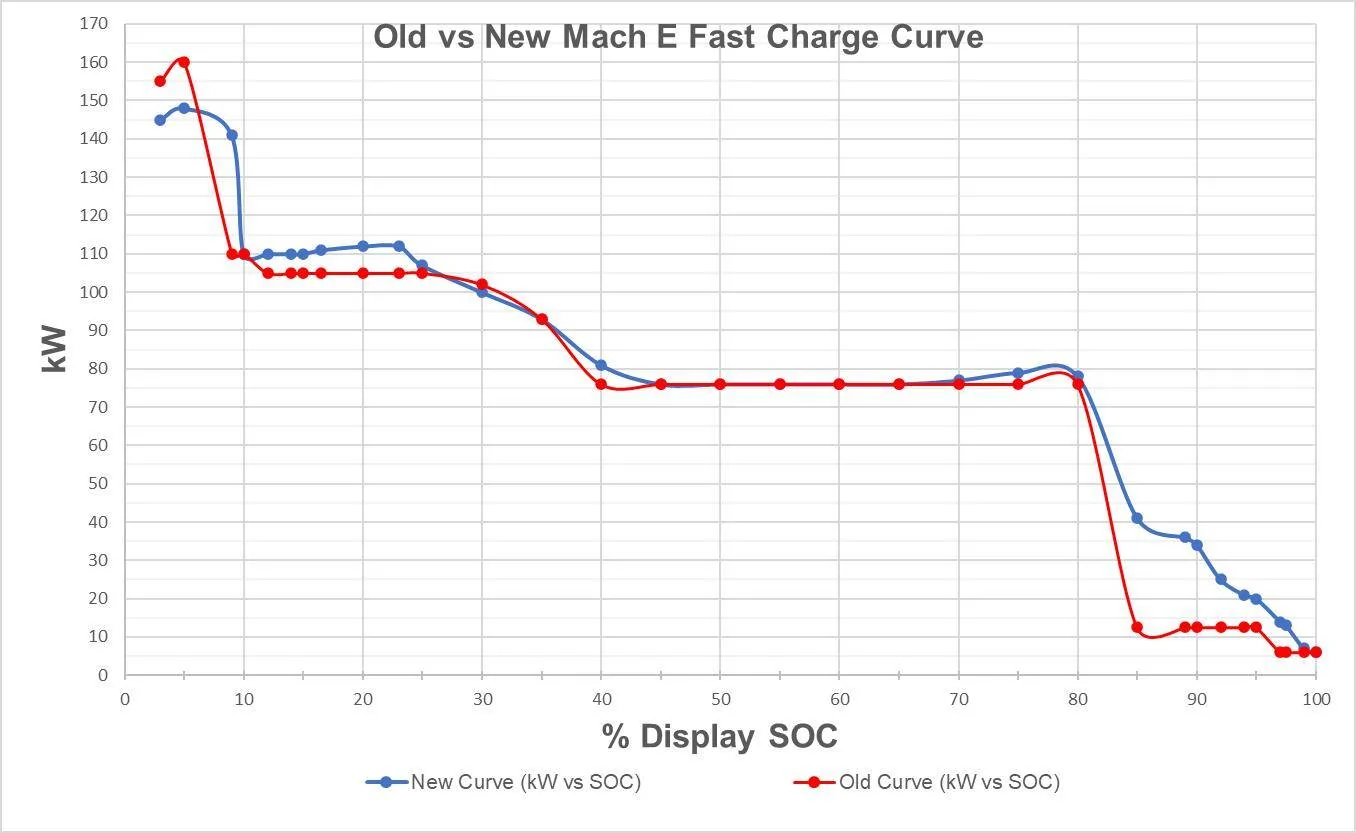
This first chart shows the new rate compared to the old rate that Inside EVs has posted. I overlayed the 2 to see how closely it matched up. It matches well until 80%, then is a big improvement to about 95%. The battery temperature at the end (100%) was 87.8 deg Fand outside temp was 46 deg.

1673650238941.png


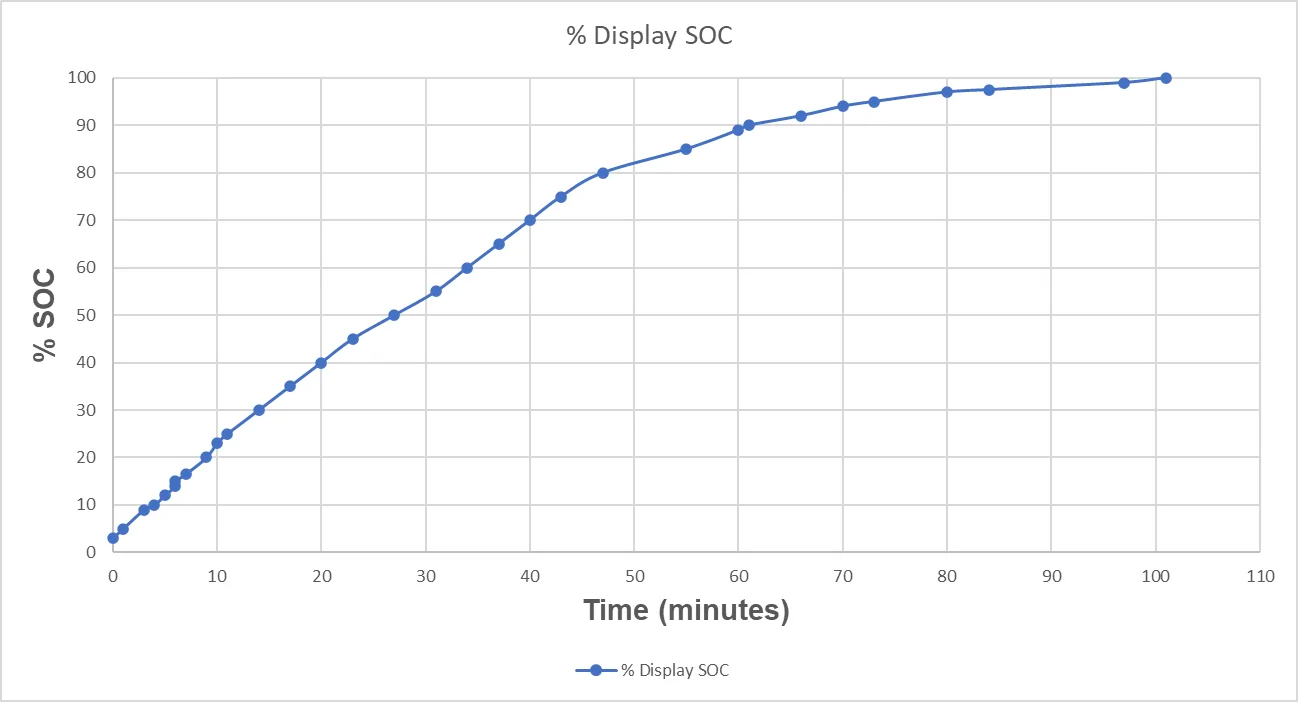
Overall, it took me 1 hour and 41 minutes to charge from 3% to 100%. Of course, the last 5% was the slowest. Here is a plot of the time it took from 3% to 100%. I've extrapulated charging from different points, say 20-80% and how much time it will take. Here is what I came up with. Maybe others who have done this can see if matches what they've seen. Of course, temperature can change these estimates.
  • 20%-80% - 38 minutes
  • 20%-85% - 46 minutes
  • 92%-95% - 7 minutes
  • 92% - 97% - 14 minutes (for that top off before my long leg to Mt Vernon)

1673650498925.png


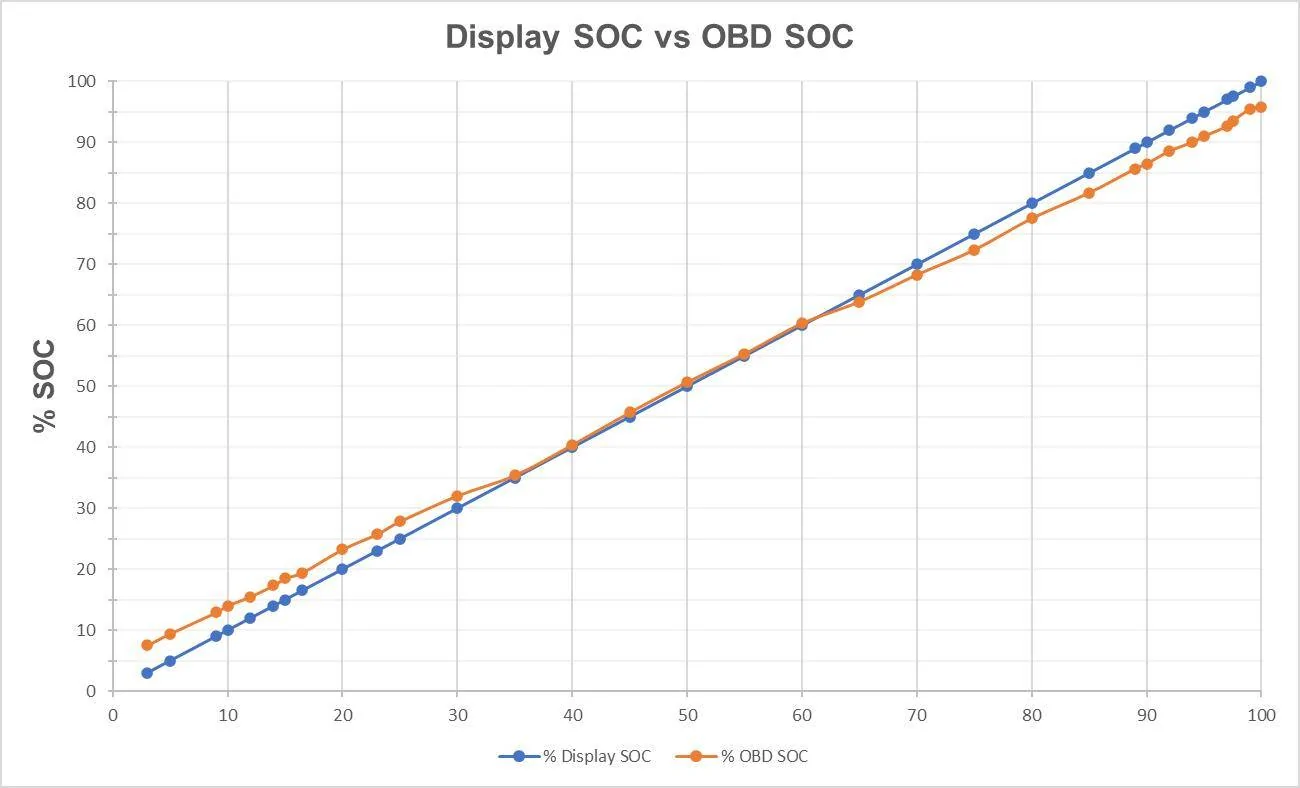
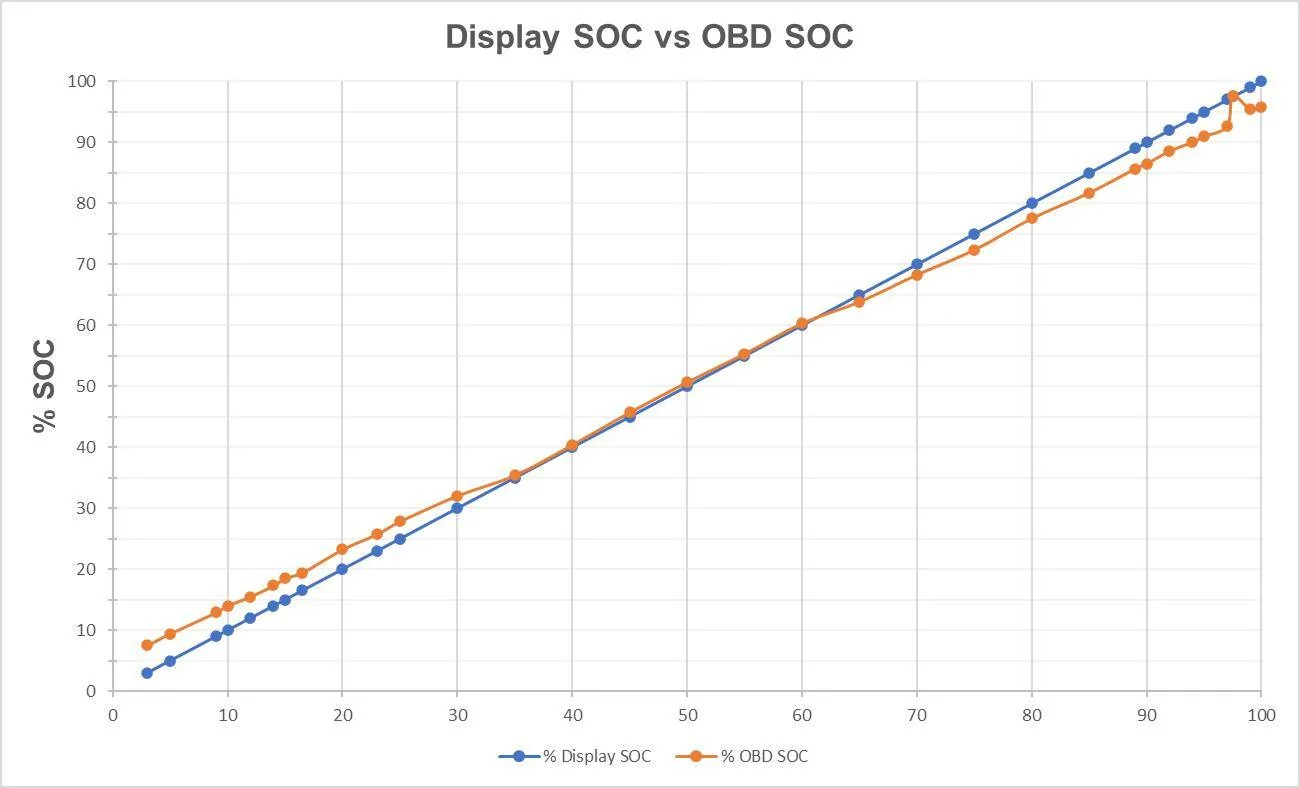
The last chart is interesting. I had my VLink OBD2 plugged in monitoring the charge, and observed when I first started, the display SOC was 3%, but the OBD said the car reported 7.48%. It reads higher than the displayed SOC below 35%. It matches from about 35% to 60%, but then it goes the other way. The displayed SOC is lower than what the OBD2 says it is from 60%-100%. So as others have said here, a displayed SOC of 100% is about 95-97% if you read it from the OBD.

1673651690546.png


1673651610477.png
There's one more long distance Winter trick I've learned that helps to preserve main battery energy for propulsion: when charging at a DCFC station,

1. Figure out your likely GO time right after you plug in ,
2. Go to SETTINGS / CHARGE / DEPARTURE TIME
3. For that day, set the departure time to your GO time and make sure to select WARM (red).
4. Shut thre cat completely down, including open / shut the door.

The car will start cabin heating from the DCFC line, and will also defog your windows, without touching your main battery.
 

RickMachE

Well-Known Member
Joined
Jul 1, 2021
Threads
267
Messages
17,903
Reaction score
27,873
Location
SE MI
Vehicles
2022 Mach-E Premium 4X, 2022 Lightning Lariat ER
Country flag
There's one more long distance Winter trick I've learned that helps to preserve main battery energy for propulsion: when charging at a DCFC station,

1. Figure out your likely GO time right after you plug in ,
2. Go to SETTINGS / CHARGE / DEPARTURE TIME
3. For that day, set the departure time to your GO time and make sure to select WARM (red).
4. Shut thre cat completely down, including open / shut the door.

The car will start cabin heating from the DCFC line, and will also defog your windows, without touching your main battery.
This flies in the face of Ford telling us to NOT use the heater for at least the first 10 to 15 minutes of the charging session, so that the battery can be warmed.
 

21st Century Pony

Well-Known Member
First Name
Martin
Joined
May 21, 2022
Threads
36
Messages
1,976
Reaction score
2,243
Location
Arlington, Virginia
Vehicles
formerly Ford Mustang Mach E 2022 Premium AWD ER, now a li'l bit of Lightning ER
Country flag
This flies in the face of Ford telling us to NOT use the heater for at least the first 10 to 15 minutes of the charging session, so that the battery can be warmed.
My car seems to know when to turn cabin heating on. At times it is just 5 minutes before my indicated GO time, at other times up up 30 minutes before my GO time. Local air temperature plays a role.

To your point - when I pull in off a highway to start DCFC, I assume my battery is already operationally warm... after all, I just drove far enough to need a recharge, no?


RickMachE

Well-Known Member
Joined
Jul 1, 2021
Threads
267
Messages
17,903
Reaction score
27,873
Location
SE MI
Vehicles
2022 Mach-E Premium 4X, 2022 Lightning Lariat ER
Country flag
My car seems to know when to turn cabin heating on. At times it is just 5 minutes before my indicated GO time, at other times up up 30 minutes before my GO time. Local air temperature plays a role.

To your point - when I pull in off a highway to start DCFC, I assume my battery is already operationally warm... after all, I just drove far enough to need a recharge, no?
No.

When you set a departure time at home, the battery heats to 59 degrees.

When you DC fast charge, the battery finishes around 95 degrees.

Now, you start driving, and the battery starts dropping in temperature. By the time you stop again in 2 or 3 hours, the battery is down around 40 degrees. So, it is in fact not warm. That's why Ford tells you to turn off the heat for the first 10 to 15 minutes of charging to warm up the battery, and speed up your charging session.
 

Mach-Lee

Well-Known Member
First Name
Lee
Joined
Jul 16, 2021
Threads
262
Messages
11,344
Reaction score
24,965
Location
Wisconsin
Vehicles
2022 Mach-E Premium AWD
Occupation
Sci/Eng
Country flag
I'm not a battery expert like some on this forum, but I do know a little about Lithium-Ion batteries. As a cargo pilot, I am trained annually on different hazmat. I know the one thing you do not want is a thermal runaway in a battery. Once it starts in one cell, it will carry over to other cells and other batteries. So I understand limiting the power in recharging to prevent this.

To see how the Mach E compares to other vehicles, I plotted the Mach E against other 400V systems. I left out Porche and Audi since since they are 800V, and I wanted an apple-to-apple comparison. Disclaimer: I used charging curves I've found online (other than the MME) so I don't know the accuracy of the other vehicles. What I found was the Mach E was last (blue line). Taking into account not knowing the exact chemistry Ford uses in their batteries, I would say they still have room to increase the rate and stay safe doing it. Hopefully we'll get another OTA update to increase the rate this year.

That said, I love the car, and do not regret buying it. 99% of my driving is commuting to and from work. I would buy it all over again. However, on a really long trip in the winter, I would take my ICE F150. :p

1673727555832.png
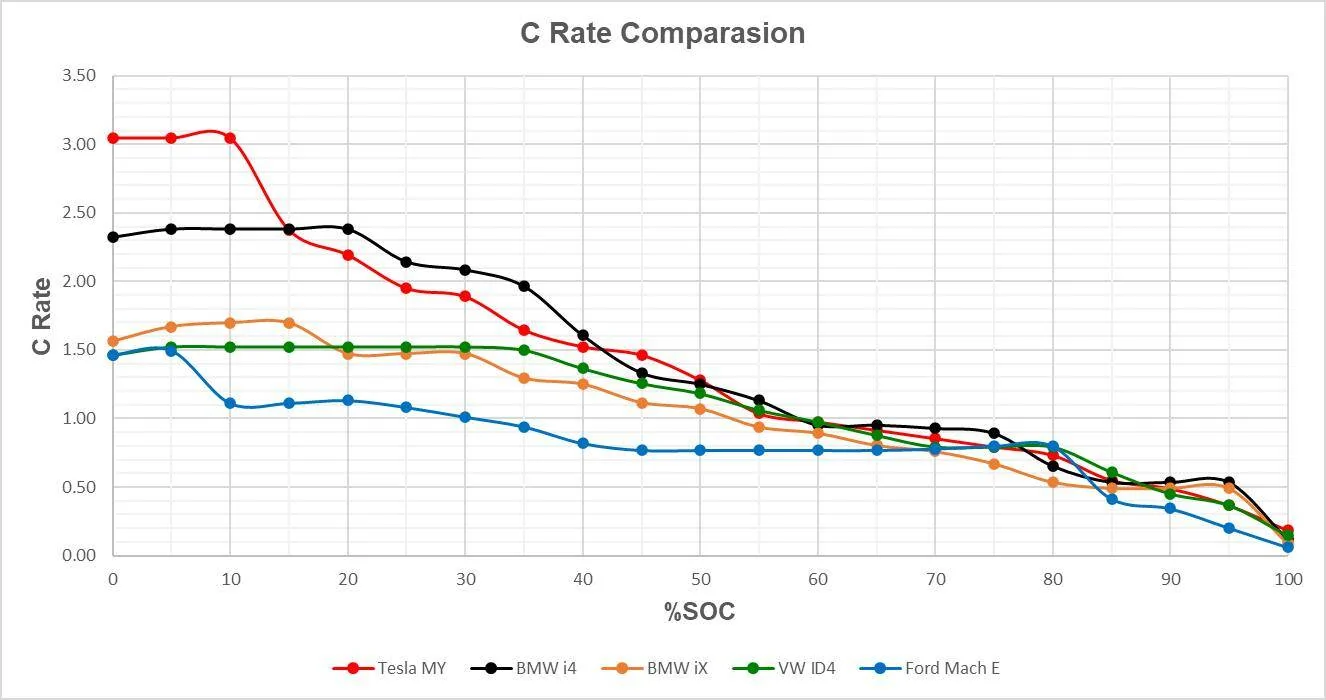
Now graph them by C rate, I think it will look even worse. C rate accounts for the relative size of the battery pack. Divide the kW rate by the kWh nominal of the pack. E.g. 80 kW / 99 kWh = 0.81C for the Mach-E.
 

dtbaker61

Well-Known Member
First Name
Dan
Joined
May 11, 2020
Threads
126
Messages
4,822
Reaction score
4,524
Location
santa fe,nm
Website
www.envirokarma.org
Vehicles
MME (delivered 2/26/21), DIY eMiata BEV
Occupation
Solar Sales/install
Country flag
Now graph them by C rate, I think it will look even worse. C rate accounts for the relative size of the battery pack. Divide the kW rate by the kWh nominal of the pack. E.g. 80 kW / 99 kWh = 0.81C for the Mach-E.

asking for more than 1C charge rate is not a great ask if you want you pack to last as long as possible. An hour at high C rates is pretty tough on Li cells.... short bursts during WOT or regen are 'ok', but still hard on the cells.
 

21st Century Pony

Well-Known Member
First Name
Martin
Joined
May 21, 2022
Threads
36
Messages
1,976
Reaction score
2,243
Location
Arlington, Virginia
Vehicles
formerly Ford Mustang Mach E 2022 Premium AWD ER, now a li'l bit of Lightning ER
Country flag
That's why Ford tells you to turn off the heat for the first 10 to 15 minutes of charging to warm up the battery, and speed up your charging session.
Perhaps we're saying similar things, in different ways. As I wrote above, I let the car choose when to turn on cabin heating using DCFC-provided energy.
That is different than the drover forcing the heating on manually while DCFC charging. In my experience, this would explain, in addition to the variable of ambient temperature, why the car does turn the cabin conditioning on, but at its choice of time befire GO time.. sometimes here, at other times there.
 

RickMachE

Well-Known Member
Joined
Jul 1, 2021
Threads
267
Messages
17,903
Reaction score
27,873
Location
SE MI
Vehicles
2022 Mach-E Premium 4X, 2022 Lightning Lariat ER
Country flag
Perhaps we're saying similar things, in different ways. As I wrote above, I let the car choose when to turn on cabin heating using DCFC-provided energy.
That is different than the drover forcing the heating on manually while DCFC charging. In my experience, this would explain, in addition to the variable of ambient temperature, why the car does turn the cabin conditioning on, but at its choice of time befire GO time.. sometimes here, at other times there.
No, we're not saying the same thing. The car is trying to make a departure time, and the battery conditioning is 59 degrees. DCFC charging takes it to around 95 degrees. So, your method is causing a longer charging session.
 

21st Century Pony

Well-Known Member
First Name
Martin
Joined
May 21, 2022
Threads
36
Messages
1,976
Reaction score
2,243
Location
Arlington, Virginia
Vehicles
formerly Ford Mustang Mach E 2022 Premium AWD ER, now a li'l bit of Lightning ER
Country flag
...your method is causing a longer charging session.
Actually, I did not raise or advocate that point.

My "method" or rather technique takes the DCFC station's energy instead of a moving car's stored battery energy, in Winter, to help get the cabin conditioned, at a time left to the car's judgment. Should it delay departure (alleged not demonstrated) and by how long (if so, by what... minutes?) appears for me to be of low consequence compared to the known vagaries of a given DCFC station's available amperage.
 

Mach-Lee

Well-Known Member
First Name
Lee
Joined
Jul 16, 2021
Threads
262
Messages
11,344
Reaction score
24,965
Location
Wisconsin
Vehicles
2022 Mach-E Premium AWD
Occupation
Sci/Eng
Country flag
Actually, I did not raise or advocate that point.

My "method" or rather technique takes the DCFC station's energy instead of a moving car's stored battery energy, in Winter, to help get the cabin conditioned, at a time left to the car's judgment. Should it delay departure (alleged not demonstrated) and by how long (if so, by what... minutes?) appears for me to be of low consequence compared to the known vagaries of a given DCFC station's available amperage.
You should set a departure time before leaving AND turn off HVAC after plugging into the DCFC station so the battery can be heated at the beginning of the DCFC session. This is the optimal way. If you do not turn off HVAC after plugging in to DCFC, the battery will not be heated to an optimal temperature for DCFC and your charge rate will be limited because the battery is cold, which is why Rick is correctly saying that will take longer to charge. All of the energy for battery heating is coming from the chargers in this situation, none from the battery.
 

21st Century Pony

Well-Known Member
First Name
Martin
Joined
May 21, 2022
Threads
36
Messages
1,976
Reaction score
2,243
Location
Arlington, Virginia
Vehicles
formerly Ford Mustang Mach E 2022 Premium AWD ER, now a li'l bit of Lightning ER
Country flag
You should set a departure time before leaving AND turn off HVAC after plugging into the DCFC station so the battery can be heated at the beginning of the DCFC session. This is the optimal way. If you do not turn off HVAC after plugging in to DCFC, the battery will not be heated to an optimal temperature for DCFC and your charge rate will be limited because the battery is cold, which is why Rick is correctly saying that will take longer to charge. All of the energy for battery heating is coming from the chargers in this situation, none from the battery.
OK.
 
OP
OP
louc757

louc757

Well-Known Member
First Name
Lou
Joined
Sep 3, 2022
Threads
3
Messages
110
Reaction score
127
Location
Louisville, KY
Vehicles
23 MME GTPE Rapid Red Nite Pony, 2024 Silverado 2500
Occupation
Pilot
Country flag
Now graph them by C rate, I think it will look even worse. C rate accounts for the relative size of the battery pack. Divide the kW rate by the kWh nominal of the pack. E.g. 80 kW / 99 kWh = 0.81C for the Mach-E.
As requested. You are correct, it is even worse.


Ford Mustang Mach-E Mach E Fast Charging Rate 1673828623521
 

Mach-Lee

Well-Known Member
First Name
Lee
Joined
Jul 16, 2021
Threads
262
Messages
11,344
Reaction score
24,965
Location
Wisconsin
Vehicles
2022 Mach-E Premium AWD
Occupation
Sci/Eng
Country flag
As requested. You are correct, it is even worse.


1673828623521.png
Yeah our pack charges very slow for how big it is, one of the slowest C rates of modern EVs. Most of the other manufactures allow 1.5C or greater rates down low as you can see. I think Ford could easily make our charging curve more like the ID4, so about 150 kW sustained. But they are just ultra conservative, I think it's driven by an extreme fear of potential future warranty costs. I've mentioned this before, but I find it bizarre how they've focused so heavily on limiting the DC charge curve and ignored enforcing a daily charge limit of 90% or less or moderating cold pack regen levels, which also contribute to early pack degradation.
Sponsored


Top