Update on Mach-E launch progress from engineering friends in Mexico

ClaudeMach-E

Well-Known Member
First Name
Claude
Joined
Mar 28, 2020
Threads
9
Messages
1,076
Reaction score
829
Location
Quebec Canada
Vehicles
Mustang Mach 3- Tempo- Malibu(3)-Actual Kia Sportage AWD
Occupation
Retired
Country flag
I didn't want to reply since we're off topic but my main concern here is can you plug in the car to warm up the battery without recharging the battery. I live in Quebec where there are nights that we get close to -40
I'm in Quebec also and here's my plan regarding the battery charge level . First of all has I'm a retire and I will probably not use the car necessaraly on a daily basis, I plan to keep the battery around 60% in summer or maybe even 50% for daily use and 80% in winter and plug the car all the time. It will only charge the battery to meet these set levels but if needed will use electricity from the house and not from the battery to keep the battery temperature safe. In this way also I can precondition the car from Ford Pass app if we decide to go somewhere on a moments notice yet using electricity from the house and not the battery. If you go onto the AVEQ (Association des Véhicules Électrique du Québec) or Roulez Electrique site you will find information there that explains how to take care of your battery in our conditions and our climate. I don't know of any english language site but I think in Ontario they have a thing similar to AVEQ. Also on You Tube channels you can find lot's of info on the matter. Tesla Bjorn and or Unplugged EV are good examples. ;)
 

Badger_Prof

Well-Known Member
First Name
Randy
Joined
Jun 22, 2020
Threads
4
Messages
758
Reaction score
1,541
Location
Wisconsin
Vehicles
Prior--Leaf,Bolt EV. Mustang Mach-E Premium AWD ER
Country flag
Sorry, most are from experts on the dutch tweakers.net forum (in Dutch and very large so not easy to find)

Engineering explained ,Tesla Bjorn from you tube.

https://www.motortrend.com/news/ev-lithium-ion-battery-life-tips-tricks-advice/

6 Ways To Extend EV Battery Life

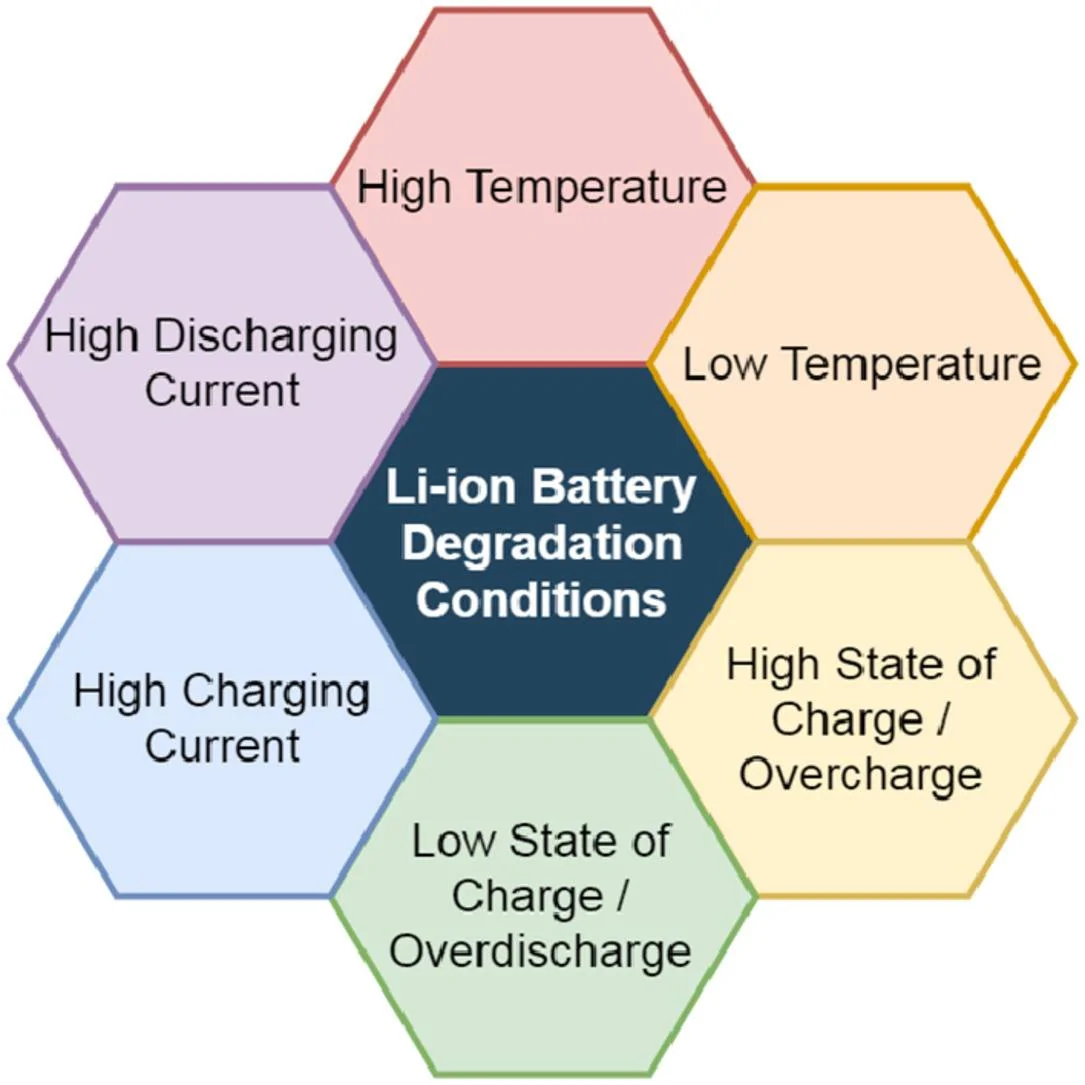
  1. Minimize exposure to high temperatures, in storage and use—Park your EV in the shade whenever possible or plug in so that the battery's thermal management system can function using grid power.
  2. Minimize exposure to low temperatures—Here again, the danger is mostly parking unplugged in extreme low temperatures. If you can plug in, the battery's thermal management system can keep the battery comfy. Some EVs automatically run the thermal management system even unplugged, until capacity drops to 15 percent, after which things get ugly.
  3. Minimize time spent at 100 percent state of charge—Try to resist the urge to plug in all night every night. If your daily travels consume 30 percent of the battery, using a middle-30-percent (like from 70 to 40 percent) is better for the battery than always using the top 30 percent. Smart chargers will eventually integrate with your calendar to anticipate daily driving needs and tailor charging to suit.
  4. Minimize time spent at 0 percent state of charge—Battery management systems typically shut an EV off well before reaching 0 percent. The bigger danger is leaving a vehicle unplugged for so long that it self-discharges to zero and stays there for a prolonged period.
  5. Avoid using fast charging—Automakers know that one of the keys to mass EV adoption is the ability to charge as quickly as filling a gas tank, so they're timid about warning against high-voltage DC charging. And indeed it's fine for recharging during infrequent long trips—or for when a surprise appointment depletes your strategic 70-percent overnight charge. Don't make it a habit.
  6. Avoid discharging more quickly than is needed—It's tough to resist those Ludicrous Tesla launches, and they're relatively harmless when enjoyed occasionally when demoing your car to a prospective EV convert. Just know that each one hastens the ultimate demise of your vehicle's battery by some amount.

Some tips for operating your EVs:
  • Avoid keeping your car sitting with a full or empty charge. Ideally, keep your SOC between 20–80% particularly when leaving it for longer periods, and only charge it fully for long distance trips.
  • Minimize fast charging (DCFC). Some high-use duty cycles will need a faster charge, but if your vehicle sits overnight, level 2 should be sufficient for the majority of your charging needs.
  • Climate is out of an operator’s control, but do what you can to avoid extreme hot temperatures, such as choosing shade when parked on hot days.
  • High-use is not a concern, so fleets shouldn’t hesitate to put them to work. An EV isn’t useful sitting idle in the fleet yard, and putting on more miles per vehicle is overall a better fleet management practice.
,

https://www.sciencedirect.com/science/article/abs/pii/S2352152X19314227?dgcid=author

1-s2.0-S2352152X19314227-fx1_lrg.jpg
Thank you. That is very helpful! I appreciate the added information.


dbsb3233

Well-Known Member
First Name
TimCO
Joined
Dec 30, 2019
Threads
56
Messages
10,100
Reaction score
11,965
Location
Colorado, USA
Vehicles
2021 Mustang Mach-E FE, 2025 Porche Macan Electric
Occupation
Retired
Country flag
This graph tells me I should not care in the least how I charge my battery. Why?

If I own my car for 10 years, using the worst case line:
- Assume 200 charge cycles a year
- 100-25% will be 270 miles x .75 = 202 miles per charge cycle new, 172 at 10 years, 187 average
- The car will have 187 x 2000 = 374,000 miles on it

At 10 years I have already bought (or am buying) a new EV with a 1000 mile range battery.
Yep. Or even more simply, the worst line shows just 10% degradation at 1000 25-100% charges. 75% of the 88 kWh battery = 66 kWh x 1000 charges = 66,000 kWh. At roughly 3.5 miles/kWh, that's 231k miles.

That's 15 years averaging 15k miles/yr. That's already well beyond the average lifespan of a car (with only 10% battery loss). Charging to 100% every time.

Of course, in the real world we have bigger temperature extremes, and probably more stress on the battery, that might chip away at that. Still though, looks like charging to 80%, 90% or 100% is a pretty minor issue either way.
 

SnBGC

Well-Known Member
First Name
Greg
Joined
Apr 20, 2020
Threads
46
Messages
5,962
Reaction score
9,778
Location
Phoenix
Vehicles
2021 Mach-E FE, 2021 Wrangler 4xe High Altitude
Occupation
Manager
Country flag
Yep. Or even more simply, the worst line shows just 10% degradation at 1000 25-100% charges. 75% of the 88 kWh battery = 66 kWh x 1000 charges = 66,000 kWh. At roughly 3.5 miles/kWh, that's 231k miles.

That's 15 years averaging 15k miles/yr. That's already well beyond the average lifespan of a car (with only 10% battery loss). Charging to 100% every time.

Of course, in the real world we have bigger temperature extremes, and probably more stress on the battery, that might chip away at that. Still though, looks like charging to 80%, 90% or 100% is a pretty minor issue either way.
You guys are getting it now....
Is it a thing? Yes.
Is it worth worrying about? Not at my age. :) I just want to drive the thing and have fun with it.
 

ajmartineau

Well-Known Member
Joined
Jun 23, 2020
Threads
33
Messages
1,392
Reaction score
1,979
Location
Washington
Vehicles
2021 Mach-E
Country flag
A stronger healthier battery equals high resale and better opinion about battery life to the uninitiated. Be nice to your battery, you might need that 5% someday in the middle of the night.
 

jhalkias

Well-Known Member
First Name
John
Joined
Mar 3, 2020
Threads
123
Messages
2,491
Reaction score
5,039
Location
Ohio
Vehicles
'21 RR ME FE, '22 Corsair GT, '22 Lightning Lariat
Occupation
Benefit Fund Administrator
Country flag
There was an interesting discussion on the Inside EV podcast this Friday. They were comparing the Audi Etron and the Tycan. What was most interesting to me was about DCFC and the fact that the Etron because of the large buffer (similar to the ME although a smaller pack) could maintain a higher charging curve longer because of that buffer.

I don’t expect the ME to have an aggressive DC charging curve when it first comes out, but I am hoping it will increase after they get data. I would rather see them increase that curve with that buffer rather than open up more of the pack.
 

Badger_Prof

Well-Known Member
First Name
Randy
Joined
Jun 22, 2020
Threads
4
Messages
758
Reaction score
1,541
Location
Wisconsin
Vehicles
Prior--Leaf,Bolt EV. Mustang Mach-E Premium AWD ER
Country flag
A stronger healthier battery equals high resale and better opinion about battery life to the uninitiated. Be nice to your battery, you might need that 5% someday in the middle of the night.
I have sold two used EVs. For each, I got bids from multiple commercial companies. The only thing remotely related to battery condition that either asked me was mileage. None of them asked or evaluated anything about battery condition. Perhaps a private buyer would care or maybe a commercial buyer would look more closely for a very high mileage vehicle. For me, charge it the same as I would fill the tank on an ICE. If that has a minor impact while I own it or when I sell it, so be it. By the way, all of the potential buyers evaluated the tires relatively carefully. That seemed to matter more to them than battery condition.
 

timbop

Well-Known Member
First Name
Tim
Joined
Jan 3, 2020
Threads
65
Messages
6,832
Reaction score
14,036
Location
New Jersey
Vehicles
Solar powered 2021 MME ER RWD (CA RT1)
Occupation
Software Engineer
Country flag
Question to clarify what they mean by "cycles" here. Do they mean just charges of the length stated? For instance, let's look at the 4000 cycles point on the x-axis. The orange line is the best but it's only adding 10% on each cycle (if I understand it right). On the MME ER that's just 8.8 kWh x 4000 = 35,200 kWh. While on the dark blue line, it's adding 75% each cycle. That's 66 kWh x 4000 = 264,000 kWh. That's 7.5x more kWh being run through, so of course it's gonna degrade much more.

There's only 2 pairs of lines on there that run the same % of SOC (kWh) through the battery. There's two that do a 40% addition, and two that do a 50% addition. Those are the ones that are really apples-to-apples comparisons. And they do show that charging around the middle rather than the ends is (slightly) better.

Of course, at around 3 miles/kWh mileage, nearly all of those are good for 100k+ miles in the vehicle (most way more), so still plenty for most people either way.
Yes, there aren't a lot of direct usage% comparisons to be made, but I'd much rather see a 10% degradation after 3000 cycles (which I will actually never see since I'll be in an old folks home before then). Essentially I'd never see more than a 7% degradation in the time I owned the car, and since there is probably some upper buffer I will only see 5%


Top