

Raymondjram
Well-Known Member
- First Name
- Raymond
- Joined
- Jun 28, 2020
- Threads
- 19
- Messages
- 581
- Reaction score
- 627
- Location
- Bayamon
- Vehicles
- 2014 Ford Fusion Hybrid LE sedan
- Occupation
- Retired Engineer

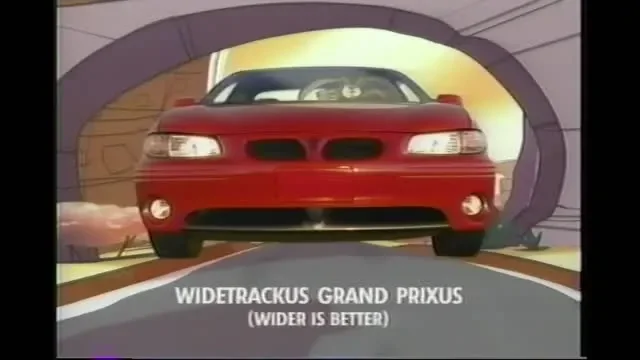
Wider track between wheels is better for stability but wider tires are not better. Besides, a wider track is a bigger collision risk when driving in heavy traffic jams. Only car racers want wider tracking. For the layperson driving in traffic, a thinner car width is safer and better but bad for wide occupants inside.but, the old Pontiac Grand Prix commercials told me otherwise! ?

GoGoGadgetMachE
Well-Known Member
- First Name
- Michael
- Joined
- Jan 23, 2020
- Threads
- 153
- Messages
- 5,612
- Reaction score
- 12,669
- Location
- Ohio
- Vehicles
- 2021 Mach-E 1st Ed., 2022 Lightning Platinum
- Occupation
- Professional forum cheerleader and fanboy

my gf had ... a GTP, a 97 maybe? it was faster than my '95 Mustang GT convertible - she could leave me behind at a light and never look back. and it had a HUD! it was actually kind of an amazing car all things considered.Lol I had a 98!
That was a fun car.
MachTee
Well-Known Member
- First Name
- Andy
- Joined
- Jun 9, 2021
- Threads
- 5
- Messages
- 368
- Reaction score
- 574
- Location
- USA
- Vehicles
- MME Premium Infinite Blue SR AWD
I drove my MME in absolutely pouring rain couple weeks ago (Ida). It was something like 3" of rain in an hour. The car handled it with absolutely no issue, with the stock 19" Michelin. Everyone has a different idea of what is "not pushing it hard". I really have to question the driving habit. If coming from a FWD vehicle, going to a high/instant torque RWD vehicle will probably need some adjustments to the driving habit.
GoGoGadgetMachE
Well-Known Member
- First Name
- Michael
- Joined
- Jan 23, 2020
- Threads
- 153
- Messages
- 5,612
- Reaction score
- 12,669
- Location
- Ohio
- Vehicles
- 2021 Mach-E 1st Ed., 2022 Lightning Platinum
- Occupation
- Professional forum cheerleader and fanboy
I was kidding of course (I included a Looney Tunes picture!) but your points are taken nonetheless.Wider track between wheels is better for stability but wider tires are not better. Besides, a wider track is a bigger collision risk when driving in heavy traffic jams. Only car racers want wider tracking. For the layperson driving in traffic, a thinner car width is safer and better but bad for wide occupants inside.

ZuleMME
Well-Known Member
- First Name
- Zule
- Joined
- Apr 23, 2021
- Threads
- 10
- Messages
- 1,018
- Reaction score
- 1,487
- Location
- Denver, CO
- Vehicles
- 21' Job1 P4X MME, 22' MYP
- Occupation
- Implementation Engineer
Yep, even worse if you shift from a german car to an american car. They really feel quite loose in comparison but it's not actually that bad. It's just a difference in how it "talks" or "feels" to you.I drove my MME in absolutely pouring rain couple weeks ago (Ida). It was something like 3" of rain in an hour. The car handled it with absolutely no issue, with the stock 19" Michelin. Everyone has a different idea of what is "not pushing it hard". I really have to question the driving habit. If coming from a FWD vehicle, going to a high/instant torque RWD vehicle will probably need some adjustments to the driving habit.
SyNRG
Well-Known Member
- First Name
- John
- Joined
- Dec 5, 2019
- Threads
- 6
- Messages
- 394
- Reaction score
- 495
- Location
- Brea, CA
- Vehicles
- 2019 Explorer Sport & 2021 MME Select (SR) RWD
- Occupation
- Healthcare Data Analysis
I'd add driver as well (in general, not a knock against OP).Like most have said, start with tires.
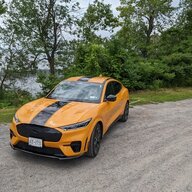
I had a S197 GT, survived El Nino, El Nina, whatever rainstorms we got between 2005-2013 (and I came from FWD cars previously), takes sometime getting used to but can't just mash the go pedal with RWD, especially when road conditions are against you. Have to modulate the go pedal, get a feel of how the car reacts depending on input, and if it's raining I'm doing 5-10 under the speed limit in all of my cars regardless of FWD/RWD/AWD.
sotek2345
Well-Known Member
- First Name
- Tom
- Joined
- Aug 30, 2021
- Threads
- 4
- Messages
- 920
- Reaction score
- 1,328
- Location
- Upstate NY
- Vehicles
- 2021 Mach-e GT, 2017 Raptor, Lightning (9/5 Build)
- Occupation
- Engineering Manager
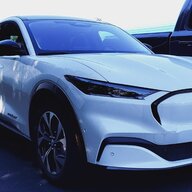
100% agree. I drove my 2011 GT500 through 2 NY winters (and did so with a couple other mustangs before that). Always a good time passing the trucks and SUVs stuck on the side of the road on my way in to work. Tires are important (I had dedicated snows), bu driver skill is critical. It is all about modulating the accelerator, and counter-steering as needed.I'd add driver as well (in general, not a knock against OP).
I had a S197 GT, survived El Nino, El Nina, whatever rainstorms we got between 2005-2013 (and I came from FWD cars previously), takes sometime getting used to but can't just mash the go pedal with RWD, especially when road conditions are against you. Have to modulate the go pedal, get a feel of how the car reacts depending on input, and if it's raining I'm doing 5-10 under the speed limit in all of my cars regardless of FWD/RWD/AWD.
TruWrecks
Well-Known Member
- Joined
- Jun 3, 2021
- Threads
- 25
- Messages
- 948
- Reaction score
- 1,030
- Location
- Oregon
- Vehicles
- Mach-E Star White Premium AWD Ext (Ghost Stallion)
- Occupation
- Retired
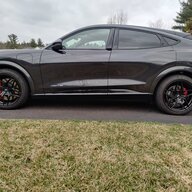
might want to try the $0 option first and check the tire pressures.
BTW. I find it hard to believe that I am the only person on this forum that knows how important tire pressure is to grip.
BTW. I find it hard to believe that I am the only person on this forum that knows how important tire pressure is to grip.
harrysiii
Well-Known Member
- First Name
- Harry
- Joined
- May 13, 2020
- Threads
- 16
- Messages
- 608
- Reaction score
- 624
- Location
- New Hampshire
- Vehicles
- 2025 Ford Bronco Badlands Sas, 2025 Toyota Grand Highlander Hybrid MAX Platinum
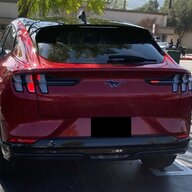
Nah, just better tires especially those geared toward wet traction. Many manufacturers have junk stock tires for cost savings, EPA ratings, etc. I've replaced many from new cars well before the tires were worn because they're junk.I uhhh... Would recommend upgrading to a GT for the wider tires. Just saying lol
But, yes, the GT Performance tires are wonderful and you could just get that instead. ;-)
ARK
Well-Known Member
- Joined
- Aug 21, 2020
- Threads
- 45
- Messages
- 2,938
- Reaction score
- 4,297
- Location
- Los Angeles
- Vehicles
- '21 Premium SR AWD
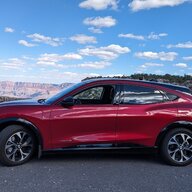
Question for @noname, does your wife happen to drive with one pedal driving on?
If so, if she lets off the accelerator in turns with the idea that she will be coasting (not accelerating, but not braking either) as many drivers do, she would inadvertently be applying a notable, moderate amount of braking force and could be losing traction for this season.
In addition, you have a RWD. Something that I haven’t seen discussed too much on this forum is that regenerative braking can only apply on an axle with an electric motor. I’m not sure if the RWD Mach-E or other RWD or FWD electric vehicles can compensate somehow (e.g., by engaging the friction brakes on the other axle whenever OPD kicks in?), but full blown regen from one pedal driving could only apply to the rear axle on a RWD Mach-E.
So if she were driving with OPD and all of a sudden lifted completely off the accelerator in a turn while in a RWD Mach-E, might her car be applying a significant amount of braking on the rear wheels, but none at all in the front?
It’s worth noting that with conventional brakes, all cars have brake pads on all wheels such that when you hit the brakes, you get a stopping force applied to both the front and rear of the vehicle.
If so, if she lets off the accelerator in turns with the idea that she will be coasting (not accelerating, but not braking either) as many drivers do, she would inadvertently be applying a notable, moderate amount of braking force and could be losing traction for this season.
In addition, you have a RWD. Something that I haven’t seen discussed too much on this forum is that regenerative braking can only apply on an axle with an electric motor. I’m not sure if the RWD Mach-E or other RWD or FWD electric vehicles can compensate somehow (e.g., by engaging the friction brakes on the other axle whenever OPD kicks in?), but full blown regen from one pedal driving could only apply to the rear axle on a RWD Mach-E.
So if she were driving with OPD and all of a sudden lifted completely off the accelerator in a turn while in a RWD Mach-E, might her car be applying a significant amount of braking on the rear wheels, but none at all in the front?
It’s worth noting that with conventional brakes, all cars have brake pads on all wheels such that when you hit the brakes, you get a stopping force applied to both the front and rear of the vehicle.
Last edited:
RickMachE
Well-Known Member
- Joined
- Jul 1, 2021
- Threads
- 267
- Messages
- 17,942
- Reaction score
- 27,953
- Location
- SE MI
- Vehicles
- 2022 Mach-E Premium 4X, 2022 Lightning Lariat ER
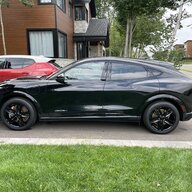
My experience across multiple vehicles is that many people complain about tires, and change them easier than I change underwear, yet I have the same tires and don't have that experience. We've put 3,500+ miles on the car, and I think the tires are fine.
I also have stock Goodyears on my 2013 F-150, original tires, and have never had an issue, yet people say they can't drive in light snow... Much is due to the driver IMO.
I also have stock Goodyears on my 2013 F-150, original tires, and have never had an issue, yet people say they can't drive in light snow... Much is due to the driver IMO.
Guy
Well-Known Member
- First Name
- Guy
- Joined
- Dec 7, 2020
- Threads
- 0
- Messages
- 276
- Reaction score
- 356
- Location
- Canada
- Vehicles
- Premium AWD Long Range

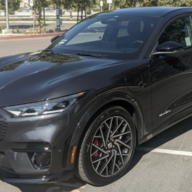
Hello, may I disagree here. I’m 64, had numerous cars in my life and never felt the need to change the stock tires on any car except the Mach-E. Installed Continental Extreme contacts and the car is transformed.
Mach1E
Well-Known Member
- Joined
- Sep 5, 2021
- Threads
- 93
- Messages
- 10,509
- Reaction score
- 13,295
- Location
- Florida
- Vehicles
- 69 Mach 1, 11 GT, 21 GTPE- sold, 24 Taycan 4S, 20 F type R
Now imagine what you could do with the proper tool/equipment!My experience across multiple vehicles is that many people complain about tires, and change them easier than I change underwear, yet I have the same tires and don't have that experience. We've put 3,500+ miles on the car, and I think the tires are fine.
I also have stock Goodyears on my 2013 F-150, original tires, and have never had an issue, yet people say they can't drive in light snow... Much is due to the driver IMO.
The higher performance your vehicle, the more difference tires will make.
On my SS with a tune, the stock tires would spin all through first and 2nd and kick out a little on the 1-2 shift.
Piliot Sport 4s tires…… hook up, even on the street. Night and day difference. But they should be better for $400/tire.
RickMachE
Well-Known Member
- Joined
- Jul 1, 2021
- Threads
- 267
- Messages
- 17,942
- Reaction score
- 27,953
- Location
- SE MI
- Vehicles
- 2022 Mach-E Premium 4X, 2022 Lightning Lariat ER
I don't think you and I drive the same.Now imagine what you could do with the proper tool/equipment!
The higher performance your vehicle, the more difference tires will make.
On my SS with a tune, the stock tires would spin all through first and 2nd and kick out a little on the 1-2 shift.
Piliot Sport 4s tires…… hook up, even on the street. Night and day difference. But they should be better for $400/tire.

Sponsored


