NoMoPetrol
Active Member
- First Name
- Scott
- Joined
- Sep 30, 2022
- Threads
- 0
- Messages
- 28
- Reaction score
- 13
- Location
- Riverside CA
- Vehicles
- 2013Tesla Model S, 2017 Chevy Bolt
- Occupation
- Retired

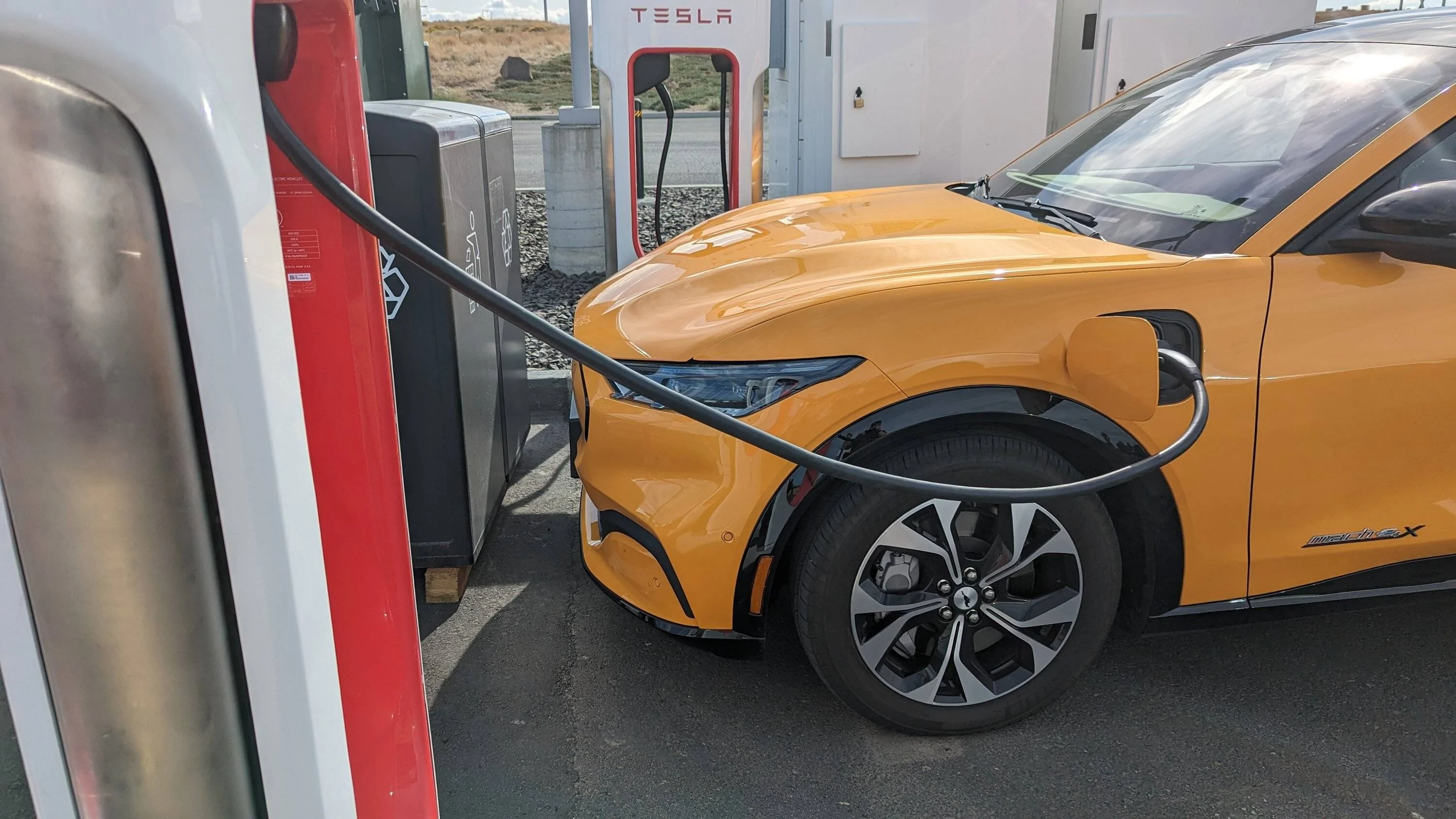
And you expect them to retrofit all their pre-existing stations, paid for by them alone, with longer cables to satisfy non-Tesla EVs? If I am reading the press releases on NACS adoption correctly, only a portion of the existing charging sites will be available to non-Teslas. The number 12,000 has been mentioned several times, which represents only about half the existing Supercharger sites. My guess is that future Supercharger installations using federal money will be much more accommodating.It's absolutely a fair point that Tesla's closed system was designed for Tesla vehicles, so yes it is a bit presumptuous that Tesla should adapt to other brands. Except that they are trying to get business from owners of those cars, as well as federal money to install more of them - with the explicit understanding that the federal money is contingent on non-teslas being able to use them.
1. So CARB established an open standard simultaneously with the EV1 crushing fiasco. And its use by all EVs would be mandatory by 2006. So who was CARB writing the standard for?Regardless, you've got a bit of revisionist history going on:
- SAE J1772 was selected in 2001 by CARB as an open standard for all EV's to use - "mandatory" by 2006.
- Tesla began selling cars in 2008 with their own proprietary adapter
- In May 2012 a consortium of seven manufacturers introduced the CCS specification to extend the 11 year old J1772 specification to accommodate DC fast charging
- In September 2012 Tesla introduced the first superchargers using their 4 year old proprietary connector
2. The SAE J1772 was incapable of servicing DCFC. What was Tesla supposed to do in 2008? Sell overpriced golf carts that could be charged overnight after puttering around town all day? In fact, Tesla approached the Detroit automakers early on about banding together around a suitable quick-charging solution and were told to go pound sand.
3. In May 2012 a consortium of seven manufacturers with no, or very little, EV experience introduced the clumsiest solution they could think of to accommodate the letter of the law, but not the spirit. That consortium, with strong oil industry participation on their seven respective Boards of Directors, had only one thing in mind - make EVs as awkward as possible in order to retard their growth and popularity.
4. The Tesla connector was proprietary by default when the other American companies used their "pounding sand" response several years earlier.
Sponsored