A warning about 50A range cords...

JCHLi

Well-Known Member
Joined
Jun 28, 2020
Threads
23
Messages
1,627
Reaction score
2,506
Location
Michigan
Vehicles
2021 Mustang Mach-E First Edition
Country flag
Wrong application ... There is nothing wrong or any poor quality issues with the GE plug .... its for a generic electric range (20A breaker), not to be used for charging EV w/32A continuous current on a 50A breaker. I have used the very same plug (from HomeDepot) as replacement for my tenant's range frayed plug and it is fine .... besides by extending the suppied pigtail cord of your EVSE you just invalidated its warranty. If the EVSE comes with a NEMA 14-50 pigtail It is meant to be plugged into a hard wired solid copper 12 AWG socket with NEMA 14-50 outlet, protected by 50A breaker.
I'm not sure why a 14-50 cord would plug into a 20 amp breaker...
Sponsored

 
OP
OP
Mach-Lee

Mach-Lee

Well-Known Member
First Name
Lee
Joined
Jul 16, 2021
Threads
262
Messages
11,344
Reaction score
24,965
Location
Wisconsin
Vehicles
2022 Mach-E Premium AWD
Occupation
Sci/Eng
Country flag
It should be noted that ranges are not considered continuous loads. In the real world, no one ever has all burners on full while self-cleaning the oven for 3+ hours!
Yes, this is why I think this problem hasn't been detected until people use the cord with an EVSE. EV charging will reveal any product flaws quickly. Similar to how the cheap Leviton 14-50 outlets fail frequently when used with EV charging but are mostly fine when used with ranges.

I think a lot of these manufacturers have been getting by with cheapened products for a while that don't pass muster, and we've been conditioned into thinking that it's our fault for choosing a cheaper product rather than the manufacturer's fault for making an inferior product. A 50A rated product needs to be able to handle 50A without overheating when new. Otherwise what's the point of the rating?

UL testing is supposed to detect these faulty devices, but the system is flawed since continuous random product testing is NOT performed, only cursory factory inspections afterwards. A manufacturer need only send their best samples to pass UL certification one time, then they can cheapen the product down the road. As long as no one notices, they get away with it. UL ratings are sort of a scam in this way, you can't trust them anymore. Not like the old days.
 

ripperAZ

Well-Known Member
First Name
Ripper
Joined
Mar 4, 2022
Threads
17
Messages
724
Reaction score
949
Location
AZ DESERT
Vehicles
2022 Ice White Mustang Mach E AWD EX BATT
Country flag
Thanks for your extremely cogent invaluable analysis. You’re absolutely correct there is a huge range of quality in cords and plugs And on products even among the same manufacturer. Almost all of it comes from China making almost all of it suspect in someway. Probably the most fundamental thing to owning an electric car is having a decent charging situation that isn’t dangerous and is efficient.

Jes sayin everyone on the forum should read this and believe it. I have found the same scenario with my charger and with almost all electric corded products if you’re pulling a lot of power

Fantastic posting?
 

ripperAZ

Well-Known Member
First Name
Ripper
Joined
Mar 4, 2022
Threads
17
Messages
724
Reaction score
949
Location
AZ DESERT
Vehicles
2022 Ice White Mustang Mach E AWD EX BATT
Country flag
Thanks for your extremely cogent invaluable analysis. You’re absolutely correct there is a huge range of quality in cords and plugs And on products even among the same manufacturer. Almost all of it comes from China making almost all of it suspect in someway. Probably the most fundamental thing to owning an electric car is having a decent charging situation that isn’t dangerous and is efficient.

Jes sayin everyone on the forum should read this and believe it. I have found the same scenario with my charger and with almost all electric corded products if you’re pulling a lot of power

Fantastic posting?
 

ZuleMME

Well-Known Member
First Name
Zule
Joined
Apr 23, 2021
Threads
10
Messages
1,018
Reaction score
1,487
Location
Denver, CO
Vehicles
21' Job1 P4X MME, 22' MYP
Occupation
Implementation Engineer
Country flag
Yes, this is why I think this problem hasn't been detected until people use the cord with an EVSE. EV charging will reveal any product flaws quickly. Similar to how the cheap Leviton 14-50 outlets fail frequently when used with EV charging but are mostly fine when used with ranges.

I think a lot of these manufacturers have been getting by with cheapened products for a while that don't pass muster, and we've been conditioned into thinking that it's our fault for choosing a cheaper product rather than the manufacturer's fault for making an inferior product. A 50A rated product needs to be able to handle 50A without overheating when new. Otherwise what's the point of the rating?

UL testing is supposed to detect these faulty devices, but the system is flawed since continuous random product testing is NOT performed, only cursory factory inspections afterwards. A manufacturer need only send their best samples to pass UL certification one time, then they can cheapen the product down the road. As long as no one notices, they get away with it. UL ratings are sort of a scam in this way, you can't trust them anymore. Not like the old days.
It would seem that any competent EVSE installation should at this point include testing with the EV pulling max current for at least an hour and taking intermittent thermal scans to ensure safety. I agree with your assessment that this seems to be companies skirting the responsibility of the UL certification and not assuring the continued product adherence to the specifications. Id love to see them start doing random product checks.

On that note, I have a Leviton consumer level 14-50 outlet that works fine per my flir camera… To much variance.


JohnFoxeSheets

Well-Known Member
First Name
John
Joined
Jan 29, 2022
Threads
28
Messages
3,403
Reaction score
5,500
Location
San Francisco
Website
johnfoxesheets.com
Vehicles
2022 Iced Blue Silver Mach E GT
Occupation
Retired Engineer
Country flag
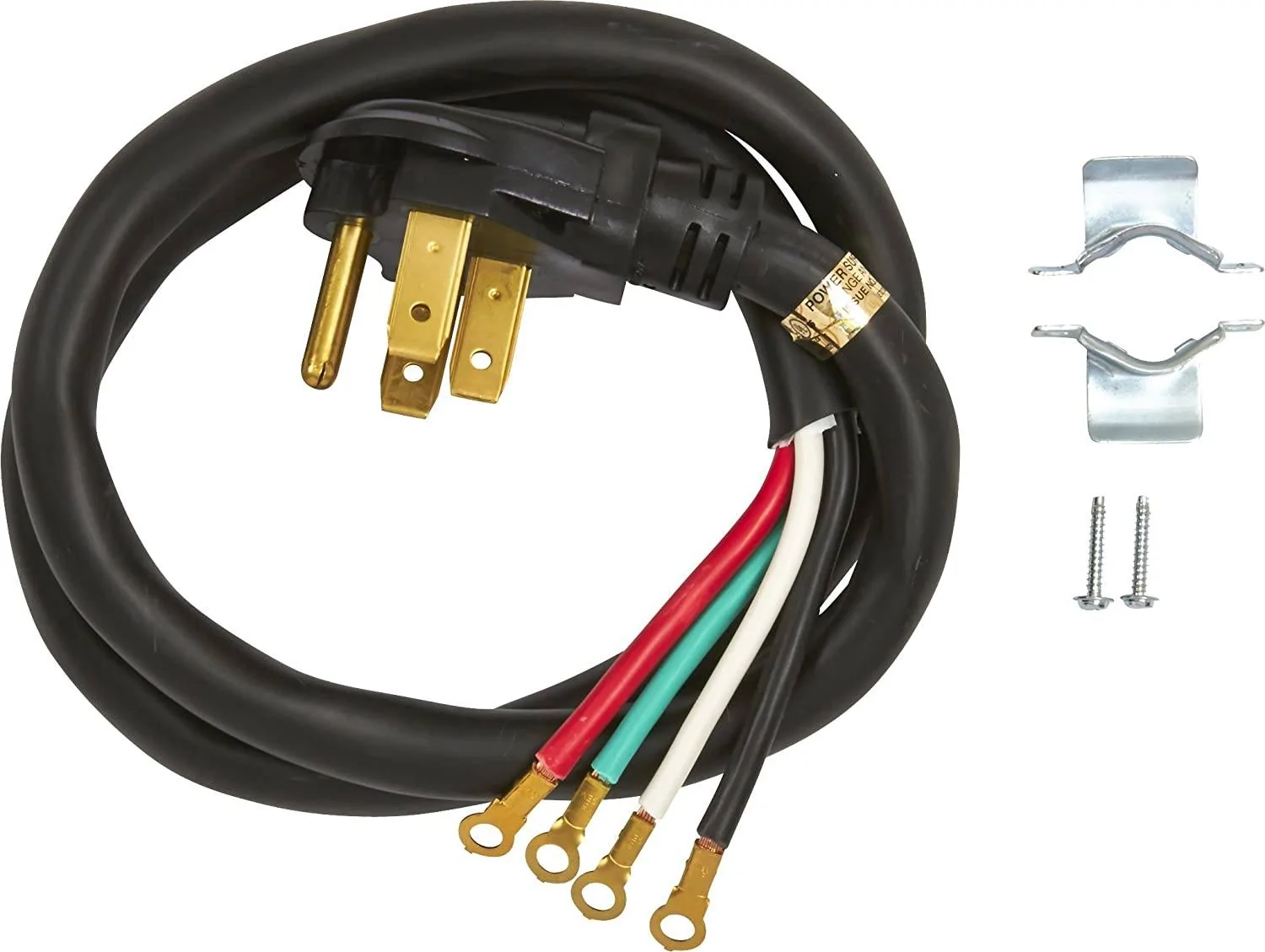
I wanted to share my experience with a range cord that ended up being faulty. I had to mount my ChargePoint in a location where the included cord didn't quite reach the 14-50 outlet, so I bought a 50A range cord to use instead like others have done. I chose a GE (well-respected brand) model WX09X10037 cord, which is rated for 50A and is UL listed (again thinking that means it should be good quality). This cord has good reviews on Amazon, 4.7/5.0 with 329 ratings, and other reviewers have said they've used it successfully as an EVSE cord.

Range Cord.jpg


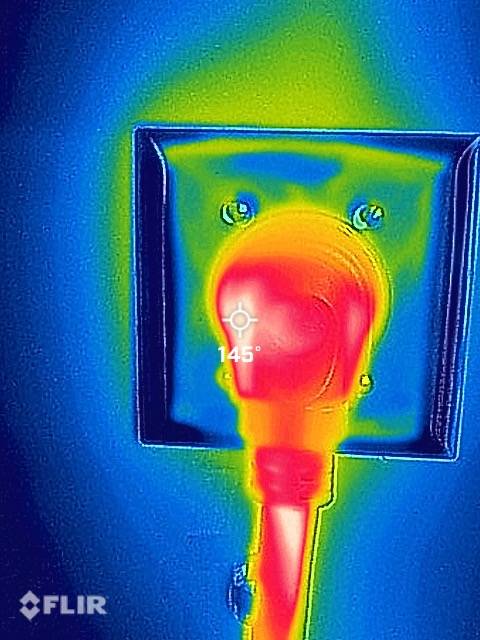
However after installation I noticed it would get quite warm while charging, up to 152ºF when my garage was only 70ºF! You can see the left side got quite a bit warmer than the right side, which indicates a bad connection:

20220530T073130.JPG


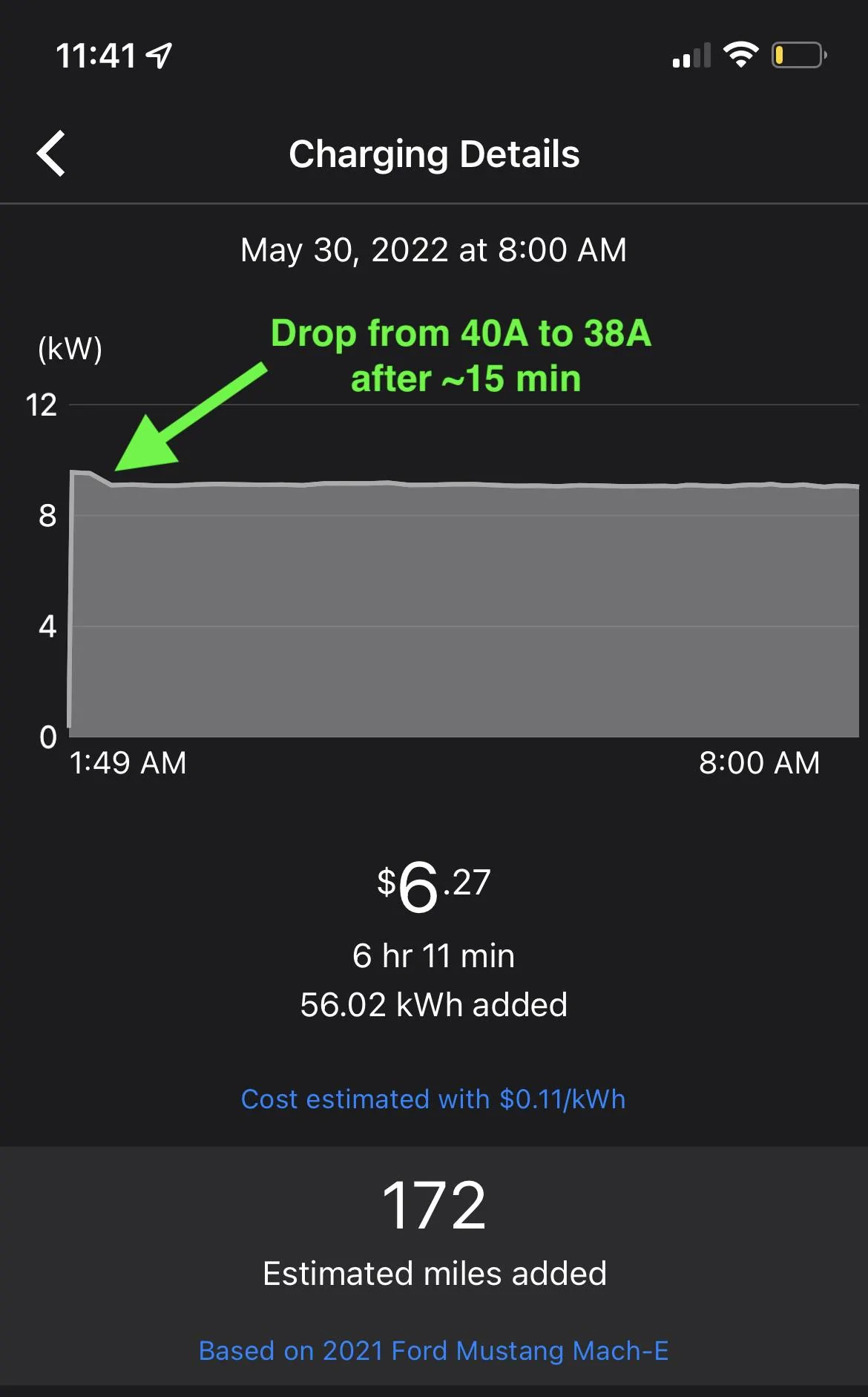
I also noticed my charging speed would drop from 40A to 38A after about 15 minutes of charging:

IMG_56E7B037B54F-1.jpeg


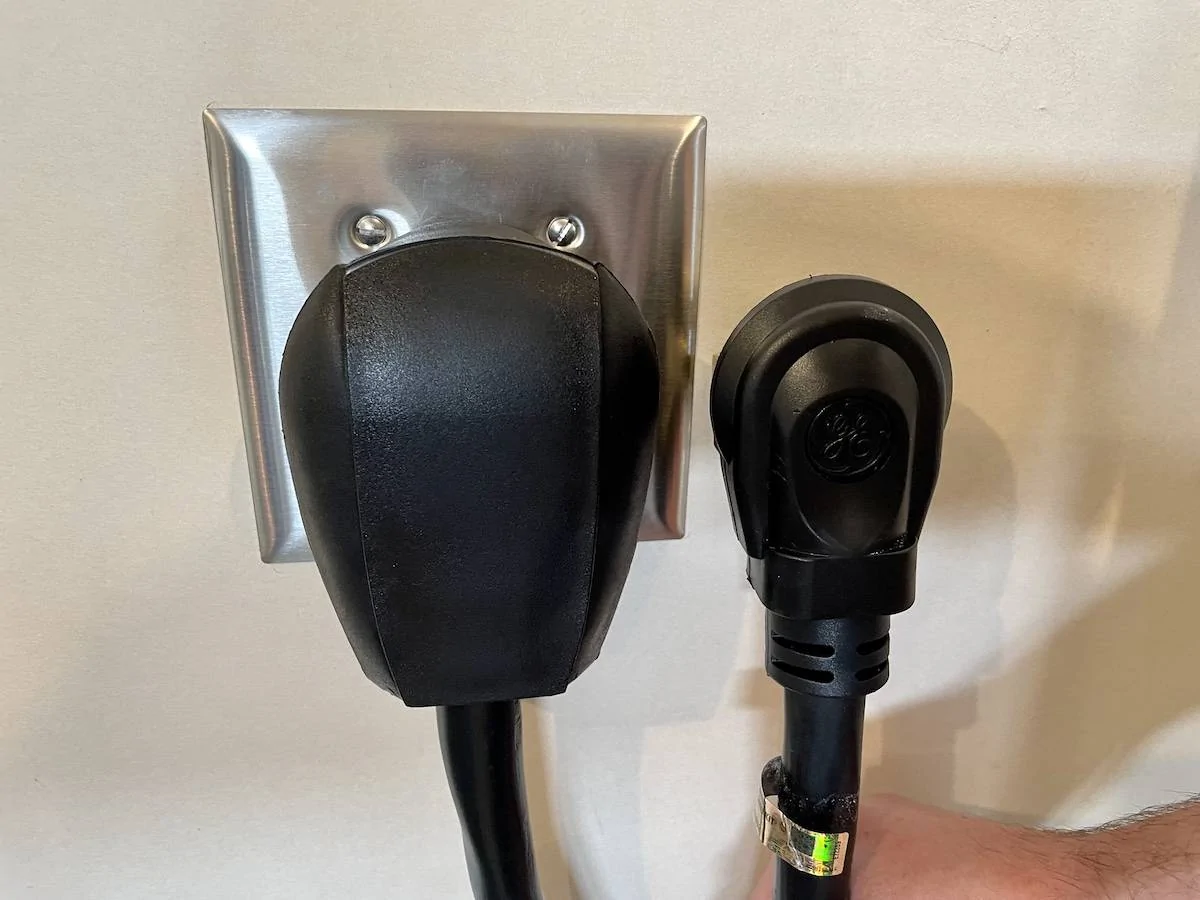
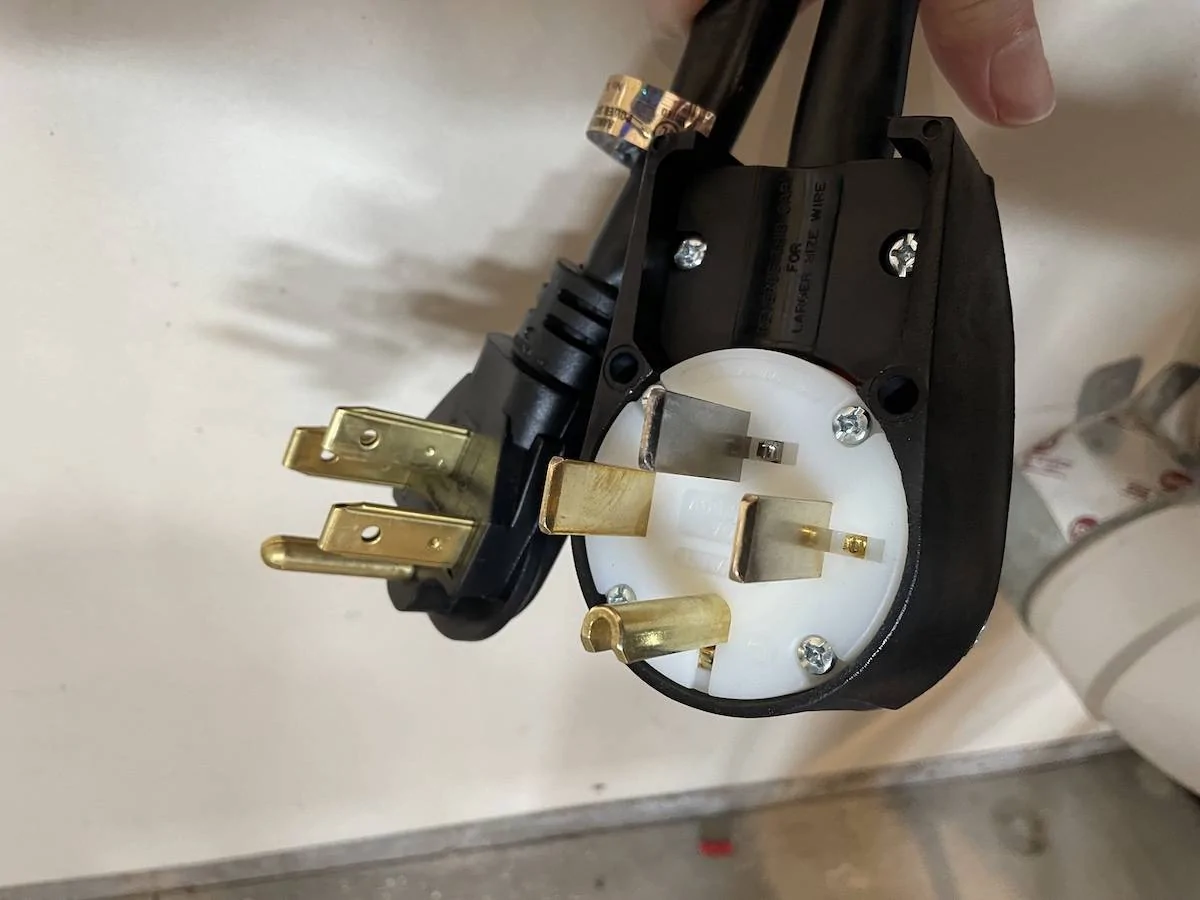
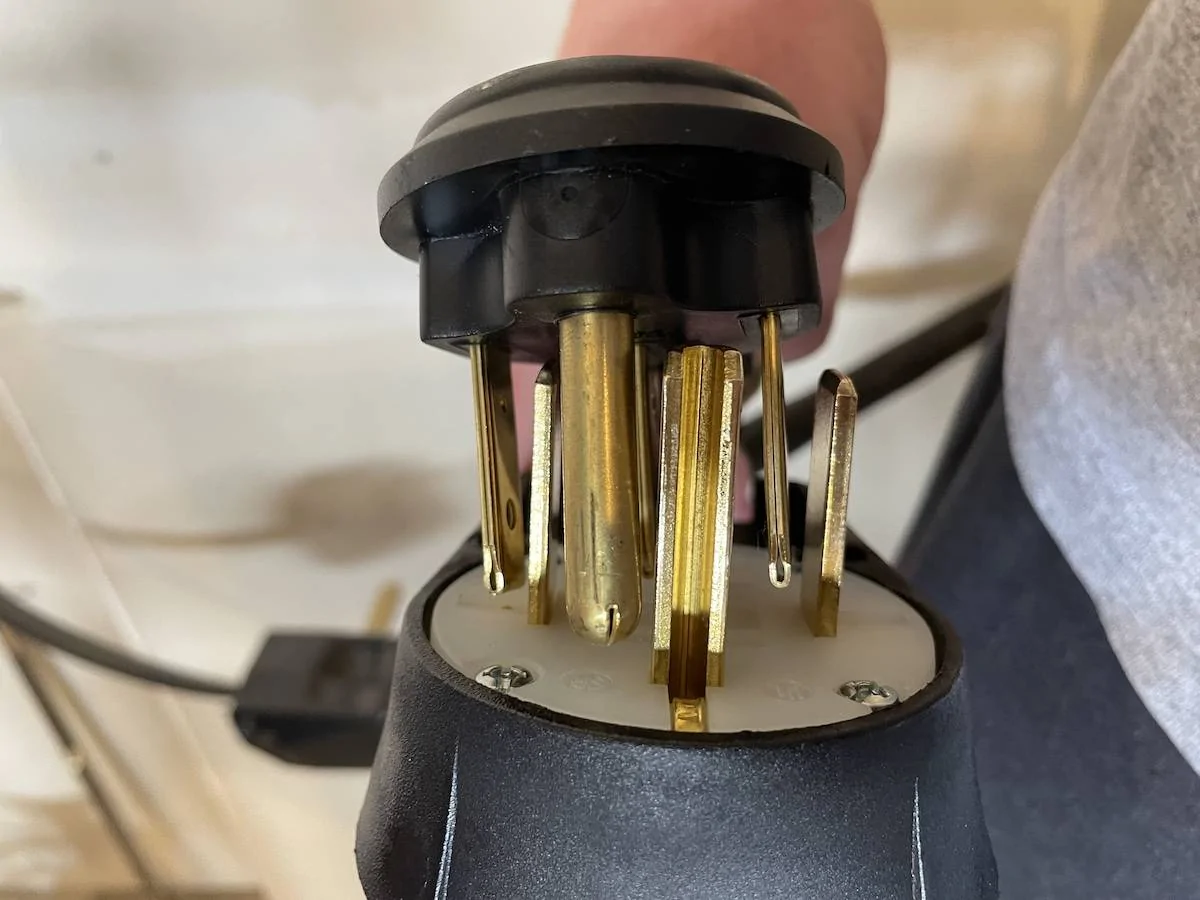
At first I thought my receptacle could have a loose connection, so I took it out and loosened/torqued everything to specs again. Still got hot, so then I replaced the receptacle with a Bryant (clone of Hubbell) 9450FR industrial-grade receptacle, torqued to specs. Alas, it still got hot, so it had to be the plug not the receptacle. So I ordered a Bryant 9452ANPB industrial-grade plug to try instead.

There is a huge difference in construction of the Bryant plug vs. the GE. The blades are much thicker and solid brass, compared to the thin, folded over blades of the GE. The attachment lugs inside are also very robust, thick metal everywhere. The plug is expensive, but you are getting what you pay for.

IMG_0807.jpg

IMG_0808.jpg

IMG_0810.jpg


After cutting the molded plug off the range cord and replacing with the Bryant plug, I can say there was a huge improvement in the plug heating! Testing the prong temperature, it barely gets warm now (100ºF) vs. the burning hot (152ºF) of the GE plug. Check your prong temps!

20220604T180912.JPG


I did some additional testing on the GE plug, and found the internal resistance of the left and right prongs to be 8 and 4 mΩ, respectively. This is far above the 1.5 mΩ threshold for a safe connection at this current level. In contrast, the internal resistance of the Bryant prongs was less than 1 mΩ, excellent.

In conclusion, there is a poor internal connection between the prongs and the wires inside the molded range cord plug head. This creates an unsafe level of heating which may have caused the connection to weaken and eventually fail. Even though this product is UL listed, it is of inferior quality and would fail the UL 817 temperature test with greater than a 54ºF rise. Reading through reviews, others have reported the same hot plug issue with this cord after finding the same internal defects, so there seems to be a lot of variation in the quality of the internal connections, not good. Therefore, I do not recommend you buy this style of range cord! This 50A cord is also sold under other brands including GE, Southwire, HDX (Home Depot), Electrolux, and Smart Choice. The plug is marked E72389-F PHILIPPINES between the prongs for reference.

In addition, after replacing the plug I no longer notice the 2A drop in charging current, and I'm getting a solid 9.5 kW now. I did some investigating and it appears that the Mach-E (not the ChargePoint) dropped the charging amperage after noticing the increased voltage drop from the poor connection heating up. Yes the internal charger (SOBDM) monitors voltage drop and responds appropriately. If you see a drop in charging amps/power a few minutes after charging starts, it's probably a clue you have a bad connection heating up somewhere and you should investigate. Thermography is a great tool for finding hot connections, but feeling with your hands (safely) also works well. Anything with more than a 45ºF temp rise above ambient should be suspect.

No more problems, I strongly recommend going with the Bryant 9450FR NEMA 14-50 receptacle and the 9452ANPB plug if you want the most robust 14-50 connection possible.
As others have said, thank you for your post and deep examination of this topic. It's very important stuff since it can literally mean the difference between a house burning down or not. It's also good to know the Mach E is engineered to properly detect voltage drop and reduce current draw accordingly. While that would hopefully prevent catastrophic failure, it much better to get a high quality plug!

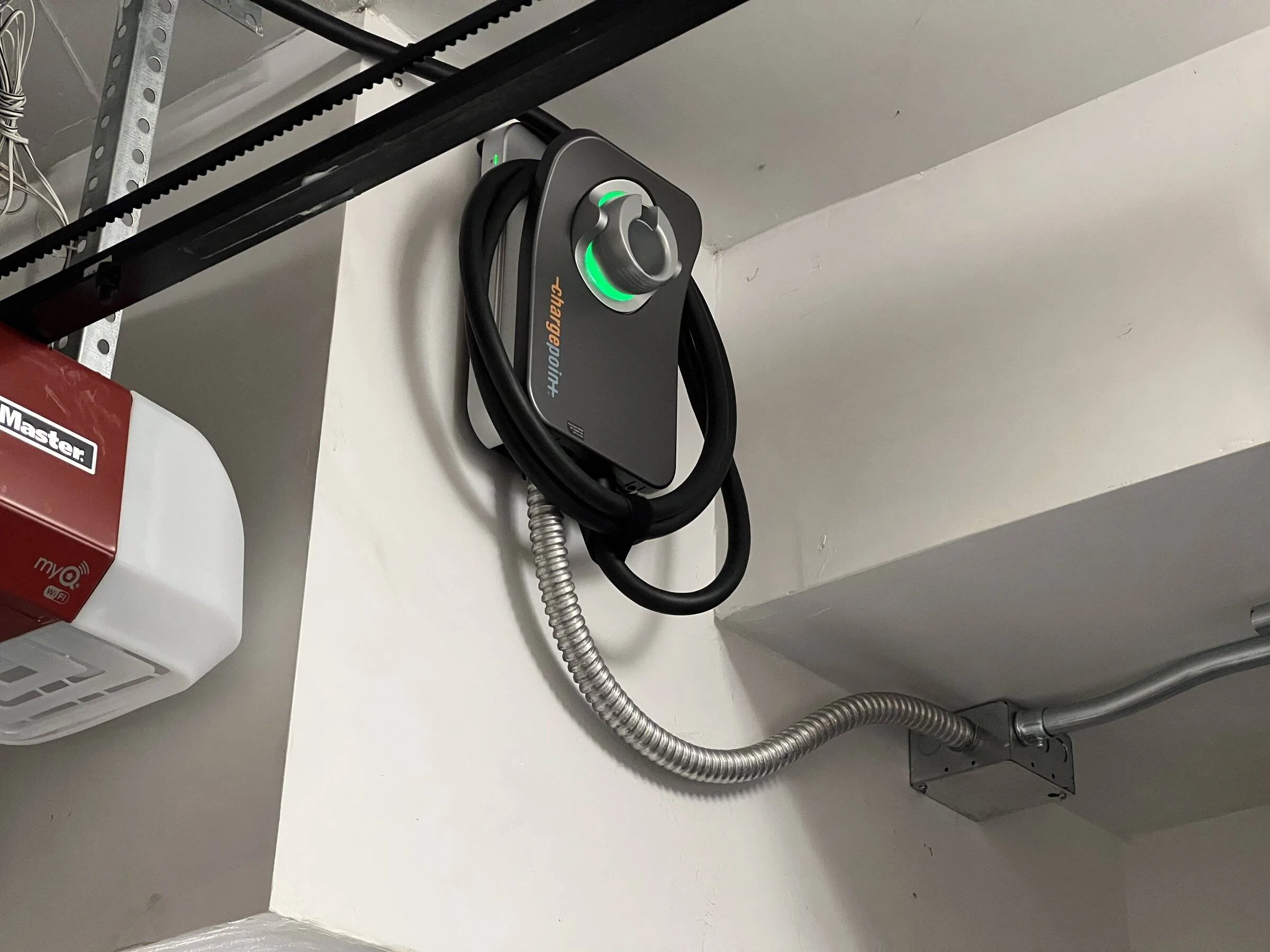
I'm curious though - why not hardwire the ChargePoint? Seems like it would be much easier. That's what I did, though I'll admit my situation is rather unique (my EVSE is installed near the ceiling of my garage since it's the only place it will fit).
Ford Mustang Mach-E A warning about 50A range cords... IMG_4621
 
OP
OP
Mach-Lee

Mach-Lee

Well-Known Member
First Name
Lee
Joined
Jul 16, 2021
Threads
262
Messages
11,344
Reaction score
24,965
Location
Wisconsin
Vehicles
2022 Mach-E Premium AWD
Occupation
Sci/Eng
Country flag
I'm curious though - why not hardwire the ChargePoint? Seems like it would be much easier. That's what I did, though I'll admit my situation is rather unique (my EVSE is installed near the ceiling of my garage since it's the only place it will fit).
IMG_4621.jpeg
Years ago when my house was built, I installed a 14-50 outlet knowing that I would probably have an EV at some point in the future. So I just wanted to use that instead of having to redo it. I also have a garage heater that I plug in sometimes.

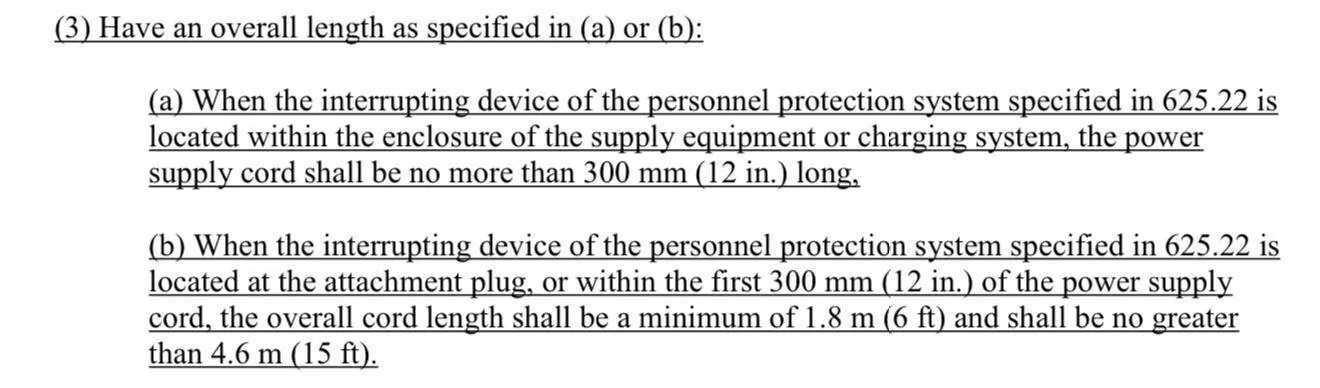
I mounted the EVSE so it’s directly in front of the charging port on the front wall of the garage. I recall the outlet had to be off to side a little because of sink pipes in the ideal location. Didn’t think it would be a big issue back then but unfortunately NEC has since limited EVSE cords from 6’ to 1’ or less, which necessitates the use of a range cord in more install situations. I wish they would amend that to 2’ so you can mount on the next stud down if needed. It would also reduce the extreme plug strain I see in some installs.
 

ZuleMME

Well-Known Member
First Name
Zule
Joined
Apr 23, 2021
Threads
10
Messages
1,018
Reaction score
1,487
Location
Denver, CO
Vehicles
21' Job1 P4X MME, 22' MYP
Occupation
Implementation Engineer
Country flag
The cords can be over 1ft per code, but the GFCI circuit must be within a foot. Seems silly, but hey…

Ford Mustang Mach-E A warning about 50A range cords... 1654457578296
 
Last edited:

dtbaker61

Well-Known Member
First Name
Dan
Joined
May 11, 2020
Threads
126
Messages
4,822
Reaction score
4,524
Location
santa fe,nm
Website
www.envirokarma.org
Vehicles
MME (delivered 2/26/21), DIY eMiata BEV
Occupation
Solar Sales/install
Country flag
I wanted to share my experience with a range cord that ended up being faulty. I had to mount my ChargePoint in a location where the included cord didn't quite reach the 14-50 outlet, so I bought a 50A range cord to use instead like others have done. I chose a GE (well-respected brand) model WX09X10037 cord, which is rated for 50A and is UL listed (again thinking that means it should be good quality). This cord has good reviews on Amazon, 4.7/5.0 with 329 ratings, and other reviewers have said they've used it successfully as an EVSE cord.

Range Cord.jpg


However after installation I noticed it would get quite warm while charging, up to 152ºF when my garage was only 70ºF! You can see the left side got quite a bit warmer than the right side, which indicates a bad connection:

20220530T073130.JPG


I also noticed my charging speed would drop from 40A to 38A after about 15 minutes of charging:

IMG_56E7B037B54F-1.jpeg


At first I thought my receptacle could have a loose connection, so I took it out and loosened/torqued everything to specs again. Still got hot, so then I replaced the receptacle with a Bryant (clone of Hubbell) 9450FR industrial-grade receptacle, torqued to specs. Alas, it still got hot, so it had to be the plug not the receptacle. So I ordered a Bryant 9452ANPB industrial-grade plug to try instead.

There is a huge difference in construction of the Bryant plug vs. the GE. The blades are much thicker and solid brass, compared to the thin, folded over blades of the GE. The attachment lugs inside are also very robust, thick metal everywhere. The plug is expensive, but you are getting what you pay for.

IMG_0807.jpg

IMG_0808.jpg

IMG_0810.jpg


After cutting the molded plug off the range cord and replacing with the Bryant plug, I can say there was a huge improvement in the plug heating! Testing the prong temperature, it barely gets warm now (100ºF) vs. the burning hot (152ºF) of the GE plug. Check your prong temps!

20220604T180912.JPG


I did some additional testing on the GE plug, and found the internal resistance of the left and right prongs to be 8 and 4 mΩ, respectively. This is far above the 1.5 mΩ threshold for a safe connection at this current level. In contrast, the internal resistance of the Bryant prongs was less than 1 mΩ, excellent.

In conclusion, there is a poor internal connection between the prongs and the wires inside the molded range cord plug head. This creates an unsafe level of heating which may have caused the connection to weaken and eventually fail. Even though this product is UL listed, it is of inferior quality and would fail the UL 817 temperature test with greater than a 54ºF rise. Reading through reviews, others have reported the same hot plug issue with this cord after finding the same internal defects, so there seems to be a lot of variation in the quality of the internal connections, not good. Therefore, I do not recommend you buy this style of range cord! This 50A cord is also sold under other brands including GE, Southwire, HDX (Home Depot), Electrolux, and Smart Choice. The plug is marked E72389-F PHILIPPINES between the prongs for reference.

In addition, after replacing the plug I no longer notice the 2A drop in charging current, and I'm getting a solid 9.5 kW now. I did some investigating and it appears that the Mach-E (not the ChargePoint) dropped the charging amperage after noticing the increased voltage drop from the poor connection heating up. Yes the internal charger (SOBDM) monitors voltage drop and responds appropriately. If you see a drop in charging amps/power a few minutes after charging starts, it's probably a clue you have a bad connection heating up somewhere and you should investigate. Thermography is a great tool for finding hot connections, but feeling with your hands (safely) also works well. Anything with more than a 45ºF temp rise above ambient should be suspect.

No more problems, I strongly recommend going with the Bryant 9450FR NEMA 14-50 receptacle and the 9452ANPB plug if you want the most robust 14-50 connection possible.

very interesting.... especially that you measured different (higher) resistance in L1/L2

I've had problems with other cords that came with molded on plugs too.... I would not recommend pulling more than 32amps thru any of them.
Sponsored


Top