Mach-Lee
Well-Known Member
- First Name
- Lee
- Joined
- Jul 16, 2021
- Threads
- 262
- Messages
- 11,344
- Reaction score
- 24,963
- Location
- Wisconsin
- Vehicles
- 2022 Mach-E Premium AWD
- Occupation
- Sci/Eng

- Thread starter
- #1
These may not get much attention from the general public, but Cybertruck does have some significant engineering achievements that will hopefully trickle down to other vehicles:


I don't like the Cybertruck, but I do hope some of these technologies can trickle down to other EVs, especially the 48V electrical system and steer-by-wire. These should have been invented already and present on cars 10+ years ago.
PART 2 UPDATE - Munro just released a video interviewing the Cybetruck engineers, and there's even more prodigious engineering on display here. I know some Munro videos are hit or miss, but this one is must-see for engineering buffs.
More details revealed:


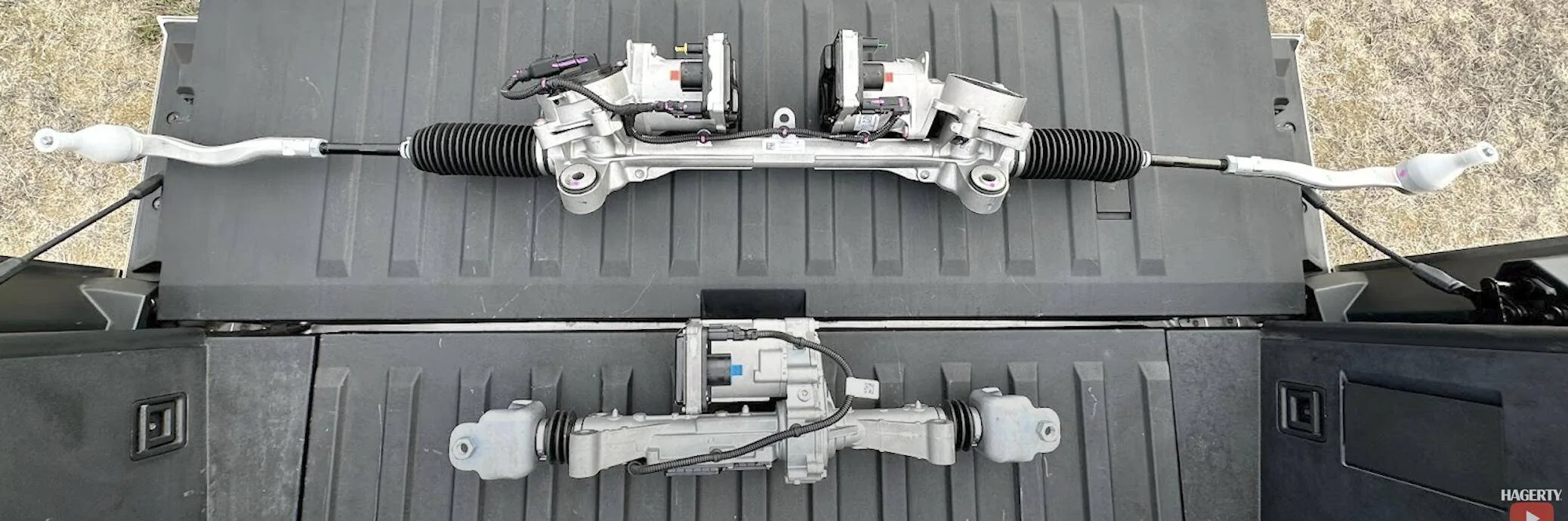
- Fully Steer-by-Wire - The steering wheel is no longer connected to the wheels, first vehicle to market like this (Lexus is also working on this, but has't been released). It is like a force feedback joystick that causes the front wheels to move. The force feedback unit provides return-to-center torque and force feedback based on detected steering load. The lack of mechanical connection also allows a variable steering ratio to be used (based on speed), and the total steering rotation is less than one turn (vs. 3-4 turns for a regular car). This means hand-over-hand steering is no longer necessary since half a turn is full left or right angle. You can turn the steering wheel when the truck is off and the wheels don't move. The required safety redundancy (that allows complete removal of a mechanical connection) is provided by two separate electric motors on the same steering column, with triple redundant sensors. This is the steering rack, I've never seen one with two motors before:
- Fully 48V LV Electrical System - The low voltage system has completely switched from 12V to 48V. There are no 12V components in the vehicle (no 12V ports either, 120V and USB-C only). This is the first vehicle in the world to fully switch to 48V, the traditional automakers have been talking about this since the 1980's but haven't been able to make it happen yet. Hopefully this is a kick in the pants. Higher voltage means the wires can be made smaller, and is also more efficient. All three steering motors draw a combined 5 horsepower at full power, which would completely overload a 12V system (300 amps). With 48V, high output steering devices are possible. I assume there is a small 48V lithium battery powering the 48V system when the truck is off.
- Distributed CAN bus architecture - Rather than having multiple CAN networks, there is a single gigabit ethernet network that connects everything in the car. This means most wire runs are extremely short and only involve a pair of power and CAN bus wires, eliminating a lot of wiring. This is in contrast to the traditional method where a body control module located in one spot has dozens of wires that run to all parts of the vehicle from it. No more thick harnesses. This is what Jim Farley was talking about when eliminating wiring waste from vehicles. Like other current Tesla models, the Cybertruck also completely eliminates the need for fuses through intelligent power control, which is still unique in the industry.
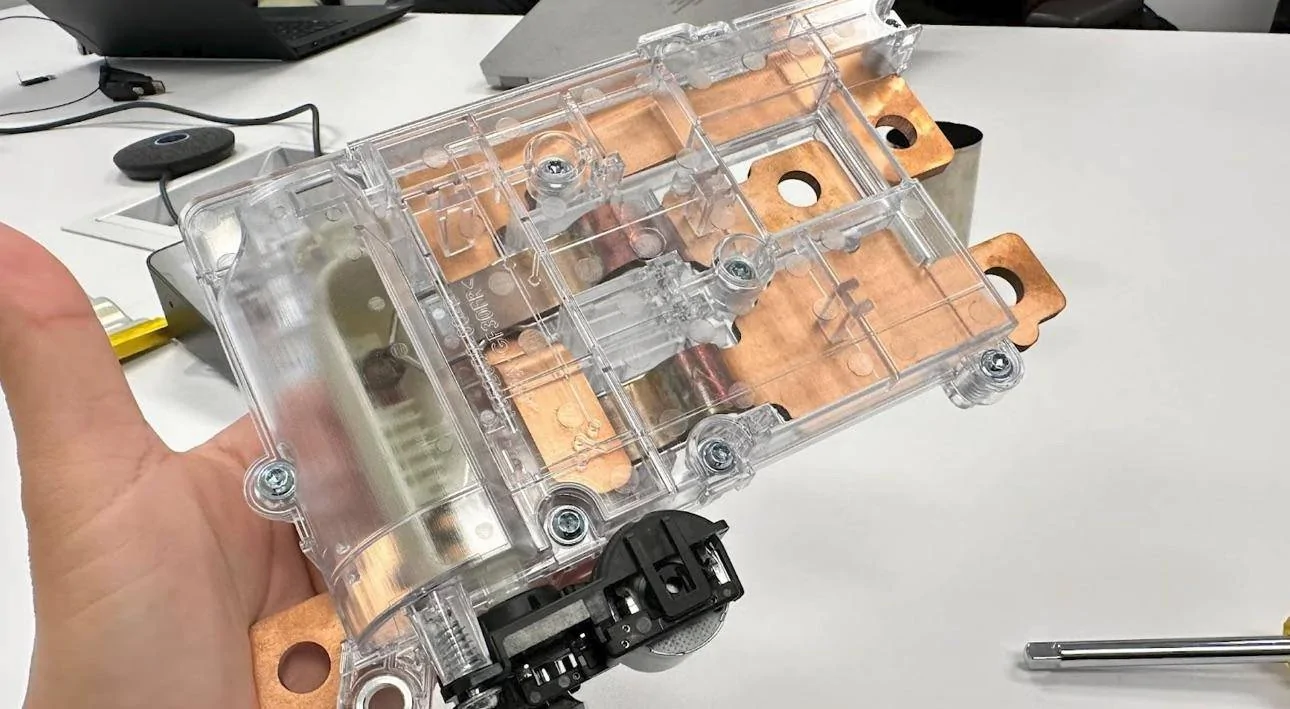
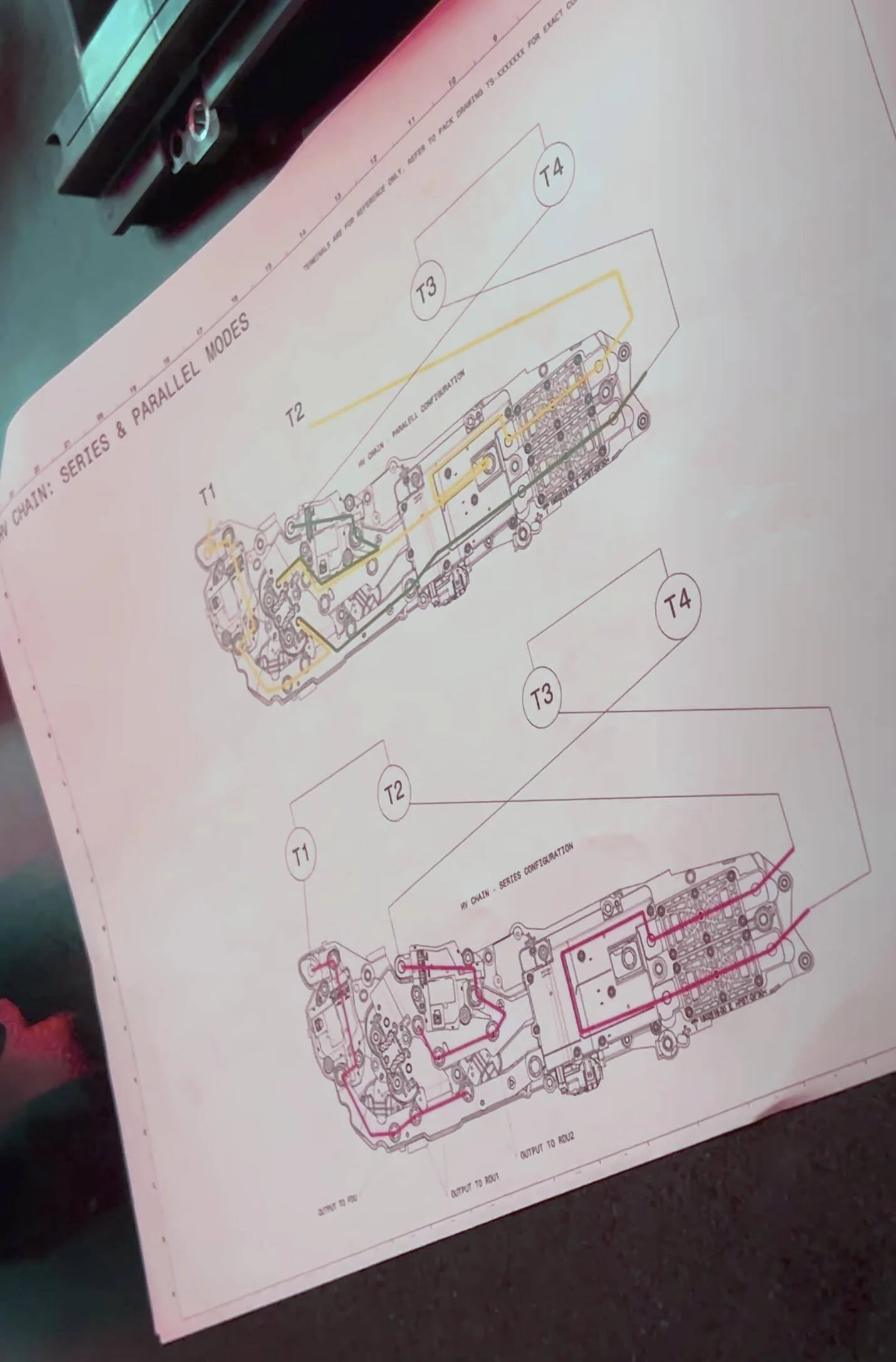
- 400V/800V switchable pack architecture - The 123 kWh battery pack normally runs in 800V mode for driving, which makes it incompatible with existing Superchargers that only go to 450V. So Tesla invented a switch that splits the pack in two, making two 400V halves in parallel while charging. This works opposite of the Hummer EV which is normally 400V and switches to 800V for charging. It's unknown whether the Cybertruck will allow 800V CCS charging, if so it could break a charging speed record. Here's the switch:
- Exoskeleton - In addition to the battery pack, the exterior body panels are also structural. This means there is no internal structure or crash bars inside the doors, and it still passes side impact tests with flying colors. The steel is extremely strong, durable, and actually bulletproof.
- Quickest pickup truck ever - The Cybertruck has beat the Rivian R1T is is now the quickest pickup truck ever, with a 0-60 of 2.6 sec and 11.0 sec @ 119 mph quarter mile. This performance is available without special battery preconditioning, and apparently unchanged with repeated runs all the down to 33% battery, which is unheard of.
- Bidirectional charging - Tesla calls this Powershare, the on-board plugs can output 9.6 kW (same as F-150 Lightning), and will also support up to 11.5 kW of power output for V2H to power your home. This will require a Powerwall. Similar to F-150 Lightning Intelligent Backup but with higher total output and less integration equipment required (provided you have a Powerwall). It's unknown whether Tesla will allow the Cybertruck to operate in V2G mode with Autobidder software and sell power back to the grid when it's profitable. If this were possible you could make hundreds of dollars per month, since the Cybertruck has the capacity of 9x Powerwalls.
- Largest Windshield and Wiper - At 4 feet long, the blade is the longest ever produced. It is a single blade. The huge windshield is also the largest ever mass produced. The wiper actually changes angle slightly while driving to improve the aerodynamics at different speeds (a form of active aero). When the wiper is on, it parks at the bottom of the windshield instead.
I don't like the Cybertruck, but I do hope some of these technologies can trickle down to other EVs, especially the 48V electrical system and steer-by-wire. These should have been invented already and present on cars 10+ years ago.
PART 2 UPDATE - Munro just released a video interviewing the Cybetruck engineers, and there's even more prodigious engineering on display here. I know some Munro videos are hit or miss, but this one is must-see for engineering buffs.
More details revealed:
- 48V System - You can actually jump start the 48V Cybertruck with a 12V battery, thanks to a built in boost converter that ups the voltage from 12V to 48V!
- EtherLoop - There's a single gigabit ethernet network that is arranged in a loop, through which all vehicle communications pass through. If the loop is cut anywhere, then the signals will travel the other way around the loop to reach their endpoints. Audio to each speaker also flows around on the same network as vehicle communication. 368 total endpoints in the system. 68% reduction in the number of cross car wires with this setup. Cybertruck also uses active noise cancellation (to cancel out road noise) microphone signals also flow over the EtherLoop network for processing.
- HFS "Hard Freakin' Stainless - Special cold rolled steel alloy designed to be extra durable and corrosion resistant. Tesla has a special process called "Air Bending" to form the panel that uses a compressed air cushion to prevent cosmetic defects.
- Largest door ring - The door ring (door openings) is made of a single inner and outer piece (boron steel) stamped and spot welded together with minimal finishing (power coating).
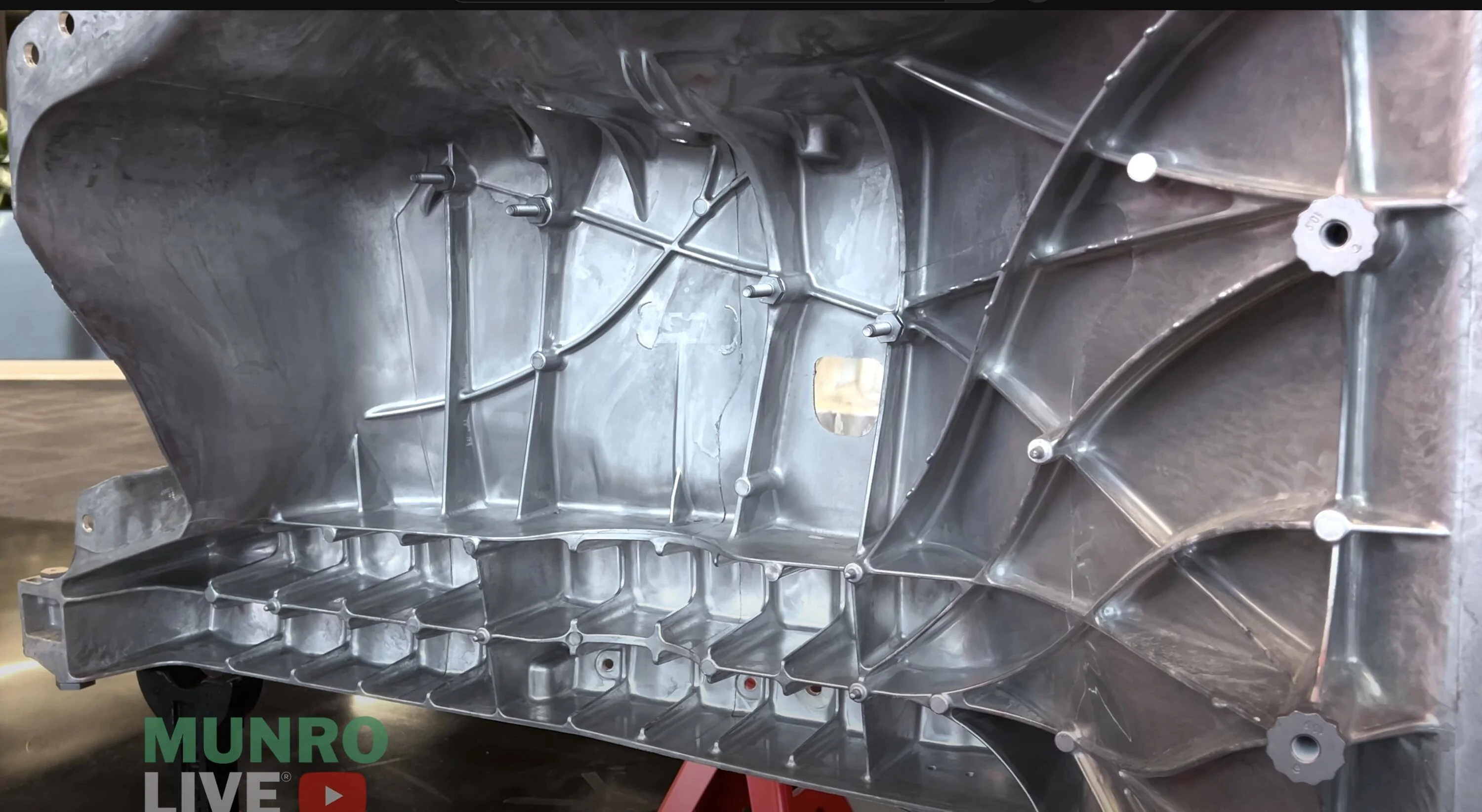
- CFD optimized castings - The flow of metal into the single large front and rear castings is optimized with computational fluid dynamics to reduce the tonnage of the press required. This means they can use their existing Model Y presses for the front casting. The curved strengthening ribs are designed with casting flow in mind rather than being purely structural like contemporary diamond strengthening. In this sense the CFD ribs are dual purpose (serves as a casting flow channel and for structural strengthening). Very smart idea. Form meets function.
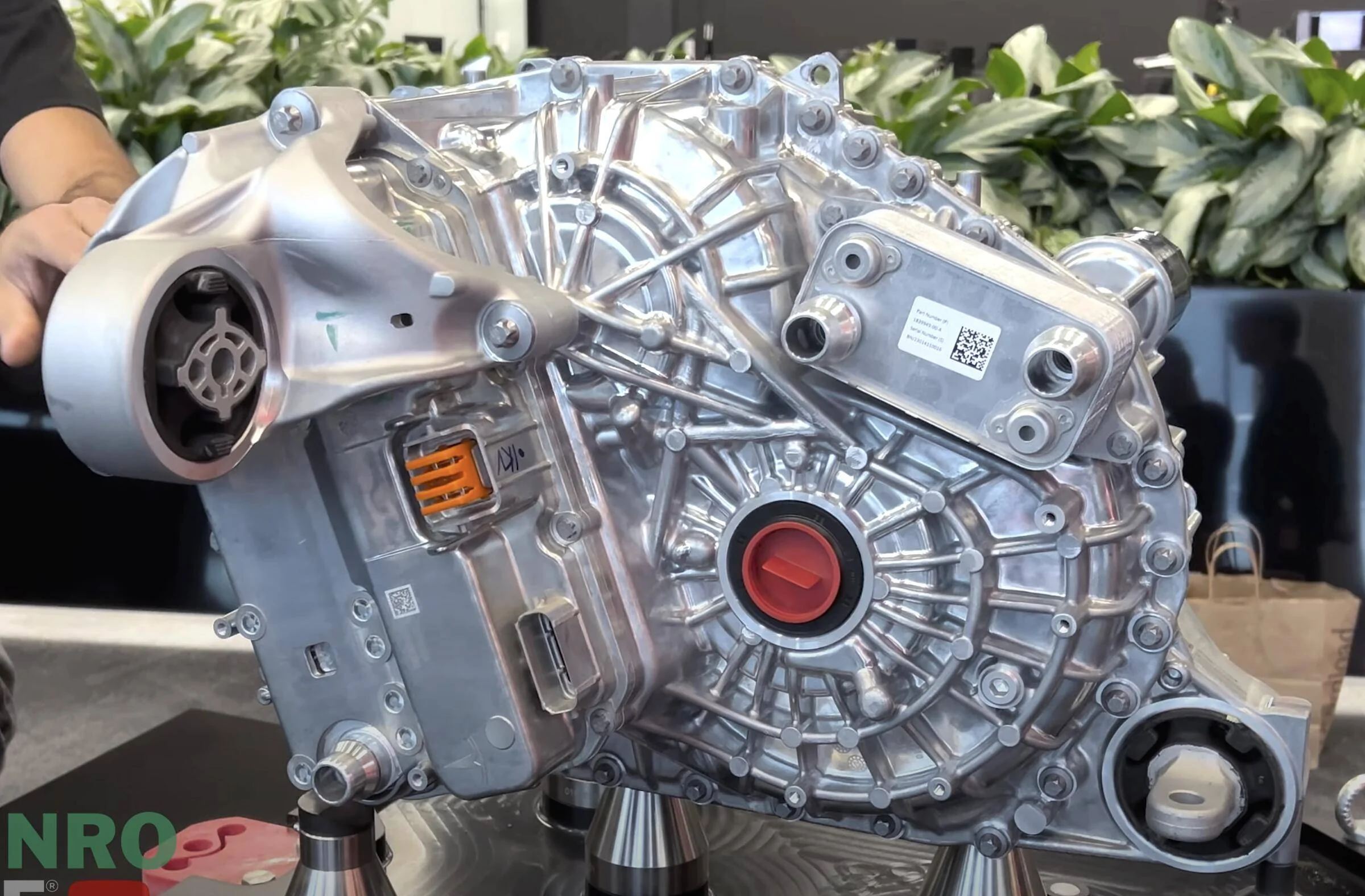
- Motor platform commonality - All the motors in all the configurations (RWD, dual, tri motor) of the cybertruck share the same parts. They're all mix and match confutations of one permanent magnet (PM) rotor, one inductive magnet (IM) rotor, one inverter, one gear reduction. Unlike the Mach-E which has completely different front and rear motors, inverters, gear reductions, etc. All Cybertrucks have on PM motor, and additional motors are inductive to reduce idle torque losses for efficiency.
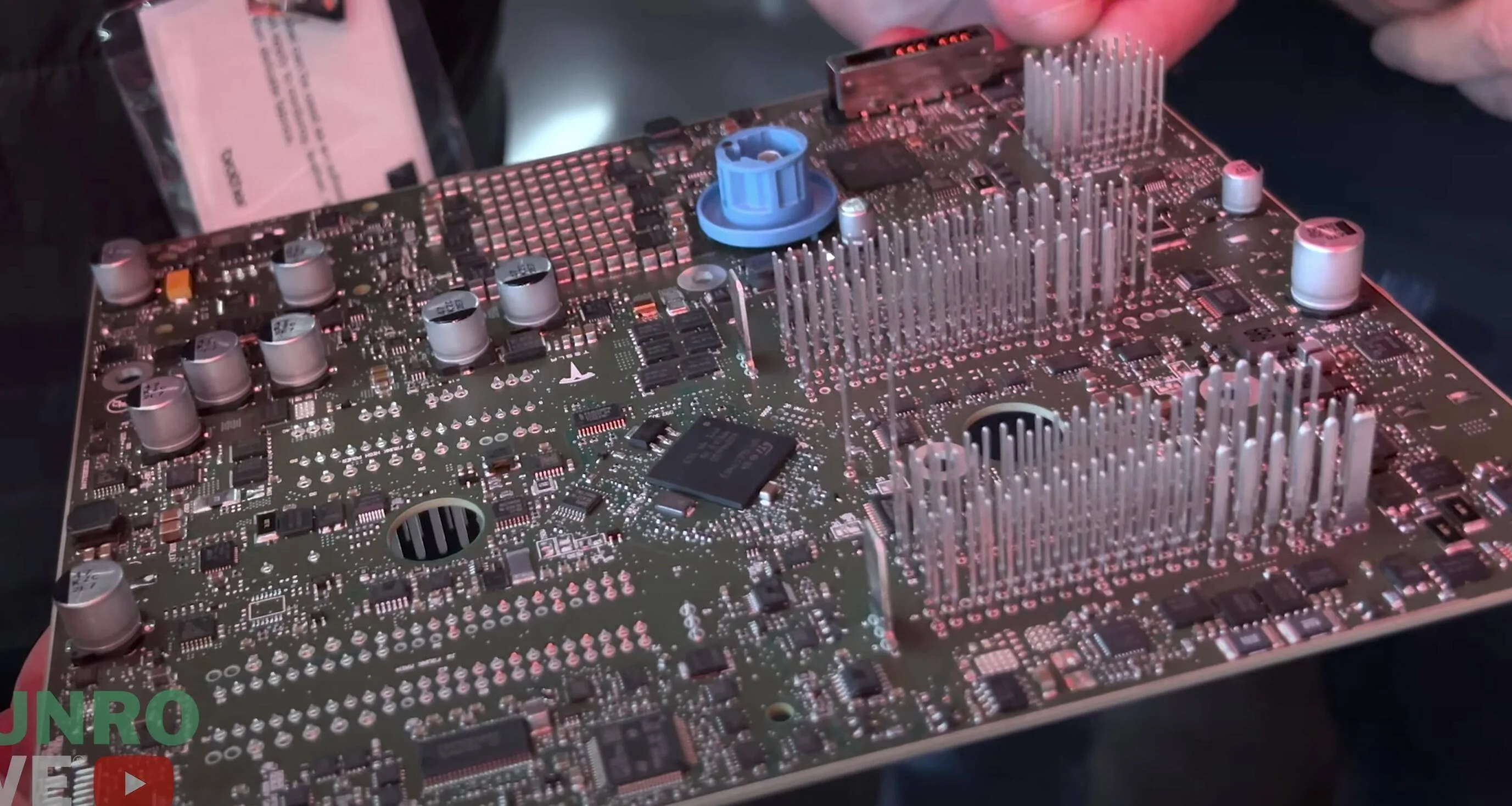
- Body controller - Mounted to the firewall and has harness connections on both sides (inside and outside). Eliminates the need for wires to pass through the firewall with grommets. Ethernet controlled is integrated on this board, as well as the motor controls for wipers, windows, etc and audio amplifiers all on the same board. The connectors are integrated into the module cover so there isn't a separate part.
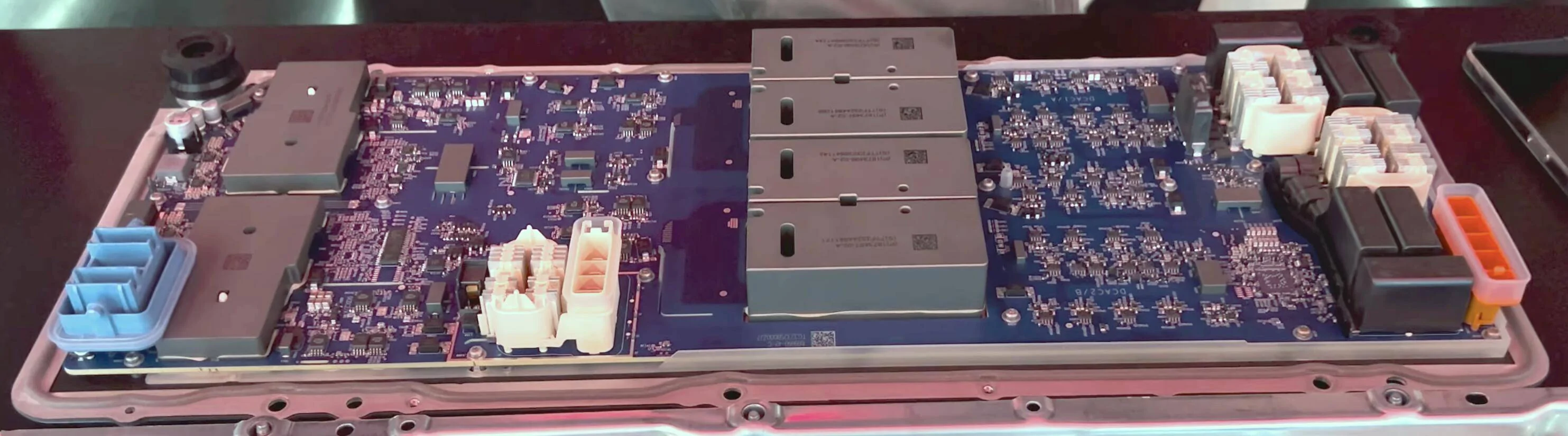
- New Power Conversion Board - It is a 11.5 kW bidirectional charger and 3 kW 48V DC/DC converter all in one. Personally I was blow away at how small this is. 100% smaller than before. All the components are surface mount including the magnetics! You can power your house with the full 11.5 kW through the charge port. 110 amps (25 kW?!) of inrush capability, which can start your large home A/C compressor! Or charge another EV.
- 400V/800V Series/Parallel switch - I mentioned this above, but they have additional diagrams that shows how it works. One thing they added is that all the high voltage accessory components like the A/C compressor will also run on 400V when the pack is in that mode during charging.
- Steer by wire rack - Dual motors sized to handle 60% of the peak load. Rear rack motor is the same design as well for commonality. Designed for sensor diversity as well, one side has an angle sensor, the other side a position sensor so there are two different redundant sensing methods. Both front and rear rack designed by the same person. 340º lock-to-lock steering angle.
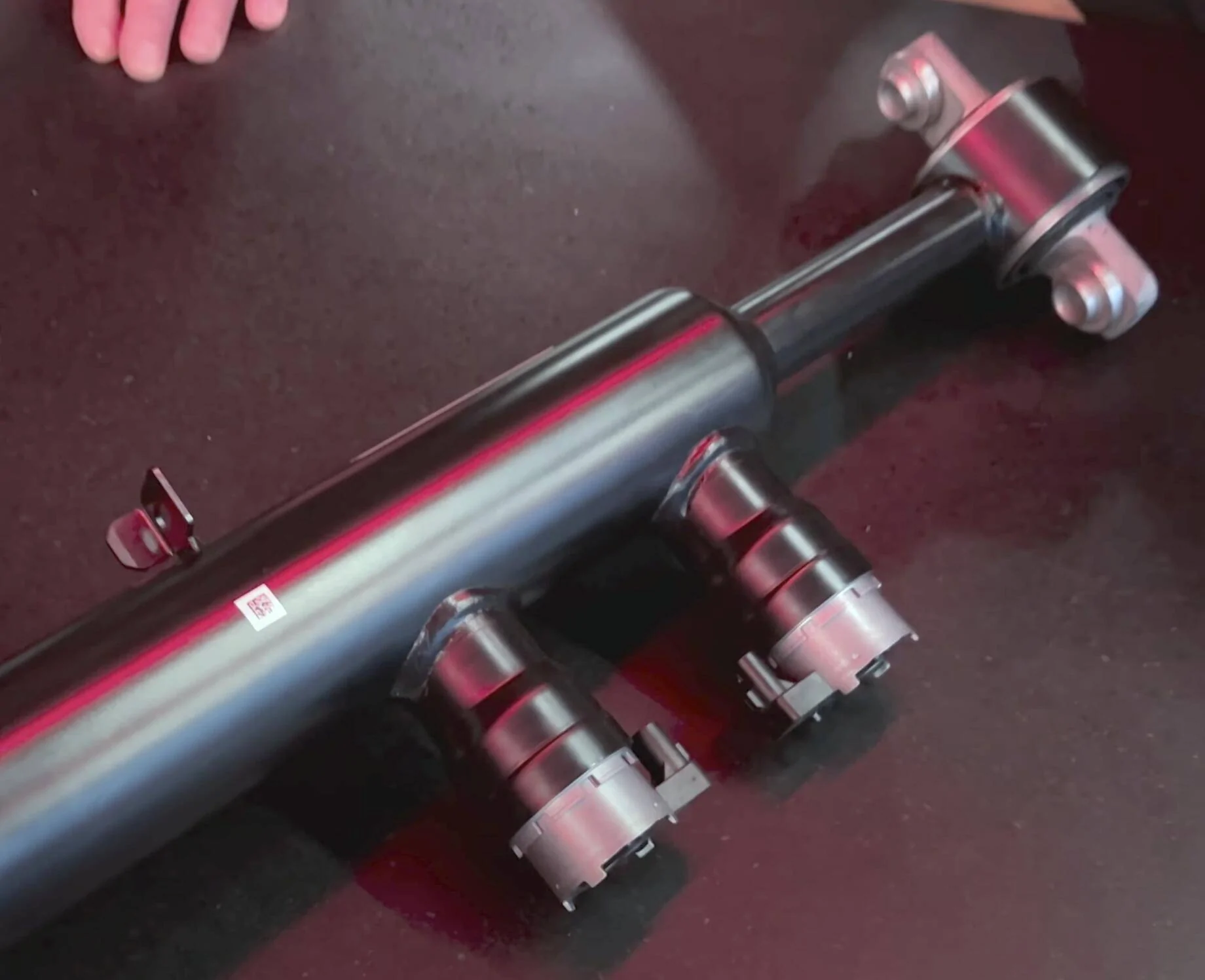
- Independent compression and rebound damping control - The suspension struts have independent compression and rebound valves that can be adjusted every 10 ms. Sort of like MagneRide but way beefier for off-road use. Can precisely control ride, body dynamics, and roll characteristics.
- 4680 Dry Cell Pack - 9% higher energy density compared to Model Y, dry cell technology for more efficient and cheaper manufacturing.
Sponsored
Last edited: