Why so slow on Level 2?

Murse-In-Airy

Well-Known Member
First Name
Rod
Joined
Mar 5, 2021
Threads
82
Messages
3,678
Reaction score
8,297
Location
Chaumont, NY
Vehicles
Mach-E ER AWD
Occupation
Nurse
Country flag
How many kWh you add to the battery per hour is your charger. How many miles you get out of those kWh is up to the car’s efficiency (less than the Tesla) and your driving. So if we’re concerned about the charger, we shouldn’t be talking miles/hour added.
Sponsored
 

ChasingCoral

Well-Known Member
First Name
Mark
Joined
Feb 3, 2020
Threads
502
Messages
14,306
Reaction score
28,654
Location
Maryland
Vehicles
2021 GB E4X FE, 2022 F-150 Lightning Lariat ER
Occupation
Retired oceanographer
Country flag
It seems like a 48 Amp charger should work fine on a 60 Amp breaker. I am planning out my wiring for when my MME arrives and want to future proof it. I was planning for a 60 Amp circuit for the future while primarily charging with a 240 VAC / 40 Amp non Ford charger. Do I really need to run a 100 Amp circuit? Maybe that is best. The wire just keeps getting thicker...
For the Mach E you are absolutely right. The maximum charge rate it can take is satisfied by a 48A EVSE, which requires a 60A circuit.

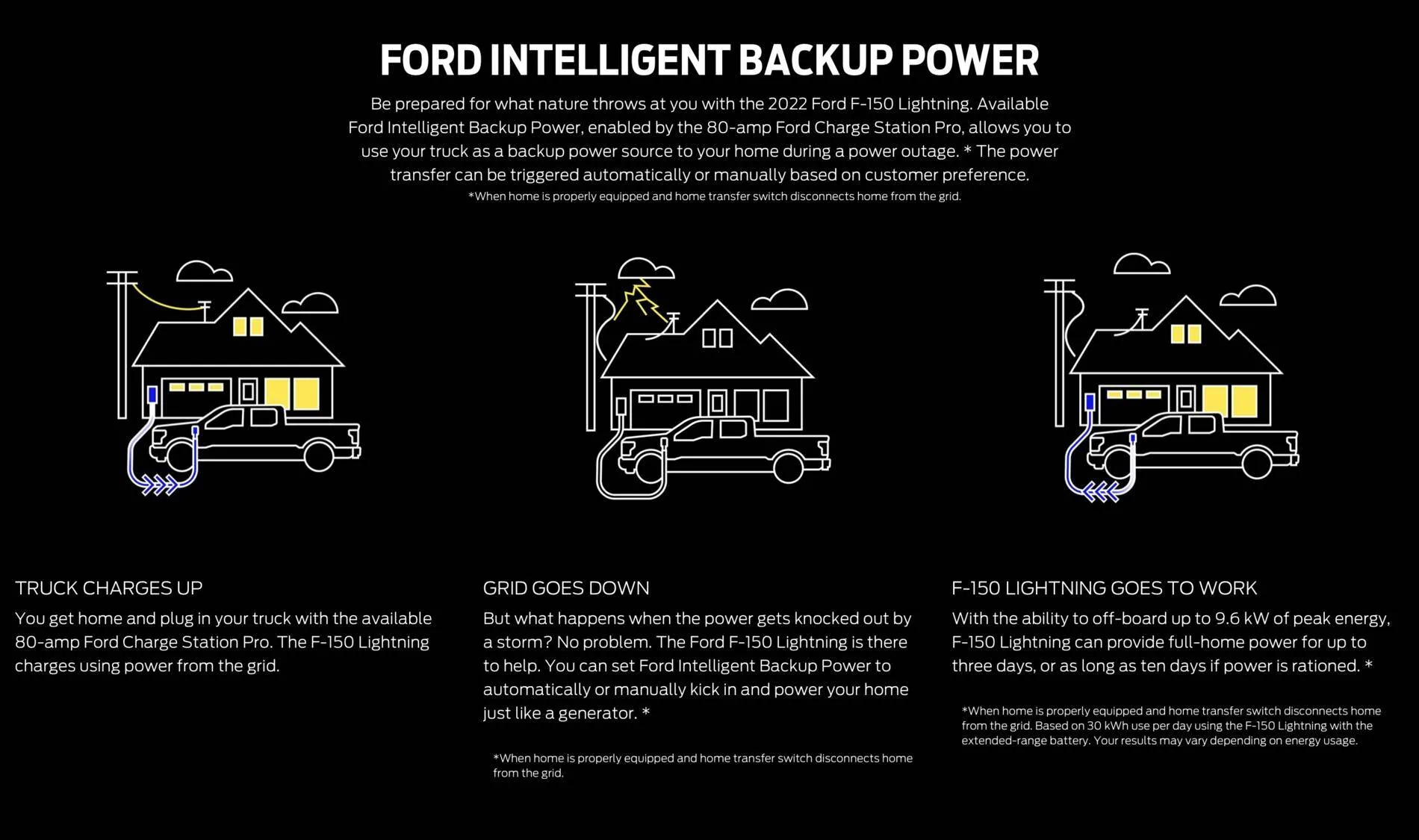
Now let's stray to your mention of a Lightning. Do you want to be able to take advantage of the Lightning's ability to provide backup power for your house?
Ford Mustang Mach-E Why so slow on Level 2? Screen Shot 2021-06-05 at 6.15.12 PM

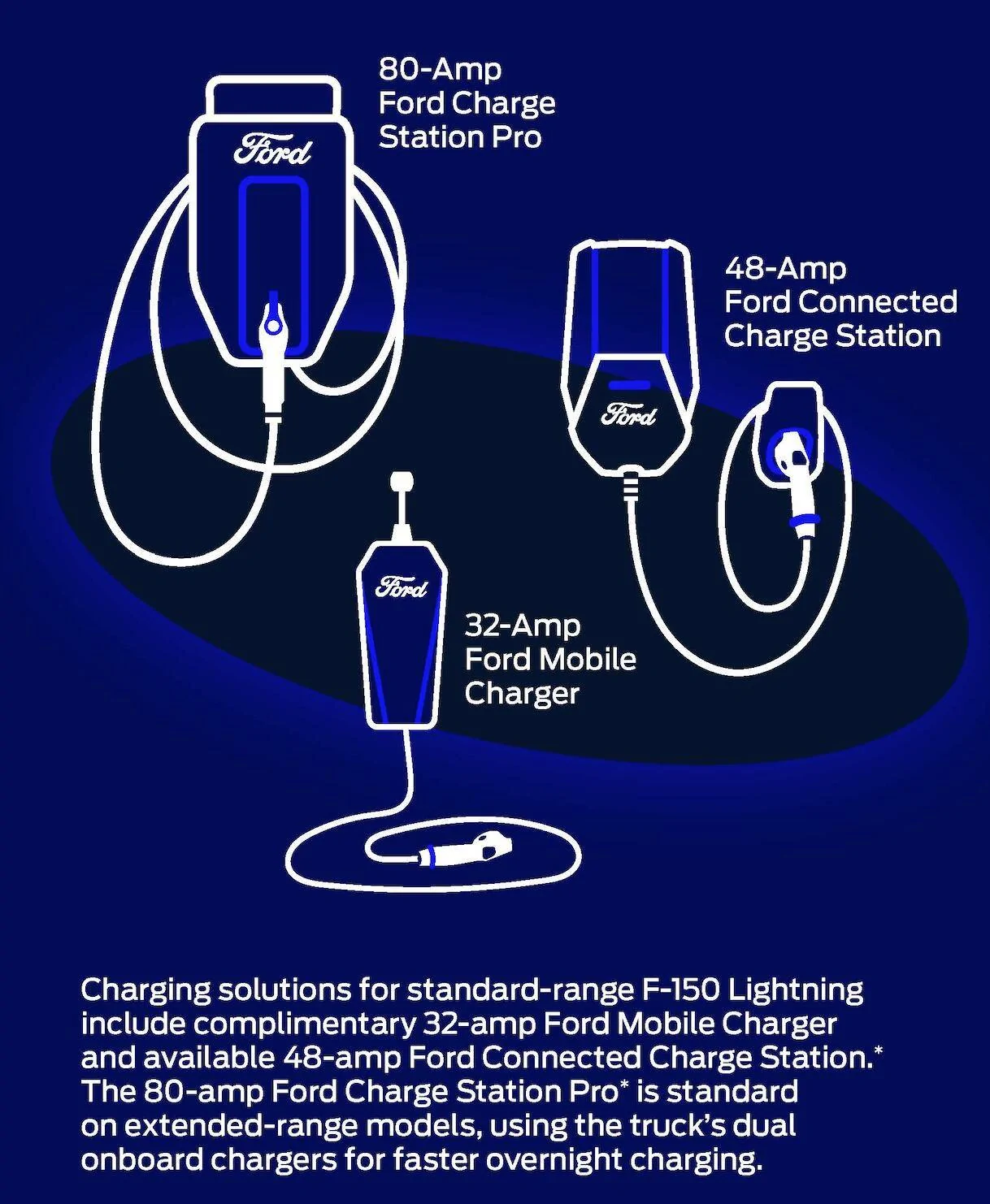
If so, you will need to install the 80A Ford Charge Station Pro.
Ford Mustang Mach-E Why so slow on Level 2? Screen Shot 2021-06-05 at 6.16.34 PM


That will require a 100A circuit.

So, the question you want to ask yourself is do you want to pay for a 60A circuit now and then have the electrician put in a 100A circuit in a year or do you want to take care of it in one shot. Your choice.

If it were me, I'd future proof and put in the 100A now unless there were some major additional cost I was trying to avoid like upgrading my panel or service.
 

Shayne

Well-Known Member
Joined
Aug 9, 2020
Threads
18
Messages
3,824
Reaction score
2,738
Location
Northern Ontario Canada
Vehicles
2021 MME4x Prem
Occupation
Retired
Country flag
If it were me, I'd future proof and put in the 100A now unless there were some major additional cost I was trying to avoid like upgrading my panel or service.
Someone should bite the bullet and install a 250 KW DCFC at their home. That will give them the bragging rights.

A 240 V 50 amp breaker with Nema 14-50 plug works on many chargers including fords mme mobile (40 amp grizzle extreme now plugged in here). With a 10 hour 0 to 100% charge time and not going from 0 to 100% too often it is more than ample for most to get them to the percentage required the next morning. Slower charging may be is better on a battery also.

My dealer finally received their Ford charger last week which is hardwired. Had to smile as they waited a year for the charger from ford when all they needed was a 240V plug and my mobile. They have been using 120V until last week and could not fill mine up when I received it as there is nowhere to charge it around here (completely understand just set up a charging schedule when I get home ?). I mentioned 4 250 KW DCFC is what they will need and they could make money with them up here if 2 installed soon. They noted they will wait for some incentive from Ford. A network of DCFC's at all ford stations would be nice. 40A at home is more than enough for us and should be for most if they sleep.
 

RonTCat

Well-Known Member
First Name
Ron
Joined
Jul 21, 2020
Threads
27
Messages
1,135
Reaction score
2,979
Location
USA
Vehicles
Mach-E wannabuy
Country flag
"Miles Per Hour" of charging is based on the actual energy put into the vehicle in an hour (e.g. kWh) divided by the "efficiency" of the vehicle (e.g. how many miles can it travel on a kWh). A Model 3 is substantially more efficient than the Mach-e, so it goes further on the same amount of energy. Thus (assuming the amount of energy delivered to each vehicle is roughly the same), the "miles per hour" for a Model 3 will be higher than for a Mach-e.
This is some of it, but...

If your Tesla reports 30 miles of range added per hour, shows it has 300 miles more range after 10 hours, but you drive it and it only goes 220 miles, then it REAL charge rate is 22 miles added per hour. Since Tesla grossly overestimates it's vehicle range compared to all the other BEV makers, this likely the primary reason for the difference. A model 3 is more aerodynamic than most BEV, so it does have a slight usage rate advantage.

At the end of the day, the battery composition and cooling dictate charge rate. Tesla is not materially different than any BEV in these areas, so the "real life" charge rate is not much different.


Killroy

Member
Joined
Jun 6, 2021
Threads
0
Messages
14
Reaction score
10
Location
California
Vehicles
Zero SR, Chevy Volt
Occupation
Engineer
Country flag
This really highlights the importance of efficiency.
 

mkhuffman

Well-Known Member
First Name
Mike
Joined
Nov 19, 2020
Threads
29
Messages
6,875
Reaction score
9,507
Location
Virginia
Vehicles
2025 Rivian R1T Tri-Max, Jeep GC-L, VW Jetta
Country flag
For the Mach E you are absolutely right. The maximum charge rate it can take is satisfied by a 48A EVSE, which requires a 60A circuit.

Now let's stray to your mention of a Lightning. Do you want to be able to take advantage of the Lightning's ability to provide backup power for your house?

If so, you will need to install the 80A Ford Charge Station Pro.

That will require a 100A circuit.

So, the question you want to ask yourself is do you want to pay for a 60A circuit now and then have the electrician put in a 100A circuit in a year or do you want to take care of it in one shot. Your choice.

If it were me, I'd future proof and put in the 100A now unless there were some major additional cost I was trying to avoid like upgrading my panel or service.
This system will require a 60amp 240V dedicated circuit to get a 48A charge rate.
Unfortunatly you cant pull the full 60A due to code regulations here in the USA that set limits on the amount of amps that you can continuously pull on a branch circuit.

For the ford OEM wall charger you will only need a 60amp branch circuit to get the full 48amps but that being said that is just the minimum that the NEC here in the USA specifies there is nothing saying that you cant over spec a circuit to what ever you want. But the limiting factors boil down to what amperage you have available at the service panel and how much extra you want to shell out.

That being said you still may want to put in a 120A circuit to 'future proof' your installation incase your thinking of having 2 BEVs that require a 48amp charger each.
(NEC article 210.19(A)(1)(a) for a more in depth explanation)
I think I prefer a NG generator backup, so I can continue to charge my MME (or other BEV) during a power outage. But it is a really good point because using a BEV to power the home is a cool idea.

If you run two 60 Amp circuits you can charge 2 BEVs, but I don't think those circuits can be "combined" into one 120 Amp circuit for BEV house powering purposes. One 120 Amp circuit would serve both purposes: charge two BEVs simultaneously and power the house in a blackout.

I might run a 120 Amp circuit just in case I change my mind about the powering the house.

Thanks for the insight! It helps to figure out the best way to proceed.
 

ChasingCoral

Well-Known Member
First Name
Mark
Joined
Feb 3, 2020
Threads
502
Messages
14,306
Reaction score
28,654
Location
Maryland
Vehicles
2021 GB E4X FE, 2022 F-150 Lightning Lariat ER
Occupation
Retired oceanographer
Country flag
I think I prefer a NG generator backup, so I can continue to charge my MME (or other BEV) during a power outage. But it is a really good point because using a BEV to power the home is a cool idea.

If you run two 60 Amp circuits you can charge 2 BEVs, but I don't think those circuits can be "combined" into one 120 Amp circuit for BEV house powering purposes. One 120 Amp circuit would serve both purposes: charge two BEVs simultaneously and power the house in a blackout.

I might run a 120 Amp circuit just in case I change my mind about the powering the house.

Thanks for the insight! It helps to figure out the best way to proceed.
Ford is advertising that the Lightning will be able to power a home for 3 days, 10 with rationing. You can run the house for a few days, drive to a DCFC for a 40 minute charging session and be ready for a few more days. In our areas, power outages don't tend to hit 100% of a region and stay that way for more than a day or two. Commercial electricity (think Walmarts where EA stations are located) is usually up within a day. Residential electricity is what usually takes days to restore.
 

bobh

Active Member
First Name
Bob
Joined
May 25, 2021
Threads
2
Messages
37
Reaction score
21
Location
Newton, MA
Vehicles
Mustang MachE
Occupation
retired
Country flag
It seems like a 48 Amp charger should work fine on a 60 Amp breaker. I am planning out my wiring for when my MME arrives and want to future proof it. I was planning for a 60 Amp circuit for the future while primarily charging with a 240 VAC / 40 Amp non Ford charger. Do I really need to run a 100 Amp circuit? Maybe that is best. The wire just keeps getting thicker...
I used a Ford charging station that puts out 48 Amps. My electrician installed a 60 Amp fuse as suggested by Ford. When I charge at full power I get about 30 Miles per hour of charge. I will set the charge to 30 Amps if I am not in a hurry as that create no fan noise wheel the car is charging. The cooling fan on the battery seems to run constantly at 48 Amps, although it is not very loud.
 

mkhuffman

Well-Known Member
First Name
Mike
Joined
Nov 19, 2020
Threads
29
Messages
6,875
Reaction score
9,507
Location
Virginia
Vehicles
2025 Rivian R1T Tri-Max, Jeep GC-L, VW Jetta
Country flag
Ford is advertising that the Lightning will be able to power a home for 3 days, 10 with rationing. You can run the house for a few days, drive to a DCFC for a 40 minute charging session and be ready for a few more days. In our areas, power outages don't tend to hit 100% of a region and stay that way for more than a day or two. Commercial electricity (think Walmarts where EA stations are located) is usually up within a day. Residential electricity is what usually takes days to restore.
Good points. Our power failures are rare and usually don't last very long. Three days of power will cover 99% of the time we are out. The only exception is a big hurricane, which would knock out the power over a wide area. I agree they get Walmart back on-line first, but my town (Williamsburg, VA) does not have any DCF chargers that I am aware of.

Isabel was the last big one here and we were out for over five days. That sucked because I did not have a generator then. Now I have a small portable generator, and I am planning to get a whole house NG generator probably this year. In any case, I am not planning to buy a Lightening (at least as of today) and the MME can't power my house at all.
 

mkhuffman

Well-Known Member
First Name
Mike
Joined
Nov 19, 2020
Threads
29
Messages
6,875
Reaction score
9,507
Location
Virginia
Vehicles
2025 Rivian R1T Tri-Max, Jeep GC-L, VW Jetta
Country flag
I used a Ford charging station that puts out 48 Amps. My electrician installed a 60 Amp fuse as suggested by Ford. When I charge at full power I get about 30 Miles per hour of charge. I will set the charge to 30 Amps if I am not in a hurry as that create no fan noise wheel the car is charging. The cooling fan on the battery seems to run constantly at 48 Amps, although it is not very loud.
If the fans come on at 48 Amps, then maybe it is better to stress the battery less and charge at 30 Amps anyway (if you can wait, of course). It is true that charging faster causes more battery damage, but I never thought the difference between 30 Amps and 48 Amps would be as significant as it sounds like it is. Interesting.
 

ChasingCoral

Well-Known Member
First Name
Mark
Joined
Feb 3, 2020
Threads
502
Messages
14,306
Reaction score
28,654
Location
Maryland
Vehicles
2021 GB E4X FE, 2022 F-150 Lightning Lariat ER
Occupation
Retired oceanographer
Country flag
Good points. Our power failures are rare and usually don't last very long. Three days of power will cover 99% of the time we are out. The only exception is a big hurricane, which would knock out the power over a wide area. I agree they get Walmart back on-line first, but my town (Williamsburg, VA) does not have any DCF chargers that I am aware of.

Isabel was the last big one here and we were out for over five days. That sucked because I did not have a generator then. Now I have a small portable generator, and I am planning to get a whole house NG generator probably this year. In any case, I am not planning to buy a Lightening (at least as of today) and the MME can't power my house at all.
You're limited to about 1.9 kW of electricity off the MME. Check PlugShare. You have a free 50kW charger close and EA fast chargers by the airport.
 
Last edited:

engnrng

Well-Known Member
First Name
Bruce
Joined
Feb 8, 2020
Threads
9
Messages
579
Reaction score
826
Location
SoCal
Vehicles
2022 GTPE, Kona EV, 2023 BMW iX
Occupation
Engineer
Country flag
If the fans come on at 48 Amps, then maybe it is better to stress the battery less and charge at 30 Amps anyway (if you can wait, of course). It is true that charging faster causes more battery damage, but I never thought the difference between 30 Amps and 48 Amps would be as significant as it sounds like it is. Interesting.
Sorry to quibble, but it is not really "damage", but rather aging within the cells. Kind of like your body: if subjected to high stress over long periods of time, your body tends to age more quickly, and that "damage" is at the "cellular" level also...
 

RonTCat

Well-Known Member
First Name
Ron
Joined
Jul 21, 2020
Threads
27
Messages
1,135
Reaction score
2,979
Location
USA
Vehicles
Mach-E wannabuy
Country flag
This really highlights the importance of efficiency.
It highlights the fact efficiency will matter to 1% of buyers, and styling to the other 99%. The efficiency difference between current BEV powertrains from various manufacturers is almost negligible, and insignificant to almost all vehicle buyers. Tesla just chose the bland aero design because they needed to squeak out any range possible at the expense of styling, and being the only game in town, ugly don't matter. People bought "because BEV". Once battery technology makes the next big storage capacity jump, even Tesla will make stylish vehicles and not just go with the most aerodynamic design. If they don't, everyone will eat their lunch.
 

Killroy

Member
Joined
Jun 6, 2021
Threads
0
Messages
14
Reaction score
10
Location
California
Vehicles
Zero SR, Chevy Volt
Occupation
Engineer
Country flag
It highlights the fact efficiency will matter to 1% of buyers, and styling to the other 99%. The efficiency difference between current BEV powertrains from various manufacturers is almost negligible, and insignificant to almost all vehicle buyers. Tesla just chose the bland aero design because they needed to squeak out any range possible at the expense of styling, and being the only game in town, ugly don't matter. People bought "because BEV". Once battery technology makes the next big storage capacity jump, even Tesla will make stylish vehicles and not just go with the most aerodynamic design. If they don't, everyone will eat their lunch.
I agree that image and styling is very important for car purchase. Styling is also a very personal choice.

I don't know what % of buyers care about efficiency, but I would like to see the data on it.

There are some real vehicle limitations when it comes to efficiency. If one is trying to match range with another vehicle, but the efficiency is not as good, well then you pay for more battery cells, weight grows, space decreases and if battery sell production is limited, thenthat would result in fewer cars procuced/ sold. Good vehicle design is a balance of many qualities that are interrelated.
Sponsored

 
Last edited:


Top