
80% charge or 90% charge for daily use?

RickMachE

Well-Known Member
Joined
Jul 1, 2021
Threads
267
Messages
17,912
Reaction score
27,889
Location
SE MI
Vehicles
2022 Mach-E Premium 4X, 2022 Lightning Lariat ER
Country flag
Some people baby their ICE cars, change oil every 3 months, rotate tires etc etc. usually in the hope of their car lasting longer. Those same people would find it helpful to understand something about their battery lifespan Since it’s relatively new to them.
Many people change their oil long before it's needed. Some still think they have "break-in oil", and change it before 1,000 miles. Many change every 3,000 miles even though manufacturers like Ford have features in the vehicle that tell them when the change is necessary. These people don't do oil analysis, they rely on crap that they've been told decades ago, or their friend Rob who worked at a car manufacturer, or what some video they watched on Youtube said. They don't read manuals, don't trust manufacturers, etc.

Learn? They don't want to learn.
Sponsored


Guss-E 2021

Well-Known Member
First Name
Pierre
Joined
Aug 12, 2021
Threads
67
Messages
1,895
Reaction score
2,327
Location
New Hampshire
Vehicles
2022 Mach-E Prem AWD ER
Occupation
Compliance Specialist
Country flag
I default to 90%. I will charge to 100% for longer drives as is expected. Keep in mind you are already limited on how much of the battery you can use. You will most likely make it until the end of both your loan and warranty. ?
 

kennethjk

Well-Known Member
First Name
Ken
Joined
Sep 3, 2021
Threads
30
Messages
3,331
Reaction score
2,124
Location
NY
Vehicles
MME Prem. EB 4WD, X3, IX50
Occupation
Retired
Country flag
Many people change their oil long before it's needed. Some still think they have "break-in oil", and change it before 1,000 miles. Many change every 3,000 miles even though manufacturers like Ford have features in the vehicle that tell them when the change is necessary. These people don't do oil analysis, they rely on crap that they've been told decades ago, or their friend Rob who worked at a car manufacturer, or what some video they watched on Youtube said. They don't read manuals, don't trust manufacturers, etc.

Learn? They don't want to learn.
All true. But hey it makes them feel good , let them enjoy
 

Guss-E 2021

Well-Known Member
First Name
Pierre
Joined
Aug 12, 2021
Threads
67
Messages
1,895
Reaction score
2,327
Location
New Hampshire
Vehicles
2022 Mach-E Prem AWD ER
Occupation
Compliance Specialist
Country flag
I wonder how many of the “I only charge once a week or less” people got the extended range ?.
I charge to 85% every day. Thats enough to comfortably make two trips to work if I forget to plug it in one day (or if the car doesn’t feel like charging lol). If you live somewhere very cold or very hot, it’s best to plug it in every day even if it’s not charging (set you limit).
DOH! (awkwardly raises hand). Though I made two trips this summer that required charging away from home. The extra range made hunting for a working fast charger stress free - I needed miles to make it home but had plenty of range left when I arrived at my destination.


DevSecOps

Well-Known Member
First Name
Todd
Joined
Sep 22, 2021
Threads
69
Messages
4,764
Reaction score
11,624
Location
Sacramento, CA
Vehicles
'21 Audi SQ5 / '23 Rivian R1T / '23 M3P
Occupation
CISO
Country flag
I don't think charging daily is the best for the car.
Says who? Where is a scientific study on that? How did you form this opinion?
I showed you mine, what is yours, oh vast traveler and DCFCer?
Ok so the way that number works is your vehicle, off the line starts with 100%. You are currently down to 96% of battery capacity meaning that over the last year you lost 4% via degradation. It's not a number that fluctuates... it just goes down, unfortunately.

Millage isn't a factor to degradation and it's been proven that the more miles you drive the more bang you get for your buck.

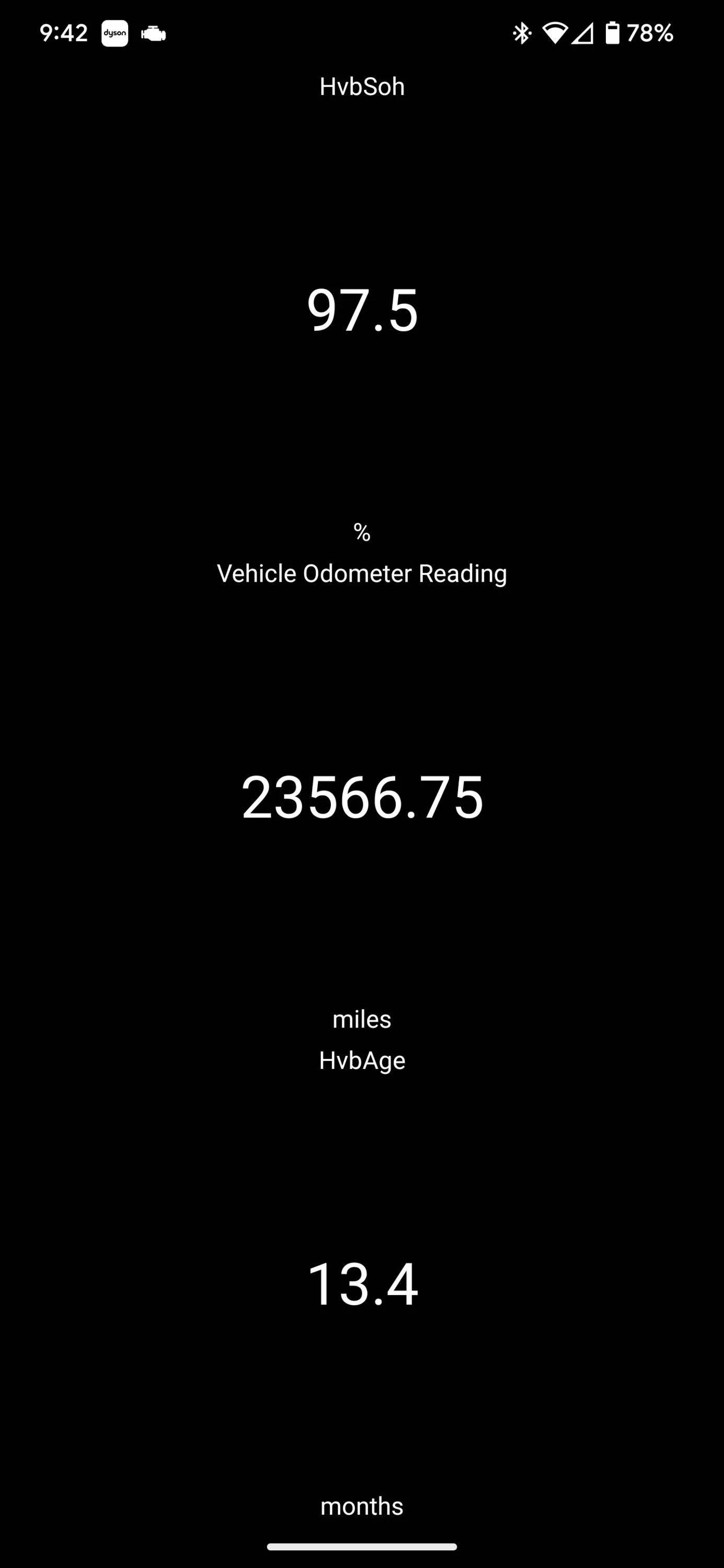
My numbers, which I posted previously are:

Battery Age: 13.4 mo
SOH: 97.5%
Millage: 23,566

Which means that in about the same amount of time my battery has only lost 2.5% of it's capacity while yours lost 4%. I would really love to see more people post their data. It's very interesting that I charge to higher SOC regularly and use DCFC a lot and my SOH is better than yours.

Ford Mustang Mach-E 80% charge or 90% charge for daily use? 1662223437829
 

mkhuffman

Well-Known Member
First Name
Mike
Joined
Nov 19, 2020
Threads
29
Messages
6,875
Reaction score
9,507
Location
Virginia
Vehicles
2025 Rivian R1T Tri-Max, Jeep GC-L, VW Jetta
Country flag
Says who? Where is a scientific study on that? How did you form this opinion?

Ok so the way that number works is your vehicle, off the line starts with 100%. You are currently down to 96% of battery capacity meaning that over the last year you lost 4% via degradation. It's not a number that fluctuates... it just goes down, unfortunately.

Millage isn't a factor to degradation and it's been proven that the more miles you drive the more bang you get for your buck.

My numbers, which I posted previously are:

Battery Age: 13.4 mo
SOH: 97.5%
Millage: 23,566

Which means that in about the same amount of time my battery has only lost 2.5% of it's capacity while yours lost 4%. I would really love to see more people post their data. It's very interesting that I charge to higher SOC regularly and use DCFC a lot and my SOH is better than yours.
I wonder if ambient temperature matters. For example, I wonder if my battery has degraded more because it has been exposed to sub zero (F) temperatures? It got pretty cold last winter and when I was traveling it did sit outside during some of the coldest days. My range took a big hit due to ambient temperature - 180 compared to 240 now.
 

Fixbear

Well-Known Member
First Name
Frank
Joined
Jun 15, 2022
Threads
5
Messages
642
Reaction score
276
Location
ADK. foothills, NY
Vehicles
2001 SelectMachE4 SR , Mini SE
Occupation
retired, Construction Mechanic, Refrigeration tech, Ford, GMC, Chevy tech,
Country flag
I get all that but the person I was quoting said he is an automotive engineer and has worked with batteries in that field. He made specific comments and I wanted to know his thoughts as to how this relates to the MME Battery.

specifically he mentioned charging to 70% normally. That is really approx 60% of MME battery.
Remember that Ford has its own formula for their batteries, and they spend over 10 years intensive testing to come to it. There are hundreds of designs out there. Different Cathodes, Anodes, insulators and containers. And Ford built a buffer in the charge limit purposely to protect the battery. What other rechargeable have you seen other than Nickle-Cadmium (25 year) with a 10-year warranty. Most brands say 20% to 80%. Ford feels that 90% is good. I split the difference at 85%
 

DevSecOps

Well-Known Member
First Name
Todd
Joined
Sep 22, 2021
Threads
69
Messages
4,764
Reaction score
11,624
Location
Sacramento, CA
Vehicles
'21 Audi SQ5 / '23 Rivian R1T / '23 M3P
Occupation
CISO
Country flag
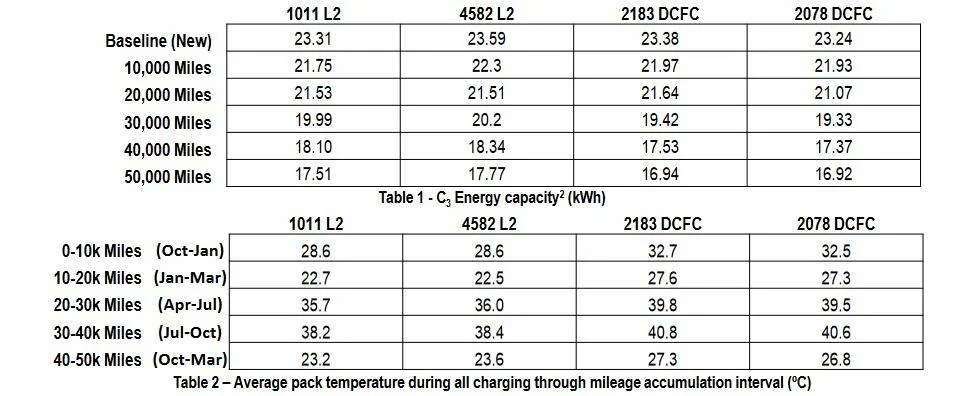
In 2015, the Idaho National Laboratory did a study with 4x leafs.
  • They charged 2 leafs 2x daily on L2
  • They charged 2 leafs 2x daily on DCFC
  • Vehicles driven 6 days a week
  • Climate control was set to the same on all vehicles
  • All vehicles were driven in the same locale, at the same time of day and on the same route to limit environmental variables.
  • All charging was to 100% SOC each charge cycle from 5 miles remaining (low SOC).
  • They continued this every single day up to 50k miles on the ODO of each vehicle.
  • Total time to 50k miles was 1 year 5 months.
The DCFC charged vehicles lost an additional 0.57kW and 0.85kW in 50k miles/17 months.

I share this as another example of people saying "OMG, DCFC will kill your battery". So yeah, in the MME that amounts to about 2.5 miles that you'll lose over 50k miles if you purely 100% DCFC vs 100% L2, twice daily for 17 months. No one does that. So again, does DCFC affect the battery life, yes it does. When you put it in perspective, should you care, no - drive the damn car and add electrons when you need to, where you need to.

Over exaggeration of what is "bad" for the car is one of my biggest pet peeves. The study concludes that "The difference in capacity loss is significantly small."

Ford Mustang Mach-E 80% charge or 90% charge for daily use? 1662224282695
 
Last edited:

kennethjk

Well-Known Member
First Name
Ken
Joined
Sep 3, 2021
Threads
30
Messages
3,331
Reaction score
2,124
Location
NY
Vehicles
MME Prem. EB 4WD, X3, IX50
Occupation
Retired
Country flag
Remember that Ford has its own formula for their batteries, and they spend over 10 years intensive testing to come to it. There are hundreds of designs out there. Different Cathodes, Anodes, insulators and containers. And Ford built a buffer in the charge limit purposely to protect the battery. What other rechargeable have you seen other than Nickle-Cadmium (25 year) with a 10-year warranty. Most brands say 20% to 80%. Ford feels that 90% is good. I split the difference at 85%
I was just curious on that individuals feeling and if was he taking into account the battery’s existing buffer, but that’s only because I have nothing else to do, I am an accountant and like numbers.

No offense to anyone but I really don’t care weather it’s 85 or 82% or 73%. I charge it as I need it, but I do find it helpful to understand what would be the best for long term battery use.

technical papers, people beliefs, peoples personal experience etc. as all discussed here is useful and fun to read. I just don’t get upset when someone does it differently for whatever reason. More important issues out there.

let’s face it, it’s just a car.

people will do what they want to do, some people like me will learn a little bit from those on this forum with much greater knowledge.

how much do I trust Fords knowledge about their car and battery, well I will take whatever they say with a grain of salt since I am still sitting here waiting for a HVBJC failure in my future. I just started using PAAK and now seats are screwy and Apple car play isn’t working, over 8 months of ownership I had a different seat issue a couple of times and car play always worked wirelessly. I will be deleting PAAK shortly.

the manual I saw online from Ford now says to charge less than 100% while it used to be 90%. Will it soon be 80% or over 100%?

I read what people say and take away from it what I think is appropriate and fits me and sometimes I will do a little bit of research on my own.

thanks for everyone sharing their knowledge
 

kennethjk

Well-Known Member
First Name
Ken
Joined
Sep 3, 2021
Threads
30
Messages
3,331
Reaction score
2,124
Location
NY
Vehicles
MME Prem. EB 4WD, X3, IX50
Occupation
Retired
Country flag
Says who? Where is a scientific study on that? How did you form this opinion?

Ok so the way that number works is your vehicle, off the line starts with 100%. You are currently down to 96% of battery capacity meaning that over the last year you lost 4% via degradation. It's not a number that fluctuates... it just goes down, unfortunately.

Millage isn't a factor to degradation and it's been proven that the more miles you drive the more bang you get for your buck.

My numbers, which I posted previously are:

Battery Age: 13.4 mo
SOH: 97.5%
Millage: 23,566

Which means that in about the same amount of time my battery has only lost 2.5% of it's capacity while yours lost 4%. I would really love to see more people post their data. It's very interesting that I charge to higher SOC regularly and use DCFC a lot and my SOH is better than yours.

1662223437829.webp
My numbers are
battery age 8 months. Car built 12/10/21
miles 6,400
HVB. SOH 100%

I normally charge at home 40 amps
DCFC. Maybe 8-10 times

edit: I normally charge to 90% and maybe 7 or 8 times To 100%
edit: I charge 2-3 times a week depending on any upcoming trips which for a month were a lot.
 
Last edited:

iaming

Well-Known Member
First Name
Br
Joined
Mar 7, 2022
Threads
21
Messages
162
Reaction score
13
Location
WA
Vehicles
SEL
In 2015, the Idaho National Laboratory did a study with 4x leafs.
  • They charged 2 leafs 2x daily on L2
  • They charged 2 leafs 2x daily on DCFC
  • Vehicles driven 6 days a week
  • Climate control was set to the same on all vehicles
  • All vehicles were driven in the same locale, at the same time of day and on the same route to limit environmental variables.
  • All charging was to 100% SOC each charge cycle from 5 miles remaining (low SOC).
  • They continued this every single day up to 50k miles on the ODO of each vehicle.
  • Total time to 50k miles was 1 year 5 months.
The DCFC charged vehicles lost an additional 0.57kW and 0.85kW in 50k miles/17 months.

I share this as another example of people saying "OMG, DCFC will kill your battery". So yeah, in the MME that amounts to about 2.5 miles that you'll lose over 50k miles if you purely 100% DCFC vs 100% L2, twice daily for 17 months. No one does that. So again, does DCFC affect the battery life, yes it does. When you put it in perspective, should you care, no - drive the damn car and add electrons when you need to, where you need to.

Over exaggeration of what is "bad" for the car is one of my biggest pet peeves. The study concludes that "The difference in capacity loss is significantly small."

1662224282695.png

Charge daily and charge from 5 miles remaining are not aligned, did I miss something?
 

Larry Paul

Well-Known Member
First Name
Larry
Joined
Aug 27, 2021
Threads
24
Messages
929
Reaction score
1,051
Location
Southern California
Vehicles
MME-GTPE, Sunbeam Tiger w1970 Boss302, 2002Rav4EV
Country flag
More data: So I had never checked on SOH - until today.

My battery is reported at 7.59 months old, but I know that is just the date that it was mounted in the car as that is the build date of the car in January (except for chips that I waited for almost 5 months after the car was built). I am sure the pack was assembled weeks before that.

I have driven 4278 miles in the last 3.75 months.

My reported SOH is 99.5%. If that data is accurate, that is a degradation rate of 0.79% per year, however, I am not sure how much of that relates to the first almost 4 months where the car was kept at a nearly full SOC in the hot Mexico climate. I will look at this in another 6 months or so and see what the degradation is then.

In 6.5 years (my other data point from an earlier post) that is projecting a 5.135% loss that is tracking much more like a 2014 Chevy Volt than an "average EV" (that saw an average loss of 11.1%). After 20 years if that tracks at the same rate of loss, I will still have 84% of my battery remaining.

I think the bottom line is just enjoy your car and drive it the way that makes you happy as I think the BMS and battery cooling design appears to be well designed. For me I love driving the car and also like to understand the tech. I know whatever happens this car will put a smile on my face and it exceed my needs for the next 2 decades (at least that is what my plan is).
Sponsored


Top