Charge anxiety?

ohmslaw

Well-Known Member
First Name
Joseph
Joined
Sep 18, 2021
Threads
18
Messages
227
Reaction score
344
Location
Connecticut
Vehicles
Toyota Highlander, Toyota Rav-4, Mach-e (on order)
Occupation
Engineer
Country flag
So totally understood the concept of how people could have range anxiety around an EV. That I never really worried about, though. Our longest day of driving in a car usually is less than 200 miles. We have an ICE Vehicle for the road trips.

I want to introduce you to charge anxiety. Never wanted to charge the car to greater than 90%; have it set to charge to 80% at home and work for now. Twice now the battery has been charged to 100% when the car would probably not be driven for a day or more. Once at the dealership (and sat for 6 days super cold) and now last night.

Randomly in the middle of the night the car thought it was 30 miles away. Threw out it’s charge location settings and charged to 100%. Now I have no reason to drive for the next two days and don’t want the car to sit at that SoC.

Bought the extended range specifically to have a battery that would hopefully last 10 years for our needs of something that can propel us at least 100 miles in all conditions. I hope things like this don’t keep happening.
Sponsored

 

RickMachE

Well-Known Member
Joined
Jul 1, 2021
Threads
267
Messages
17,957
Reaction score
27,994
Location
SE MI
Vehicles
2022 Mach-E Premium 4X, 2022 Lightning Lariat ER
Country flag
You need to stop worrying. Much of what people on this site think are issues, simply aren't for 99.5% of all owners. Most have no clue, and are none the wiser.

We plugged in our 2018 Fusion Energi every night and charged to 100%. We noticed no degradation. We measured nothing. We sold it at 3 years and it was a non-issue. We sold our Fusion Hybrid at 9 years and it was never brought up.

Relax.
 
Last edited:

hybrid2bev

Well-Known Member
Joined
Dec 4, 2019
Threads
78
Messages
4,642
Reaction score
12,772
Location
USA
Vehicles
2026 Rally
Country flag
Now I have no reason to drive for the next two days and don’t want the car to sit at that SoC.
It can randomly lose it's location sometimes. The car thinks it's not at home so it charges to 100%.

If you're worried about it staying fully charged then drive the car for about 30 to 45 minutes with the heater on full blast (Temp set to HI and fan speed max), roll the windows down if you get too hot. That will bring down the SOC quick!
 

Murse-In-Airy

Well-Known Member
First Name
Rod
Joined
Mar 5, 2021
Threads
82
Messages
3,678
Reaction score
8,297
Location
Chaumont, NY
Vehicles
Mach-E ER AWD
Occupation
Nurse
Country flag
It can randomly lose it's location sometimes. The car thinks it's not at home so it charges to 100%.

If you're worried about it staying fully charged then drive the car for about 30 to 45 minutes with the heater on full blast (Temp set to HI and fan speed max), roll the windows down if you get too hot. That will bring down the SOC quick!
But aren’t rapid changes in state of charge JUST the kind of things that lead to degradation? Wouldn’t it be better to let the car sit idle with the heat at a comfortable 56.7°F for a few hours? /s
 

hybrid2bev

Well-Known Member
Joined
Dec 4, 2019
Threads
78
Messages
4,642
Reaction score
12,772
Location
USA
Vehicles
2026 Rally
Country flag
But aren’t rapid changes in state of charge JUST the kind of things that lead to degradation? Wouldn’t it be better to let the car sit idle with the heat at a comfortable 56.7°F for a few hours? /s
Well I'm just glad for them that the battery did not charge up to 130% to get that GOM up to 270 miles. THAT would've been bad. ? ?


ChasingCoral

Well-Known Member
First Name
Mark
Joined
Feb 3, 2020
Threads
502
Messages
14,318
Reaction score
28,680
Location
Maryland
Vehicles
2021 GB E4X FE, 2022 F-150 Lightning Lariat ER
Occupation
Retired oceanographer
Country flag
So totally understood the concept of how people could have range anxiety around an EV. That I never really worried about, though. Our longest day of driving in a car usually is less than 200 miles. We have an ICE Vehicle for the road trips.

I want to introduce you to charge anxiety. Never wanted to charge the car to greater than 90%; have it set to charge to 80% at home and work for now. Twice now the battery has been charged to 100% when the car would probably not be driven for a day or more. Once at the dealership (and sat for 6 days super cold) and now last night.

Randomly in the middle of the night the car thought it was 30 miles away. Threw out it’s charge location settings and charged to 100%. Now I have no reason to drive for the next two days and don’t want the car to sit at that SoC.

Bought the extended range specifically to have a battery that would hopefully last 10 years for our needs of something that can propel us at least 100 miles in all conditions. I hope things like this don’t keep happening.
Like you, I have Marlin's charge schedule set to 80%. When a Power Up causes the charge limit to be ignored and I get a 100% charge, I don't worry about it unless I won't be driving for a couple of days. In that case, it's a good excuse to go for a drive somewhere!
 

ManInBlack

Well-Known Member
First Name
Drew
Joined
May 29, 2021
Threads
4
Messages
78
Reaction score
196
Location
PA
Vehicles
Prem. Mach E SR AWD; Jeep Renegade Trailhawk
Occupation
Engineer
Country flag
Charging everyday for 5 years to 100% is different that charging 5 times to 100%. The differences are very small in expected battery life (even at daily charging to 100%) and you’ll likely never notice. Ford has buffer built in too to help mitigate the effects.
It’s really about consistently charging to 100% for many years. A couple times a year is NBD and many here do it before a road trip, etc.
 
OP
OP

ohmslaw

Well-Known Member
First Name
Joseph
Joined
Sep 18, 2021
Threads
18
Messages
227
Reaction score
344
Location
Connecticut
Vehicles
Toyota Highlander, Toyota Rav-4, Mach-e (on order)
Occupation
Engineer
Country flag
I wish Ford had a way to submit a bugfix/feature improvement requests. It would be so simple to latch charge settings once started to prevent something like the vehicle location changing from changing charge settings. Obviously the vehicle hasn’t moved if the charge cord was never removed.
 

SpaceEVDriver

Well-Known Member
Joined
Aug 26, 2021
Threads
71
Messages
2,654
Reaction score
4,780
Location
Arizona
Vehicles
2022 CA Route 1 AWD, ER; 2023 Lightning Lariat ER
Occupation
Planetary Science
Country flag
Most of the real-world battery degradation studies of LiFePO4 that I've read (more than a few) indicate that rate of discharge and battery temperature are the strongest factors in lifetime degradation (capacity fade).

Most of the studies are done using 1C discharge rate, which essentially means the battery is discharged to its cutoff voltage over one hour. The Mustang ER battery has about 200 Ah of capacity. If we got 300 miles of range (100% to voltage cutoff=0% capacity) at 60 mph, that's a C/5 discharge rate, or about 1/5 of the discharge rate that battery labs typically use to test capacity or power fade of a battery. Confusingly, battery discharge rates are written as: 5C for a 20 minute discharge and C/5 for a 5-hour discharge.

When we're told that a LiFePO4 battery has about an 8 year lifetime expectancy, this is typically derived from a 1C discharge rate and subjecting the battery to multiple charge cycles over a very short time. Unless you're doing track day every day, with multiple recharge cycles, the >80% capacity lifetime of the battery is likely to exceed the length of time you own the vehicle by many, many years.

For storage, a day or two at 100% SOC is irrelevant to the lifetime of the battery. Even if you forgot to drive for an hour or so and stored the battery at 100% SOC for six months, you can (mostly) recondition the battery and bring it back up to nearly its full pre-storage capacity via a full, uninterrupted discharge-recharge cycle.

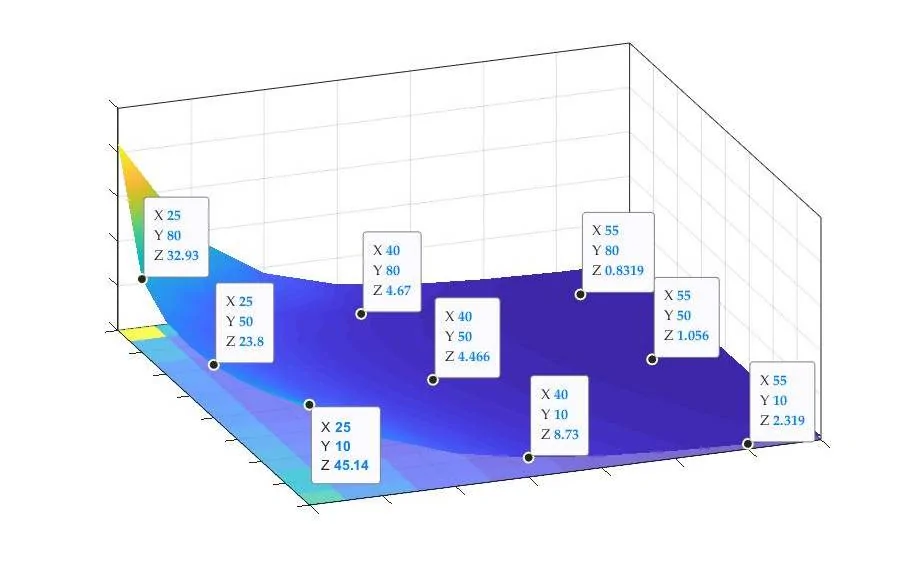
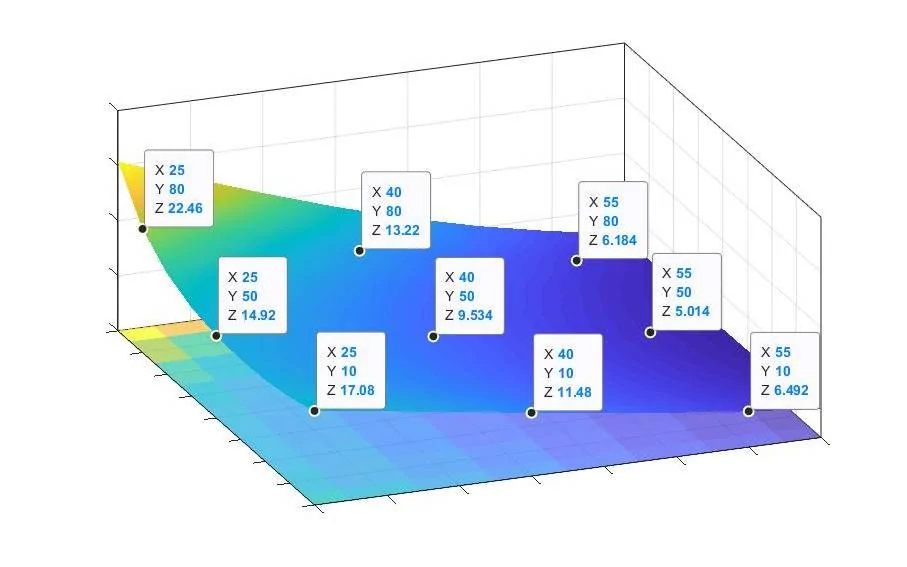
Most of the storage tests are done at elevated temperatures because few people have the lab space to run a battery storage test for six or more months. So they elevate the temperatures to cause faster chemistry and simulate longer storage times. Those models are okay, but there is some permanent impact from higher temperatures. The attached images are from a paper that ran a long-term lifetime test on LiFEPO4 batteries and then created models based on the data collected.

In the attached images, X = storage temperature in Celsius; Y = SOC%; Z = Lifetime in years.
The first image is for capacity fade.
Ford Mustang Mach-E Charge anxiety? soc_v_temp_capacitylif

The second image is for internal resistance increase.
Ford Mustang Mach-E Charge anxiety? soc_v_temp_Resistancelifetim


Note that in the capacity tests (first image), you get a ~33-year lifetime if you store at 25C with SOC=80% and 45-year lifetime if you store at the same temperature but SOC=10%; in between you get the shortest lifetime. Notice that the 100% SOC gives the longer lifetime, assuming the battery can maintain its 100% SOC (lots of small recharge cycles may cause issues).

The internal resistance gives a slightly different story: 25C, 80% SOC gives 22.5 year lifetime; 25C, 50% SOC, 15-year lifetime; 25C, 10% SOC, 17-year lifetime.

You can explore the graphs more on your own. Essentially, the more important factor in storage is battery temperature, not SOC. This paper did not explore temperatures lower than 25C in any detail.

[Citation: The Degradation Behavior of LiFePO4/C Batteries during Long-Term Calendar Aging (2021), Sui et al., https://www.mdpi.com/journal/energies]
 

Jimmy2

Well-Known Member
First Name
Jimmy
Joined
Jan 23, 2021
Threads
17
Messages
665
Reaction score
833
Location
Wilmington NC
Vehicles
21 MME Premium 4EX; 23 MME GTPE Vapor Blue Met
Country flag
Like you, I have Marlin's charge schedule set to 80%. When a Power Up causes the charge limit to be ignored and I get a 100% charge, I don't worry about it unless I won't be driving for a couple of days. In that case, it's a good excuse to go for a drive somewhere!

Mark, just curious, why would you only set it to 80% charge at home? Why not 90?
 

ChasingCoral

Well-Known Member
First Name
Mark
Joined
Feb 3, 2020
Threads
502
Messages
14,318
Reaction score
28,680
Location
Maryland
Vehicles
2021 GB E4X FE, 2022 F-150 Lightning Lariat ER
Occupation
Retired oceanographer
Country flag
Mark, just curious, why would you only set it to 80% charge at home? Why not 90?
Most research on lithium battery systems has shown that they are happiest when maintained around 50% SOC. In my normal driving, I can charge when the battery drops below 40% and charge to 80% and have plenty of range. If I need more range, I override to 100% that day.
 

zhackwyatt

Well-Known Member
Joined
Dec 18, 2019
Threads
14
Messages
1,617
Reaction score
2,635
Location
Arizona
Vehicles
'21 InfBlu Prem MMEx, '21 F150 PowerBoost Hybrid Past: '13 C-Max '98 Explorer
Country flag
Most of the real-world battery degradation studies of LiFePO4 that I've read (more than a few) indicate that rate of discharge and battery temperature are the strongest factors in lifetime degradation (capacity fade).

Most of the studies are done using 1C discharge rate, which essentially means the battery is discharged to its cutoff voltage over one hour. The Mustang ER battery has about 200 Ah of capacity. If we got 300 miles of range (100% to voltage cutoff=0% capacity) at 60 mph, that's a C/5 discharge rate, or about 1/5 of the discharge rate that battery labs typically use to test capacity or power fade of a battery. Confusingly, battery discharge rates are written as: 5C for a 20 minute discharge and C/5 for a 5-hour discharge.

When we're told that a LiFePO4 battery has about an 8 year lifetime expectancy, this is typically derived from a 1C discharge rate and subjecting the battery to multiple charge cycles over a very short time. Unless you're doing track day every day, with multiple recharge cycles, the >80% capacity lifetime of the battery is likely to exceed the length of time you own the vehicle by many, many years.

For storage, a day or two at 100% SOC is irrelevant to the lifetime of the battery. Even if you forgot to drive for an hour or so and stored the battery at 100% SOC for six months, you can (mostly) recondition the battery and bring it back up to nearly its full pre-storage capacity via a full, uninterrupted discharge-recharge cycle.

Most of the storage tests are done at elevated temperatures because few people have the lab space to run a battery storage test for six or more months. So they elevate the temperatures to cause faster chemistry and simulate longer storage times. Those models are okay, but there is some permanent impact from higher temperatures. The attached images are from a paper that ran a long-term lifetime test on LiFEPO4 batteries and then created models based on the data collected.

In the attached images, X = storage temperature in Celsius; Y = SOC%; Z = Lifetime in years.
The first image is for capacity fade.
soc_v_temp_capacitylife.jpg

The second image is for internal resistance increase.
soc_v_temp_Resistancelifetime.jpg


Note that in the capacity tests (first image), you get a ~33-year lifetime if you store at 25C with SOC=80% and 45-year lifetime if you store at the same temperature but SOC=10%; in between you get the shortest lifetime. Notice that the 100% SOC gives the longer lifetime, assuming the battery can maintain its 100% SOC (lots of small recharge cycles may cause issues).

The internal resistance gives a slightly different story: 25C, 80% SOC gives 22.5 year lifetime; 25C, 50% SOC, 15-year lifetime; 25C, 10% SOC, 17-year lifetime.

You can explore the graphs more on your own. Essentially, the more important factor in storage is battery temperature, not SOC. This paper did not explore temperatures lower than 25C in any detail.

[Citation: The Degradation Behavior of LiFePO4/C Batteries during Long-Term Calendar Aging (2021), Sui et al., https://www.mdpi.com/journal/energies]
The thing I don't like about this is that perfect lab conditions at 25C is a lot different than a rattling car that can range from 0C to 45C ambient temperature with 10 degree swings in one day. I charge to 80% myself because I don't need to charge more. If I ever do, I will charge to 100 and go on my trip. I agree though, a few times to 100 at a few days isn't going to hurt much.
 

Maquis

Well-Known Member
First Name
Dave
Joined
Dec 21, 2020
Threads
34
Messages
5,698
Reaction score
8,087
Location
Illinois
Vehicles
2021 Mach E4X, 2023 Lightning Lariat ER
Country flag
Most research on lithium battery systems has shown that they are happiest when maintained around 50% SOC. In my normal driving, I can charge when the battery drops below 40% and charge to 80% and have plenty of range. If I need more range, I override to 100% that day.
That’s exactly what I do. Right now, that means charging about once per week.
 

Blue highway

Well-Known Member
First Name
Steve
Joined
Oct 15, 2021
Threads
5
Messages
2,700
Reaction score
4,249
Location
Oregon
Vehicles
Mach E Premium SR RWD
Country flag
Most of the real-world battery degradation studies of LiFePO4 that I've read (more than a few) indicate that rate of discharge and battery temperature are the strongest factors in lifetime degradation (capacity fade).

Most of the studies are done using 1C discharge rate, which essentially means the battery is discharged to its cutoff voltage over one hour. The Mustang ER battery has about 200 Ah of capacity. If we got 300 miles of range (100% to voltage cutoff=0% capacity) at 60 mph, that's a C/5 discharge rate, or about 1/5 of the discharge rate that battery labs typically use to test capacity or power fade of a battery. Confusingly, battery discharge rates are written as: 5C for a 20 minute discharge and C/5 for a 5-hour discharge.

When we're told that a LiFePO4 battery has about an 8 year lifetime expectancy, this is typically derived from a 1C discharge rate and subjecting the battery to multiple charge cycles over a very short time. Unless you're doing track day every day, with multiple recharge cycles, the >80% capacity lifetime of the battery is likely to exceed the length of time you own the vehicle by many, many years.

For storage, a day or two at 100% SOC is irrelevant to the lifetime of the battery. Even if you forgot to drive for an hour or so and stored the battery at 100% SOC for six months, you can (mostly) recondition the battery and bring it back up to nearly its full pre-storage capacity via a full, uninterrupted discharge-recharge cycle.

Most of the storage tests are done at elevated temperatures because few people have the lab space to run a battery storage test for six or more months. So they elevate the temperatures to cause faster chemistry and simulate longer storage times. Those models are okay, but there is some permanent impact from higher temperatures. The attached images are from a paper that ran a long-term lifetime test on LiFEPO4 batteries and then created models based on the data collected.

In the attached images, X = storage temperature in Celsius; Y = SOC%; Z = Lifetime in years.
The first image is for capacity fade.
soc_v_temp_capacitylife.jpg

The second image is for internal resistance increase.
soc_v_temp_Resistancelifetime.jpg


Note that in the capacity tests (first image), you get a ~33-year lifetime if you store at 25C with SOC=80% and 45-year lifetime if you store at the same temperature but SOC=10%; in between you get the shortest lifetime. Notice that the 100% SOC gives the longer lifetime, assuming the battery can maintain its 100% SOC (lots of small recharge cycles may cause issues).

The internal resistance gives a slightly different story: 25C, 80% SOC gives 22.5 year lifetime; 25C, 50% SOC, 15-year lifetime; 25C, 10% SOC, 17-year lifetime.

You can explore the graphs more on your own. Essentially, the more important factor in storage is battery temperature, not SOC. This paper did not explore temperatures lower than 25C in any detail.

[Citation: The Degradation Behavior of LiFePO4/C Batteries during Long-Term Calendar Aging (2021), Sui et al., https://www.mdpi.com/journal/energies]
Hmm as I understand it the chemistry of the MME battery is lithium manganese cobalt. Not lithium iron phosphate covered in the article. They behave a bit differently. A lot of manufacturers are switching to lithium iron phosphate including Tesla and most of the Chinese manufacturers. Ford is working on it for commercial vehicles but aren’t there yet.
 

Frankie

Banned
Banned
Joined
Nov 17, 2019
Threads
3
Messages
517
Reaction score
730
Location
Nevada
Vehicles
2021 MUSTANG MACH-E GTPE
Country flag
I was out of town for a week and when I got back i discovered my wife had been charging the Mach-E to 100% every night and now I can't stop crying and am on alprazolam and I can't stop thinking about all the poor dead electrons inside my battery cluttering it up and reducing its effectiveness.
Sponsored


Top