Preparing for Mach-E charging at home - preparation and installing charger

CHeil402

Well-Known Member
First Name
Chris
Joined
Sep 21, 2020
Threads
8
Messages
726
Reaction score
1,325
Location
King of Prussia, PA
Vehicles
2017 Audi A4, 2021 MME
Occupation
Electrical Engineer
Country flag
To all of you with these nice, neat, tight coils of cord: please unwind it all before charging. Operating your EVSE with the unused part of the charging cord tightly coiled increases fire risk in two important ways. You are creating and inductive coil that increases resistance (actually reactance) in the wire. You also eliminate the ability of the wire to shed heat. Big, loose loops are better than tight coils and unwinding it to drop on the floor is even better.
While both of those are true, their impacts would be rather negligible. They even specially sell coiled charger cables for the storage convenience.

The reactance would be very small from a few manually wound unbound loops and compared to the series resistance offered by the battery, the heat rise would be negligible.

Same goes for cable heat rise. If the loops are in open air, even if wound together, they should be rated to at least 60 deg C and the hotter it gets the more aggressively the heat gradient will force heat into the air.

In summary, while it's true that it would be "better" to unwind it all when in use, the benefit isn't enough to be a serious concern. The additional trip hazard might even be worse.
Sponsored
 

ChasingCoral

Well-Known Member
First Name
Mark
Joined
Feb 3, 2020
Threads
502
Messages
14,318
Reaction score
28,679
Location
Maryland
Vehicles
2021 GB E4X FE, 2022 F-150 Lightning Lariat ER
Occupation
Retired oceanographer
Country flag
While both of those are true, their impacts would be rather negligible. They even specially sell coiled charger cables for the storage convenience.

The reactance would be very small from a few manually wound unbound loops and compared to the series resistance offered by the battery, the heat rise would be negligible.

Same goes for cable heat rise. If the loops are in open air, even if wound together, they should be rated to at least 60 deg C and the hotter it gets the more aggressively the heat gradient will force heat into the air.

In summary, while it's true that it would be "better" to unwind it all when in use, the benefit isn't enough to be a serious concern. The additional trip hazard might even be worse.
Good to hear you think both are minimal. As an EE you have a more practical understanding of this than I do. I'll still stick with big loops for the unused cable rather than tight coils on mine. Better safe than sorry.
 

CHeil402

Well-Known Member
First Name
Chris
Joined
Sep 21, 2020
Threads
8
Messages
726
Reaction score
1,325
Location
King of Prussia, PA
Vehicles
2017 Audi A4, 2021 MME
Occupation
Electrical Engineer
Country flag
Good to hear you think both are minimal. As an EE you have a more practical understanding of this than I do. I'll still stick with big loops for the unused cable rather than tight coils on mine. Better safe than sorry.
I agree that safety is paramount, and that's generally driven my posting about charging stuff. But I didn't want anyone to panic over this. Perhaps the best compromise would be to make each loop a different length. While it might bother your inner OCD, that would further minimize any reactance and give the most open air surface area.
 

ChasingCoral

Well-Known Member
First Name
Mark
Joined
Feb 3, 2020
Threads
502
Messages
14,318
Reaction score
28,679
Location
Maryland
Vehicles
2021 GB E4X FE, 2022 F-150 Lightning Lariat ER
Occupation
Retired oceanographer
Country flag
I agree that safety is paramount, and that's generally driven my posting about charging stuff. But I didn't want anyone to panic over this. Perhaps the best compromise would be to make each loop a different length. While it might bother your inner OCD, that would further minimize any reactance and give the most open air surface area.
Good point. My loops are sloppy by default so I'm good ?
 

RonTCat

Well-Known Member
First Name
Ron
Joined
Jul 21, 2020
Threads
27
Messages
1,137
Reaction score
2,982
Location
USA
Vehicles
Mach-E wannabuy
Country flag
Good to hear you think both are minimal. As an EE you have a more practical understanding of this than I do. I'll still stick with big loops for the unused cable rather than tight coils on mine. Better safe than sorry.
Do an experiment... take a magnetic compass and put it near the charge coil loop. If the needle flies off and sticks in the wall, you may want to unloop your cable :D . Otherwise, you should be OK. I might try this to see if there is even enough field to move the needle.




ChasingCoral

Well-Known Member
First Name
Mark
Joined
Feb 3, 2020
Threads
502
Messages
14,318
Reaction score
28,679
Location
Maryland
Vehicles
2021 GB E4X FE, 2022 F-150 Lightning Lariat ER
Occupation
Retired oceanographer
Country flag
Do an experiment... take a magnetic compass and put it near the charge coil loop. If the needle flies off and sticks in the wall, you may want to unloop your cable :D . Otherwise, you should be OK. I might try this to see if there is even enough field to move the needle.
I like it when someone understands the scientific method: hypothesize then test. The compass is a far safer way to test this than building an intentional fire hazard and cranking it up until you exceed the limit. ? Although the latter does sound like more fun ?
 

CHeil402

Well-Known Member
First Name
Chris
Joined
Sep 21, 2020
Threads
8
Messages
726
Reaction score
1,325
Location
King of Prussia, PA
Vehicles
2017 Audi A4, 2021 MME
Occupation
Electrical Engineer
Country flag
I like it when someone understands the scientific method: hypothesize then test. The compass is a far safer way to test this than building an intentional fire hazard and cranking it up until you exceed the limit. ? Although the latter does sound like more fun ?
I can share two fun stories. I work to design and build passenger trains. The electrification in the north east is done between 12,500 Vac and 25,000 Vac. I've done short circuit tests with cables where they literally jumped several inches off the ground due to reactance. I'll have to see if I can find my test videos.

On another project about heat dissipation, just like EV's are starting to do, electric trains use regenerative braking. However, when there is more power generated than can be consumed by a load, the extra power is 'burned' off in a resistor bank on the roof. These can get to several hundred degrees. One project the designers proposed a sealed top resistor bank. When I told them then the heat couldn't properly escape, they stated that since the train would be in motion and the sides were open, the wind would dissipate the heat. But in reality the rate at which hot air rises is proportional to how hot it is. At 500 deg F the 25 mph cross-wind doesn't really do anything. But they insisted it would be fine. Long story short, the week before I was scheduled to go witness the test, they called me to say they needed more time because they set the resistors on fire.

Bonus fun fact, as we all know, electric motors have way more torque than ICE equivalents. So to move massive trains and locomotives around, even diesel locomotives use the diesel fuel to power generators that power electric motors to move the train.
 

ChasingCoral

Well-Known Member
First Name
Mark
Joined
Feb 3, 2020
Threads
502
Messages
14,318
Reaction score
28,679
Location
Maryland
Vehicles
2021 GB E4X FE, 2022 F-150 Lightning Lariat ER
Occupation
Retired oceanographer
Country flag
Bonus fun fact, as we all know, electric motors have way more torque than ICE equivalents. So to move massive trains and locomotives around, even diesel locomotives use the diesel fuel to power generators that power electric motors to move the train.
Wow! I had no idea. In other words, diesel locomotives are electric locomotives with diesel generators? No wonder it's easy for them to switch to electric in cities where electric lines are present.
 

dbsb3233

Well-Known Member
First Name
TimCO
Joined
Dec 30, 2019
Threads
56
Messages
10,100
Reaction score
11,965
Location
Colorado, USA
Vehicles
2021 Mustang Mach-E FE, 2025 Porche Macan Electric
Occupation
Retired
Country flag
Wow! I had no idea. In other words, diesel locomotives are electric locomotives with diesel generators? No wonder it's easy for them to switch to electric in cities where electric lines are present.
One of the "passing interest" shows we've been binging this year with so much time at home is Mighty Trains. They always talk about that stuff, while showing some really interesting train routes around the world.
 

JamieGeek

Well-Known Member
Joined
Dec 29, 2019
Threads
82
Messages
3,589
Reaction score
6,823
Location
Southeastern Michigan
Website
spareelectrons.wordpress.com
Vehicles
Escape PHEV, old: Mach-E, Bolt, C-Max Energi, Focus Electric
Country flag
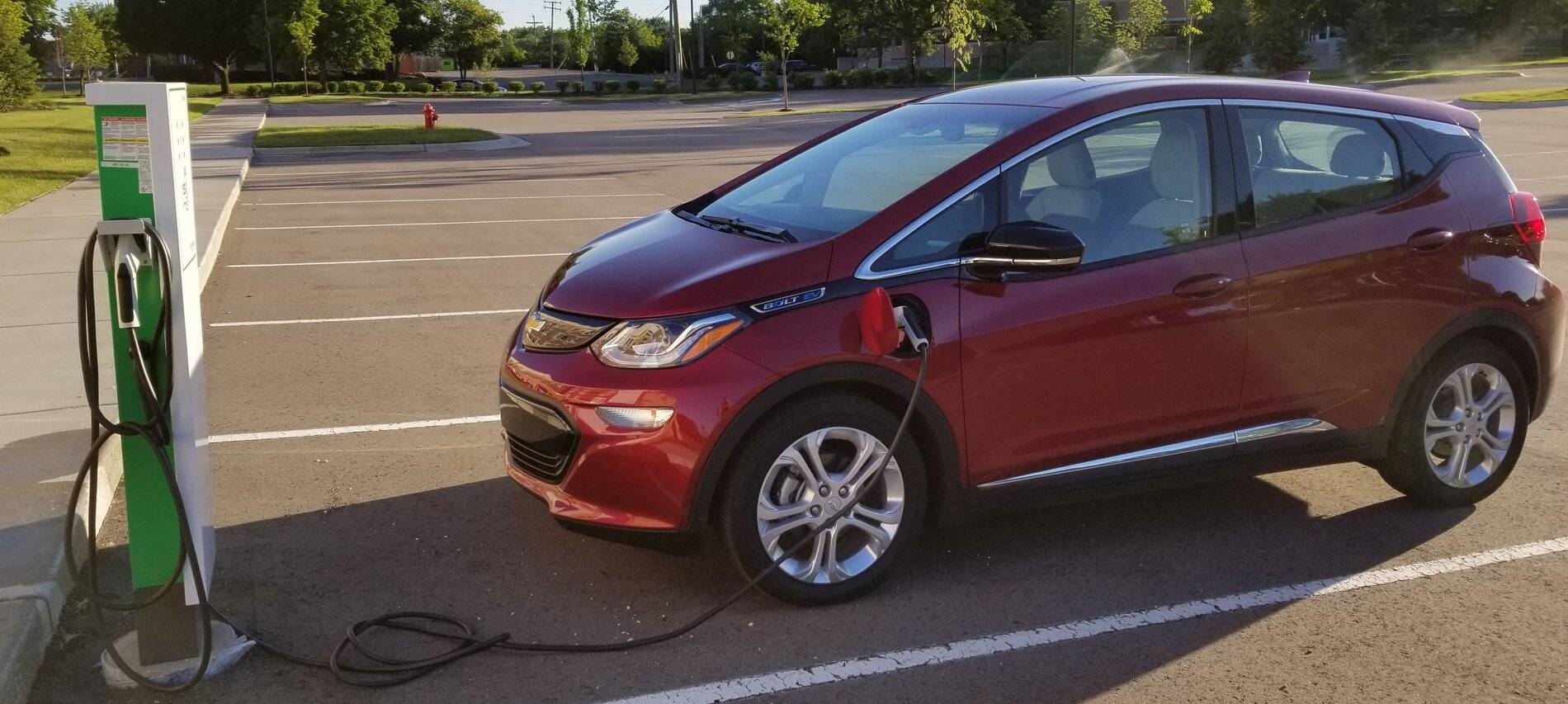
So this is bad: LOL
Ford Mustang Mach-E Preparing for Mach-E charging at home - preparation and installing charger boltchargecro

Cable wasn't warm at all when it was done charging....

Some of my EVSE instructions have included text instructing that the wires should be uncoiled prior to charging. So far I haven't had an issue.

Sometimes I'll need an extra foot or two and can't move the car. In those instances I simply use the 40ft extension and leave most of it coiled up--I'm sure this causes all kinds of issues ;)

(I'm an EE here as well but most of my EE career is low voltage digital crap.)
 

RonTCat

Well-Known Member
First Name
Ron
Joined
Jul 21, 2020
Threads
27
Messages
1,137
Reaction score
2,982
Location
USA
Vehicles
Mach-E wannabuy
Country flag
Wow! I had no idea. In other words, diesel locomotives are electric locomotives with diesel generators? No wonder it's easy for them to switch to electric in cities where electric lines are present.
GM had an electro-motive division which made locomotives. Not sure if they still own it. Likely why the Volt basically works on this same technique, where the gas motor works as a generator.
 

JellyBelly

Well-Known Member
First Name
Kris
Joined
Jun 27, 2020
Threads
14
Messages
2,489
Reaction score
1,944
Location
San Diego
Vehicles
MME RR FE
Country flag
So this is bad: LOL
boltchargecrop.jpg

Cable wasn't warm at all when it was done charging....

Some of my EVSE instructions have included text instructing that the wires should be uncoiled prior to charging. So far I haven't had an issue.

Sometimes I'll need an extra foot or two and can't move the car. In those instances I simply use the 40ft extension and leave most of it coiled up--I'm sure this causes all kinds of issues ;)

(I'm an EE here as well but most of my EE career is low voltage digital crap.)
My juice box 40 came with no instructions so no details about coiling or uncoiling. But to keep a 25 ft cable loosely uncoiled I might have to hoist some cable up the ceiling and use a tension device to pull down to plug in and remove and hold back to a hanging position. Otherwise daily coil and uncoil will be a chore. Or loosely coil in larger diameter around the juice box cable holder and hood the heat will not be an issue. I am just learning about this on this forum.
 

CHeil402

Well-Known Member
First Name
Chris
Joined
Sep 21, 2020
Threads
8
Messages
726
Reaction score
1,325
Location
King of Prussia, PA
Vehicles
2017 Audi A4, 2021 MME
Occupation
Electrical Engineer
Country flag
My juice box 40 came with no instructions so no details about coiling or uncoiling. But to keep a 25 ft cable loosely uncoiled I might have to hoist some cable up the ceiling and use a tension device to pull down to plug in and remove and hold back to a hanging position. Otherwise daily coil and uncoil will be a chore. Or loosely coil in larger diameter around the juice box cable holder and hood the heat will not be an issue. I am just learning about this on this forum.
Short Answer: That's what I was trying to convey. This shouldn't be a contributing factor to your design. The amount of reactance that you would get from a few coils of cable is insignificant.

Long (but overly simplified) Answer: Let's prove it... first let's figure out the inductance of your loops of cable. Let's say for a 25 foot cable that you have loops with a diameter of 2 feet. Then C = 2 * pi * r, each loop is roughly 6 feet, so you can get 4 loops. I couldn't find the wire gauge of the Juicebox 40, but let's say it's 6 AWG wire. Let's say the diameter of 6/3 NM-B wire is about an inch, so the coil is 4 inches wide. Assuming the cables are copper and they form a perfect solenoid (which they don't) you'd get an inductance of about 56 µH.

You can use this calculator if you want to adjust that to your liking: https://www.allaboutcircuits.com/tools/coil-inductance-calculator/

Next, let's see how much power would be lost to the cable assuming it had no inductance. The cable pure resistance is based on the cable properties. Again, assuming 50 feet (25 feet out and back for the complete circuit) of 6 AWG, you'll get about 20 mΩ. Power = Current ^2 * Resistance = 32 Watts.

Adding to that would be the impedance of the inductor = 2 * pi * f (60 Hz) * L (56 µH) = 21 mΩ. So you're essentially doubling the power lost to the cable. So it would be the same as having a 50 foot charge cable. Well within NEC limits for the cable length running to the end point. I could calculate temperature rise of the copper conductor, but I think this is a simple enough example within safety margins.

Other factors in your favor here... I assumed a perfect solenoid... which it isn't, so you'd have a smaller inductance value. And I assumed the cable was fully coiled, which it won't be when you have it plugged into the car, so you lose some there. Also, since the power returns in the same cable, you essentially have an inverse inductor coiled the opposite direction, so essentially any magnetic fields they create would oppose each other and cancel out.

Long story short, the reason you haven't heard of this warning before, is because it isn't an issue. Take it from the manufacturers lack of a specific warning for this, and lawyers love excessive warnings (like don't start chainsaw with genitals). I hope this alleviates some of your concerns.
 

JellyBelly

Well-Known Member
First Name
Kris
Joined
Jun 27, 2020
Threads
14
Messages
2,489
Reaction score
1,944
Location
San Diego
Vehicles
MME RR FE
Country flag
Short Answer: That's what I was trying to convey. This shouldn't be a contributing factor to your design. The amount of reactance that you would get from a few coils of cable is insignificant.

Long (but overly simplified) Answer: Let's prove it... first let's figure out the inductance of your loops of cable. Let's say for a 25 foot cable that you have loops with a diameter of 2 feet. Then C = 2 * pi * r, each loop is roughly 6 feet, so you can get 4 loops. I couldn't find the wire gauge of the Juicebox 40, but let's say it's 6 AWG wire. Let's say the diameter of 6/3 NM-B wire is about an inch, so the coil is 4 inches wide. Assuming the cables are copper and they form a perfect solenoid (which they don't) you'd get an inductance of about 56 µH.

You can use this calculator if you want to adjust that to your liking: https://www.allaboutcircuits.com/tools/coil-inductance-calculator/

Next, let's see how much power would be lost to the cable assuming it had no inductance. The cable pure resistance is based on the cable properties. Again, assuming 50 feet (25 feet out and back for the complete circuit) of 6 AWG, you'll get about 20 mΩ. Power = Current ^2 * Resistance = 32 Watts.

Adding to that would be the impedance of the inductor = 2 * pi * f (60 Hz) * L (56 µH) = 21 mΩ. So you're essentially doubling the power lost to the cable. So it would be the same as having a 50 foot charge cable. Well within NEC limits for the cable length running to the end point. I could calculate temperature rise of the copper conductor, but I think this is a simple enough example within safety margins.

Other factors in your favor here... I assumed a perfect solenoid... which it isn't, so you'd have a smaller inductance value. And I assumed the cable was fully coiled, which it won't be when you have it plugged into the car, so you lose some there. Also, since the power returns in the same cable, you essentially have an inverse inductor coiled the opposite direction, so essentially any magnetic fields they create would oppose each other and cancel out.

Long story short, the reason you haven't heard of this warning before, is because it isn't an issue. Take it from the manufacturers lack of a specific warning for this, and lawyers love excessive warnings (like don't start chainsaw with genitals). I hope this alleviates some of your concerns.
Thanks makes me feel better being a BEV newbie.
 

zhackwyatt

Well-Known Member
Joined
Dec 18, 2019
Threads
14
Messages
1,617
Reaction score
2,635
Location
Arizona
Vehicles
'21 InfBlu Prem MMEx, '21 F150 PowerBoost Hybrid Past: '13 C-Max '98 Explorer
Country flag
Take it from the manufacturers lack of a specific warning for this, and lawyers love excessive warnings (like don't start chainsaw with genitals).
I'm conflicted. I kinda want to know more, but I kinda don't.
Sponsored


Top