Mach-Lee
Well-Known Member
- First Name
- Lee
- Joined
- Jul 16, 2021
- Threads
- 262
- Messages
- 11,366
- Reaction score
- 25,029
- Location
- Wisconsin
- Vehicles
- 2022 Mach-E Premium AWD
- Occupation
- Sci/Eng

- Thread starter
- #1
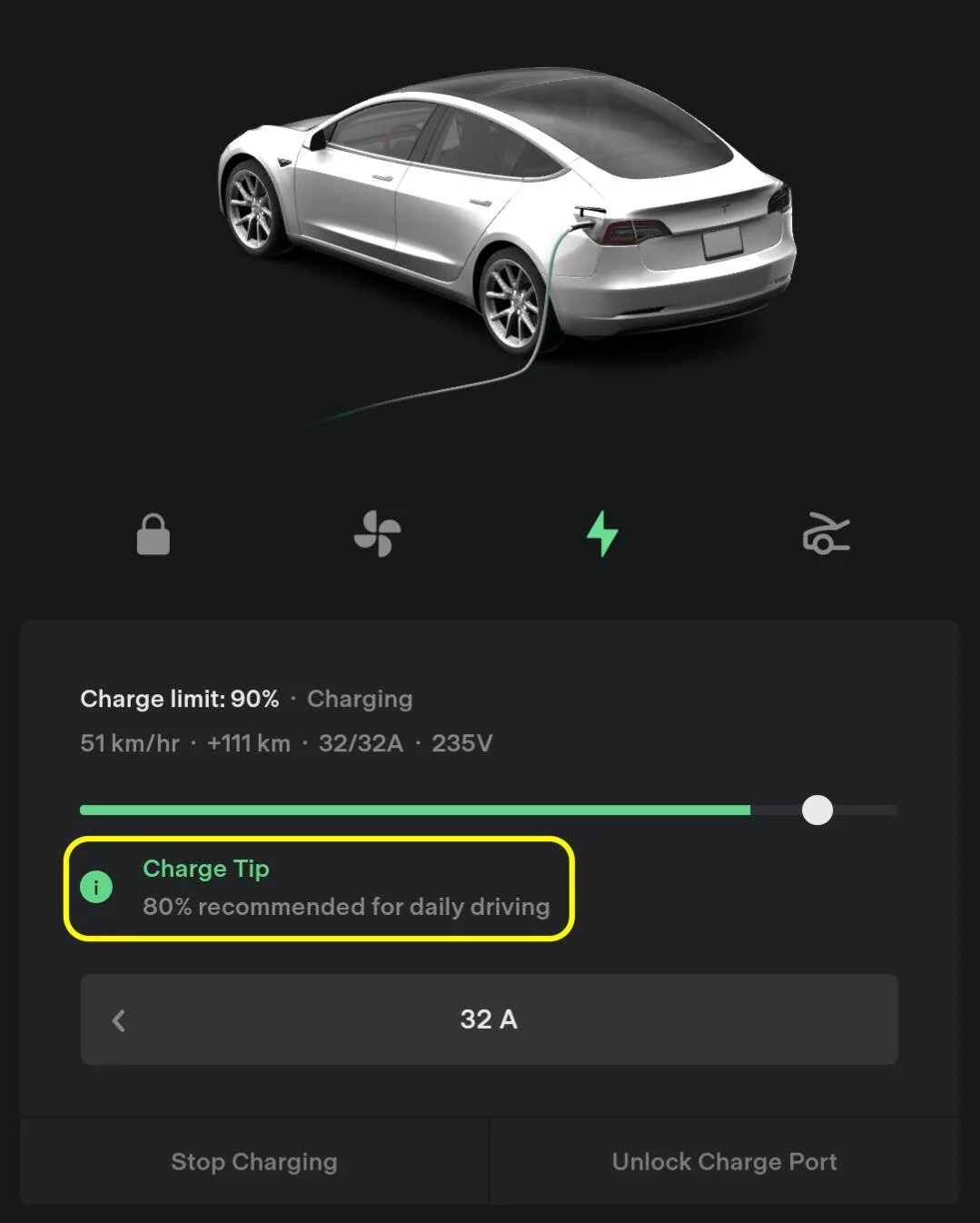
Just like the Mach-E, Tesla previously recommended a maximum daily charge limit of 90% to prevent battery degradation. However, they have just lowered their recommendation to 80% in the latest update (applies to NCA packs, not LFP packs):

Of course there is no official word from Tesla why the daily charge limit was lowered. But you can infer that there was probably too much pack degradation happening at 90%. Lower is better when it comes to charge limits—the lower the limit the longer the pack will last. Maybe they were getting too many warranty pack replacements?
Tesla lowering the limit to 80% is sort of a big deal because they are dominant in the industry and have some of the best battery experts in the world. If Tesla lowers their limit to 80%, I bet a lot of others in the industry will eventually do the same, including Ford. Rivian currently recommends only 70% for daily use.
Unfortunately, Ford doesn't educate the customer about high charge limits through intelligent user interface design like the Tesla app. The 90% recommendation is buried in the manual, and it doesn't help that the Mach-E still defaults to 100% and doesn't have a global charge limit setting.
I should note the "real" SoC for a given charge limit can vary significantly from manufacturer to manufacturer, so 80% displayed on a Tesla could be like 90% on a Mach-E or 75% on a Rivian in terms voltage level.
For more information about why high charge levels degrade lithium batteries (and why you should set your limit as low as possible), see the below Tweet and YouTube video:
More detailed scientific information about battery degradation can be found in this video.
P.S. - Still bothers me that Ford isn't more proactive about limiting pack temps while parked, nor enforcing global charge limits since both of these factors can significantly degrade lithium cell capacity.
Of course there is no official word from Tesla why the daily charge limit was lowered. But you can infer that there was probably too much pack degradation happening at 90%. Lower is better when it comes to charge limits—the lower the limit the longer the pack will last. Maybe they were getting too many warranty pack replacements?
Tesla lowering the limit to 80% is sort of a big deal because they are dominant in the industry and have some of the best battery experts in the world. If Tesla lowers their limit to 80%, I bet a lot of others in the industry will eventually do the same, including Ford. Rivian currently recommends only 70% for daily use.
Unfortunately, Ford doesn't educate the customer about high charge limits through intelligent user interface design like the Tesla app. The 90% recommendation is buried in the manual, and it doesn't help that the Mach-E still defaults to 100% and doesn't have a global charge limit setting.
I should note the "real" SoC for a given charge limit can vary significantly from manufacturer to manufacturer, so 80% displayed on a Tesla could be like 90% on a Mach-E or 75% on a Rivian in terms voltage level.
For more information about why high charge levels degrade lithium batteries (and why you should set your limit as low as possible), see the below Tweet and YouTube video:
More detailed scientific information about battery degradation can be found in this video.
P.S. - Still bothers me that Ford isn't more proactive about limiting pack temps while parked, nor enforcing global charge limits since both of these factors can significantly degrade lithium cell capacity.
Sponsored
Last edited: