Tesla now recommends charging to 80% daily instead of 90%

RKinWA

Well-Known Member
Joined
Mar 13, 2023
Threads
54
Messages
719
Reaction score
1,035
Location
Seattle, WA
Vehicles
2022 Mach-E GTPE Space White, 2023 Lincoln Corsair Pristine White Metallic
Occupation
Software Engineer
Country flag
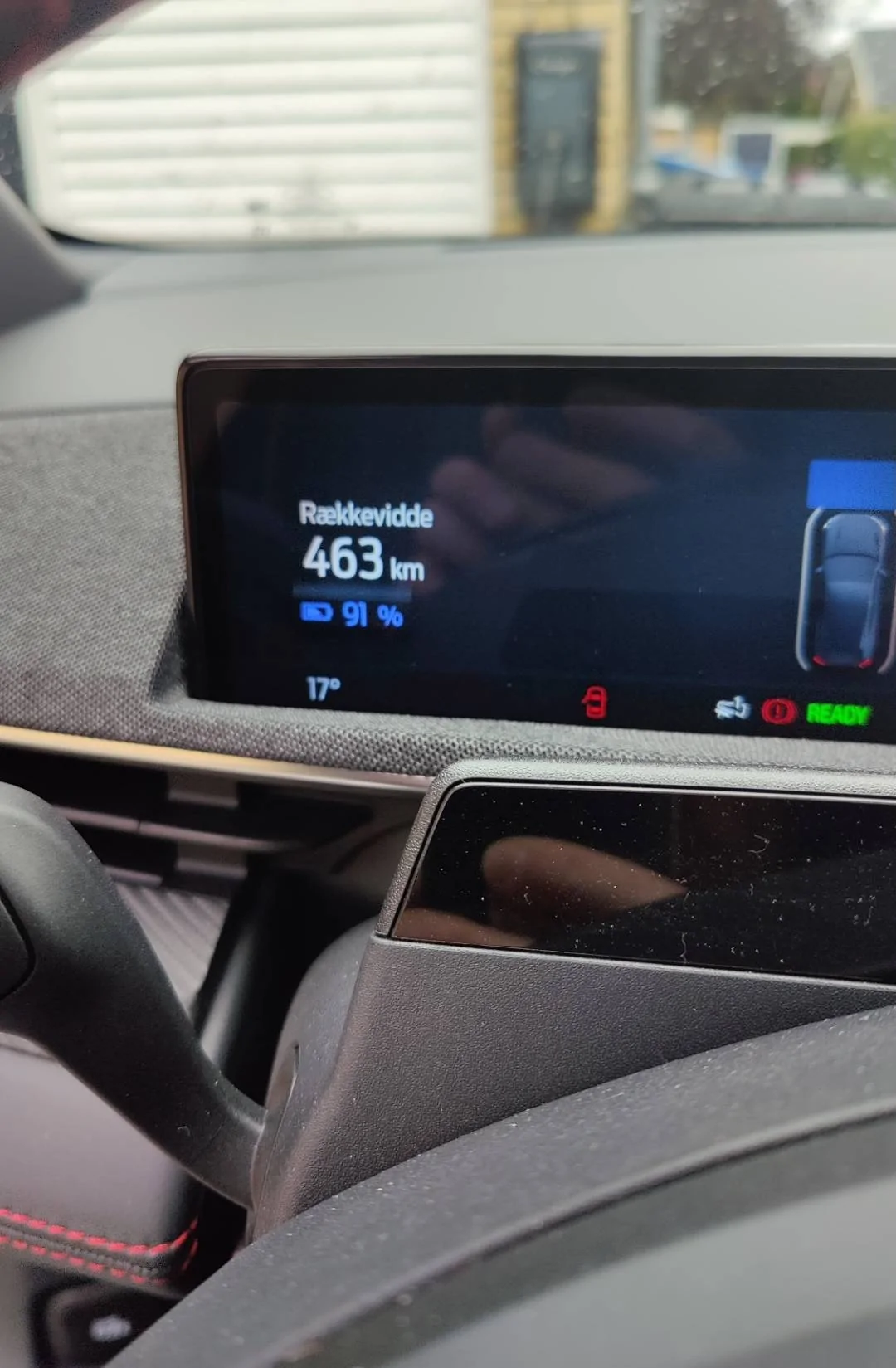
I charge to 90% daily at home, 100% on Friday night as I usually go somewhere on Saturday, 80% at DCFC.
Sponsored


jamelski

Banned
Banned
First Name
JJ
Joined
Feb 16, 2021
Threads
7
Messages
191
Reaction score
268
Location
Sacramento
Vehicles
2021 GTPE
Country flag
2021 GTPE. Charge to 100% I want the ability to drive if I need to. Daily drive 50-80 miles a day. Dcfc once a week. Get 2.8-3.0 Mile a KW. ? GOM each morning says 260-265. 30k miles. You battery savers needs to chilll and drive you car. ?. Battery will last longer that most will keep the car. You all tripping if you keep the Mach e after the battery warranty period anyways.

I made that mistake on a 2013 ford focus electric. Only 60k battery out a warranty needed to be replaced. Ford wants 13k and car was worth 7k at time. ?‍♂ won’t every do that again.
 

dtbaker61

Well-Known Member
First Name
Dan
Joined
May 11, 2020
Threads
126
Messages
4,823
Reaction score
4,525
Location
santa fe,nm
Website
www.envirokarma.org
Vehicles
MME (delivered 2/26/21), DIY eMiata BEV
Occupation
Solar Sales/install
Country flag
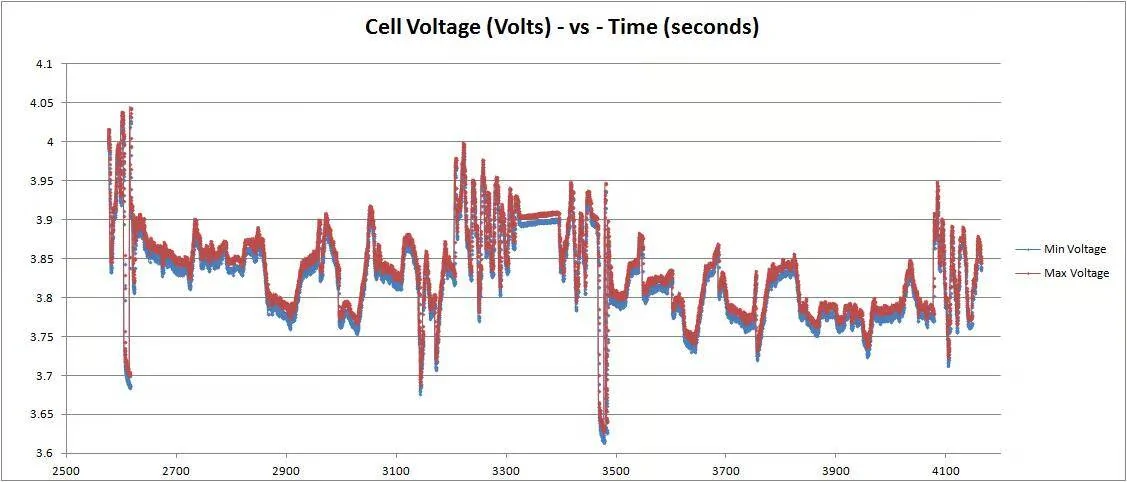
There's not much room in the graphs above. 82% SoC (see 4.05V) sagged all the way to 3.6V which is below nominal (3.7V). BMSes will shut the power off after a certain voltage and this is just a RWD ID.4 accelerating to 80mph and not a performance EV..

I disagree with flat voltages with NMC/NCA cells... Flat is the LFP voltage graph. Regular li-ion batteries have a linearly decreasing voltage curve.

1691889523515.png
you are misunderstanding me.... this graph is showing sag under various loads.

different battery chemistries do have different 'stiffness' in regarding sag under load... Flooded Lead acid being the worst, then AGM, .... and Lithum-ion and LFP are at the other end of the spectrum in terms of percent sag under load, but they still do sag from no-load voltage.

My point is that the no-load 'resting' voltage for Li batteries is very flat when the SOC is between 20%-90%. Thats why you can't tell SOC from battery voltage, the system has to 'count' energy consumed from a known 'full' starting point where voltage DOES rise appreciably in the last bit of capacity. This is also why it is good the charge to 90%-100% occasionally to 'reset' the internal counters at a point the batteries are known to be full.

with LFP for instance, the 'resting' voltage when SOC is between 20%-80% is virtually unchanged, rising slightly as it approaches 90%, and then more steeply as it approaches 100%. The no-load voltage difference between 80%-95% is pretty small, and the inverter/motor would just pull more current to deliver full output; until you hit the internally calculated 5-second limit, or some other temperature parameter.

This is my basis for saying that I doubt there would be a detectable difference in output related to state of charge (at the top end)..... There may well be detectable reduction in power when SOC <20% where the increased current may exceed some parameter and be limited to prevent overheating....


bbulkow

Well-Known Member
First Name
Brian
Joined
Aug 30, 2022
Threads
24
Messages
889
Reaction score
729
Location
menlo park, california
Vehicles
Honda CRV
Country flag
For me personally, I am happy with having the location based limit. I am fine with allowing up to 100% when traveling. My Bolt, which I no longer have, had two limits, but I did not use the away one. My Rivian has only one global limit, which I do not like, because I have to manually set and reset it on trips.

100% occasionally, and when it is not stored for long times at that level, is not a big deal. In fact GM has a departure time setting that allows the car to complete the charge at departure time, so that it does not sit at the target charge limit for a long time.
For me, personally, I like to set the charge limit for a charging session. If I'm on the road and I want to charge to a certain pecent, that would be what I'd like. Sometimes it'll be 100%, sometimes not.

The "crazy useful" part of the location based limit is if you arrive in a location and want to charge, it's not on your list. So you can't set a limit, period. It seems likely you can charge for a little bit, unplug, wait a bit, see the location, set a location limit, then plug back in.

If you could start a session, then set the limit for that session or location without that foolery, that would be enough for me. Or set a global limit, and I'd just have that as a default if I don't have a location, and change that while on the road.

But the current system.... having to play that foolery... and the couple times I've tried it, it seems to take a while to create a new location.... WHY WHY WHY. Why not be able to set a limit on the fly.
 

Just Lurking

Well-Known Member
First Name
Paul
Joined
Dec 31, 2022
Threads
8
Messages
635
Reaction score
599
Location
Washington
Vehicles
2022 Mach-E GT
Country flag
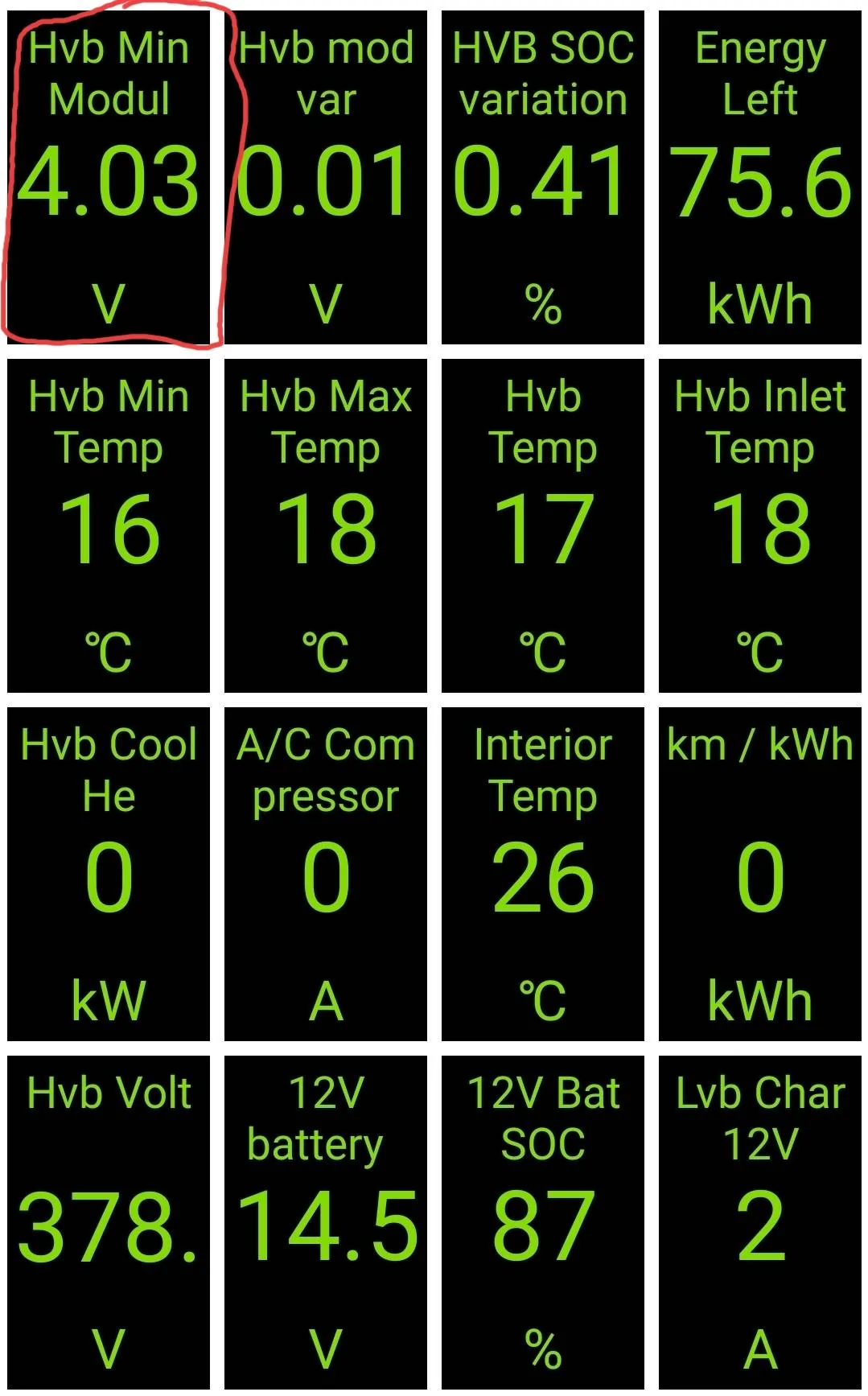
The issue I have is power feels significantly reduced at the recommended SOCs. I only charge to 90% daily but I feel a linear lack of power as SOC goes down, and markedly less power even when you get to 87% and below. I have yet to positively confirm with my OBDLink, but that’s been my experience. Does anyone else (preferably with a GT or GTPE) notice the same?
100%. Power on my GT seems to fall off a cliff below about 80% SOC, even in mild/ideal temperatures.

Maybe a SLIGHT difference in output if SOC is between 90-100%.

If you get a ODB2 and CarScanner app you can display real-time power output and regen to verify.

You may see power limiting after repeat WOT/regen due to temps and '5-second' software, but I doubt you will see a difference based on SOC.
This is my basis for saying that I doubt there would be a detectable difference in output related to state of charge (at the top end)..... There may well be detectable reduction in power when SOC <20% where the increased current may exceed some parameter and be limited to prevent overheating....
All I can say is there is an extremely noticeable difference between WOT performance below 80% and at 90-95%, and it sucks. I hope this is on the "must fix" list for the next-gen Mach-E GT.
 

Mach1E

Well-Known Member
Joined
Sep 5, 2021
Threads
93
Messages
10,511
Reaction score
13,298
Location
Florida
Vehicles
69 Mach 1, 11 GT, 21 GTPE- sold, 24 Taycan 4S, 20 F type R
Country flag
100%. Power on my GT seems to fall off a cliff below about 80% SOC, even in mild/ideal temperatures.


All I can say is there is an extremely noticeable difference between WOT performance below 80% and at 90-95%, and it sucks. I hope this is on the "must fix" list for the next-gen Mach-E GT.
It’s on the must fix list for this gen.

Ford is going to change the limit per the direct words of VP Darren Palmer in a recent video interview.

The SoC limit seems as artificially restrictive as the limit based on speed, temp and time (5 seconds). So hopefully it’s on the chopping block as well.
 

dtbaker61

Well-Known Member
First Name
Dan
Joined
May 11, 2020
Threads
126
Messages
4,823
Reaction score
4,525
Location
santa fe,nm
Website
www.envirokarma.org
Vehicles
MME (delivered 2/26/21), DIY eMiata BEV
Occupation
Solar Sales/install
Country flag
100%. Power on my GT seems to fall off a cliff below about 80% SOC, even in mild/ideal temperatures.


All I can say is there is an extremely noticeable difference between WOT performance below 80% and at 90-95%, and it sucks. I hope this is on the "must fix" list for the next-gen Mach-E GT.

My bet is that any noticeable Power output reduction is from 'programmed' current limits rather than voltage drop in batteries. The hated '5-second algorithm' is counting time and power and programmatically clamping power down.

extended high speed, or hillclimb pulling more than about 50kw for very long, or repeat WOT will reduce the time allowed at full output until there is time at lower output to recover.
 

Just Lurking

Well-Known Member
First Name
Paul
Joined
Dec 31, 2022
Threads
8
Messages
635
Reaction score
599
Location
Washington
Vehicles
2022 Mach-E GT
Country flag
My bet is that any noticeable Power output reduction is from 'programmed' current limits rather than voltage drop in batteries. The hated '5-second algorithm' is counting time and power and programmatically clamping power down.

extended high speed, or hillclimb pulling more than about 50kw for very long, or repeat WOT will reduce the time allowed at full output until there is time at lower output to recover.
I hope that's true as well, because it implies that it's fixable in software, as @Mach1E just said. Fingers crossed.
 

4sallypat

Well-Known Member
First Name
Pat
Joined
Mar 30, 2022
Threads
103
Messages
2,808
Reaction score
2,464
Location
Southern California
Website
www.kudo-ume-farms.com
Vehicles
'23 MME delivered May '23 + '22 Lightning July '22
Occupation
Network Tech
Country flag
This obssesion with the batteries. All of logic on batteries is true to a point. How many real world replacements of batteries are there? Not the ones "my friend had to have battery replaced and it was $xx,xxx.oo." EVs have been around awhile, if people or companies were payin giant claims on batteries would be all over internet. It is almost the great debate over when to change engine oil. Change evety 3k no matter what manufacture says. Tell folks they can go 5k-10k or more without changeing oil. Ford says 90% daily Tesla says 80% for thiers. EVs are cars. Drive them like a car. Just like an ICE vehicle some go 50k and quit and some go 200k. There are so many factors that can cause any vehicle to have problems. If you want your battery to last the longest charge to 50% at 72 degrees and dont drive.
Agree!

Bought the EV to drive - not worry about battery longevity.

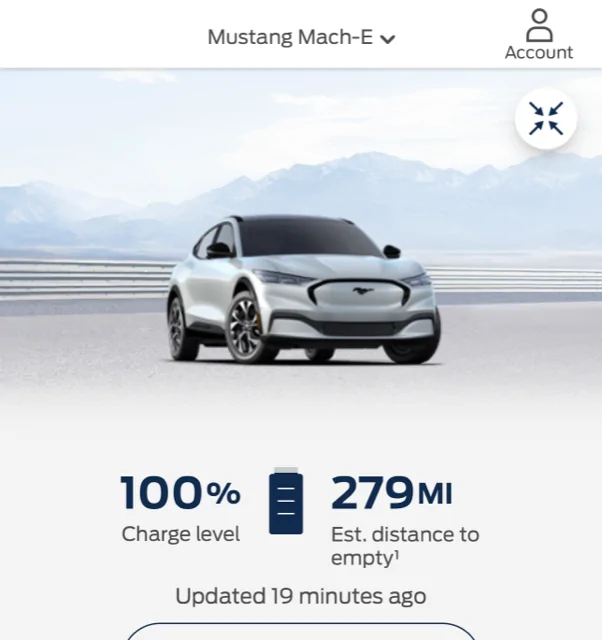
I charge mine to 100% once a week at home on L2.

90% if using L3 DCFC.

I don't worry about 80, 90, 100% - I just charge and drive.

My SR Premium gets more range than the EPA sticker even with high A/C use in So Cal:

Ford Mustang Mach-E Tesla now recommends charging to 80% daily instead of 90% Screenshot 2023-08-13 at 11.14.11 AM
 

dtbaker61

Well-Known Member
First Name
Dan
Joined
May 11, 2020
Threads
126
Messages
4,823
Reaction score
4,525
Location
santa fe,nm
Website
www.envirokarma.org
Vehicles
MME (delivered 2/26/21), DIY eMiata BEV
Occupation
Solar Sales/install
Country flag
I hope that's true as well, because it implies that it's fixable in software, as @Mach1E just said. Fingers crossed.
software could be CHANGED to allow higher output for longer, but at the risk of damage and shorter battery life. Lifting the cap is not FIXING the root issue. What is really needed is better internal cooling, and a few more sensors in key locations to have direct feedback loop controls rather than programmatic.
 

Mach1E

Well-Known Member
Joined
Sep 5, 2021
Threads
93
Messages
10,511
Reaction score
13,298
Location
Florida
Vehicles
69 Mach 1, 11 GT, 21 GTPE- sold, 24 Taycan 4S, 20 F type R
Country flag
software could be CHANGED to allow higher output for longer, but at the risk of damage and shorter battery life. Lifting the cap is not FIXING the root issue. What is really needed is better internal cooling, and a few more sensors in key locations to have direct feedback loop controls rather than programmatic.
Do we know that cooling is actually a problem?

To my knowledge, no one has broken their cars from the battery overheating.

And no, the HVJB welding shut or open isn’t a result of lack of cooling. Whole different issue altogether.

We do know this though (per the direct words of the VP at Ford), they were overly cautious due to the lack of sensors, but now after extensive testing they know they can change the limits.

So either way, the current cooling can handle more power. We shall see how much more they release.
 

kodiakng

Well-Known Member
First Name
David
Joined
Oct 1, 2022
Threads
19
Messages
903
Reaction score
1,408
Location
Oregon
Vehicles
2023 Cyber Orange 4X Mach-E
Country flag
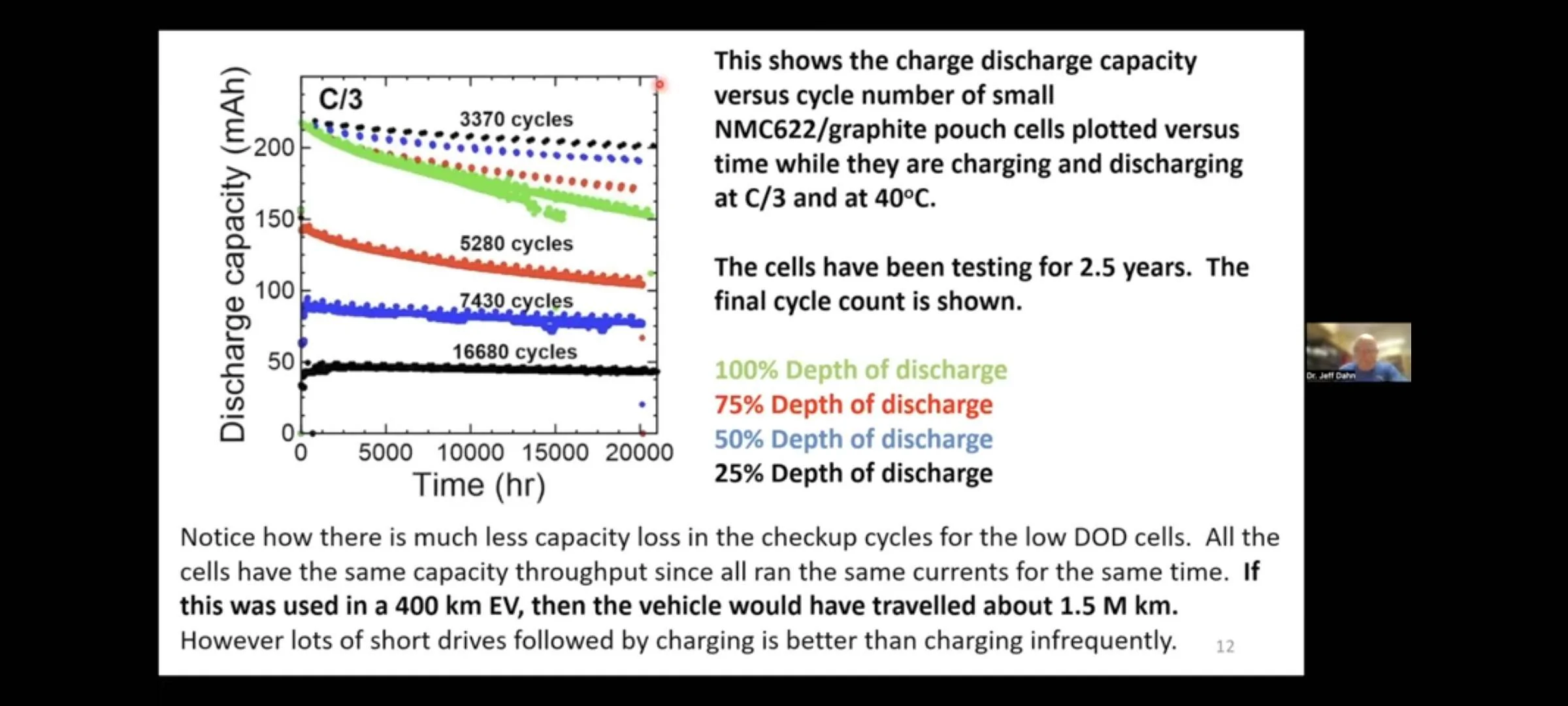
More detailed scientific information about battery degradation can be found in this video.
the whole video is great but a couple of takeaways i found illuminating:

1) depth of discharge between charging is a large contributor and charging daily as @RickMachE suggests is best for battery longevity (19:00-22:37); charging around 50% or less is significantly better than getting to 75% or higher depth of discharge.

Ford Mustang Mach-E Tesla now recommends charging to 80% daily instead of 90% Screenshot_20230813-124758


2) heat kills batteries and lower top SoC in high temperature locales is better (53:32-54:20) but more moderate climes is less of an issue.

lots of other nerdy details too - would like to know the details of our NMC packs. ?
Sponsored


Top