
Ride_the_lightning
Well-Known Member
- Joined
- Jul 11, 2021
- Threads
- 6
- Messages
- 545
- Reaction score
- 1,067
- Location
- Midwest
- Vehicles
- Mach E Premium SR AWD
- Occupation
- Engineer

Good point. The heaters may run more when the weather is colder.The amount of heat generated may not be cancelled in equal amounts by colder weather.
Tangible
Well-Known Member
- Thread starter
- #19
On reflection, I agree with @RickMachE and I disagree with me.Good point. The heaters may run more when the weather is colder.
RickMachE
Well-Known Member
- Joined
- Jul 1, 2021
- Threads
- 267
- Messages
- 17,906
- Reaction score
- 27,880
- Location
- SE MI
- Vehicles
- 2022 Mach-E Premium 4X, 2022 Lightning Lariat ER
On reflection, I agree with @RickMachE and I disagree with me.
Congrats! Took me over 30 years to get my wife to this stage...

breeves002
Well-Known Member
- First Name
- Sam
- Joined
- Feb 21, 2021
- Threads
- 90
- Messages
- 1,734
- Reaction score
- 3,593
- Location
- St. Louis, MO
- Vehicles
- 2021 Mach-E GT PE
I think this is mainly true because you will get less heat from the motors/inverter going into the radiator as the ambient temp will help cool them some. I don't know by how much but it isn't a linear curve.The amount of heat generated may not be cancelled in equal amounts by colder weather.

Murse-In-Airy
Well-Known Member
- First Name
- Rod
- Joined
- Mar 5, 2021
- Threads
- 82
- Messages
- 3,678
- Reaction score
- 8,297
- Location
- Chaumont, NY
- Vehicles
- Mach-E ER AWD
- Occupation
- Nurse
Now I’m going to have to put my Bluetooth BBQ thermometer in my frunk and drive around. Must contribute to science.
Who knew that the MME forum would be full of people who believe in science?
Who knew that the MME forum would be full of people who believe in science?

hitchhiker
Well-Known Member
- Joined
- Apr 30, 2021
- Threads
- 1
- Messages
- 74
- Reaction score
- 155
- Location
- Maine, USA
- Vehicles
- 2021 Mach-e 4x, 1965 F-100, 1999 Chevy Silverado
- Occupation
- Software Engineer
Anecdotally, I transported a turkey up there this Thanksgiving with no cooler. Ambient temperatures were in the 40s. No noticeable thaw over approximately 5 hours driving. Granted, a turkey is going to be on the higher end of thermal mass for typical consumer food items.
HuntingPudel
Well-Known Member
- First Name
- Steve
- Joined
- Mar 23, 2021
- Threads
- 88
- Messages
- 12,932
- Reaction score
- 17,376
- Location
- Bay Area, CA
- Vehicles
- 2024 MME GT with Performance Upgrade, 1979 Fire-Am, 1972 K/5 Blazer
- Occupation
- Engineering
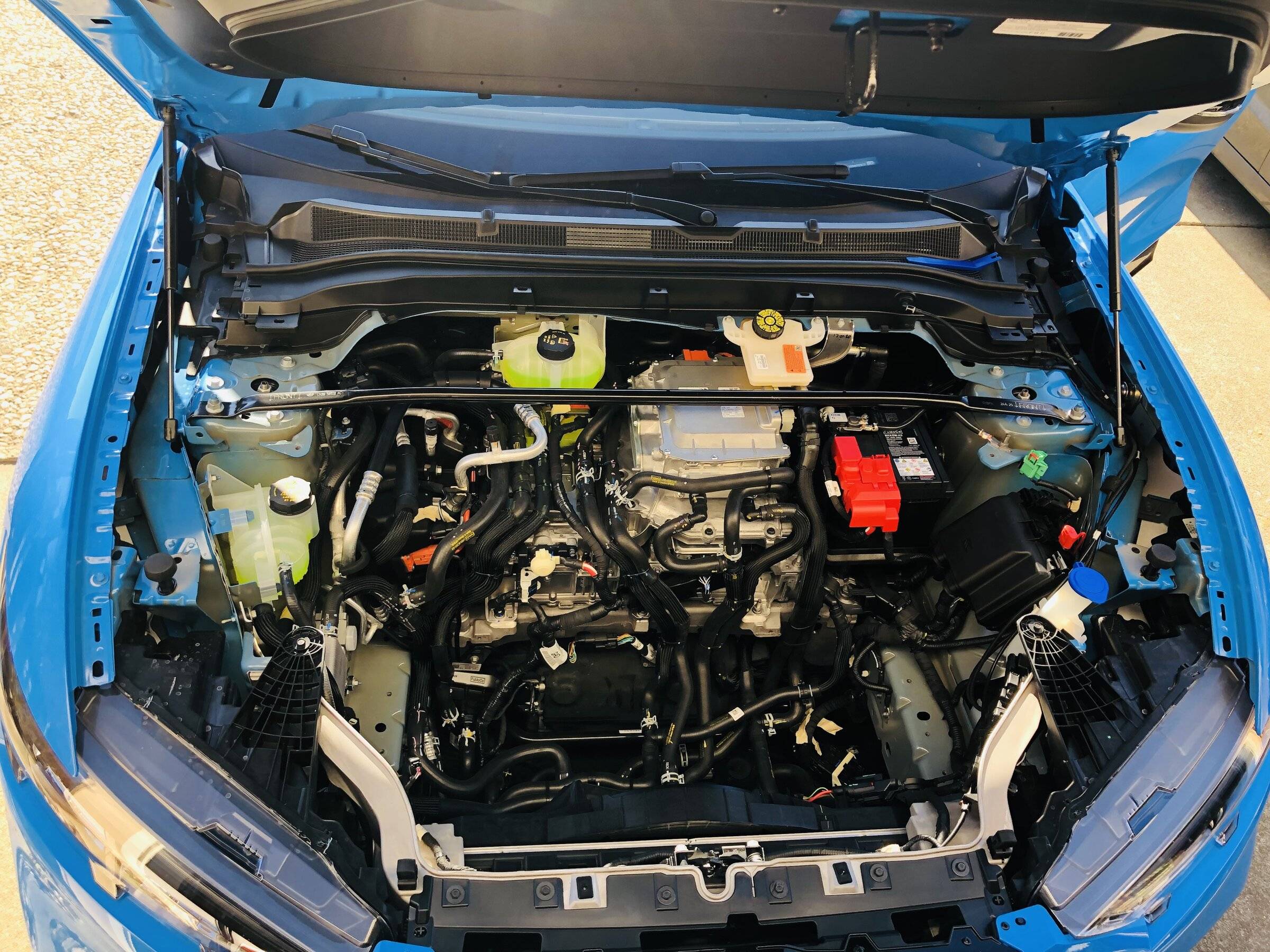
The warmest part of the frunk appears to be lower middle of the back wall, based on how ice appears to melt in the frunk tub. Place your thermal sensing gear near there. ??

troublebot
Well-Known Member
- Joined
- Jan 31, 2021
- Threads
- 12
- Messages
- 250
- Reaction score
- 585
- Location
- Portland, OR
- Vehicles
- 2021 MME Premium EXT AWD, Infinite Blue
- Occupation
- Industrial Design & Mechanical Engineering
Hmm, maybe a form-fitting frunk cooler insert is needed. @AOSKYou should not think it will be 20 degrees, no. Use a cooler.
RickMachE
Well-Known Member
- Joined
- Jul 1, 2021
- Threads
- 267
- Messages
- 17,906
- Reaction score
- 27,880
- Location
- SE MI
- Vehicles
- 2022 Mach-E Premium 4X, 2022 Lightning Lariat ER
Not unless it has an insulated top.Hmm, maybe a form-fitting frunk cooler insert is needed. @AOSK
Or, one could just use a cooler. #ThisIsNotHard
Gimme_my_MME
Well-Known Member
- Joined
- Oct 12, 2020
- Threads
- 12
- Messages
- 1,945
- Reaction score
- 6,460
- Location
- Dearborn
- Vehicles
- Grabber Blue First Edition Mustang Mach-E
- Occupation
- Engineer
Not unless it has an insulated top.
Or, one could just use a cooler. #ThisIsNotHard
frontrunner
Well-Known Member
- First Name
- John
- Joined
- Oct 7, 2021
- Threads
- 0
- Messages
- 92
- Reaction score
- 78
- Location
- NJ
- Vehicles
- 2022 Iced Blue Silver Premium AWD
I would recommend driving with a thermometer in the frunk for a bit and see what the temperature does before chancing a trip like that. Unless you don't have any time left to try it out.I’m going to be traveling for several hours with some frozen food, with outside temperatures in the 20s F. Will the frunk temperature be the same as the ambient temperature, or does it pick up heat from components under the hood or from the heated cabin?
louibluey
Well-Known Member
- First Name
- Joe
- Joined
- Dec 21, 2020
- Threads
- 60
- Messages
- 888
- Reaction score
- 1,127
- Location
- NY
- Vehicles
- FE "Louibluey" GB
- Occupation
- retired
Using @HuntingPudel 's picture with the frunk out, the back of the tub rests against all of those cooling lines (tub back), the stack of modules and literally bolts (back bottom) into those two holes in the lower part of either side of that bottom most power electronics module.

Sponsored
Similar threads

- Replies
- 154
- Views
- 42,905


