
Is the Mach-E really 7 years behind Tesla?

mark360

Well-Known Member
First Name
Mark
Joined
Feb 13, 2020
Threads
14
Messages
303
Reaction score
349
Location
North Carolina
Vehicles
Tesla Model 3 AWD(OLD), Ford Raptor
Occupation
Manufacturing
Country flag
Nah, standard industry coolant and refrigerant hoses are cheap. HV wiring and connectors are expensive.
SMH, I think Jolteon is just trolling. Unfortunately that is a half assed response to someone asking a sincere question. Honestly doesn't even address the complexity of redesigning motor housings to allow for fluid porting through it.
Sponsored


Jolteon

Banned
Banned
Joined
Sep 25, 2020
Threads
4
Messages
385
Reaction score
218
Location
Michigan
Vehicles
Model 3
Country flag
SMH, I think Jolteon is just trolling. Unfortunately that is a half assed response to someone asking a sincere question. Honestly doesn't even address the complexity of redesigning motor housings to allow for fluid porting through it.
I'm done with your trolling. I've wasted far too much time on it already. Discussion over.
 

SyNRG

Well-Known Member
First Name
John
Joined
Dec 5, 2019
Threads
6
Messages
394
Reaction score
495
Location
Brea, CA
Vehicles
2019 Explorer Sport & 2021 MME Select (SR) RWD
Occupation
Healthcare Data Analysis
Country flag
How about them Lakers?
 

Nak

Well-Known Member
First Name
Mike
Joined
Jan 5, 2020
Threads
10
Messages
441
Reaction score
525
Location
Camas, Washington
Vehicles
Tesla Model Y Performance, Tesla Model 3, 1992 K1500 Blazer
Country flag
The problem is, it's very simple to explain the Model Y Heat pump system. It is not efficient at creating heat unless you are operating the vehicle.
Correct. But that's exactly when we care about maximum efficiency, when we are operating the vehicle. Again, I would have thought this was somewhat obvious.

You do know the Model Y uses the electronics to heat the fluid that heats the cabin, right? LOL. Again you clearly do not understand what the definition of Resistive heating is.
Since you're being pretty demanding with semantics, I'll point out that The model Y uses electricity--and not electronics--to heat the cabin below temperatures that the heat pump is effective, and that electricity is wasted anyway until you reach a sufficiently low temperature that the motors and the battery produce no waste heat. As far as the definition of "resistive heating" that term is commonly used to refer to a length of electrical conductor that uses it's natural resistance to current flow to produce heat. That is not what happens in a Tesla, but yes, it runs the motor inefficiently so that it's inductive resistance creates heat.

Just so we're clear, the Y has no dedicated resistive heater. Please watch the Sandy Munro teardown videos if you don't believe me. Seriously, no one has a place trying to argue these points without becoming informed on the issues. And that means watch the videos.

The Y's HVAC does not add complexity, it reduces it. You have to run coolant to the motors and the battery and the cabin anyways. The Y's HVAC allows you to do more with those same coolant lines and eliminate the dedicated resistive heater. Less complexity and significantly more efficient at any temperature other than 68 F. Hopefully the E will have a similar system. if it doesn't you'll have first hand proof of just how much dedicated resistive heaters degrade range.

I mean seriously folks, this is all common sense. Heat pumps: good. Using waste heat instead of a dedicated heater: good. Trying to argue otherwise doesn't defeat common sense, it only shows your own lack of understanding of basic thermodynamics.


JCHLi

Well-Known Member
Joined
Jun 28, 2020
Threads
23
Messages
1,627
Reaction score
2,506
Location
Michigan
Vehicles
2021 Mustang Mach-E First Edition
Country flag
I've seen this "heat pump better" argument on here several times. It always seems to come down to one side saying something like "it's an engineering marvel" and the other saying "that is not how the rules of thermodynamics work".
 

Jolteon

Banned
Banned
Joined
Sep 25, 2020
Threads
4
Messages
385
Reaction score
218
Location
Michigan
Vehicles
Model 3
Country flag
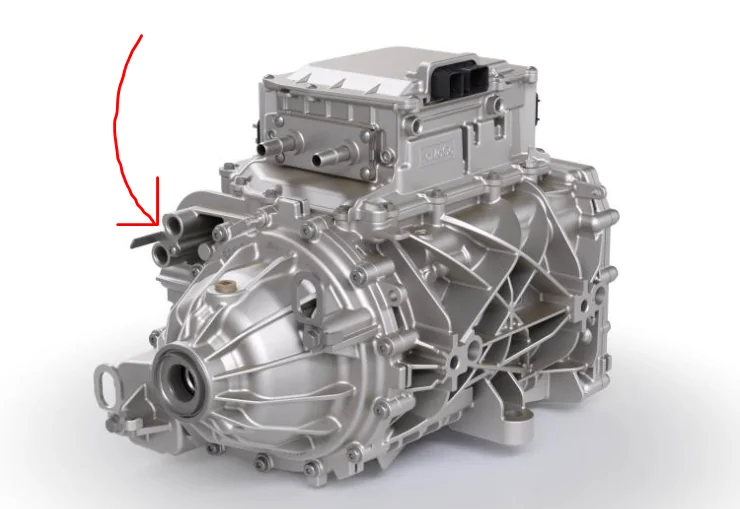
Yes, but you have to in order to cool it. The Mach-E's motors are liquid cooled.

Ford Mustang Mach-E Is the Mach-E really 7 years behind Tesla? 1602537088139
 

Nak

Well-Known Member
First Name
Mike
Joined
Jan 5, 2020
Threads
10
Messages
441
Reaction score
525
Location
Camas, Washington
Vehicles
Tesla Model Y Performance, Tesla Model 3, 1992 K1500 Blazer
Country flag
Teslas and the Mach e are going to have coolant flowing through the motors regardless. You might get away with air cooling in something like a leaf, but then you get premature failures anyway. Even the Leaf is going to coolant systems. In the E and the Teslas, you have no choice but to cool the motors with coolant. The power output is too great to avoid this with anything built today. It would be great if electric motors were efficient enough not to need cooling, but they are not. At least not if you want the motor to live for a reasonable length of time.
 

Nak

Well-Known Member
First Name
Mike
Joined
Jan 5, 2020
Threads
10
Messages
441
Reaction score
525
Location
Camas, Washington
Vehicles
Tesla Model Y Performance, Tesla Model 3, 1992 K1500 Blazer
Country flag
You have waste heat coming from the battery and the motors that you have to get rid of. You can run coolant to a radiator to disperse the heat to the atmosphere, or you can use it to heat the battery and cabin when needed. (Sometimes batteries need to be cooled, sometimes they need to be heated.) If you disperse the heat to the atmosphere, you must then use battery power through a dedicated heater. Waste heat is effectively "free" energy you can use. Not really free, you've paid for it once. But since you've paid for it once already, why not use it rather than throw it away and pay for more heat?

What the octovalve does is route coolant to where it is needed and at the temperature it is needed. The same coolant provides both heat and cools the CMB (cabin, motors and battery) when needed. That's where the complexity is reduced. One system for both heating and cooling. The radiator can disperse heat to the atmosphere when needed. The heat pump and the octovalve act as a system. Picture this: You know your ICE vehicle has engine coolant going to the cabin to provide heat and AC lines going to the cabin to provide cooling. With the octovalve, instead of two systems you have one system. One set of coolant lines run to the cabin. If you demand cooling, the octovalve routes cold coolant to the cabin; if you demand heat you get hot coolant. If the entire system is producing too much heat (Hot ambient temps) coolant is routed to the radiator to disperse heat to the atmosphere. One might argue that an ICE thermostat serves the same function, but it doesn't. The ICE thermostat can't determine if that excess heat is needed elsewhere, the octovalve can and does.
Sponsored


Top