SteveUk
Well-Known Member
- Joined
- Nov 10, 2020
- Threads
- 0
- Messages
- 2,113
- Reaction score
- 1,576
- Location
- Warrington
- Vehicles
- Mustang Mache with crap keys

How easy is it to change the cabin filter?
Sponsored

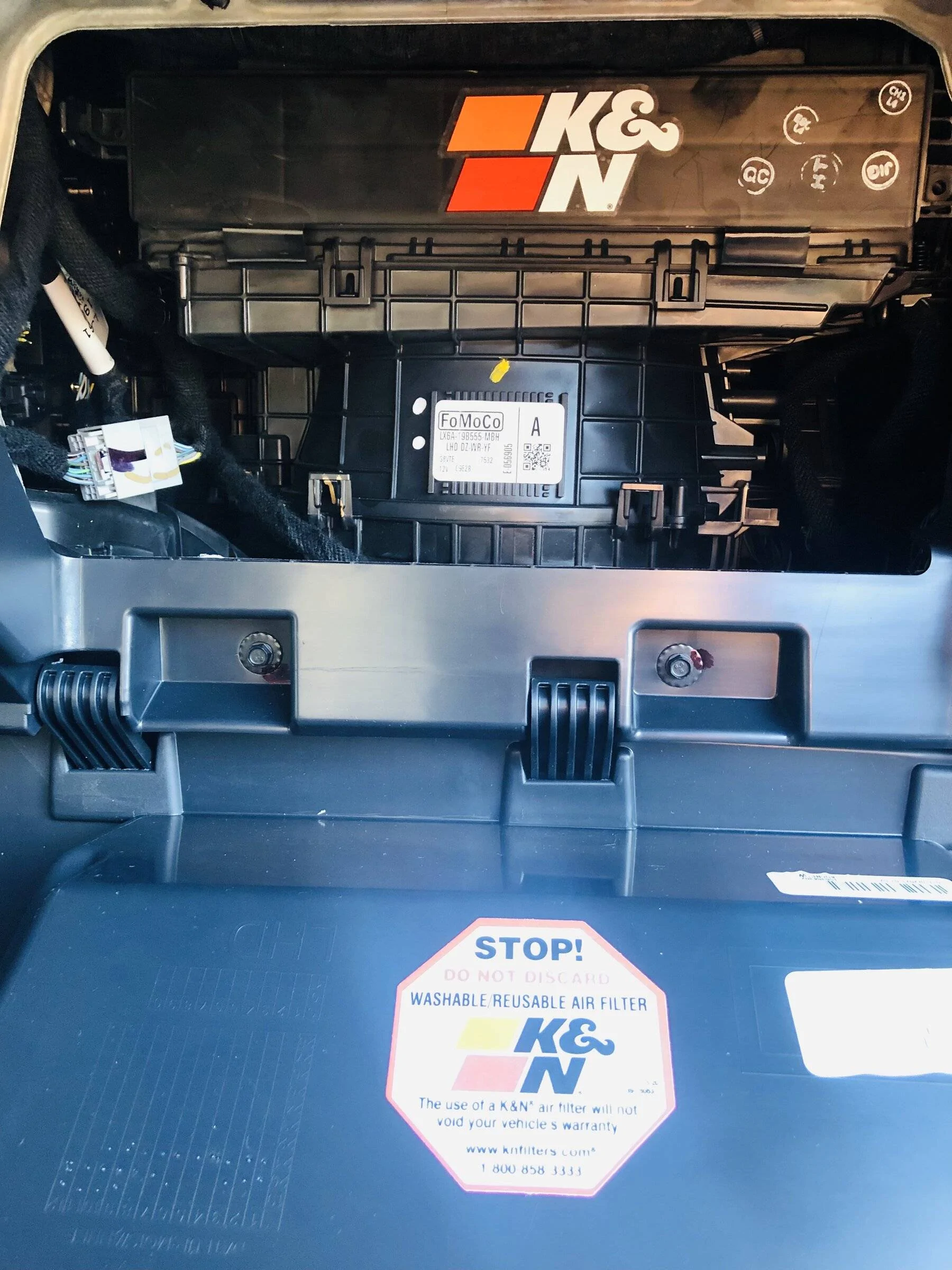
The owner’s manual covers the filter R&R. The one thing the neglect to mention is to empty the glove box out *before* detaching the pneumatic strut or defeating the travel stops. Paper slid out under my seat. ???How easy is it to change the cabin filter?
How easy is it to change the cabin filter?
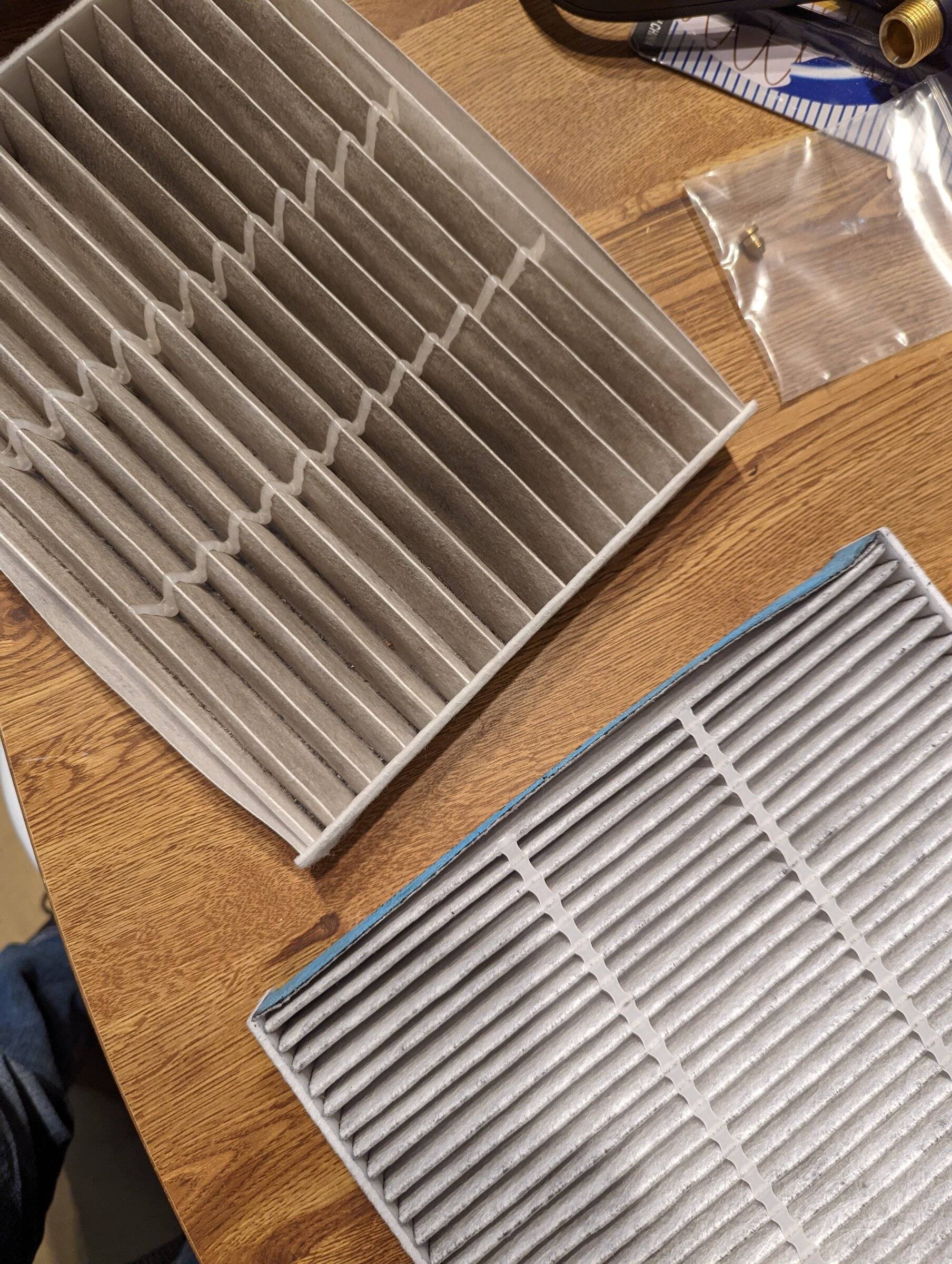
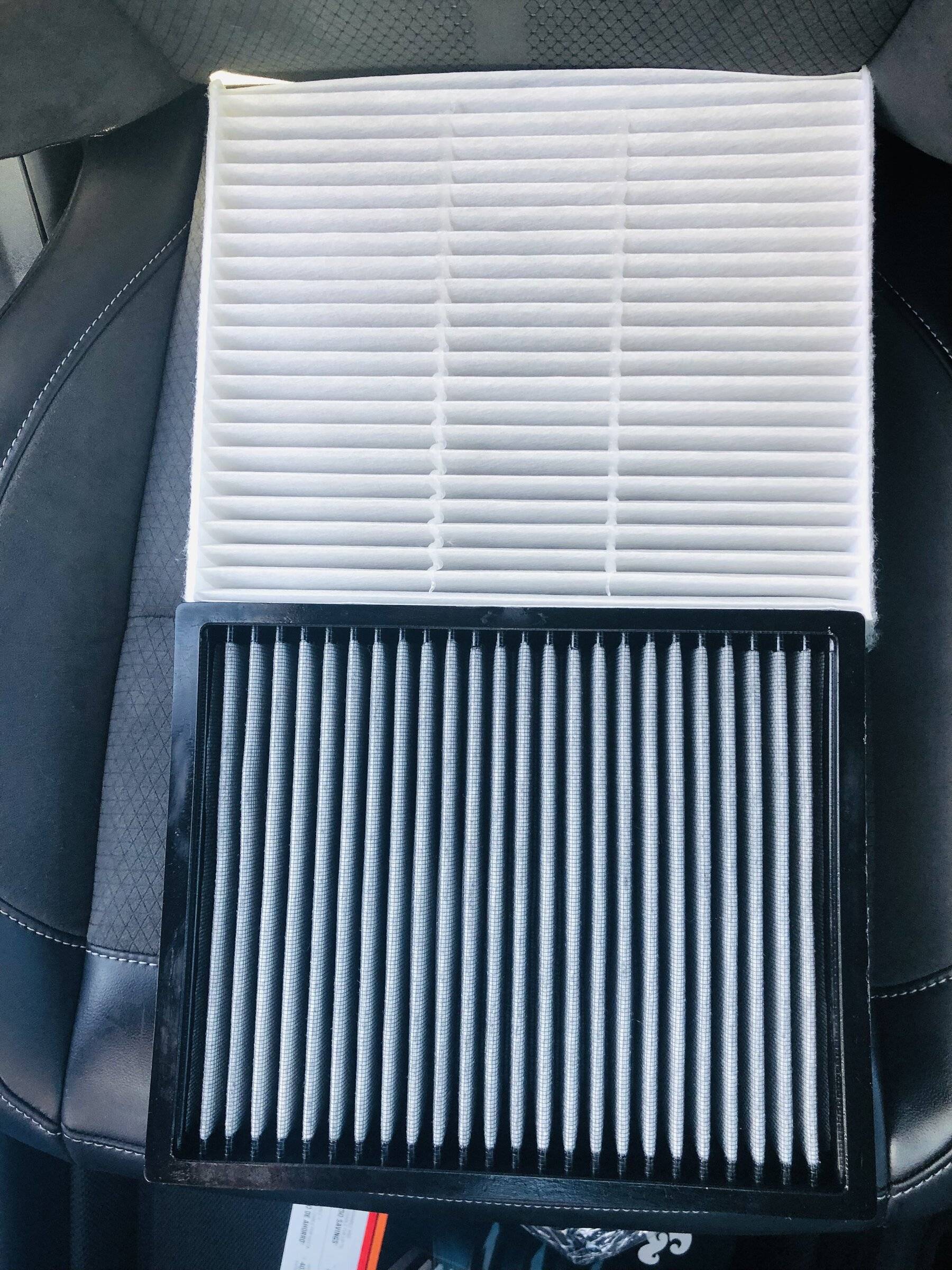
Comparison of the two filters:

Ripper, does your stock filter look like mine did, or like Poodle's? Jes curious.I tend to use the cheapest filters to keep airflow high the more robust filters will slow down your airflow and I don’t know if that’s good for the car in general In Arizona I need full airflow in the summer

Mine resembles the cheapest white one I buy them on Amazon and five packs for 20 some bucks. They also fit my Kia stinger. My philosophy is at the Cabin environment is pretty good already and a minimal filter with a little treatment and checking it’s better than a big pleated one. I based this on the nerdy MERV ratings for home air filters where they say if you get above 14 MERV You will restrict airflow and heat up your system and run it less efficientlyRipper, does your stock filter look like mine did, or like Poodle's? Jes curious.
His car was built later, after Ford switched over to their "improved" filter design. His stock filter pleat density looks very similar to the Pureflow replacement, just missing the carbon.
You have a good point about max airflow. I'll try to gauge the difference this summer versus last, though it'll be subjective at best.
BTW, I tried to buy Ford's new filter as the replacement but the dealer was out of both (old and new SKUs) and also it was more expensive than the Pureflow so I decided to give the third party one a try.

Glad you said it.? Never owned a car with one.Just to point out, there are many vehicles that have never had cabin air filters. F-150s for many years had none.
I try not to overthink it. I will change it every 20,000 miles as the manual states. No spray, no special filters. To each their own.
Highway air is quite toxic, I think filters can play an important role in making it less toxic, also part of the reason why I hate that Ford has programmed the HVAC’s recirculation option to switch off at seemingly every turn.Just to point out, there are many vehicles that have never had cabin air filters. F-150s for many years had none.
I try not to overthink it. I will change it every 20,000 miles as the manual states. No spray, no special filters. To each their own.
Your system thinks your filter is up to date. Have dealer use FDRS.My OTA keeps failing so I had to make an appointment with the dealer to change the filter. They said they can get it done in 2 or 3 days since they send it off-site for the actual filter element work.
*I hope nobody pays attention to anything I say....
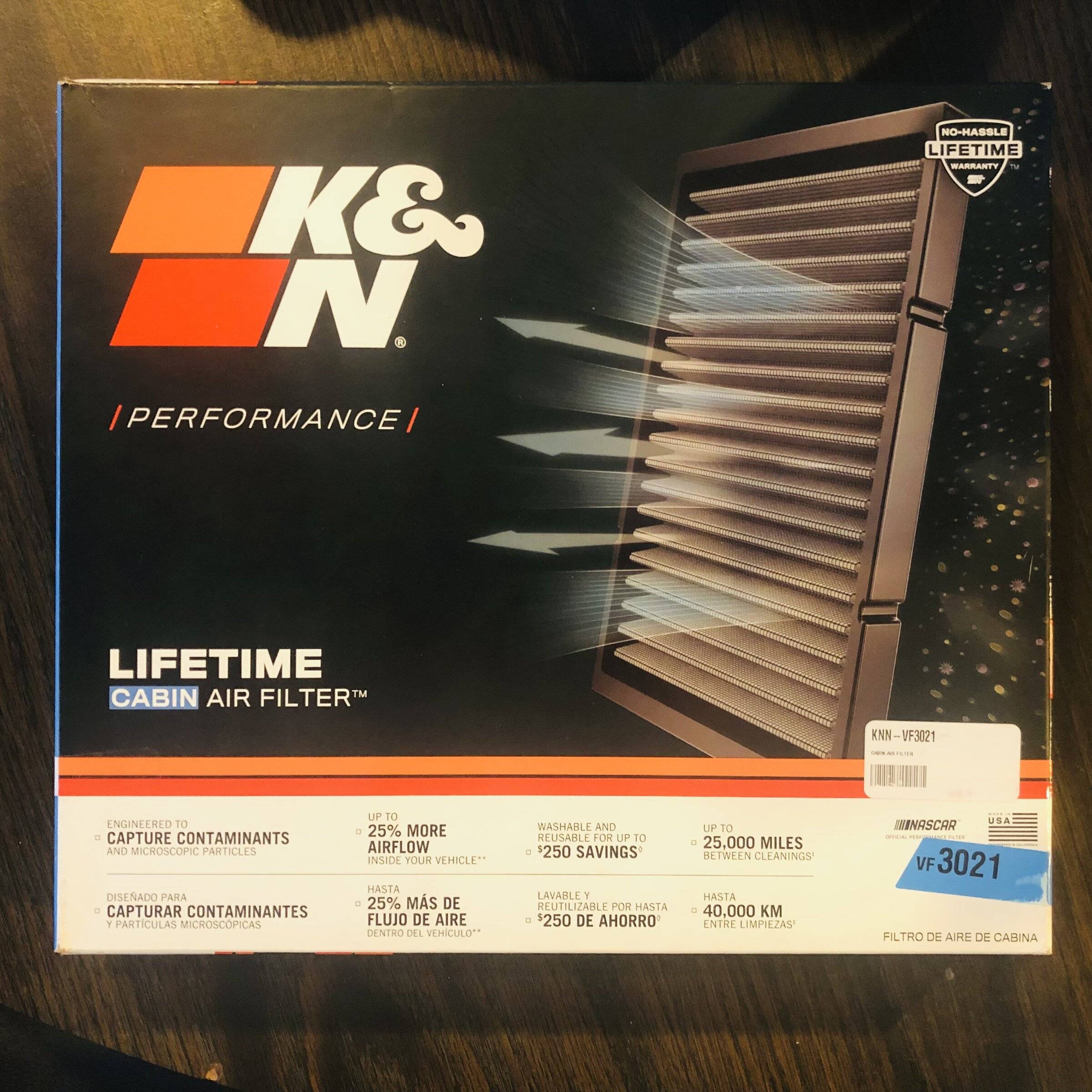
The only thing that K&N filter will clean better is your wallet.I just got a K&N cabin air filter. I pulled out my stock one and it’s still snow white. Being a cheapskate dog, I am not sure I want to replace the filter when it still has a lot of useful life left. Thoughts? ???

Sure, in some parts of the country with crazy commuter traffic. LA, SF, Denver, NYC, Boston.Highway air is quite toxic, I think filters can play an important role in making it less toxic, also part of the reason why I hate that Ford has programmed the HVAC’s recirculation option to switch off at seemingly every turn.
Source: Los Angeles Times - Freeway pollution travels farther than we thought. Here’s how to protect yourself
Key snippet from the article:
Drive less, and use the 'recirculate' button
Spending time in a car on the freeway can expose you to pollution levels five to 10 times higher than surrounding areas.
Even with the windows up, you could be breathing up to 80% of the levels of pollution found in traffic if your vehicle’s ventilation system is drawing in outside air.
So if you can, live closer to work, use public transit or take other steps to limit your driving time.
“That’s where we still get a big, big share of our exposure, especially if you’re driving very far in rush-hour traffic,” said Scott Fruin, a professor of preventive medicine at USC. “If you can reduce that, it helps a lot.”
When you’re in the car, roll up the windows and set your ventilation system to recirculate. That button can cut pollution to 20% of on-road levels.