generaltso

Well-Known Member
Joined
Jun 24, 2020
Threads
76
Messages
15,389
Reaction score
28,696
Location
Vermont
Vehicles
2024 Kia EV9 GT-Line
Country flag
They began the update, and apparently the VIN associated with the vehicle was removed in the dealers computer that was performing the update, and they have consequently been unable to complete.
I've done lots of updates, and I can honestly say that I have no idea what that means. Sounds like the dealer is blowing smoke.
Sponsored


generaltso

Well-Known Member
Joined
Jun 24, 2020
Threads
76
Messages
15,389
Reaction score
28,696
Location
Vermont
Vehicles
2024 Kia EV9 GT-Line
Country flag
Called my nearest dealer, and got this:
1) We don't see an open recall associated with your VIN
2) Our earliest scheduling for recall repairs is December. We'll call you if anything opens up sooner.
Sounds like it's time to find a different dealer.
 

RickMachE

Well-Known Member
Joined
Jul 1, 2021
Threads
267
Messages
17,935
Reaction score
27,940
Location
SE MI
Vehicles
2022 Mach-E Premium 4X, 2022 Lightning Lariat ER
Country flag
Called my nearest dealer, and got this:
1) We don't see an open recall associated with your VIN
2) Our earliest scheduling for recall repairs is December. We'll call you if anything opens up sooner.
Based on my time on the forum, it seems like I don't want to own a Ford EV in Colorado, EVER.
 

Neil4Real

Well-Known Member
Joined
Jul 8, 2021
Threads
17
Messages
3,385
Reaction score
3,073
Location
Southern California
Vehicles
Mach-E GT Performance Edition - Shadow Black
Country flag
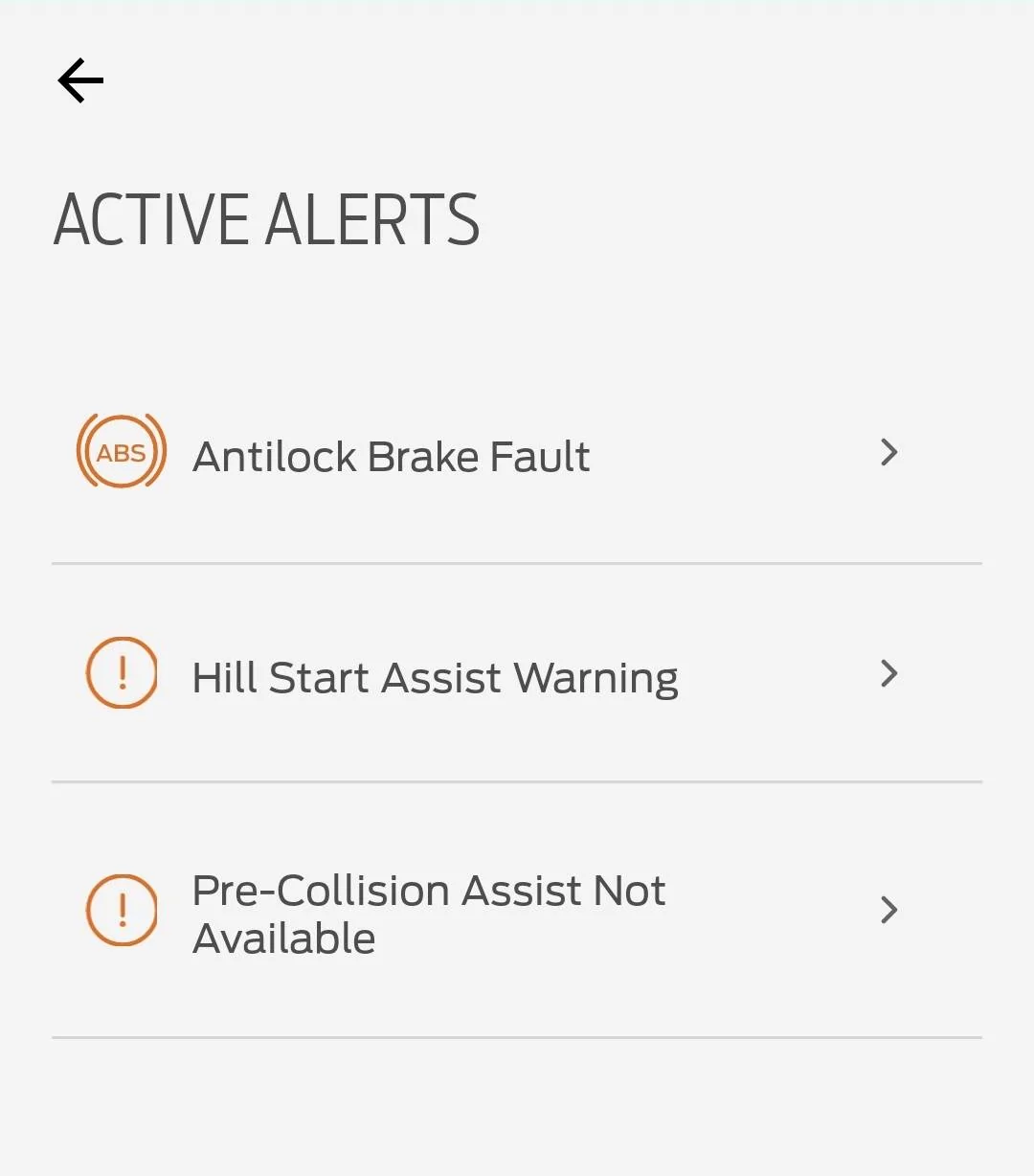
Dropped my vehicle off yesterday at 10am because we are on a road trip, and as of right now, they still have been unable to perform the full update. They began the update, and apparently the VIN associated with the vehicle was removed in the dealers computer that was performing the update, and they have consequently been unable to complete. Additionally, and I assume it's because they've started the update, I have 3 new alerts too.
Screenshot_20220630-132417_FordPass.jpg
Now I'm without a vehicle, 500 miles from home. Recommend y'all wait for the OTA and not go to a dealer!
That doesn't make any sense, I don't even know what that means. I agree with @generaltso that they're blowing smoke. You can send me your VIN if you want so I can confirm you still have these updates available and you can tell the dealer they're ridiculous.

I'd advise, if anyone else wants to get this done without waiting for the OTA, you just at least do it at a dealer close to home if you're scared of an issue cropping up...


ElectrifyCLT

Well-Known Member
First Name
Kevin
Joined
Aug 1, 2021
Threads
15
Messages
272
Reaction score
445
Location
Charlotte, NC
Vehicles
Mach E GT- Dark Matter Grey
Country flag
Honest question: why do people do this kind of thing at home? Aren't you worried something off-script will happen and no one will be available to fix it? You bring it to the dealer and something goes wrong, it's their problem.
This may sound silly but.... I trust myself far more than I do a dealer. I'm using the exact same tools and following the exact same service procedures. While FDRS can be finicky, if the software doesn't install properly I've generally found it to fail gracefully, not brick the entire car. And you just reset and try again. At the end of the day, the question I ask myself is "can I push a mouse button and follow step by step instructions as good as the tech that'll be asked to do this at the dealer?"

Second, I'm a nerd! To me this is no different than installing a software update on my home built PC. Can it go wrong, yes. Do I trust myself more than GeekSquad to do it? Also yes.

Third, and not pictured in my post, is the kegerator off to the right of my computer rig in the garage. Tinkering with the car while enjoying a fresh brew brings back memories of helping my dad tear apart entire engines to replace head gaskets, timing chains, etc as a kid. For him, he did it to be frugal as opposed to for fun. But fundamentally I was raised learning how to do these things myself, and how to enjoy it while doing so.

Not everyone has that appetite, and for them there's the dealer network as well as the upcoming OTA.
 
Last edited:

RickMachE

Well-Known Member
Joined
Jul 1, 2021
Threads
267
Messages
17,935
Reaction score
27,940
Location
SE MI
Vehicles
2022 Mach-E Premium 4X, 2022 Lightning Lariat ER
Country flag
Honest question: why do people do this kind of thing at home? Aren't you worried something off-script will happen and no one will be available to fix it? You bring it to the dealer and something goes wrong, it's their problem.
There are several reasons why I haven't sought to do these updates myself:

1) Cost - buying an adapter, battery maintainer, and software license.

2) Dealer - while inconvenient to leave my car there, my dealership is quite responsive. I suspect that if I reached out today to push the issue, they'd have me in there next week. If I was going away on the weekend, they'd fit me in prior.

3) Fear of she who shall not be named - If I "bricked" the car, my wife would never let me hear the end of it. For those that have no fear of doing that to their car (I'm sure they'd be afraid of my wife), I point to my instrument panel going dead during the April update for BlueCruise, with the dealership unable to fix it. Ford engineers and a rep from the instrument panel manufacturer got it working again. If you did that to your own vehicle, and Ford saw you were playing in FDRS, that would be an interesting "it's covered under warranty discussion".

I have high hopes that Ford starts rolling out significant OTA updates in October and March like they said months ago they were going to. That said, car basically is fine for me right now.
 

gpgrim

Well-Known Member
First Name
Gary
Joined
May 17, 2021
Threads
11
Messages
233
Reaction score
213
Location
Danville, CA
Vehicles
RR 4XP, MB E-350, Exp. EB, Subaru XTrek
Occupation
Physicist
Country flag
40 Mach-E? Wow
The reason I was chatting with the sales rep is that I initially pulled into the wrong part of the dealership heading to the service bays, and while turning around I noticed at least 10 MMEs sitting on the display lot, longing for their new owners.

I was curious as to whether any had been abandoned yet, but alas, the rep noted none were available, that's when he mentioned they had a few dozen more on the storage lot.

He also said the new order book would open in Aug., for what it's worth.

Also just got a text while typing this, my beast is almost ready. Walnut Creek Ford seems to be a well oiled machine, nice
 

Jmets18

New Member
First Name
Joe
Joined
Jun 30, 2022
Threads
0
Messages
4
Reaction score
2
Location
20105
Vehicles
2021 Mustang Mach E
Country flag
That doesn't make any sense, I don't even know what that means. I agree with @generaltso that they're blowing smoke. You can send me your VIN if you want so I can confirm you still have these updates available and you can tell the dealer they're ridiculous.

I'd advise, if anyone else wants to get this done without waiting for the OTA, you just at least do it at a dealer close to home if you're scared of an issue cropping up...
Agree with the feedback, thx.
That doesn't make any sense, I don't even know what that means. I agree with @generaltso that they're blowing smoke. You can send me your VIN if you want so I can confirm you still have these updates available and you can tell the dealer they're ridiculous.

I'd advise, if anyone else wants to get this done without waiting for the OTA, you just at least do it at a dealer close to home if you're scared of an issue cropping up...
Just an awful dealership up in Buffalo; Dave Smith Ford. VIN is 3FMTK3R76MMA59979. Thx!
 

DrJay32

Well-Known Member
First Name
Jason
Joined
Oct 1, 2021
Threads
21
Messages
404
Reaction score
790
Location
Colorado
Website
www.luminescentphoto.com
Vehicles
2022 Mach-E Select AWD
Occupation
Photographer
Country flag
Based on my time on the forum, it seems like I don't want to own a Ford EV in Colorado, EVER.
Phil Long Ford of Chapel Hills has a reasonable sales dept, but a putrid and frankly, untrustworthy service dept. They just happen to be very close to where I'm located in Colorado Springs.
 

JCHLi

Well-Known Member
Joined
Jun 28, 2020
Threads
23
Messages
1,627
Reaction score
2,506
Location
Michigan
Vehicles
2021 Mustang Mach-E First Edition
Country flag
First, thanks for sharing your thoughts. I'd like to offer the following not as a rebuttal, but hopefully some insight gleaned from 25 years experience working with the type of electrical device in question. My goal here is to share some knowledge, as there a lot of us here looking for technical insight in various aspects, myself included. I hope that you can find it useful and I'm crossing my fingers that it doesn't come off sounding condescending, which often happens when writing about technical stuff.

With regard to contact arcing; Arcs in a contactor should only occur when interrupting the flow of current (opening/turning off). They can also occur, generally to a lesser extent, when the contactor is engaged due to a condition known as contact bounce. Arcs should not occur, at all, when the contactor is in steady state (fully engaged or disengaged). If arcing is occurring in steady state, then the contactor is most definitely defective. It is also important to note that arcs occur only when there is an electrical load that is being interrupted, and the magnitude of the arc is proportionate to size of the current. No load, no arc, regardless of voltage present.

So, high current being interrupted yields a larger arc, which causes contact surface pitting/burning, which results in contact particulate debris, which causes improper seating of the contact on subsequent engagements from the debris, that generates hot spots on contact surfaces, which get hot and weld the contacts. (whew.)

Now, with all of that being said. I'm pretty sure this is NOT what is happening. The reason is that the contact is not being commanded to open and close under high load conditions. This contact closes when you turn the car on, and remains that way until you turn the car off. Same thing happens when charging. It does not open and close during normal operation and when it does change state, it is normally under lower amounts of current load. This contact is basically a protective main disconnect switch in case the vehicle senses a problem with the various power semiconductors that run the motors and handle the charging. Having a mechanical contactor inline with a solid-state motor drive system that does the real load switching is a common (and sound) practice.

As the contacts in a contactor are conductors, they are subject to resistive heating from current flow, even when working properly. If you run too much current through them, they get hot. These contacts are supported by non-conductive materials, usually some type of fiberglass-reinforced plastic (phenolic in older ones). This plastic will experience deformation (melting) if it gets too hot. When this happens, the mechanical action of the contactor is no longer able to function correctly. The contactor can fail with the contacts in either state. It is likely being labeled a contact weld state simply because from an electrical standpoint, that's what it appears to be, the contact is stuck in the closed (on) state.

ZuleMME posted a link (from yet a previous poster on another thread, thanks to both!) to a TE contactor which appears convincingly to be the part. It is a 500 amp contactor. As many of us have long figured out, the drivetrain can demand currents well in excess of 500 amps during heavy acceleration. Not to worry though. This contactor, like most electrical components has a thermal performance curve. The 500 amp rating is a continuous duty rating, and can handle passing much larger currents for intermittent periods of time. The larger the current, the shorter period of time. In the case of this contactor, up to 2000 amps for 15 seconds is permitted. This transient current rating should be more than adequate for handling things such as full acceleration on a GTPE for example. However, the other side of this condition is that the contactor also needs adequate time to cool before it can handle this excursion again. Failure to do so builds enough heat in successive steps to exceed the upper design limit of the contactor, causing the contactor frame or armature to deform and stick.
Sidebar: I've come across melted contactors in my career, often they were switching AC motors on and off. The contactor was sized correctly, but the motor encountered a mechanical failure resulting in operation beyond full load or in a locked-rotor state. Leading up to this, maintenance would be called for the overload protection tripping out, to which they just upped the limits. The contactor ultimately would pay the price for this. The point here is that most contactors are designed to handle loads well in excess of their continuous duty rating to cover things like motor startup or other in-rush currents, but only for short periods of time. When you abuse or miscalculate this headroom, you run into issues.​

The vehicle controls can monitor voltages at various points in the electrical system. Can it monitor this directly (close in) on both sides of the contactor, I'm not completely sure, but would expect that it can to some reasonable degree (with whatever power-carrying cables might be in between). Yet the resolution to monitor a voltage drop (resistance) across the contacts when the battery is not under hard charge or discharge conditions is probably not there. There is no independent ohmmeter to check contact resistance, so it would have to be extrapolated from observing voltage levels as closely as possible on either side of the contactor to ascertain the actual contact resistance. This contactor is also buried inside the battery compartment, so it's not like someone can just pop the hood and put a set of probes across it, either.

The vehicle controls do monitor current load in and out of the HV battery, which means that the current through the contactor can be monitored. From this, a thermal model of the contacts can be produced, and the temperature calculated (not measured). The vehicle can then reduce load (e.g. limit acceleration) to limit the heat added to the contacts.

Now, the real speculation part: Either the thermal time constant was calculated incorrectly (the thermal model was incorrect). Or going back to the manufacturing inconsistencies, some contactors had more resistance (and developed more heat) than was anticipated, meaning again, the thermal model was not an accurate representation of what the contactor was actually experiencing. In both cases, the contactor ultimately gets too hot and fails.

Is the software update a Band-Aid? In some respects, yes. But it likely tweaks (if not overhauls) the thermal model to better protect this contactor. It remains to be seen the efficacy of this update. Regardless, a contactor with a higher rating (i.e. "beefier") would be a better long term fix.
Thanks. A couple things, shouldn't occur and doesn't occur are two very different things.

The fact that these are "welding" makes me suspect that they are arcing, at least at some point. I base that on my experience in the welding field.

As far as what the vehicle can actually monitor, I can only speculate, but as most modern weld machines have the "intelligence" to monitor and maintain electrical characteristics to maintain, as in wave form controlled processes such as STT, it doesn't seem unseasonable to consider that an advanced vehicle might be able to also monitor and control electrical characteristics in a similar manner.
 

Guss-E 2021

Well-Known Member
First Name
Pierre
Joined
Aug 12, 2021
Threads
67
Messages
1,895
Reaction score
2,327
Location
New Hampshire
Vehicles
2022 Mach-E Prem AWD ER
Occupation
Compliance Specialist
Country flag
My dealer just called me to schedule a time push the update. I'm rather impressed as I only saw this post this morning and was intending on stopping by the dealer on Saturday to set up an appointment.
 

KevinS

Well-Known Member
Joined
Oct 11, 2021
Threads
34
Messages
1,515
Reaction score
2,831
Location
Maryland
Vehicles
2021 Mach-E (sold), 2023 Ioniq 6 SEL
Country flag
Honest question: why do people do this kind of thing at home? Aren't you worried something off-script will happen and no one will be available to fix it? You bring it to the dealer and something goes wrong, it's their problem.
Because I'm a tinkerer and a geek. I used to work on my last Mustang; this and body mods are as close as I can get on this one.
 

KevinS

Well-Known Member
Joined
Oct 11, 2021
Threads
34
Messages
1,515
Reaction score
2,831
Location
Maryland
Vehicles
2021 Mach-E (sold), 2023 Ioniq 6 SEL
Country flag
I point to my instrument panel going dead during the April update for BlueCruise, with the dealership unable to fix it. Ford engineers and a rep from the instrument panel manufacturer got it working again. If you did that to your own vehicle, and Ford saw you were playing in FDRS, that would be an interesting "it's covered under warranty discussion".
If one is using a licensed purchased from Ford, and installing the updates as provided by Ford, all while hooked up to their servers, I don't know how there can be a warranty issue.

If I was doing something in Forscan that ended up bricking the thing, that'd be different.
 
OP
OP
Mach-Lee

Mach-Lee

Well-Known Member
First Name
Lee
Joined
Jul 16, 2021
Threads
262
Messages
11,365
Reaction score
25,025
Location
Wisconsin
Vehicles
2022 Mach-E Premium AWD
Occupation
Sci/Eng
Country flag
First, thanks for sharing your thoughts. I'd like to offer the following not as a rebuttal, but hopefully some insight gleaned from 25 years experience working with the type of electrical device in question. My goal here is to share some knowledge, as there a lot of us here looking for technical insight in various aspects, myself included. I hope that you can find it useful and I'm crossing my fingers that it doesn't come off sounding condescending, which often happens when writing about technical stuff.

With regard to contact arcing; Arcs in a contactor should only occur when interrupting the flow of current (opening/turning off). They can also occur, generally to a lesser extent, when the contactor is engaged due to a condition known as contact bounce. Arcs should not occur, at all, when the contactor is in steady state (fully engaged or disengaged). If arcing is occurring in steady state, then the contactor is most definitely defective. It is also important to note that arcs occur only when there is an electrical load that is being interrupted, and the magnitude of the arc is proportionate to size of the current. No load, no arc, regardless of voltage present.

So, high current being interrupted yields a larger arc, which causes contact surface pitting/burning, which results in contact particulate debris, which causes improper seating of the contact on subsequent engagements from the debris, that generates hot spots on contact surfaces, which get hot and weld the contacts. (whew.)

Now, with all of that being said. I'm pretty sure this is NOT what is happening. The reason is that the contact is not being commanded to open and close under high load conditions. This contact closes when you turn the car on, and remains that way until you turn the car off. Same thing happens when charging. It does not open and close during normal operation and when it does change state, it is normally under lower amounts of current load. This contact is basically a protective main disconnect switch in case the vehicle senses a problem with the various power semiconductors that run the motors and handle the charging. Having a mechanical contactor inline with a solid-state motor drive system that does the real load switching is a common (and sound) practice.

As the contacts in a contactor are conductors, they are subject to resistive heating from current flow, even when working properly. If you run too much current through them, they get hot. These contacts are supported by non-conductive materials, usually some type of fiberglass-reinforced plastic (phenolic in older ones). This plastic will experience deformation (melting) if it gets too hot. When this happens, the mechanical action of the contactor is no longer able to function correctly. The contactor can fail with the contacts in either state. It is likely being labeled a contact weld state simply because from an electrical standpoint, that's what it appears to be, the contact is stuck in the closed (on) state.

ZuleMME posted a link (from yet a previous poster on another thread, thanks to both!) to a TE contactor which appears convincingly to be the part. It is a 500 amp contactor. As many of us have long figured out, the drivetrain can demand currents well in excess of 500 amps during heavy acceleration. Not to worry though. This contactor, like most electrical components has a thermal performance curve. The 500 amp rating is a continuous duty rating, and can handle passing much larger currents for intermittent periods of time. The larger the current, the shorter period of time. In the case of this contactor, up to 2000 amps for 15 seconds is permitted. This transient current rating should be more than adequate for handling things such as full acceleration on a GTPE for example. However, the other side of this condition is that the contactor also needs adequate time to cool before it can handle this excursion again. Failure to do so builds enough heat in successive steps to exceed the upper design limit of the contactor, causing the contactor frame or armature to deform and stick.
Sidebar: I've come across melted contactors in my career, often they were switching AC motors on and off. The contactor was sized correctly, but the motor encountered a mechanical failure resulting in operation beyond full load or in a locked-rotor state. Leading up to this, maintenance would be called for the overload protection tripping out, to which they just upped the limits. The contactor ultimately would pay the price for this. The point here is that most contactors are designed to handle loads well in excess of their continuous duty rating to cover things like motor startup or other in-rush currents, but only for short periods of time. When you abuse or miscalculate this headroom, you run into issues.​

The vehicle controls can monitor voltages at various points in the electrical system. Can it monitor this directly (close in) on both sides of the contactor, I'm not completely sure, but would expect that it can to some reasonable degree (with whatever power-carrying cables might be in between). Yet the resolution to monitor a voltage drop (resistance) across the contacts when the battery is not under hard charge or discharge conditions is probably not there. There is no independent ohmmeter to check contact resistance, so it would have to be extrapolated from observing voltage levels as closely as possible on either side of the contactor to ascertain the actual contact resistance. This contactor is also buried inside the battery compartment, so it's not like someone can just pop the hood and put a set of probes across it, either.

The vehicle controls do monitor current load in and out of the HV battery, which means that the current through the contactor can be monitored. From this, a thermal model of the contacts can be produced, and the temperature calculated (not measured). The vehicle can then reduce load (e.g. limit acceleration) to limit the heat added to the contacts.

Now, the real speculation part: Either the thermal time constant was calculated incorrectly (the thermal model was incorrect). Or going back to the manufacturing inconsistencies, some contactors had more resistance (and developed more heat) than was anticipated, meaning again, the thermal model was not an accurate representation of what the contactor was actually experiencing. In both cases, the contactor ultimately gets too hot and fails.

Is the software update a Band-Aid? In some respects, yes. But it likely tweaks (if not overhauls) the thermal model to better protect this contactor. It remains to be seen the efficacy of this update. Regardless, a contactor with a higher rating (i.e. "beefier") would be a better long term fix.
This is a good post. FYI the BECM does measure the voltage on both sides of the contactors. It also measures the voltage flowing through the pack via a shunt. With the voltage drop and the amperage it’s able to calculate the resistance of the contactors from ohm’s law. I believe the issues start with a defective part with high resistance. From there, overheating causes parts to warp, which may cause a worse connection, and even more overheating/warping/arcing as the contacts no longer mate properly or lose their pulled-in pressure. I agree if the contactors all met their specs on paper these issues would be very rare, so it’s mostly parts quality issue unless Ford didn’t anticipate the duty cycle some lead-foot GT drivers put them through.

Last, you talk about thermal modeling, I think that is a new approach here. They didn’t have ANY before, and the monitoring would only notice if the contactor was completely stuck open or closed after you turned the car off. The new software is supposed to notice when the contactor is going bad and limit power before the contacts are completely fried. It’s an early warning system where there was nothing before.
Sponsored


Top